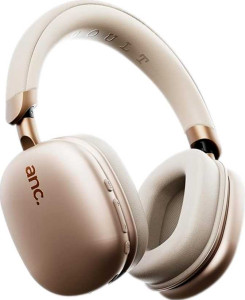
Boult Audio Fluid X Pro
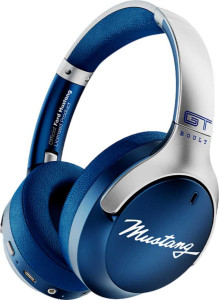
Boult Audio Mustang Q

Boult Audio Fluid X Pro Boult Audio Mustang Q

Overview

Welcome to our in-depth spec comparison between the Boult Audio Fluid X Pro and the Boult Audio Mustang Q. Both are over-ear, foldable wireless headphones sharing a strong foundation of features, yet they diverge in some meaningful ways. In this comparison, we examine the key battlegrounds of noise cancellation, battery life, water resistance, and ambient sound capabilities to help you decide which headphone is the right fit for your lifestyle.

Common Features

  • Both products have an over-ear fit.
  • Both products come with a detachable cable.
  • Both products can be folded.
  • Neither product is designed for kids.
  • Both products feature a tangle-free cable.
  • Neither product has an open-back design.
  • Both products have stereo speakers.
  • Both products share a lowest frequency of 20 Hz.
  • Both products share a highest frequency of 20000 Hz.
  • Both products use a 40 mm driver unit.
  • Spatial audio support is not available on either product.
  • Both products offer passive noise reduction.
  • Both products support USB Type-C charging.
  • Both products include a battery level indicator.
  • Wireless charging is not available on either product.
  • Neither product has a solar power battery.
  • Both products have a rechargeable battery.
  • Neither product has a removable battery.
  • Both products support wireless and wired connectivity.
  • Both products use Bluetooth version 5.4.
  • aptX Adaptive support is not available on either product.
  • LDAC support is not available on either product.
  • Bluetooth LE Audio support is not available on either product.
  • Both products feature a noise-canceling microphone.
  • In/on-ear detection is not available on either product.
  • A mute function is not available on either product.
  • Both products have a control panel placed on the device.
  • Both products can be used as a headset.
  • Neither product has an in-line control panel.
  • Both products come with a 1-year warranty.

Main Differences

  • Water resistance is present on the Boult Audio Mustang Q but not available on the Boult Audio Fluid X Pro.
  • Active noise cancellation (ANC) is present on the Boult Audio Fluid X Pro but not available on the Boult Audio Mustang Q.
  • A neodymium magnet is present on the Boult Audio Fluid X Pro but not featured on the Boult Audio Mustang Q.
  • Battery life is 60 hours on the Boult Audio Fluid X Pro and 70 hours on the Boult Audio Mustang Q.
  • Ambient sound mode is present on the Boult Audio Fluid X Pro but not available on the Boult Audio Mustang Q.
Specs Comparison
Boult Audio Fluid X Pro

Boult Audio Fluid X Pro

Boult Audio Mustang Q

Boult Audio Mustang Q

Design:
Fit Over-ear Over-ear
has a detachable cable
water resistance None Water resistant
can be folded
is designed for kids
has a tangle free cable
has an open-back design
has stereo speakers

Both the Boult Audio Fluid X Pro and the Boult Audio Mustang Q share a remarkably similar design foundation: both are over-ear headphones that can be folded, feature a detachable, tangle-free cable, a closed-back construction, and stereo drivers. For users prioritizing portability and cable management convenience, either headphone delivers the same practical benefits out of the box.

The single differentiating factor in this group is water resistance. The Mustang Q carries a water-resistant rating, while the Fluid X Pro offers none. In real-world terms, this means the Mustang Q can better handle light rain, sweat during workouts, or accidental splashes without risk of damage — making it a more durable choice for active or outdoor use. The Fluid X Pro, lacking any such protection, is better suited to controlled indoor environments.

Overall, the Boult Audio Mustang Q holds a clear edge in this design category purely due to its water resistance. For users who plan to use their headphones exclusively at a desk or in dry conditions, the difference may be negligible — but for anyone with an active lifestyle or unpredictable environment, the Mustang Q′s added protection is a meaningful advantage.

Sound quality:
has active noise cancellation (ANC)
lowest frequency 20 Hz 20 Hz
highest frequency 20000 Hz 20000 Hz
driver unit size 40 mm 40 mm
supports spatial audio
has a neodymium magnet
has passive noise reduction

At the hardware level, the two headphones start from an identical baseline: both use a 40 mm driver, cover the same 20 Hz – 20,000 Hz frequency range, and rely on passive noise reduction through physical ear cup isolation. For casual listening, this shared foundation means neither has an inherent acoustic advantage in raw driver capability alone.

Where the gap opens up is in active noise management. The Fluid X Pro includes Active Noise Cancellation (ANC) and a neodymium magnet, while the Mustang Q has neither. ANC uses microphones to analyze and cancel out ambient sound in real time — a significant advantage in noisy environments like commutes, offices, or cafes. The neodymium magnet, known for high magnetic strength relative to its size, typically contributes to tighter, more controlled driver movement, which can translate to better clarity and efficiency. The Mustang Q, relying solely on passive isolation, will struggle more in genuinely noisy settings.

The Fluid X Pro holds a clear edge in this category. The addition of ANC alone is a meaningful upgrade for anyone who listens in environments with consistent background noise, and the neodymium magnet further reinforces its sound quality credentials. The Mustang Q is not at a disadvantage in quiet settings, but it simply cannot compete with the Fluid X Pro when ambient noise becomes a factor.

Power:
Battery life 60 hours 70 hours
Has USB Type-C
has a battery level indicator
has wireless charging
Has a solar power battery
has a rechargeable battery
has a removable battery

On the charging and power infrastructure front, these two headphones are essentially identical — both charge via USB Type-C, include a battery level indicator, and use a sealed rechargeable battery with no wireless charging option. For day-to-day usability, this parity means neither has a convenience advantage when it comes to how you power them up.

The one meaningful differentiator is stamina. The Mustang Q is rated for 70 hours of battery life versus 60 hours for the Fluid X Pro — a 10-hour gap that represents roughly a 17% increase in longevity. In practical terms, both figures are exceptionally long by any standard; even at 60 hours, the Fluid X Pro can go well over a week of daily commuting without a recharge. However, it is worth noting that the Fluid X Pro includes ANC, which typically draws additional power — so its 60-hour rating likely reflects real-world usage with ANC active, making that figure arguably more impressive in context. The Mustang Q, without ANC, has fewer power demands to manage.

Strictly by the numbers, the Mustang Q has the edge in this category with its higher rated battery life. For users who travel frequently or simply dislike charging routines, that extra buffer is a genuine advantage — though in practice, either headphone offers enough endurance that most users will rarely feel constrained.

Connectivity:
connectivity Wireless & wired Wireless & wired
Bluetooth version 5.4 5.4
has aptX Adaptive
has aptX
has LDAC
has LDHC
has Bluetooth LE Audio
has aptX Low Latency
has aptX HD
has aptX Lossless
has AAC
has Auracast
maximum Bluetooth range 10 m 10 m
has fast pairing
supports Bluetooth pairing using NFC

Connectivity is the one category where these two headphones are in complete lockstep. Both support wireless and wired connections, run on Bluetooth 5.4, and top out at a 10 m wireless range. Bluetooth 5.4 is a modern, capable standard that brings improved connection stability and efficiency over older versions — so users of either headphone benefit equally from that foundation.

Neither model supports any high-resolution audio codec — no LDAC, aptX, AAC, or any of their variants — which means audio is transmitted over standard SBC by default. For most listeners in everyday scenarios this will be imperceptible, but audiophiles seeking lossless or near-lossless wireless transmission will find both headphones equally limited in this regard. The absence of fast pairing or NFC pairing also means the initial connection experience is a standard Bluetooth handshake on both devices.

This category is a complete tie. There is no differentiator — not a single connectivity spec separates the Fluid X Pro from the Mustang Q. A buyer's decision here should be driven entirely by the differences found in other spec groups.

Features:
release date July 2025 February 2025
has a noise-canceling microphone
has ambient sound mode
has in/on-ear detection
has a mute function
control panel placed on a device
can be used as a headset
Has an in-line control panel
warranty period 1 years 1 years

Shared across both headphones is a solid common feature set: a noise-canceling microphone, on-device controls, headset functionality for calls, and an identical 1-year warranty. The noise-canceling mic is worth highlighting — it actively filters background noise during calls, making both headphones reasonably capable communication tools, not just audio playback devices.

The sole differentiator in this group is ambient sound mode, which the Fluid X Pro supports and the Mustang Q does not. Ambient sound mode uses the headphone's external microphones to pipe in surrounding audio, allowing the wearer to stay aware of their environment — conversations, announcements, or traffic — without removing the headphones. For commuters, travelers, or anyone who frequently needs situational awareness, this is a genuinely practical feature. Its absence on the Mustang Q means users must physically take the headphones off whenever they need to engage with the world around them.

The Fluid X Pro has the edge here, and the margin is meaningful. When combined with its ANC capability noted in the sound quality group, the Fluid X Pro effectively offers a full noise management toolkit — block out the world when needed, let it back in when required — while the Mustang Q offers neither flexibility. For users who value versatile, situationally aware listening, that gap is difficult to overlook.

Comparison Summary & Verdict

After a thorough side-by-side review, it is clear that the Boult Audio Fluid X Pro and the Boult Audio Mustang Q serve slightly different audiences despite sharing the same core DNA. The Fluid X Pro stands out with its Active Noise Cancellation, ambient sound mode, and neodymium magnet driver, making it the stronger choice for commuters and focus-driven listeners who need to control their sonic environment. The Mustang Q, on the other hand, counters with a longer 70-hour battery life and water resistance, making it a more durable and endurance-focused companion for outdoor and active use. Both headphones share Bluetooth 5.4, a 40 mm driver, USB Type-C charging, and a 1-year warranty, ensuring a solid baseline experience regardless of which you choose.

Boult Audio Fluid X Pro
Buy Boult Audio Fluid X Pro if...

Buy the Boult Audio Fluid X Pro if you want Active Noise Cancellation and an ambient sound mode for commuting or focused listening in noisy environments.

Boult Audio Mustang Q
Buy Boult Audio Mustang Q if...

Buy the Boult Audio Mustang Q if you prioritize a longer 70-hour battery life and water resistance for active outdoor use.