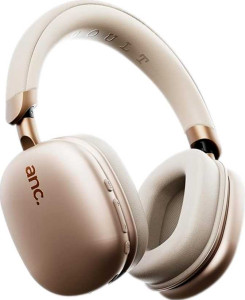
Boult Audio Fluid X Pro
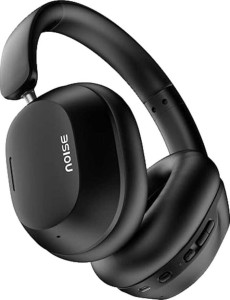
Noise Airwave Max 5

Boult Audio Fluid X Pro Noise Airwave Max 5

Overview

Welcome to this detailed head-to-head between the Boult Audio Fluid X Pro and the Noise Airwave Max 5, two over-ear wireless headphones that share a surprisingly strong foundation. Both bring active noise cancellation, Bluetooth 5.4, and ambient sound mode to the table, yet they diverge in meaningful ways. In this comparison, we examine their key battlegrounds: battery endurance, build and portability, audio technology choices, and water resistance, to help you decide which one truly fits your lifestyle.

Common Features

  • Both headphones have an over-ear fit.
  • Both headphones come with a detachable cable.
  • Both headphones can be folded.
  • Neither headphone is designed for kids.
  • Both headphones include a tangle-free cable.
  • Neither headphone has an open-back design.
  • Both headphones feature stereo speakers.
  • Active noise cancellation (ANC) is available on both headphones.
  • Both headphones have a lowest frequency of 20 Hz and a highest frequency of 20000 Hz.
  • Both headphones use a 40 mm driver unit.
  • Passive noise reduction is present on both headphones.
  • Both headphones charge via USB Type-C.
  • A battery level indicator is present on both headphones.
  • Wireless charging is not available on either headphone.
  • Neither headphone has a solar power battery.
  • Both headphones have a rechargeable battery.
  • Neither headphone has a removable battery.
  • Both headphones support wireless and wired connectivity.
  • Both headphones use Bluetooth version 5.4.
  • Neither headphone supports aptX, aptX Adaptive, LDAC, LDHC, Bluetooth LE Audio, or aptX Low Latency.
  • A noise-canceling microphone is present on both headphones.
  • Ambient sound mode is available on both headphones.
  • In/on-ear detection is not available on either headphone.
  • A mute function is not available on either headphone.
  • Both headphones have a control panel placed on the device.
  • Both headphones can be used as a headset.
  • Neither headphone has an in-line control panel.

Main Differences

  • Weight is 205 g on Boult Audio Fluid X Pro and 250 g on Noise Airwave Max 5.
  • Water resistance is not present on Boult Audio Fluid X Pro, while Noise Airwave Max 5 is water resistant.
  • Spatial audio support is present on Noise Airwave Max 5 but not available on Boult Audio Fluid X Pro.
  • A neodymium magnet is used in Boult Audio Fluid X Pro but is not present in Noise Airwave Max 5.
  • Battery life is 60 hours on Boult Audio Fluid X Pro and 80 hours on Noise Airwave Max 5.
Specs Comparison
Boult Audio Fluid X Pro

Boult Audio Fluid X Pro

Noise Airwave Max 5

Noise Airwave Max 5

Design:
Fit Over-ear Over-ear
weight 205 g 250 g
has a detachable cable
water resistance None Water resistant
can be folded
is designed for kids
has a tangle free cable
has an open-back design
has stereo speakers

Both the Boult Audio Fluid X Pro and the Noise Airwave Max 5 share the same fundamental design DNA: over-ear fit, foldable build, detachable tangle-free cable, and stereo speakers. For users who prioritize portability and cable flexibility, both headphones deliver equally well on these fronts — neither stands out here.

Where the two diverge meaningfully is in weight and water resistance. The Boult tips the scale at 205 g versus the Noise's 250 g — a difference of 45 grams that may seem minor on paper, but over extended listening sessions translates to noticeably less neck and head fatigue. On the other hand, the Noise Airwave Max 5 adds water resistance to its feature set, something the Boult entirely lacks. This means the Noise can handle light rain, sweat, or accidental splashes, making it a more durable companion for outdoor or gym use.

The edge here depends on use case: if you prioritize all-day wearing comfort and lighter carry, the Boult Audio Fluid X Pro has a clear advantage in weight. If you need resilience against moisture and plan to use your headphones in active or unpredictable environments, the Noise Airwave Max 5 wins with its water resistance. There is no single overall winner — the better design choice hinges directly on how and where you intend to use the headphones.

Sound quality:
has active noise cancellation (ANC)
lowest frequency 20 Hz 20 Hz
highest frequency 20000 Hz 20000 Hz
driver unit size 40 mm 40 mm
supports spatial audio
has a neodymium magnet
has passive noise reduction

At the hardware level, these two headphones are remarkably well-matched: both feature a 40 mm driver, an identical frequency range of 20 Hz – 20,000 Hz, and both include Active Noise Cancellation alongside passive noise reduction. The combination of ANC and passive isolation is a meaningful one — it means both headphones attack ambient noise on two fronts, which is particularly effective in commuting or office environments.

The key divergence lies in two opposing choices each manufacturer made. The Boult Audio Fluid X Pro opts for a neodymium magnet, which generally allows the driver to produce a stronger, more precise magnetic field — contributing to tighter bass response and better overall driver efficiency. The Noise Airwave Max 5 trades that for spatial audio support, a feature that creates a simulated surround-sound effect especially useful for movies, gaming, and immersive content consumption.

Neither trade-off is universally superior — it comes down to listening priorities. If you are a purist who values raw driver quality and audio accuracy, the Boult Audio Fluid X Pro holds a technical edge with its neodymium magnet. If you frequently consume cinematic or gaming content and want a more enveloping soundstage, the Noise Airwave Max 5 gains a meaningful practical advantage through spatial audio support. For straightforward music listening, the two are effectively tied.

Power:
Battery life 60 hours 80 hours
Has USB Type-C
has a battery level indicator
has wireless charging
Has a solar power battery
has a rechargeable battery
has a removable battery

In terms of charging infrastructure, these two headphones are identical — both rely on USB Type-C for charging, include a battery level indicator, and share the same absence of wireless charging. For day-to-day usability, the Type-C standard is a welcome convenience, meaning most users won't need to carry a dedicated cable.

The single but significant differentiator here is stamina. The Noise Airwave Max 5 claims an 80-hour battery life compared to the Boult's 60 hours — a 33% gap that is hard to overlook. In practical terms, 60 hours already far exceeds what most users will consume in a week of regular listening, but the Noise's 80-hour rating pushes the recharge interval even further, making it particularly appealing for frequent travelers or users who dislike keeping track of charging routines.

The Noise Airwave Max 5 holds a clear edge in this category purely on the strength of its longer battery life. Unless you are someone who charges your devices religiously and 60 hours already exceeds your needs, the Noise's additional headroom is a genuine real-world advantage with no offsetting disadvantage visible in the provided specs.

Connectivity:
connectivity Wireless & wired Wireless & wired
Bluetooth version 5.4 5.4
has aptX Adaptive
has aptX
has LDAC
has LDHC
has Bluetooth LE Audio
has aptX Low Latency
has aptX HD
has aptX Lossless
has AAC
has Auracast
maximum Bluetooth range 10 m 10 m
has fast pairing
supports Bluetooth pairing using NFC

Connectivity is the one category where there is simply nothing to separate these two headphones — every single spec is identical. Both support wireless and wired connectivity, run on Bluetooth 5.4, and cap out at a 10-meter range. Bluetooth 5.4 is a modern, capable standard that offers improved stability and power efficiency over older versions, so both headphones are well-equipped for reliable everyday wireless use.

Worth noting for audio enthusiasts is that neither headphone supports any high-resolution audio codec — no LDAC, no aptX variant, and no AAC. This means audio transmission will default to standard SBC, which is adequate for casual listening but does represent a ceiling on wireless audio quality. Neither product offers fast pairing or NFC pairing either, so the initial connection experience will be a standard Bluetooth discovery process on both.

This group is a complete tie. There is no connectivity-based reason to choose one over the other — both offer the same capabilities and the same limitations. Buyers who prioritize high-fidelity wireless codecs or quick-connect features will find both products equally lacking in that regard.

Features:
release date July 2025 January 2025
has a noise-canceling microphone
has ambient sound mode
has in/on-ear detection
has a mute function
control panel placed on a device
can be used as a headset
Has an in-line control panel

Much like connectivity, the features category yields no differentiation between these two headphones — every spec is a mirror image. Both the Boult Audio Fluid X Pro and the Noise Airwave Max 5 include a noise-canceling microphone and ambient sound mode, two features that together cover the full spectrum of environmental awareness: block the world out when you need focus, or let it back in safely without removing the headphones.

Both also place their control panel on the device itself and support headset use for calls, making them equally capable as work-from-home or on-the-go communication tools. The absence of in/on-ear detection and a mute function is a shared limitation — users who frequently jump between calls and music, or who want auto-pause when removing the headphones, will find neither product accommodates that workflow.

This category is a complete tie with no differentiating factor on either side. The feature sets are functionally identical, and any purchasing decision will need to rest on the distinctions found in other specification groups.

Comparison Summary & Verdict

After examining every spec, both headphones prove themselves capable companions for everyday wireless listening, sharing ANC, a 40 mm driver, Bluetooth 5.4, and an ambient sound mode. However, their differences are telling. The Boult Audio Fluid X Pro stands out with its lighter 205 g build and a neodymium magnet driver, making it the more comfortable choice for long sessions. The Noise Airwave Max 5 counters with an impressive 80-hour battery life, water resistance, and spatial audio support, giving it a clear edge for outdoor use and immersive listening. Neither is a universal winner, but each excels for a specific type of user.

Boult Audio Fluid X Pro
Buy Boult Audio Fluid X Pro if...

Buy the Boult Audio Fluid X Pro if you prioritize a lighter, more comfortable fit during long listening sessions and prefer a headphone equipped with a neodymium magnet driver.

Noise Airwave Max 5
Buy Noise Airwave Max 5 if...

Buy the Noise Airwave Max 5 if you need a longer 80-hour battery life, water resistance for outdoor use, and spatial audio support for a more immersive experience.