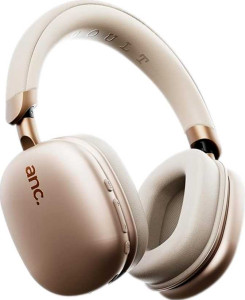
Boult Audio Fluid X
Boult Audio Fluid X Pro

Boult Audio Fluid X Boult Audio Fluid X Pro

Overview

Welcome to our in-depth specification comparison between the Boult Audio Fluid X and the Boult Audio Fluid X Pro. Both headphones share a strong common foundation — over-ear fit, 60-hour battery life, Bluetooth 5.4, and passive noise reduction — yet they diverge in some meaningful ways. In this comparison, we examine key battlegrounds including active noise cancellation, audio codec support, and additional features like ambient sound mode to help you decide which model best suits your listening needs.

Common Features

  • Both products have an over-ear fit.
  • Both products weigh 205 g.
  • Both products have a detachable cable.
  • Both products can be folded.
  • Both products are not designed for kids.
  • Both products have a tangle-free cable.
  • Neither product has an open-back design.
  • Both products have stereo speakers.
  • Both products have a lowest frequency of 20 Hz and a highest frequency of 20000 Hz.
  • Both products use a 40 mm driver unit size.
  • Spatial audio support is not available on either product.
  • Both products have passive noise reduction.
  • Both products offer 60 hours of battery life.
  • Both products support USB Type-C charging.
  • Both products have a battery level indicator.
  • Wireless charging is not available on either product.
  • Neither product has a solar power battery.
  • Both products have a rechargeable battery.
  • Both products support wireless and wired connectivity.
  • Both products use Bluetooth version 5.4.
  • aptX Adaptive support is not available on either product.
  • aptX support is not available on either product.
  • LDAC support is not available on either product.
  • LDHC support is not available on either product.
  • Bluetooth LE Audio support is not available on either product.
  • aptX Low Latency support is not available on either product.
  • Both products have a noise-canceling microphone.
  • In/on-ear detection is not available on either product.
  • A mute function is not available on either product.
  • Both products have a control panel placed on the device.
  • Both products can be used as a headset.
  • Neither product has an in-line control panel.
  • Both products come with a 1-year warranty.

Main Differences

  • Water resistance is present on Boult Audio Fluid X but not available on Boult Audio Fluid X Pro.
  • Active noise cancellation (ANC) is present on Boult Audio Fluid X Pro but not available on Boult Audio Fluid X.
  • A neodymium magnet is present on Boult Audio Fluid X Pro but not on Boult Audio Fluid X.
  • AAC support is available on Boult Audio Fluid X but not on Boult Audio Fluid X Pro.
  • Ambient sound mode is present on Boult Audio Fluid X Pro but not available on Boult Audio Fluid X.
Specs Comparison
Boult Audio Fluid X

Boult Audio Fluid X

Boult Audio Fluid X Pro

Boult Audio Fluid X Pro

Design:
Fit Over-ear Over-ear
weight 205 g 205 g
has a detachable cable
water resistance Water resistant None
can be folded
is designed for kids
has a tangle free cable
has an open-back design
has stereo speakers

In terms of physical design, the Boult Audio Fluid X and Fluid X Pro are nearly identical twins: both are over-ear, foldable headphones weighing exactly 205 g, equipped with a detachable, tangle-free cable, stereo speakers, and a closed-back architecture. For most buyers, day-to-day handling, portability, and build ergonomics will feel indistinguishable between the two.

The one meaningful divergence is water resistance: the standard Fluid X carries a water-resistant rating, while the Fluid X Pro offers none. This is a practical consideration rather than a cosmetic one — the Fluid X can better withstand light rain, sweat during workouts, or accidental splashes, making it the more versatile choice for active or outdoor use.

On design alone, the Fluid X holds a clear edge due to its water resistance advantage. The Fluid X Pro matches it in every other structural regard, so if your usage is strictly indoor or desk-bound, the difference is negligible — but for anyone expecting to use their headphones in varied environments, the Fluid X is the more durable and future-proof option from this spec group.

Sound quality:
has active noise cancellation (ANC)
lowest frequency 20 Hz 20 Hz
highest frequency 20000 Hz 20000 Hz
driver unit size 40 mm 40 mm
supports spatial audio
has a neodymium magnet
has passive noise reduction

Both headphones share an identical acoustic foundation: a 40 mm driver and a frequency range of 20 Hz – 20,000 Hz, covering the full extent of human hearing. At this level, raw frequency response alone tells you little about sound character — what matters more is the technology layered on top, and this is where the two models diverge significantly.

The Fluid X Pro pulls ahead on two fronts: it adds Active Noise Cancellation (ANC) and uses a neodymium magnet in its driver. ANC is a meaningful real-world upgrade — it actively suppresses ambient noise like commute rumble or office chatter, something the standard Fluid X cannot do. The neodymium magnet, meanwhile, is associated with stronger magnetic flux, which typically translates to tighter, more efficient driver movement and potentially cleaner transient response. Both models include passive noise reduction, but the Pro layers active cancellation on top of it for a more thorough isolation experience.

The Fluid X Pro holds a clear advantage in sound quality specs. The addition of ANC alone is a substantial functional leap for listeners in noisy environments, and the neodymium magnet suggests a more refined driver assembly. The standard Fluid X is not without merit, but in this category it is outclassed by its Pro sibling on every differentiating point.

Power:
Battery life 60 hours 60 hours
Has USB Type-C
has a battery level indicator
has wireless charging
Has a solar power battery
has a rechargeable battery
has a removable battery

Power is the one category where these two headphones are in complete lockstep. Both deliver a substantial 60-hour battery life — an exceptionally generous figure that puts them well ahead of most competitors in their class, meaning most users will go several days of heavy listening before needing to reach for a cable.

The supporting features are identical too: both charge via USB Type-C, include a battery level indicator to avoid unexpected shutdowns, and share a non-removable, non-wireless-charging design. The USB-C standard is a practical convenience worth noting — it means no proprietary cables and compatibility with most modern chargers.

This category is an absolute tie. There is no differentiator here, not even a minor one. Whichever model you choose, your power experience will be exactly the same, so battery life and charging should play no role in the decision between the Fluid X and the Fluid X Pro.

Connectivity:
connectivity Wireless & wired Wireless & wired
Bluetooth version 5.4 5.4
has aptX Adaptive
has aptX
has LDAC
has LDHC
has Bluetooth LE Audio
has aptX Low Latency
has aptX HD
has aptX Lossless
has AAC
has Auracast
maximum Bluetooth range 10 m 10 m
has fast pairing
supports Bluetooth pairing using NFC

Connectivity is largely uniform across both models. Each runs on Bluetooth 5.4 — a current-generation standard that offers reliable pairing stability and efficient power consumption — and both support wireless and wired connections, capping out at a 10 m Bluetooth range. Neither model supports advanced codecs like LDAC, aptX, or Bluetooth LE Audio, which means audiophiles chasing high-resolution wireless streaming will find both headphones equally limited in that regard.

The one distinction worth flagging is codec support: the Fluid X includes AAC, while the Fluid X Pro does not. AAC is the preferred codec for Apple devices and delivers noticeably better audio quality over Bluetooth compared to the default SBC fallback. For iPhone users in particular, this is a tangible real-world difference — the Fluid X will stream at higher wireless fidelity on Apple ecosystems, while the Fluid X Pro is restricted to SBC regardless of the source device.

Given that single but meaningful codec gap, the Fluid X holds a narrow edge in connectivity. It is an unexpected advantage for the base model — particularly for Apple users — and worth factoring in if wireless audio quality is a priority for you.

Features:
release date July 2025 July 2025
has a noise-canceling microphone
has ambient sound mode
has in/on-ear detection
has a mute function
control panel placed on a device
can be used as a headset
Has an in-line control panel
warranty period 1 years 1 years

Feature parity between these two is strong across the board: both include a noise-canceling microphone, on-device controls, headset capability, and a 1-year warranty. The noise-canceling mic is worth highlighting — it actively filters background noise during calls, making both models viable for remote work or commute calling scenarios, not just music listening.

The single differentiator here is ambient sound mode, available exclusively on the Fluid X Pro. This feature uses the external microphones to pipe in surrounding audio, allowing the wearer to stay aware of their environment — announcements, traffic, or conversations — without removing the headphones. It is a particularly useful complement to the Pro's ANC capability, letting users toggle between full isolation and full awareness as the situation demands.

The Fluid X Pro takes the edge in this category. Ambient sound mode is a genuinely practical addition rather than a superficial one, and its pairing with ANC creates a more complete and flexible listening experience. The standard Fluid X covers the essentials well, but it lacks that environmental awareness toggle that many users come to rely on.

Comparison Summary & Verdict

After reviewing all the specifications, it is clear that both the Boult Audio Fluid X and the Boult Audio Fluid X Pro are well-matched in core areas such as 60-hour battery life, Bluetooth 5.4 connectivity, and overall build design. However, the differences between them are meaningful. The Boult Audio Fluid X Pro steps ahead with Active Noise Cancellation, an ambient sound mode, and a neodymium magnet for potentially enhanced audio performance. The Boult Audio Fluid X, on the other hand, holds its own with water resistance and AAC codec support, making it a practical choice for everyday outdoor use. Your decision ultimately comes down to whether you need immersive, noise-free listening or a durable, versatile headphone for active use.

Boult Audio Fluid X
Buy Boult Audio Fluid X if...

Buy the Boult Audio Fluid X if you want water resistance for outdoor use and prefer AAC codec support for a compatible audio experience.

Boult Audio Fluid X Pro
Buy Boult Audio Fluid X Pro if...

Buy the Boult Audio Fluid X Pro if Active Noise Cancellation and ambient sound mode are priorities for your listening environment.