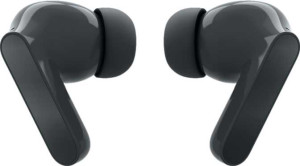
Boult Audio Mustang Dyno
Motorola Moto Buds Bass

Boult Audio Mustang Dyno Motorola Moto Buds Bass

Overview

Welcome to our detailed spec comparison between the Boult Audio Mustang Dyno and the Motorola Moto Buds Bass. Both are truly wireless in-ear earbuds that share a strong foundation — fast charging, passive noise reduction, and a full 20 Hz to 20000 Hz frequency range — but they diverge sharply when it comes to active noise cancellation, audio codec support, and total battery endurance. Read on to see which one fits your lifestyle best.

Common Features

  • Both products use an in-ear fit design.
  • Both products are truly wireless with no wires or cables.
  • Neither product is a neckband-style earbud.
  • Neither product includes wingtips.
  • Neither product features RGB lighting.
  • Both products have stereo speakers.
  • Neither product has a UV light.
  • Neither product has a display.
  • Both products offer passive noise reduction.
  • Both products have a lowest frequency of 20 Hz and a highest frequency of 20000 Hz.
  • Spatial audio is not supported on either product.
  • Neither product has a neodymium magnet.
  • Both products take 1.5 hours to fully charge.
  • Wireless charging is not available on either product.
  • Both products have a battery level indicator.
  • Both products have a rechargeable battery.
  • Fast pairing is not available on either product.
  • Both products use USB Type-C for charging.
  • Neither product supports LDAC, LDHC, aptX, aptX HD, aptX Low Latency, aptX Adaptive, or Bluetooth LE Audio.
  • In-ear or on-ear detection is not available on either product.
  • Neither product has a find device feature.
  • Both products support fast charging.
  • Neither product can read notifications.
  • Both products have a mute function.
  • Both products can be used as a headset.
  • Both products have a control panel placed on the device.
  • Both products have voice prompts.
  • Both products have a noise-canceling microphone.

Main Differences

  • The Ingress Protection rating is IPX5 on Boult Audio Mustang Dyno and IPX4 on Motorola Moto Buds Bass.
  • The Boult Audio Mustang Dyno is rated as water resistant, while the Motorola Moto Buds Bass is rated as sweat resistant.
  • Active noise cancellation (ANC) is present on Motorola Moto Buds Bass but not available on Boult Audio Mustang Dyno.
  • The driver unit size is 13 mm on Boult Audio Mustang Dyno and 12.4 mm on Motorola Moto Buds Bass.
  • Dolby Atmos support is present on Motorola Moto Buds Bass but not available on Boult Audio Mustang Dyno.
  • Battery life is 8 hours on Boult Audio Mustang Dyno and 9 hours on Motorola Moto Buds Bass.
  • The battery life of the charging case is 52 hours on Boult Audio Mustang Dyno and 34 hours on Motorola Moto Buds Bass.
  • The Bluetooth version is 5.4 on Boult Audio Mustang Dyno and 5.3 on Motorola Moto Buds Bass.
  • LDAC support is present on Motorola Moto Buds Bass but not available on Boult Audio Mustang Dyno.
  • Ambient sound mode is present on Motorola Moto Buds Bass but not available on Boult Audio Mustang Dyno.
  • The number of microphones is 4 on Boult Audio Mustang Dyno and 6 on Motorola Moto Buds Bass.
Specs Comparison
Boult Audio Mustang Dyno

Boult Audio Mustang Dyno

Motorola Moto Buds Bass

Motorola Moto Buds Bass

Design:
Fit In-ear In-ear
Ingress Protection (IP) rating IPX5 IPX4
water resistance Water resistant Sweat resistant
has no wires or cables
are neckband earbuds
wingtips included
has RGB lighting
has stereo speakers
has UV light
Has a display

Both the Boult Audio Mustang Dyno and the Motorola Moto Buds Bass share the same fundamental design philosophy: fully wireless, in-ear fit with stereo audio and no neckband. Neither includes wingtips, RGB lighting, a display, or UV light, making them straightforward, no-frills earbuds focused on core functionality.

The most meaningful differentiator in this group is water resistance. The Mustang Dyno carries an IPX5 rating, meaning it can withstand sustained, low-pressure water jets — making it genuinely suitable for workouts in rain or heavy sweat. The Moto Buds Bass, rated IPX4, is only certified against splashes from any direction, which translates to sweat resistance rather than true water resistance. In practical terms, IPX5 offers a notably higher margin of safety for active users.

Overall, the Boult Audio Mustang Dyno holds a clear edge in design durability due to its superior ingress protection rating. For users who intend to use their earbuds during intense exercise or in wet conditions, this difference is meaningful. In all other design aspects, both products are essentially identical.

Sound quality:
has active noise cancellation (ANC)
has passive noise reduction
driver unit size 13 mm 12.4 mm
lowest frequency 20 Hz 20 Hz
highest frequency 20000 Hz 20000 Hz
supports spatial audio
has Dolby Atmos
has Dirac Virtuo
has a neodymium magnet

On paper, both earbuds cover the same 20 Hz – 20,000 Hz frequency range, which spans the full extent of human hearing. Driver size is nearly identical too — 13 mm on the Mustang Dyno versus 12.4 mm on the Moto Buds Bass — a difference too marginal to draw meaningful conclusions from alone. Where these two products genuinely diverge is in how they handle noise isolation and audio processing.

The Moto Buds Bass brings Active Noise Cancellation (ANC) to the table, a feature the Mustang Dyno entirely lacks. ANC uses microphones to actively counter ambient noise in real time, making a noticeable difference in commuting, office, or travel environments — passive noise reduction alone, which both earbuds share, simply cannot replicate that. On top of that, the Moto Buds Bass adds Dolby Atmos support, which provides a more immersive, spatially enriched soundstage on compatible content compared to standard stereo playback.

The Motorola Moto Buds Bass holds a clear advantage in this category. ANC alone is a significant real-world differentiator, and Dolby Atmos further widens the gap for users who consume supported media. The Mustang Dyno offers no comparable audio processing features to offset this difference.

Power:
Battery life 8 hours 9 hours
Battery life of charging case 52 hours 34 hours
charge time 1.5 hours 1.5 hours
has wireless charging
Has a solar power battery
has a battery level indicator
has a rechargeable battery

Charge time and convenience features are a wash here — both earbuds take 1.5 hours to fully charge, neither supports wireless charging, and both include a battery level indicator. The real story is how they split the difference between per-session endurance and total system longevity.

The Moto Buds Bass edges ahead with 9 hours of earbud battery life versus 8 hours on the Mustang Dyno — a modest but real advantage for back-to-back listening sessions without reaching for the case. Flip the equation, though, and the Mustang Dyno's case delivers a substantial 52 total hours compared to just 34 hours on the Moto Buds Bass. That 18-hour gap is significant for travelers or users who go days without access to a wall outlet, since the case functions as the primary reserve power bank for the earbuds.

This group does not have a single clean winner — it comes down to use case. Users who prioritize fewer interruptions during a single day lean toward the Moto Buds Bass, while those who need maximum endurance across multiple days without recharging will find the Mustang Dyno's case capacity the more practical choice.

Connectivity:
has fast pairing
Has USB Type-C
Bluetooth version 5.4 5.3
has LDAC
has LDHC
has Bluetooth LE Audio
has aptX Adaptive
has aptX Low Latency
has aptX HD
has aptX
has aptX Lossless
has aptX Voice
has Auracast
maximum Bluetooth range 10 m 10 m
supports Bluetooth pairing using NFC
Can be used wirelessly
has AAC

Much of this category is common ground — identical 10 m Bluetooth range, USB-C charging, AAC codec support, and no NFC or fast pairing on either side. The two differentiators worth focusing on are Bluetooth version and high-resolution audio codec support.

The Mustang Dyno runs on the newer Bluetooth 5.4, while the Moto Buds Bass uses Bluetooth 5.3. In practice, the gap between these two versions is marginal for everyday use — both offer stable, low-latency connections at the same rated range. The more impactful distinction is codec support: the Moto Buds Bass includes LDAC, Sony's high-bandwidth codec capable of transmitting significantly more audio data than AAC. For listeners using LDAC-compatible source devices, this translates to noticeably higher audio fidelity over a wireless connection — assuming the source material and device support it.

The Motorola Moto Buds Bass has the connectivity edge for audio quality-conscious users, as LDAC is a meaningful codec advantage that the Mustang Dyno cannot match. The Dyno's slightly newer Bluetooth version does not offer a comparable real-world benefit to offset this gap.

Features:
release date February 2025 August 2025
has ambient sound mode
has in/on-ear detection
has find device feature
Supports fast charging
can read notifications
has a mute function
can be used as a headset
control panel placed on a device
Has voice prompts
travel bag is included
Has an in-line control panel
Has a temperature sensor
Has a built-in camera remote control function

These two earbuds share a surprisingly similar feature set: fast charging, mute function, on-device controls, voice prompts, headset capability, and an included travel bag are all present on both. For most users, this common ground covers the everyday essentials comfortably.

The single differentiator in this group is ambient sound mode, which the Moto Buds Bass supports and the Mustang Dyno does not. Ambient mode uses the earbuds' microphones to pipe in surrounding environmental audio, allowing the wearer to stay aware of conversations, announcements, or traffic without removing the earbuds. It is a particularly useful feature for commuters, office environments, or anyone who needs situational awareness while listening — and it pairs logically with the ANC capability noted in the sound quality category.

The Motorola Moto Buds Bass takes the edge here by virtue of ambient sound mode alone. While it is the only distinction in this group, it is a genuinely practical feature that meaningfully expands day-to-day usability in ways the Mustang Dyno cannot replicate.

Microphone:
number of microphones 4 6
has a noise-canceling microphone

Microphone hardware is sparse but telling in this group. Both earbuds feature noise-canceling microphones, meaning call quality benefits from active voice isolation on either choice — a baseline that matters for hands-free calls in noisy environments.

Where they diverge is microphone count: the Mustang Dyno deploys 4 microphones, while the Moto Buds Bass uses 6 microphones. More microphones generally enable more sophisticated beamforming and noise-rejection algorithms — the array has more spatial reference points to isolate the speaker's voice and suppress wind, crowd, or ambient noise. This is also directly relevant to the ANC performance noted in the sound quality category, since ANC quality is partially dependent on how many microphones are available for environmental sampling.

The Motorola Moto Buds Bass holds the advantage here. A 6-microphone array over a 4-microphone setup is a meaningful hardware distinction, pointing toward stronger call clarity and more effective noise handling in demanding conditions.

Comparison Summary & Verdict

After weighing all the evidence, both earbuds serve different listener profiles. The Motorola Moto Buds Bass is the feature-richer choice, offering active noise cancellation, Dolby Atmos, LDAC high-quality audio streaming, an ambient sound mode, and 6 microphones — making it ideal for commuters, remote workers, and audiophiles who demand immersive, studio-grade sound on the go. The Boult Audio Mustang Dyno, on the other hand, counters with a stronger IPX5 water resistance rating, a larger 13 mm driver, a newer Bluetooth 5.4 chip, and a commanding 52-hour total case battery life that nearly doubles its rival's 34 hours — a compelling advantage for travelers and outdoor users who prioritize longevity over feature depth.

Boult Audio Mustang Dyno
Buy Boult Audio Mustang Dyno if...

Buy the Boult Audio Mustang Dyno if you need stronger IPX5 water resistance, a longer total battery life of up to 52 hours with the case, and the latest Bluetooth 5.4 connectivity.

Motorola Moto Buds Bass
Buy Motorola Moto Buds Bass if...

Buy the Motorola Moto Buds Bass if you want active noise cancellation, Dolby Atmos, LDAC support, ambient sound mode, and a superior 6-microphone setup for clearer calls.