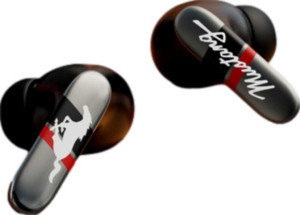
Boult Audio Mustang Dyno
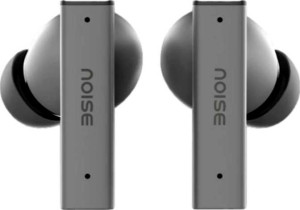
Noise Buds Marine

Boult Audio Mustang Dyno Noise Buds Marine

Overview

Welcome to our in-depth specification comparison between the Boult Audio Mustang Dyno and the Noise Buds Marine. Both are true wireless in-ear earbuds sharing a number of solid fundamentals, yet they take meaningfully different approaches in key areas. In this head-to-head, we examine how they stack up across water resistance ratings, noise cancellation capabilities, battery endurance, and connectivity features to help you decide which one truly fits your lifestyle.

Common Features

  • Both products have an in-ear fit.
  • Neither product has wires or cables.
  • Neither product is a neckband earbud style.
  • Neither product includes wingtips.
  • Neither product has RGB lighting.
  • Both products have stereo speakers.
  • Neither product has a UV light.
  • Neither product has a display.
  • Both products offer passive noise reduction.
  • Both products have a driver unit size of 13 mm.
  • Both products have a lowest frequency of 20 Hz and a highest frequency of 20000 Hz.
  • Spatial audio is not supported on either product.
  • Dolby Atmos is not available on either product.
  • Neither product has a neodymium magnet.
  • Both products have a battery life of 8 hours.
  • Both products have a charge time of 1.5 hours.
  • Wireless charging is not available on either product.
  • Both products have a battery level indicator.
  • Both products have a rechargeable battery.
  • Fast pairing is not available on either product.
  • Both products have USB Type-C connectivity.
  • LDAC is not supported on either product.
  • Bluetooth LE Audio is not supported on either product.
  • aptX Adaptive is not supported on either product.
  • aptX Low Latency is not supported on either product.
  • aptX HD is not supported on either product.
  • In-ear or on-ear detection is not available on either product.
  • Neither product has a find device feature.
  • Both products support fast charging.
  • Both products support multipoint connection with 2 devices.
  • Neither product can read notifications.
  • Both products have a mute function.
  • Both products can be used as a headset.
  • Both products have a control panel placed on the device.
  • Both products have 4 microphones.
  • Both products have a noise-canceling microphone.

Main Differences

  • The ingress protection rating is IPX5 on Boult Audio Mustang Dyno and IPX4 on Noise Buds Marine.
  • Water resistance is rated for water on Boult Audio Mustang Dyno, while Noise Buds Marine is rated for sweat resistance only.
  • Active noise cancellation (ANC) is present on Noise Buds Marine but not available on Boult Audio Mustang Dyno.
  • The battery life of the charging case is 52 hours on Boult Audio Mustang Dyno and 27 hours on Noise Buds Marine.
  • The Bluetooth version is 5.4 on Boult Audio Mustang Dyno and 5.3 on Noise Buds Marine.
  • AAC codec support is available on Boult Audio Mustang Dyno but not on Noise Buds Marine.
  • Ambient sound mode is present on Noise Buds Marine but not available on Boult Audio Mustang Dyno.
Specs Comparison
Boult Audio Mustang Dyno

Boult Audio Mustang Dyno

Noise Buds Marine

Noise Buds Marine

Design:
Fit In-ear In-ear
Ingress Protection (IP) rating IPX5 IPX4
water resistance Water resistant Sweat resistant
has no wires or cables
are neckband earbuds
wingtips included
has RGB lighting
has stereo speakers
has UV light
Has a display

Both the Boult Audio Mustang Dyno and the Noise Buds Marine share the same fundamental design DNA: true wireless, in-ear form factors with no cables, no neckband, and no wingtips. This means users of either product get the same cord-free convenience and a similar wearing style, making the physical experience largely comparable out of the box.

Where the two diverge meaningfully is in water and sweat protection. The Dyno carries an IPX5 rating, meaning it can withstand sustained, low-pressure water jets from any direction — making it a reasonable companion for outdoor runs in rain or even a quick rinse. The Noise Buds Marine, at IPX4, is only rated for splashing water from any direction, which is adequate for workouts and sweat but falls short of handling any directed water flow. Despite its ″Marine″ branding implying ruggedness, the Dyno is actually the more water-resistant of the two.

For users who prioritize durability in wet conditions, the Boult Audio Mustang Dyno holds a clear edge in this category. If your use case is strictly gym workouts or casual daily use, the IPX4 on the Noise Buds Marine is sufficient — but for anything more demanding, the Dyno's superior IP rating is a tangible real-world advantage.

Sound quality:
has active noise cancellation (ANC)
has passive noise reduction
driver unit size 13 mm 13 mm
lowest frequency 20 Hz 20 Hz
highest frequency 20000 Hz 20000 Hz
supports spatial audio
has Dolby Atmos
has Dirac Virtuo
has a neodymium magnet

On the raw acoustic hardware front, these two earbuds are identical: both use a 13 mm driver and cover the same 20 Hz – 20,000 Hz frequency range, which spans the full extent of human hearing. Neither supports spatial audio, Dolby Atmos, or Dirac Virtuo, and neither uses a neodymium magnet. In terms of sound reproduction potential from the driver alone, there is no advantage to either side.

The decisive differentiator in this group is noise isolation. Both earbuds offer passive noise reduction through their in-ear fit, which physically blocks ambient sound. However, the Noise Buds Marine adds Active Noise Cancellation (ANC) on top of that — a hardware-and-software system that uses microphones to detect and cancel out external noise in real time. This is a meaningful upgrade in practice: passive isolation handles mid-to-high frequency noise like chatter, while ANC specifically targets persistent low-frequency hum such as traffic, air conditioning, or engine rumble that passive seals alone cannot block.

The Noise Buds Marine holds a clear edge in this category. For users who commute, work in noisy environments, or simply want more immersive listening, ANC adds tangible value that the Dyno's passive-only approach cannot match. The identical driver specs mean the underlying sound signature is comparable, but the Marine's noise isolation toolkit is objectively more capable.

Power:
Battery life 8 hours 8 hours
Battery life of charging case 52 hours 27 hours
charge time 1.5 hours 1.5 hours
has wireless charging
Has a solar power battery
has a battery level indicator
has a rechargeable battery

Per-earbud endurance is a dead heat: both the Boult Audio Mustang Dyno and the Noise Buds Marine deliver 8 hours of playback on a single charge and refill in the same 1.5 hours. For most daily use cases — commutes, workouts, work-from-home sessions — that runtime is more than adequate without ever touching the case.

The gap opens up sharply when the charging case enters the picture. The Dyno's case extends total battery life to a remarkable 52 hours, while the Marine's case tops out at 27 hours. In practical terms, the Dyno can go nearly an entire week of heavy daily use without needing a cable, whereas the Marine requires more frequent top-ups. This distinction matters most for travelers, remote workers, or anyone who regularly finds themselves away from a power source for extended stretches.

Neither product offers wireless charging, but both include a battery level indicator — a small but useful convenience. Overall, the Boult Audio Mustang Dyno holds a decisive advantage in this category purely on the strength of its case capacity. The earbuds themselves are equal, but the Dyno's case nearly doubles the Marine's total reserve, making it the stronger choice for users who prioritize long-haul autonomy.

Connectivity:
has fast pairing
Has USB Type-C
Bluetooth version 5.4 5.3
has LDAC
has LDHC
has Bluetooth LE Audio
has aptX Adaptive
has aptX Low Latency
has aptX HD
has aptX
has aptX Lossless
has aptX Voice
has Auracast
maximum Bluetooth range 10 m 10 m
supports Bluetooth pairing using NFC
Can be used wirelessly
has AAC

The connectivity foundations are nearly identical: both earbuds are wireless-only, charge via USB Type-C, and cap out at a 10 m Bluetooth range — a standard figure for budget true wireless earbuds that works fine in typical everyday scenarios. Neither supports advanced pairing features like NFC or fast pairing, so the initial setup experience will be equally manual on both.

Two subtle but meaningful differences emerge on closer inspection. The Dyno runs on Bluetooth 5.4 versus the Marine's 5.3 — a newer revision that brings incremental improvements in connection efficiency and power consumption, though in real-world use the difference is unlikely to be dramatic. More practically significant is codec support: the Dyno supports AAC, while the Marine does not. AAC is the preferred codec for Apple devices and delivers noticeably better audio quality over Bluetooth compared to the universal SBC fallback — meaning Dyno users on iPhones or iPads will get a higher-fidelity wireless signal, while Marine users will default to SBC regardless of device.

Neither product reaches for premium codecs like LDAC or aptX, so audiophile-grade wireless audio is off the table for both. Still, the Boult Audio Mustang Dyno edges ahead in this category — its newer Bluetooth version and AAC support together give it a modest but real connectivity advantage, particularly for users in the Apple ecosystem.

Features:
release date February 2025 July 2025
has ambient sound mode
has in/on-ear detection
has find device feature
Supports fast charging
multipoint count 2 2
can read notifications
has a mute function
can be used as a headset
control panel placed on a device
Has voice prompts
travel bag is included
Has an in-line control panel
Has a temperature sensor
Has a built-in camera remote control function

Across most practical features, these two earbuds are remarkably well-matched. Fast charging, 2-device multipoint connectivity, a mute function, on-device controls, voice prompts, headset capability, and even an included travel bag — all present on both. For the majority of daily use scenarios, the feature experience will feel functionally identical.

The single differentiator in this group is ambient sound mode, which the Noise Buds Marine offers and the Dyno does not. This feature uses the earbuds' external microphones to pipe in surrounding environmental audio, letting the user stay aware of conversations, announcements, or traffic without removing the earbuds. It is a genuinely useful safety and convenience feature — especially during outdoor activities or commutes — and its absence on the Dyno is a tangible gap for users who value situational awareness.

Given how closely matched everything else is, the Noise Buds Marine holds the edge in this category on the strength of ambient sound mode alone. It is a feature that, once used regularly, becomes difficult to go without — making it a meaningful real-world differentiator despite the otherwise near-identical feature sets.

Microphone:
number of microphones 4 4
has a noise-canceling microphone

The microphone specifications for these two earbuds are completely identical: both feature 4 microphones with noise-canceling microphone support. A quad-mic array at this price tier is a solid offering — more microphones allow for better beamforming, meaning the earbuds can more accurately isolate the user's voice while suppressing background noise during calls.

The noise-canceling microphone designation indicates that both products apply active processing to call audio, which is particularly useful in loud environments like busy streets or public transport. Users on either device can expect a comparable hands-free calling experience on paper.

This group is a complete tie. With no differentiating specs whatsoever, neither the Boult Audio Mustang Dyno nor the Noise Buds Marine has any advantage here — the decision between the two should rest entirely on the other specification groups.

Comparison Summary & Verdict

After a thorough look at every specification, both earbuds deliver a strong foundation: identical 13 mm drivers, 8-hour playback, 4-microphone setups, fast charging, and dual-device multipoint connectivity. However, the differences are meaningful. The Boult Audio Mustang Dyno pulls ahead with a superior IPX5 water resistance rating, a significantly larger 52-hour charging case, Bluetooth 5.4, and AAC codec support, making it the better pick for users who travel frequently or need long-haul battery backup. The Noise Buds Marine, on the other hand, counters with Active Noise Cancellation and an ambient sound mode, catering to commuters and users who need to stay aware of their surroundings. Choose the Dyno for durability and stamina; choose the Marine for immersive, environment-aware listening.

Boult Audio Mustang Dyno
Buy Boult Audio Mustang Dyno if...

Buy the Boult Audio Mustang Dyno if you want a stronger IPX5 water resistance rating, a massive 52-hour case battery, and AAC codec support for better wireless audio quality.

Noise Buds Marine
Buy Noise Buds Marine if...

Buy the Noise Buds Marine if Active Noise Cancellation and an ambient sound mode are priorities, giving you greater control over how much of the outside world you hear.