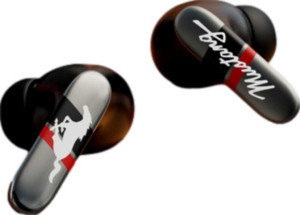
Boult Audio Mustang Dyno
Philips TAT1269

Boult Audio Mustang Dyno Philips TAT1269

Overview

Welcome to our detailed spec comparison between the Boult Audio Mustang Dyno and the Philips TAT1269. Both of these fully wireless, in-ear earbuds share a remarkable number of similarities, making this a fascinating head-to-head. The key battlegrounds come down to battery endurance and charging efficiency, where each product makes its own trade-offs. Read on to see exactly how they stack up across every specification.

Common Features

  • Both use an in-ear fit design.
  • Both have an IPX5 ingress protection rating, making them water resistant.
  • Neither product has wires or cables, as both are fully wireless.
  • Neither product is a neckband-style earbud.
  • Wingtips are not included with either product.
  • RGB lighting is not present on either product.
  • Both products feature stereo speakers.
  • Active noise cancellation (ANC) is not available on either product.
  • Both products offer passive noise reduction.
  • Both use a 13 mm driver unit.
  • Both share the same frequency range, from 20 Hz to 20000 Hz.
  • Spatial audio is not supported on either product.
  • Dolby Atmos is not available on either product.
  • Dirac Virtuo is not available on either product.
  • Wireless charging is not supported on either product.
  • Neither product has a solar power battery.
  • Both products include a battery level indicator.
  • Both products have a rechargeable battery.
  • Fast pairing is not available on either product.
  • Both products feature a USB Type-C connector.
  • Both products use Bluetooth version 5.4.
  • LDAC support is not available on either product.
  • LDHC support is not available on either product.
  • Bluetooth LE Audio is not supported on either product.
  • aptX Adaptive is not supported on either product.
  • aptX Low Latency is not supported on either product.
  • Ambient sound mode is not available on either product.
  • In/on-ear detection is not present on either product.
  • A find device feature is not available on either product.
  • Fast charging is supported on both products.
  • Neither product can read notifications aloud.
  • Both products include a mute function.
  • Both products can be used as a headset.
  • Both products have a control panel placed on the device.
  • Both products have 4 microphones.
  • Both products feature a noise-canceling microphone.

Main Differences

  • Battery life is 8 hours on Boult Audio Mustang Dyno and 10 hours on Philips TAT1269.
  • Battery life of the charging case is 52 hours on Boult Audio Mustang Dyno and 30 hours on Philips TAT1269.
  • Charge time is 1.5 hours on Boult Audio Mustang Dyno and 2 hours on Philips TAT1269.
Specs Comparison
Boult Audio Mustang Dyno

Boult Audio Mustang Dyno

Philips TAT1269

Philips TAT1269

Design:
Fit In-ear In-ear
Ingress Protection (IP) rating IPX5 IPX5
water resistance Water resistant Water resistant
has no wires or cables
are neckband earbuds
wingtips included
has RGB lighting
has stereo speakers
has UV light
Has a display

In terms of design, the Boult Audio Mustang Dyno and the Philips TAT1269 are virtually identical across every measured attribute. Both are true wireless, in-ear earbuds with no neckband, no wingtips, no RGB lighting, no display, and no UV light — keeping both designs clean, minimal, and focused purely on audio utility.

Water resistance is an important real-world consideration for earbuds, and here both products share an IPX5 rating, meaning they can withstand sustained, low-pressure water jets — suitable for workouts, rain, and sweat, but not submersion. Neither product holds an advantage here.

Given that every design spec is identical between the two, this category is a complete tie. A buyer prioritizing design factors alone will find no meaningful difference and should look to other specification groups — such as audio performance, battery life, or features — to differentiate between these two products.

Sound quality:
has active noise cancellation (ANC)
has passive noise reduction
driver unit size 13 mm 13 mm
lowest frequency 20 Hz 20 Hz
highest frequency 20000 Hz 20000 Hz
supports spatial audio
has Dolby Atmos
has Dirac Virtuo
has a neodymium magnet

Both the Boult Audio Mustang Dyno and the Philips TAT1269 rely on passive noise reduction rather than active noise cancellation — meaning isolation comes purely from the physical in-ear fit blocking ambient sound, with no electronic processing involved. For casual everyday use this is often sufficient, but users in loud commuting or office environments will notice the limitation compared to ANC-equipped earbuds.

At the core of each earbud sits a 13 mm driver with a frequency range of 20 Hz to 20,000 Hz — covering the full extent of human hearing. A larger driver generally moves more air, which can translate to stronger bass presence and overall sound dynamics. The matched driver size here means neither product holds a hardware advantage in this regard. Neither supports spatial audio, Dolby Atmos, Dirac Virtuo, or neodymium magnets, keeping both firmly in the entry-level sound profile tier.

The sound quality specs are a complete tie across every data point. Buyers seeking richer soundstage processing, immersive audio formats, or active noise cancellation will find both products equally lacking those features — and should consider stepping up to a higher-tier option. As a head-to-head decision, sound quality specs alone offer no basis for choosing one over the other.

Power:
Battery life 8 hours 10 hours
Battery life of charging case 52 hours 30 hours
charge time 1.5 hours 2 hours
has wireless charging
Has a solar power battery
has a battery level indicator
has a rechargeable battery

Power is where these two products finally diverge in a meaningful way. The Philips TAT1269 edges ahead on per-session earbud battery life at 10 hours versus 8 hours for the Boult Audio Mustang Dyno — a 25% difference that matters for long-haul travelers, remote workers, or anyone who regularly goes a full day without reaching for the case.

The case-based endurance story flips entirely, however. The Mustang Dyno's charging case delivers a remarkable 52 total hours of combined playback, compared to just 30 hours for the TAT1269. That gap is substantial — the Dyno's case can recharge the earbuds roughly five to six times before needing a wall outlet, while the TAT1269 manages about three. For multi-day trips or users who rarely remember to charge the case, this is a significant practical advantage. Adding to this, the Dyno also charges faster at 1.5 hours versus the TAT1269's 2 hours, reducing downtime when the case does run low.

The verdict here depends on usage pattern. Frequent listeners who rarely deplete a full charge in one sitting will appreciate the TAT1269's longer single-session runtime, but users who prize overall endurance between wall charges will find the Mustang Dyno's 52-hour case capacity and faster charging a more compelling package. On balance, the Dyno holds the broader power advantage.

Connectivity:
has fast pairing
Has USB Type-C
Bluetooth version 5.4 5.4
has LDAC
has LDHC
has Bluetooth LE Audio
has aptX Adaptive
has aptX Low Latency
has aptX HD
has aptX
has aptX Lossless
has aptX Voice
has Auracast
maximum Bluetooth range 10 m 10 m
supports Bluetooth pairing using NFC
Can be used wirelessly
has AAC

Connectivity specs reveal another category where the Boult Audio Mustang Dyno and the Philips TAT1269 are indistinguishable. Both run on Bluetooth 5.4 — a modern version that brings improved connection stability, lower energy consumption, and better handling of crowded wireless environments compared to older 5.0 or 5.1 implementations. Paired with a 10 m wireless range, everyday use cases like leaving a phone on a desk while moving around a room are well covered by either product.

On audio codec support, both earbuds include AAC — a meaningful step above the baseline SBC codec, offering better audio quality at similar bitrates, particularly beneficial for iPhone users. Neither product supports higher-fidelity codecs like LDAC or aptX variants, which caps the wireless audio ceiling but is entirely typical at this price tier. The absence of Bluetooth LE Audio and Auracast also means neither supports next-generation multi-device broadcast features, though these remain niche even in premium segments.

Charging via USB-C is a shared convenience worth noting — a universal standard that eliminates the need for proprietary cables. With no differentiating feature on either side, connectivity is a complete tie. Buyers with a strong preference for advanced codec support or fast pairing will find both products equally limited, and should factor that into a broader buying decision.

Features:
release date February 2025 September 2025
has ambient sound mode
has in/on-ear detection
has find device feature
Supports fast charging
can read notifications
has a mute function
can be used as a headset
control panel placed on a device
Has voice prompts
travel bag is included
Has an in-line control panel
Has a temperature sensor
Has a built-in camera remote control function

Feature sets for the Boult Audio Mustang Dyno and the Philips TAT1269 are once again a mirror image. Both support fast charging, which at this battery size typically delivers a meaningful amount of playback from just a short time on charge — a genuinely useful convenience for users who frequently forget to top up overnight. Both also include on-device controls and voice prompts, enabling basic playback and call management without reaching for a phone, and a mute function that adds practical value during calls.

Notably, a travel bag is included with both products — a small but welcome accessory that competing budget earbuds often omit. Both can also function as a headset for calls, rounding out their utility for work-from-home or on-the-go voice use. The absence of ambient sound mode and in-ear detection are the more notable gaps; without these, users must manually remove the earbuds to be aware of their surroundings, and there is no automatic pause when doing so.

With every feature spec aligned identically, this category is a complete tie. Neither product introduces a feature the other lacks, and the shared omissions — ambient mode, find-my-device, ear detection — define the ceiling of what both offer equally. Users who require any of those absent features will need to look beyond either option.

Microphone:
number of microphones 4 4
has a noise-canceling microphone

Microphone capability is identical across both products. The Boult Audio Mustang Dyno and the Philips TAT1269 each pack 4 microphones alongside noise-canceling microphone support — a setup that enables beamforming, where multiple mics work together to isolate the user's voice and suppress surrounding noise. For an entry-level price tier, a quad-mic array is a notably capable configuration that competes well with more expensive options.

The practical benefit is clearer call quality in noisy environments — whether commuting, working in a café, or taking calls outdoors. A single microphone per earbud picking up ambient noise is a common complaint with budget earbuds; the multi-mic approach here directly addresses that weakness on both products equally.

With specs perfectly matched, the microphone category is a complete tie. Neither product holds any measurable advantage, and both offer a more robust call experience than many competing earbuds at this segment would suggest.

Comparison Summary & Verdict

After examining every specification, the Boult Audio Mustang Dyno and the Philips TAT1269 are near-identical in most areas, sharing the same 13 mm drivers, IPX5 water resistance, Bluetooth 5.4, 4 noise-canceling microphones, and fast charging support. The decision truly comes down to how you prioritize battery performance. The Philips TAT1269 offers longer earbud playtime at 10 hours per charge versus 8 hours, making it the stronger pick for extended listening sessions away from a case. On the other hand, the Boult Audio Mustang Dyno delivers a vastly superior total case battery of 52 hours compared to just 30 hours, giving it a significant edge for long trips or situations where recharging is infrequent. Additionally, the Boult charges faster at 1.5 hours versus 2 hours, a small but practical advantage. Choose based on whether you value more time per earbud charge or more total power in your pocket.

Boult Audio Mustang Dyno
Buy Boult Audio Mustang Dyno if...

Buy the Boult Audio Mustang Dyno if you want a much larger total charging case battery of 52 hours and faster charge times, making it ideal for frequent travelers or those who rarely have access to a power outlet.

Philips TAT1269
Buy Philips TAT1269 if...

Buy the Philips TAT1269 if longer earbud playtime per single charge is your priority, as its 10-hour battery life outperforms the Boult Audio Mustang Dyno by 2 full hours.