Bowers & Wilkins Px7 S3
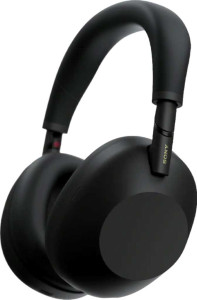
Sony WH-1000XM6

Bowers & Wilkins Px7 S3 Sony WH-1000XM6

Common Features

  • Both products are over-ear headphones.
  • Both products have a detachable cable.
  • Neither product has water resistance.
  • Both products can be folded.
  • Neither product is designed for kids.
  • Both products have a tangle-free cable.
  • Both products include a travel bag.
  • Neither product has an open-back design.
  • Both products have active noise cancellation.
  • Both products have passive noise reduction.
  • Both products feature a 30-hour battery life.
  • Both products have USB Type-C charging.
  • Both products have a battery level indicator.
  • Neither product supports wireless charging.
  • Both products have a rechargeable battery.
  • Neither product has a removable battery.
  • Both products support wireless and wired connectivity.
  • Both products use Bluetooth version 5.3.
  • Both products support LDAC.
  • Both products have a noise-canceling microphone.

Main Differences

  • The weight is 300 g on Bowers & Wilkins Px7 S3 and 254 g on Sony WH-1000XM6.
  • The driver unit size is 40 mm on Bowers & Wilkins Px7 S3 and 30 mm on Sony WH-1000XM6.
  • Bowers & Wilkins Px7 S3 does not have a neodymium magnet, while Sony WH-1000XM6 does.
  • Bowers & Wilkins Px7 S3 supports aptX Adaptive, but Sony WH-1000XM6 does not.
  • Bowers & Wilkins Px7 S3 supports aptX, but Sony WH-1000XM6 does not.
  • Bowers & Wilkins Px7 S3 supports aptX HD, but Sony WH-1000XM6 does not.
  • Bowers & Wilkins Px7 S3 supports aptX Lossless, but Sony WH-1000XM6 does not.
  • Sony WH-1000XM6 supports AAC, but Bowers & Wilkins Px7 S3 does not.
  • Sony WH-1000XM6 supports Bluetooth LE Audio, but Bowers & Wilkins Px7 S3 does not.
  • Sony WH-1000XM6 supports Auracast, but Bowers & Wilkins Px7 S3 does not.
  • Sony WH-1000XM6 supports fast pairing, but Bowers & Wilkins Px7 S3 does not.
  • Sony WH-1000XM6 has 12 microphones, while Bowers & Wilkins Px7 S3 has 8 microphones.
  • Sony WH-1000XM6 has in/on-ear detection, but Bowers & Wilkins Px7 S3 does not.
Specs Comparison
Bowers & Wilkins Px7 S3

Bowers & Wilkins Px7 S3

Sony WH-1000XM6

Sony WH-1000XM6

Design:
Fit Over-ear Over-ear
weight 300 g 254 g
has a detachable cable
water resistance None None
can be folded
is designed for kids
has a tangle free cable
travel bag is included
has an open-back design
cable length 1.2 m 1.2 m
has stereo speakers

Both the Bowers & Wilkins Px7 S3 and the Sony WH-1000XM6 feature an over-ear fit, offering good comfort for extended listening sessions. The Px7 S3 weighs 300 g, which is slightly heavier than the 254 g of the WH-1000XM6. While both headphones come with a detachable cable, neither product is rated for water resistance. Both models are foldable for easy storage, and neither has an open-back design, which might be important for users looking for a more immersive listening experience.

Both products include a travel bag and have a tangle-free cable, with a cable length of 1.2 m, making them convenient for use without the hassle of tangling. Additionally, both headphones feature stereo speakers, ensuring quality audio output. Neither product is specifically designed for kids, meaning they are intended for adult users.

Overall, the two models are quite similar in terms of design and portability, with only slight differences in weight that may be noticeable to some users.

Sound quality:
has active noise cancellation (ANC)
driver unit size 40 mm 30 mm
has a neodymium magnet
has passive noise reduction

Both the Bowers & Wilkins Px7 S3 and the Sony WH-1000XM6 feature active noise cancellation (ANC), helping to block out ambient noise for a more immersive listening experience. However, the Px7 S3 does not have a neodymium magnet, while the WH-1000XM6 does, which could potentially impact the efficiency of the drivers and overall sound reproduction.

In terms of driver unit size, the Px7 S3 uses 40 mm drivers, which are larger than the 30 mm drivers in the WH-1000XM6. Larger drivers typically result in a broader range of sound, particularly in bass frequencies. Both models also include passive noise reduction, enhancing the isolation of external sounds when ANC is not in use.

Overall, both headphones offer solid noise reduction and similar passive noise isolation, but the Px7 S3 stands out with its larger driver size, while the WH-1000XM6 benefits from the presence of a neodymium magnet.

Power:
Battery life 30 hours 30 hours
Has USB Type-C
has a battery level indicator
has wireless charging
Has a solar power battery
has a rechargeable battery
has a removable battery

Both the Bowers & Wilkins Px7 S3 and the Sony WH-1000XM6 offer the same battery life of 30 hours, ensuring long listening sessions without needing to recharge. Both models also feature USB Type-C connectivity for charging, which is convenient and fast. Additionally, both headphones come with a battery level indicator, allowing users to easily check their remaining battery life.

Neither product includes wireless charging or a solar power battery, both of which would have offered alternative charging options. Both headphones are equipped with a rechargeable battery, but neither features a removable battery, so users will need to rely on the built-in battery for the lifespan of the product.

Overall, the power specifications are identical between the Px7 S3 and WH-1000XM6, with both offering strong battery life and convenient charging features.

Connectivity:
connectivity Wireless & wired Wireless & wired
Bluetooth version 5.3 5.3
has aptX Adaptive
has aptX
has LDAC
has LDHC
has Bluetooth LE Audio
has aptX Low Latency
has aptX HD
has aptX Lossless
has AAC
has Auracast
maximum Bluetooth range 10 m 10 m
has fast pairing
supports Bluetooth pairing using NFC

Both the Bowers & Wilkins Px7 S3 and the Sony WH-1000XM6 offer wireless and wired connectivity, providing versatile connection options for different situations. Both models support Bluetooth 5.3, ensuring a modern and stable wireless connection. The maximum Bluetooth range is the same for both products at 10 m, offering similar performance in terms of distance from the connected device.

However, the two headphones differ in their support for various audio technologies. The Px7 S3 includes aptX Adaptive, aptX, aptX HD, and aptX Lossless, making it a strong choice for users who prioritize high-resolution audio over Bluetooth. On the other hand, the WH-1000XM6 supports LDAC and Bluetooth LE Audio, along with AAC and Auracast, which may appeal to users who want compatibility with a wider range of devices and higher audio quality over Bluetooth.

Both models do not support Bluetooth pairing via NFC, and neither has fast pairing in the case of the Px7 S3, although the WH-1000XM6 does include this feature. The differences in Bluetooth audio codecs and features like Bluetooth LE Audio and Auracast make these models appealing for slightly different user needs in terms of wireless audio quality and compatibility.

Features:
release date April 2025 May 2025
has a noise-canceling microphone
has ambient sound mode
has in/on-ear detection
number of microphones 8 12
control panel placed on a device
can be used as a headset
Has an in-line control panel

Both the Bowers & Wilkins Px7 S3 and the Sony WH-1000XM6 come equipped with a noise-canceling microphone, ensuring clearer calls and better communication. Both models also feature an ambient sound mode, allowing users to hear their surroundings while still listening to music or taking calls. However, the Px7 S3 does not include in/on-ear detection, unlike the WH-1000XM6, which does. This feature can automatically pause music when the headphones are removed and resume when put back on.

The Px7 S3 has 8 microphones, while the WH-1000XM6 features 12 microphones, which could contribute to enhanced voice clarity during calls and better noise-canceling performance. Both headphones have the control panel placed on the device itself, and can be used as a headset. Neither model includes an in-line control panel for more manual adjustments during use.

Overall, the two headphones offer similar key features, with the main difference being the WH-1000XM6’s additional microphones and the inclusion of in/on-ear detection.

Comparison Summary

This is a specification comparison between Bowers & Wilkins Px7 S3 and Sony WH-1000XM6. Both products are over-ear headphones with a detachable cable, a tangle-free design, and include a travel bag. The battery life is 30 hours for both, and both support USB Type-C charging. However, the weight is 300 g for the Bowers & Wilkins Px7 S3 and 254 g for the Sony WH-1000XM6. The driver unit size is 40 mm for the Bowers & Wilkins model, while it is 30 mm for the Sony model. The Bowers & Wilkins Px7 S3 supports aptX and aptX HD, while the Sony WH-1000XM6 supports AAC and has Bluetooth LE Audio support. Additionally, the Sony WH-1000XM6 has 12 microphones compared to the 8 microphones of the Bowers & Wilkins Px7 S3.