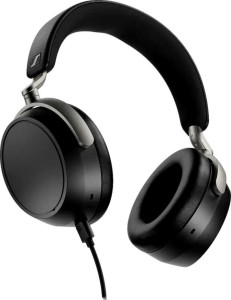
Bowers & Wilkins Px8 S2
Sennheiser HDB 630

Bowers & Wilkins Px8 S2 Sennheiser HDB 630

Overview

When choosing between the Bowers & Wilkins Px8 S2 and the Sennheiser HDB 630, audiophiles and everyday listeners alike face a compelling decision. Both are premium over-ear headphones sharing a solid foundation of aptX HD, aptX Adaptive, and wired-plus-wireless connectivity, yet they diverge sharply in areas like active noise cancellation, battery endurance, and advanced Bluetooth features. Read on to see how these two contenders stack up across every key specification.

Common Features

  • Both headphones use an over-ear fit.
  • Both headphones feature a detachable cable.
  • Both headphones can be folded.
  • Neither headphone is designed for kids.
  • Both headphones come with a tangle-free cable.
  • A travel bag is included with both headphones.
  • Neither headphone uses an open-back design.
  • The cable length is 1.2 m on both headphones.
  • Neither headphone has a neodymium magnet.
  • Passive noise reduction is available on both headphones.
  • Both headphones charge via USB Type-C.
  • A battery level indicator is present on both headphones.
  • Wireless charging is not available on either headphone.
  • Neither headphone has a solar power battery.
  • Both headphones have a rechargeable battery.
  • Neither headphone has a removable battery.
  • Both headphones support wireless and wired connectivity.
  • aptX Adaptive support is available on both headphones.
  • aptX support is available on both headphones.
  • LDAC support is not available on either headphone.
  • LDHC support is not available on either headphone.
  • Bluetooth LE Audio is not available on either headphone.
  • aptX Low Latency is not available on either headphone.
  • aptX HD support is available on both headphones.
  • In/on-ear detection is not available on either headphone.
  • A mute function is not available on either headphone.
  • Both headphones can be used as a headset.
  • Neither headphone has an in-line control panel.

Main Differences

  • Weight is 310 g on Bowers & Wilkins Px8 S2 and 311 g on Sennheiser HDB 630.
  • Active noise cancellation (ANC) is available on Bowers & Wilkins Px8 S2 but not on Sennheiser HDB 630.
  • Driver unit size is 40 mm on Bowers & Wilkins Px8 S2 and 42 mm on Sennheiser HDB 630.
  • Spatial audio support is present on Bowers & Wilkins Px8 S2 but not available on Sennheiser HDB 630.
  • Battery life is 30 hours on Bowers & Wilkins Px8 S2 and 60 hours on Sennheiser HDB 630.
  • Bluetooth version is 5.3 on Bowers & Wilkins Px8 S2 and 5.2 on Sennheiser HDB 630.
  • aptX Lossless support is present on Bowers & Wilkins Px8 S2 but not available on Sennheiser HDB 630.
  • Auracast support is present on Bowers & Wilkins Px8 S2 but not available on Sennheiser HDB 630.
  • Fast pairing is available on Bowers & Wilkins Px8 S2 but not on Sennheiser HDB 630.
  • Ambient sound mode is available on Bowers & Wilkins Px8 S2 but not on Sennheiser HDB 630.
Specs Comparison
Bowers & Wilkins Px8 S2

Bowers & Wilkins Px8 S2

Sennheiser HDB 630

Sennheiser HDB 630

Design:
Fit Over-ear Over-ear
weight 310 g 311 g
has a detachable cable
can be folded
is designed for kids
has a tangle free cable
travel bag is included
has an open-back design
cable length 1.2 m 1.2 m
has stereo speakers

In terms of design, the Bowers & Wilkins Px8 S2 and the Sennheiser HDB 630 are virtually identical across every measurable specification in this group. Both are over-ear headphones with a closed-back design, weigh within a single gram of each other (310 g vs 311 g), and share the same 1.2 m detachable, tangle-free cable. Both fold for storage and ship with a travel bag included, making them equally well-suited for commuting or travel use.

The near-identical weight is worth noting: at this mass, neither headphone holds a practical ergonomic advantage over the other. The difference of 1 gram is imperceptible during real-world use. Similarly, the shared cable length of 1.2 m is a standard choice that balances desktop and portable use without excess slack.

Based strictly on the design specifications provided, these two headphones are evenly matched in every meaningful category. There is no differentiator here that would give either product a design advantage — users should look to other specification groups to find meaningful distinctions between the two.

Sound quality:
has active noise cancellation (ANC)
driver unit size 40 mm 42 mm
supports spatial audio
has a neodymium magnet
has passive noise reduction

The most consequential difference in this group is noise isolation. The Px8 S2 features active noise cancellation (ANC), while the HDB 630 relies solely on passive noise reduction. In practice, this means the Px8 S2 can electronically suppress low-frequency ambient noise — think aircraft engines, office HVAC, or train rumble — while the HDB 630 can only attenuate sound through the physical seal of its ear cups. For commuters or frequent travelers, this is a significant real-world gap.

Spatial audio support further widens the Px8 S2's lead for certain use cases. The HDB 630 lacks this feature entirely, which matters for users who consume immersive content — whether that is Dolby Atmos music, gaming, or cinematic audio. The HDB 630's marginally larger 42 mm driver versus the Px8 S2's 40 mm unit is the one area where it holds a nominal edge, though driver size alone is not a reliable predictor of audio quality without accompanying frequency response or sensitivity data.

The Px8 S2 holds a clear advantage in this group. Its combination of ANC and spatial audio support addresses two high-demand modern listening scenarios that the HDB 630 simply does not accommodate. The HDB 630's slightly larger driver is the only counterpoint, but it is insufficient to offset the functional gap in noise management and immersive audio capability.

Power:
Battery life 30 hours 60 hours
Has USB Type-C
has a battery level indicator
has wireless charging
Has a solar power battery
has a rechargeable battery
has a removable battery

Battery life is where these two headphones diverge sharply. The HDB 630 delivers a rated 60 hours of playback, exactly double the 30 hours offered by the Px8 S2. To put that in practical terms, the HDB 630 can last through an entire long-haul travel week on a single charge for a typical listener, while the Px8 S2 will require a top-up mid-week under similar usage patterns.

Outside of battery life, the two headphones are identical in every power-related specification: both charge via USB Type-C, both include a battery level indicator, and neither supports wireless charging or carries a removable battery. The shared USB-C charging is a meaningful baseline convenience — it means no proprietary cables — but it does not offset the substantial gap in endurance.

The HDB 630 wins this group decisively. A 2x battery life advantage is not a marginal difference; it materially reduces how often users need to think about charging, which is especially relevant for road warriors or those who use headphones throughout long workdays. The Px8 S2's 30-hour figure is competitive in absolute terms, but it simply cannot match the HDB 630's stamina on this spec alone.

Connectivity:
connectivity Wireless & wired Wireless & wired
Bluetooth version 5.3 5.2
has aptX Adaptive
has aptX
has LDAC
has LDHC
has Bluetooth LE Audio
has aptX Low Latency
has aptX HD
has aptX Lossless
has AAC
has Auracast
maximum Bluetooth range 10 m 10 m
has fast pairing
supports Bluetooth pairing using NFC

Both headphones operate on a shared foundation of strong Bluetooth codec support — aptX Adaptive, aptX HD, and AAC are present on both — meaning most users on compatible Android or iOS devices will get high-quality wireless audio regardless of which they choose. The Bluetooth range is also identical at 10 m for both. The version difference, 5.3 on the Px8 S2 versus 5.2 on the HDB 630, is minor in day-to-day use, but the newer revision does bring incremental improvements in connection efficiency and stability.

Where the Px8 S2 pulls ahead is in two meaningful additions: aptX Lossless and Auracast. aptX Lossless enables CD-quality wireless audio transmission when paired with a compatible source device — a genuine differentiator for audiophile-oriented users who want the full fidelity of their library without a cable. Auracast, meanwhile, is a Bluetooth broadcast standard that allows audio sharing to multiple listeners simultaneously, a feature with growing real-world adoption in public spaces and for shared listening scenarios. The Px8 S2 also supports fast pairing, which streamlines the initial device connection experience — a small but daily-use convenience the HDB 630 lacks.

The Px8 S2 takes a clear edge in connectivity. While the shared codec support keeps the HDB 630 competitive for standard wireless listening, aptX Lossless and Auracast represent forward-looking capabilities that the HDB 630 simply does not offer. For users invested in high-fidelity wireless audio or multi-listener scenarios, these omissions on the HDB 630 are notable.

Features:
release date September 2025 October 2025
has ambient sound mode
has in/on-ear detection
has a mute function
can be used as a headset
Has an in-line control panel

This feature set is lean for both headphones, and the specs are nearly identical — with one meaningful exception. The Px8 S2 includes an ambient sound mode, which the HDB 630 lacks. This feature uses the headphone's microphones to pipe in environmental audio, allowing the wearer to stay aware of their surroundings — hear a boarding announcement, follow a conversation, or monitor traffic — without removing the headphones. For a closed-back, ANC-capable headphone like the Px8 S2, ambient mode is a natural and important complement; without it, isolation can become a liability in situations requiring situational awareness.

Beyond that, both headphones share the same functional profile: both support headset use for calls, and neither offers in/on-ear detection, a mute function, or an in-line control panel. The absence of ear detection is worth flagging — it means neither headphone will auto-pause playback when removed, a convenience feature now common in this category.

The Px8 S2 holds the edge here solely on the strength of its ambient sound mode. It is the only differentiating feature in this group, but it is a practically useful one. The HDB 630 offers no compensating feature that narrows this gap, leaving it at a functional disadvantage for users who need to move fluidly between isolated and aware listening.

Comparison Summary & Verdict

After examining every specification, both headphones prove themselves capable premium offerings — but for different listeners. The Bowers & Wilkins Px8 S2 stands out for users who demand a richer feature set: it brings active noise cancellation, ambient sound mode, spatial audio, aptX Lossless, Auracast, and fast pairing to the table, making it the stronger choice for commuters and frequent travelers who want maximum control over their listening environment. The Sennheiser HDB 630, on the other hand, wins decisively on battery life at 60 hours — double the Px8 S2's 30 hours — and features a marginally larger 42 mm driver, appealing to long-session listeners who prioritize endurance over extra smart features. Both share an identical design philosophy, tangle-free detachable cables, and USB-C charging, so neither disappoints on fundamentals.

Bowers & Wilkins Px8 S2
Buy Bowers & Wilkins Px8 S2 if...

Buy the Bowers & Wilkins Px8 S2 if you want active noise cancellation, ambient sound mode, spatial audio, and cutting-edge Bluetooth features like aptX Lossless and Auracast.

Sennheiser HDB 630
Buy Sennheiser HDB 630 if...

Buy the Sennheiser HDB 630 if exceptional battery life is your top priority, as its 60-hour endurance is double what the Px8 S2 offers.