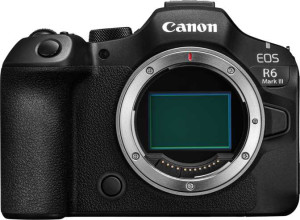
Canon EOS R6 Mark III
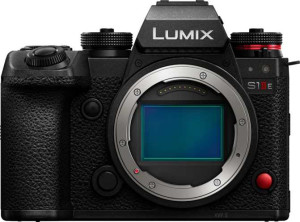
Panasonic Lumix DC-S1 IIE

Canon EOS R6 Mark III Panasonic Lumix DC-S1 IIE

Common Features

  • Both products are mirrorless cameras.
  • Both cameras feature an electronic viewfinder (EVF).
  • Both cameras are weather-sealed (splashproof).
  • Both products have a flip-out screen.
  • Both cameras offer 100% viewfinder coverage.
  • Both products have a touch screen.
  • Both cameras include a hot shoe.
  • Both products are system cameras.
  • Both cameras have a full-frame sensor size.
  • Both products support sensor shift stabilization.
  • Both cameras feature autofocus tracking.
  • Both products have phase-detection autofocus for photos.
  • Both cameras support manual focus.
  • Both products feature touch autofocus.
  • Both cameras offer manual shutter speed control.
  • Both products have a BSI sensor.
  • Both cameras support phase-detection autofocus for videos.
  • Both products feature continuous autofocus when recording movies.
  • Both cameras have a microphone input and a socket for a 3.5 mm audio jack.
  • Both products have stereo microphones.

Main Differences

  • The Canon EOS R6 Mark III has a 1600k dots screen resolution, while the Panasonic Lumix DC-S1 IIE has a 1840k dots screen resolution.
  • The Canon EOS R6 Mark III has a 3″ screen, while the Panasonic Lumix DC-S1 IIE has a 3.2″ screen.
  • The Canon EOS R6 Mark III weighs 699 g, while the Panasonic Lumix DC-S1 IIE weighs 795 g.
  • The Canon EOS R6 Mark III has a volume of 1203.880704 cm³, while the Panasonic Lumix DC-S1 IIE has a volume of 1261.230102 cm³.
  • The Canon EOS R6 Mark III can operate at temperatures as low as 0 °C, while the Panasonic Lumix DC-S1 IIE can operate at temperatures as low as -10 °C.
  • The Canon EOS R6 Mark III is 138.4 mm wide, while the Panasonic Lumix DC-S1 IIE is 134.3 mm wide.
  • The Canon EOS R6 Mark III is 98.4 mm high, while the Panasonic Lumix DC-S1 IIE is 102.3 mm high.
  • The Canon EOS R6 Mark III is 88.4 mm thick, while the Panasonic Lumix DC-S1 IIE is 91.8 mm thick.
  • The Canon EOS R6 Mark III has 1053 focus points, while the Panasonic Lumix DC-S1 IIE has 779 focus points.
  • The Canon EOS R6 Mark III has a 32.5 MP main camera, while the Panasonic Lumix DC-S1 IIE has a 24.1 MP main camera.
  • The Canon EOS R6 Mark III has a maximum ISO of 64000, while the Panasonic Lumix DC-S1 IIE has a maximum ISO of 51200.
  • The Canon EOS R6 Mark III has a maximum expanded ISO of 102400, while the Panasonic Lumix DC-S1 IIE has a maximum expanded ISO of 204800.
  • The Canon EOS R6 Mark III can shoot at 12 fps continuously (mechanical), while the Panasonic Lumix DC-S1 IIE can shoot at 10 fps continuously (mechanical).
  • The Canon EOS R6 Mark III has a fastest shutter speed of 0.000125 s, while the Panasonic Lumix DC-S1 IIE has a fastest shutter speed of 6.25E-5 s.
  • The Canon EOS R6 Mark III has an exposure time of 30 s, while the Panasonic Lumix DC-S1 IIE has an exposure time of 60 s.
  • The Canon EOS R6 Mark III has an image stabilization rating (CIPA) of 8.5 stops, while the Panasonic Lumix DC-S1 IIE has an image stabilization rating (CIPA) of 8 stops.
  • The Canon EOS R6 Mark III supports video recording at 4320 x 60 fps, while the Panasonic Lumix DC-S1 IIE supports video recording at 2160 x 60 fps.
  • The Canon EOS R6 Mark III has a movie bitrate of 2600 Mbps, while the Panasonic Lumix DC-S1 IIE has a movie bitrate of 1900 Mbps.
  • The Canon EOS R6 Mark III has a battery life (CIPA) of 620 shots, while the Panasonic Lumix DC-S1 IIE has a battery life (CIPA) of 380 shots.
  • The Canon EOS R6 Mark III has a battery power of 0 mAh, while the Panasonic Lumix DC-S1 IIE has a battery power of 2400 mAh.
  • The Canon EOS R6 Mark III uses Bluetooth version 5.1, while the Panasonic Lumix DC-S1 IIE uses Bluetooth version 5.
Specs Comparison
Canon EOS R6 Mark III

Canon EOS R6 Mark III

Panasonic Lumix DC-S1 IIE

Panasonic Lumix DC-S1 IIE

Design:
Type Mirrorless Mirrorless
viewfinder Electronic viewfinder (EVF) Electronic viewfinder (EVF)
is weather-sealed (splashproof)
screen resolution 1600k dots 1840k dots
Has a flip-out screen
viewfinder coverage 100% 100%
screen size 3" 3.2"
weight 699 g 795 g
has a touch screen
Has a hot shoe
volume 1203.880704 cm³ 1261.230102 cm³
is a system camera
has a flash
lowest potential operating temperature 0 °C -10 °C
maximum operating temperature 40 °C 40 °C
Has a tilting viewfinder
width 138.4 mm 134.3 mm
height 98.4 mm 102.3 mm
thickness 88.4 mm 91.8 mm

The Canon EOS R6 Mark III and Panasonic Lumix DC-S1 IIE are both mirrorless cameras, each equipped with an electronic viewfinder (EVF) offering 100% viewfinder coverage. While the Canon model features a 1600k dot screen resolution, the Panasonic's screen resolution is slightly higher at 1840k dots. Both cameras have flip-out screens, but the Canon has a 3″ screen, while the Panasonic offers a slightly larger 3.2″ display. Both cameras are weather-sealed (splashproof), though the Canon operates in a temperature range from 0°C to 40°C, whereas the Panasonic has a broader operating temperature range from -10°C to 40°C.

In terms of physical dimensions, the Canon EOS R6 Mark III is a bit more compact with a width of 138.4 mm, height of 98.4 mm, and thickness of 88.4 mm, weighing 699 g. On the other hand, the Panasonic Lumix DC-S1 IIE is slightly larger and heavier, measuring 134.3 mm in width, 102.3 mm in height, 91.8 mm in thickness, and weighing 795 g. The Canon has a volume of 1203.9 cm³, while the Panasonic has a slightly larger volume at 1261.2 cm³.

Both cameras are system cameras and support a hot shoe, but neither has a built-in flash. Additionally, neither model has a tilting viewfinder. The Canon model has a touchscreen and is rated for operating in temperatures as low as 0°C, while the Panasonic offers a wider operating temperature range down to -10°C and also includes a touchscreen. Both cameras share the same maximum operating temperature of 40°C.

Optics:
sensor size Full frame Full frame
lens mount Canon RF Leica L
focus points 1053 779
megapixels (main camera) 32.5 MP 24.1 MP
maximum ISO 64000 ISO 51200 ISO
maximum expanded ISO 102400 ISO 204800 ISO
has sensor shift stabilization
continuous shooting (mechanical) 12 fps 10 fps
has AF tracking
Has phase-detection autofocus for photos
fastest shutter speed 0.000125 s 6.25E-5 s
has manual focus
has touch autofocus
has manual shutter speed
has a BSI sensor
has manual exposure
has a two-stage shutter
has a serial shot mode
has a CMOS sensor
has manual ISO
flash sync speed 0.004 s 0.004 s
has manual white balance
exposure time 30 s 60 s
Maximum electronic shutter speed 6.25E-5 s 6.25E-5 s
has a stacked CMOS sensor
image stabilization rating (CIPA) 8.5 stops 8 stops
can combine image stabilization

Both the Canon EOS R6 Mark III and Panasonic Lumix DC-S1 IIE feature full-frame sensors and have Leica L and Canon RF lens mounts, respectively. The Canon model has a higher resolution with a 32.5 MP main camera, compared to the Panasonic's 24.1 MP. The Canon also supports a wider ISO range, with a maximum ISO of 64000 and an expanded ISO up to 102400, while the Panasonic's maximum ISO is 51200 and its expanded ISO reaches 204800.

In terms of autofocus and shooting performance, the Canon boasts 1053 focus points and offers continuous shooting at 12 fps with a mechanical shutter, while the Panasonic has 779 focus points and a 10 fps continuous shooting speed. Both cameras support phase-detection autofocus for photos, AF tracking, and have manual focus options. They also share a similar maximum electronic shutter speed of 6.25E-5 s and both have a two-stage shutter.

When it comes to stabilization, both cameras feature sensor shift stabilization with the Canon having an image stabilization rating of 8.5 stops and the Panasonic at 8 stops. Both models allow combining image stabilization. Additionally, the Canon has a flash sync speed of 0.004 s, which matches the Panasonic’s, and both cameras offer manual control for ISO, exposure, white balance, and shutter speed. The Canon has a slightly faster exposure time of 30 s, while the Panasonic can go up to 60 s.

Videography:
video recording (main camera) 4320 x 60 fps 2160 x 60 fps
Has phase-detection autofocus for videos
has continuous autofocus when recording movies
has a microphone input
has a socket for a 3.5 mm audio jack
has a stereo microphone
Has timelapse function
movie bitrate 2600 Mbps 1900 Mbps
number of microphones 2 2
has a 24p cinema mode
supports slow-motion video recording

The Canon EOS R6 Mark III and Panasonic Lumix DC-S1 IIE both offer impressive videography features. The Canon supports video recording at a higher resolution and frame rate of 4320 x 60 fps, compared to the Panasonic's 2160 x 60 fps. Both cameras include phase-detection autofocus, continuous autofocus during video recording, and a microphone input with a 3.5 mm audio jack socket, along with stereo microphones for audio capture.

Both models also include a timelapse function, 24p cinema mode, and support for slow-motion video recording. The Canon records video at a higher bitrate of 2600 Mbps, while the Panasonic records at 1900 Mbps. Both cameras use two microphones for stereo sound.

In summary, while both cameras share many videography features, the Canon offers a higher resolution video recording and a faster bitrate, which may appeal to those seeking higher-quality video output. However, the Panasonic remains a solid choice with similar core features like 24p cinema mode and timelapse functions.

Battery:
Battery life (CIPA) 620 shots 380 shots
has a removable battery
has a rechargeable battery
has a battery level indicator
battery power 0 mAh 2400 mAh

The Canon EOS R6 Mark III and Panasonic Lumix DC-S1 IIE both feature removable and rechargeable batteries, and both have battery level indicators. However, the Canon has a battery life of 620 shots (CIPA), significantly higher than the Panasonic's 380 shots. The Panasonic uses a 2400 mAh battery, while the Canon does not specify a battery power value.

Both cameras share similar battery functionality in terms of being removable, rechargeable, and having battery level indicators. However, the Canon provides longer battery life, making it more suitable for extended shooting sessions without needing to recharge.

Features:
release date November 2025 June 2025
supports Wi-Fi
Has Bluetooth
Has dual card slots
shoots raw
supports lossless compressed raw
Wi-Fi version Wi-Fi 5 (802.11ac), Wi-Fi 4 (802.11n) Wi-Fi 5 (802.11ac), Wi-Fi 4 (802.11n)
supports a remote smartphone
has an HDMI output
has GPS
has NFC
has an external memory slot
Has USB Type-C
Bluetooth version 5.1 5

Both the Canon EOS R6 Mark III and Panasonic Lumix DC-S1 IIE come with a wide array of features aimed at enhancing user experience. Both cameras support Wi-Fi (Wi-Fi 5 and Wi-Fi 4), Bluetooth (with the Canon using version 5.1 and the Panasonic using version 5), dual card slots, and shooting in raw formats, including lossless compressed raw. They both also support remote smartphone control, have HDMI outputs, external memory slots, and feature USB Type-C connectivity. Neither camera includes GPS or NFC capabilities.

The primary difference lies in Bluetooth version, with the Canon offering the latest Bluetooth 5.1, while the Panasonic uses Bluetooth 5. Both cameras provide a robust set of connectivity features, ensuring reliable performance in both professional and casual settings.

Comparison Summary

This is a specification comparison between the Canon EOS R6 Mark III and Panasonic Lumix DC-S1 IIE. Both cameras feature a mirrorless design, an electronic viewfinder (EVF), and weather-sealing. They also share sensor shift stabilization and phase-detection autofocus for both photos and videos. The Canon EOS R6 Mark III has a higher screen resolution (1600k vs 1840k), a smaller screen size (3″ vs 3.2″), and a lighter weight (699 g vs 795 g). It also offers faster continuous shooting at 12 fps compared to 10 fps on the Panasonic. Additionally, the Canon EOS R6 Mark III supports video recording at 4320 x 60 fps, while the Panasonic Lumix DC-S1 IIE records at 2160 x 60 fps. Lastly, the Canon has a significantly longer battery life with 620 shots versus the Panasonic's 380 shots.