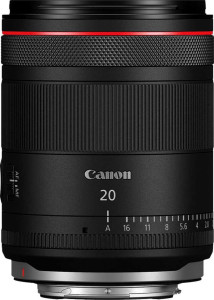
Canon RF 20mm f/1.4L VCM
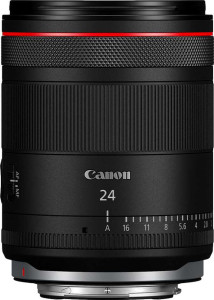
Canon RF 24mm f/1.4 L VCM

Canon RF 20mm f/1.4L VCM Canon RF 24mm f/1.4 L VCM

Overview

Welcome to our in-depth specification comparison between the Canon RF 20mm f/1.4L VCM and the Canon RF 24mm f/1.4 L VCM — two premium wide-angle prime lenses from Canon's prestigious L-series lineup. Both share the same RF mount, f/1.4 aperture, and weather-sealed build, yet they differ in key areas including focal length, angle of view, and minimum focus distance. Read on to discover which lens better suits your shooting style.

Common Features

  • Both lenses are prime lenses.
  • Both lenses use the Canon RF mount.
  • Both lenses are weather-sealed (splashproof).
  • Both lenses have a metal mount.
  • The front element does not rotate on either lens.
  • A lens hood is included with both lenses.
  • The lens hood is reversible on both lenses.
  • Both lenses share a 67 mm filter size.
  • Neither lens has built-in optical image stabilization.
  • The minimum angle of view is 62° on both lenses.
  • Both lenses have an optical zoom of 1x.
  • Both lenses have a wide aperture of f/1.4.
  • The widest aperture at maximum focal length is f/1.4 on both lenses.
  • Both lenses feature 11 aperture blades.
  • Rounded aperture blades are present on both lenses.
  • The smallest aperture at maximum focal length is f/1.4 on both lenses.
  • The smallest aperture at minimum focal length is f/16 on both lenses.
  • Neither lens can focus to infinity.
  • Both lenses have a built-in focus motor.
  • Full-time manual focus is available on both lenses.
  • Both lenses feature a silent focus motor.

Main Differences

  • Weight is 500 g on the Canon RF 20mm f/1.4L VCM and 515 g on the Canon RF 24mm f/1.4 L VCM.
  • Maximum focal length is 20 mm on the Canon RF 20mm f/1.4L VCM and 24 mm on the Canon RF 24mm f/1.4 L VCM.
  • Minimum focal length is 20 mm on the Canon RF 20mm f/1.4L VCM and 24 mm on the Canon RF 24mm f/1.4 L VCM.
  • Maximum angle of view is 94° on the Canon RF 20mm f/1.4L VCM and 84° on the Canon RF 24mm f/1.4 L VCM.
  • Magnification is 0.19x on the Canon RF 20mm f/1.4L VCM and 0.17x on the Canon RF 24mm f/1.4 L VCM.
  • Minimum focus distance is 0.2 m on the Canon RF 20mm f/1.4L VCM and 0.24 m on the Canon RF 24mm f/1.4 L VCM.
Specs Comparison
Canon RF 20mm f/1.4L VCM

Canon RF 20mm f/1.4L VCM

Canon RF 24mm f/1.4 L VCM

Canon RF 24mm f/1.4 L VCM

General info:
lens type Prime Prime
lens mount Canon RF Canon RF
release date March 2025 March 2025
is weather-sealed (splashproof)
Has a metal mount
weight 500 g 515 g
Front element doesn't rotate
Includes lens hood
Lens hood is reversible
filter size 67 mm 67 mm

At the general level, the Canon RF 20mm f/1.4L VCM and Canon RF 24mm f/1.4 L VCM are built from the same design philosophy: both are prime lenses on the Canon RF mount, both feature weather sealing, a metal mount, a non-rotating front element, and ship with a reversible lens hood — all while sharing an identical 67 mm filter thread. For a user already invested in the RF ecosystem, either lens slots in seamlessly with the same accessories and shooting workflow.

The only measurable difference in this group is weight: the 20mm comes in at 500 g versus 515 g for the 24mm — a gap of just 15 g. In practice, that difference is imperceptible during handheld shooting or when mounted on a gimbal, and it should not factor into a buying decision at this level.

For this spec group, the two lenses are effectively tied. There is no meaningful advantage on either side — build quality, mount compatibility, ergonomic conveniences, and filter size are identical. The real differentiator between these lenses lies elsewhere, in focal length, optical performance, and autofocus characteristics rather than anything surfaced here.

Optics:
maximum focal length 20 mm 24 mm
minimum focal length 20 mm 24 mm
has built-in optical image stabilization
maximum angle of view 94° 84°
minimum angle of view 62° 62°
magnification 0.19x 0.17x
optical zoom 1x 1x

The defining optical difference here is focal length: 20mm versus 24mm. That 4mm gap translates directly into a noticeably wider field of view — 94° on the 20mm compared to 84° on the 24mm at their maximum angles. In practical terms, the 20mm captures significantly more of a scene in a single frame, which matters enormously for architecture, interiors, astrophotography, and environmental portraits where getting close to a subject while retaining expansive surroundings is the goal.

On magnification, the 20mm edges ahead with 0.19x versus 0.17x for the 24mm — a modest but real difference that means slightly larger subject rendering at minimum focus distance. Neither lens has optical image stabilization, so both rely equally on the camera body's IBIS system or the shooter's technique in low light.

The 20mm f/1.4L VCM holds a clear optical edge in this group for photographers who prioritize maximum field coverage. That said, the 24mm's narrower 84° view can actually be an advantage for those who find ultra-wide perspective distortion unflattering — it is a touch more natural-looking for subjects close to the frame edges. The choice ultimately hinges on how extreme a wide-angle view the shooter needs.

Aperture:
wide aperture (main camera) 1.4f 1.4f
widest aperture at maximum focal length 1.4f 1.4f
aperture blades 11 11
Has rounded aperture blades
smallest aperture at maximum focal length 1.4f 1.4f
smallest aperture at minimum focal length 16f 16f

Aperture is one area where these two lenses are in complete lockstep. Both open to a maximum of f/1.4 and stop down to a minimum of f/16, giving shooters an identical exposure range across the full aperture spectrum. At f/1.4, both lenses deliver the same light-gathering capability — critical for low-light shooting and for achieving that shallow, subject-isolating depth of field that makes an f/1.4 prime so compelling in the first place.

Bokeh character is also matched: each lens features 11 rounded aperture blades, which produces smooth, circular out-of-focus highlights rather than the polygonal ″nervous″ bokeh associated with fewer, straight-edged blades. This is a hallmark of L-series optical design and benefits portrait, event, and available-light photographers who care about the quality of background rendering.

This group is a straightforward tie. Every aperture specification is identical between the two lenses, so neither holds any advantage here. Aperture performance will not be a deciding factor in choosing between the 20mm and 24mm — that decision rests entirely on the focal length and field-of-view considerations covered in the optics group.

Focus:
Can focus to infinity
Has focus motor
Has full-time manual focus
has a silent focus motor built into the lens
minimum focus distance 0.2 m 0.24 m

Both lenses share the same core focusing architecture: a built-in silent focus motor with full-time manual focus override. The silent motor is particularly valuable for video work and quiet environments like weddings or wildlife shoots, where autofocus noise picked up by an on-camera microphone would be intrusive. Full-time manual focus means a shooter can refine focus by hand at any point without switching modes — a small but meaningful ergonomic advantage in critical shooting situations.

The one measurable difference in this group is minimum focus distance: 0.20 m for the 20mm versus 0.24 m for the 24mm. That 4 cm gap means the 20mm can physically get closer to a subject before losing focus lock. Combined with its already slightly higher magnification figure from the optics group, the 20mm is the more capable lens for close-proximity work — think table-top detail shots, tight environmental context, or creative wide-angle close-ups.

The 20mm f/1.4L VCM takes a narrow but real edge in this group, purely on the strength of its shorter minimum focus distance. For photographers who regularly work close to their subjects, that extra 4 cm of reach matters. Otherwise, focusing behavior, motor quality, and manual control are identical between the two lenses.

Comparison Summary & Verdict

After examining the full specification set, both the Canon RF 20mm f/1.4L VCM and the Canon RF 24mm f/1.4 L VCM prove to be exceptionally well-matched lenses, sharing the same f/1.4 maximum aperture, silent focus motor, weather-sealing, and 67 mm filter thread. The decisive differences lie in their focal length and angle of view: the 20mm delivers a wider 94° field of view and gets slightly closer to subjects with a 0.2 m minimum focus distance, while the 24mm offers a narrower 84° perspective and is marginally heavier at 515 g. Photographers who prioritize an ultra-wide, immersive field of view will lean toward the 20mm, whereas those who prefer a slightly more natural wide-angle rendering with a touch less distortion may favor the 24mm.

Canon RF 20mm f/1.4L VCM
Buy Canon RF 20mm f/1.4L VCM if...

Buy the Canon RF 20mm f/1.4L VCM if you want a wider 94° angle of view, a closer minimum focus distance of 0.2 m, and a slightly lighter build for ultra-wide creative shots.

Canon RF 24mm f/1.4 L VCM
Buy Canon RF 24mm f/1.4 L VCM if...

Buy the Canon RF 24mm f/1.4 L VCM if you prefer a 24mm perspective with an 84° angle of view, which offers a slightly more natural wide-angle rendering for everyday and travel photography.