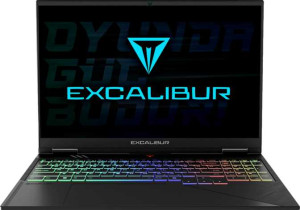
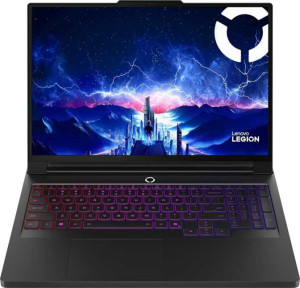
The Casper Excalibur G920 and Lenovo Legion Pro 7i Gen 10 have several similar technical features, but there are also some key differences. Both laptops use Blackwell GPU architecture and support Intel Resizable BAR. Neither of the laptops features LHR, and both support 3D and multi-display technology. Both laptops have ECC memory support, with the same 256-bit memory bus width and 25400 MHz effective memory speed. The maximum memory bandwidth for both is 811.5 GB/s. Both products also have integrated graphics, and both support instruction sets such as MMX, F16C, FMA3, AES, AVX2, AVX, SSE 4.1, and SSE 4.2. They each have 36 MB of L3 cache and support Double Precision Floating Point (DPFP).
In terms of CPU performance, the Excalibur G920 has a clock multiplier of 22, while the Legion Pro 7i Gen 10 has a higher multiplier of 27. The thermal design power (TDP) for the Excalibur G920 is 80W, compared to 95W for the Legion Pro 7i Gen 10, suggesting that the Lenovo laptop might generate more heat during use. The CPU temperature is higher for the Legion Pro 7i Gen 10, at 105 °C, versus the Excalibur G920's 100 °C. The Excalibur G920 does not have an unlocked multiplier, while the Legion Pro 7i Gen 10 does. Both laptops use big.LITTLE technology, and their memory channels are both dual-channel.
In terms of graphical power, the Legion Pro 7i Gen 10 outperforms the Excalibur G920 with 128 render output units (ROPs), 328 texture mapping units (TMUs), and 10496 shading units, compared to the Excalibur G920's 96 ROPs, 256 TMUs, and 7680 shading units.