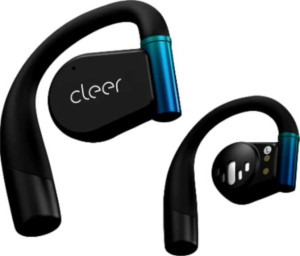
Cleer Audio Arc 3 Gaming
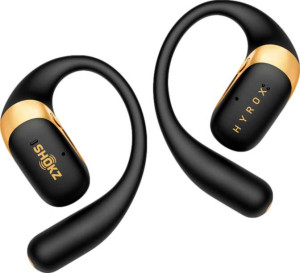
Shokz OpenFit 2 Plus

Cleer Audio Arc 3 Gaming Shokz OpenFit 2 Plus

Overview

When choosing between the Cleer Audio Arc 3 Gaming and the Shokz OpenFit 2 Plus, buyers are faced with two compelling open-ear wireless earbuds that share a surprising amount of common ground. Both are wire-free, feature a comfortable wingtip design, and support fast charging with wireless charging capability. Yet key differences emerge around audio codec support, water resistance levels, and frequency response — making this a genuinely interesting head-to-head worth examining closely.

Common Features

  • Both products have an open-ear fit.
  • Neither product has wires or cables.
  • Neither product is a neckband earbud design.
  • Both products include wingtips.
  • Neither product has RGB lighting.
  • Both products feature stereo speakers.
  • Neither product has a display.
  • Neither product has active noise cancellation (ANC).
  • Neither product has passive noise reduction.
  • Neither product supports spatial audio.
  • Neither product has a Dirac Virtuo feature.
  • Neither product has a neodymium magnet.
  • Both products have a charge time of 2 hours.
  • Both products support wireless charging.
  • Neither product has a solar power battery.
  • Both products have a battery level indicator.
  • Both products have a rechargeable battery.
  • Neither product has fast pairing.
  • Both products have a USB Type-C port.
  • Neither product has LDHC, Bluetooth LE Audio, aptX Low Latency, aptX HD, aptX, or aptX Voice support.
  • Neither product has an ambient sound mode.
  • Neither product has in/on-ear detection.
  • Both products have a find device feature.
  • Both products support fast charging.
  • Both products support multipoint connection for up to 2 devices.
  • Neither product can read notifications.
  • Both products have a mute function.
  • Both products can be used as a headset.
  • Both products have a noise-canceling microphone.

Main Differences

  • The Ingress Protection rating is IPX7 on Cleer Audio Arc 3 Gaming and IP55 on Shokz OpenFit 2 Plus.
  • The Cleer Audio Arc 3 Gaming is fully waterproof, while the Shokz OpenFit 2 Plus is only water resistant.
  • A UV light is present on Cleer Audio Arc 3 Gaming but not available on Shokz OpenFit 2 Plus.
  • The driver unit size is 16.2 mm on Cleer Audio Arc 3 Gaming and 17.3 mm on Shokz OpenFit 2 Plus.
  • The lowest frequency is 50 Hz on Cleer Audio Arc 3 Gaming and 20 Hz on Shokz OpenFit 2 Plus.
  • The highest frequency is 40000 Hz on Cleer Audio Arc 3 Gaming and 20000 Hz on Shokz OpenFit 2 Plus.
  • Dolby Atmos support is present on Cleer Audio Arc 3 Gaming but not available on Shokz OpenFit 2 Plus.
  • Battery life is 10 hours on Cleer Audio Arc 3 Gaming and 11 hours on Shokz OpenFit 2 Plus.
  • The battery life of the charging case is 40 hours on Cleer Audio Arc 3 Gaming and 37 hours on Shokz OpenFit 2 Plus.
  • LDAC support is present on Cleer Audio Arc 3 Gaming but not available on Shokz OpenFit 2 Plus.
  • aptX Adaptive support is present on Cleer Audio Arc 3 Gaming but not available on Shokz OpenFit 2 Plus.
  • aptX Lossless support is present on Cleer Audio Arc 3 Gaming but not available on Shokz OpenFit 2 Plus.
  • AAC support is present on Cleer Audio Arc 3 Gaming but not available on Shokz OpenFit 2 Plus.
Specs Comparison
Cleer Audio Arc 3 Gaming

Cleer Audio Arc 3 Gaming

Shokz OpenFit 2 Plus

Shokz OpenFit 2 Plus

Design:
Fit Open-ear Open-ear
Ingress Protection (IP) rating IPX7 IP55
water resistance Waterproof Water resistant
has no wires or cables
are neckband earbuds
wingtips included
has RGB lighting
has stereo speakers
has UV light
Has a display

Both the Cleer Audio Arc 3 Gaming and the Shokz OpenFit 2 Plus share the same fundamental design philosophy: open-ear, fully wireless earbuds with wingtips for a secure fit and stereo speaker output. Neither features RGB lighting or a display, keeping the aesthetic clean and focused on function. For users who value a distraction-free, cable-free design, both deliver equally on that front.

The most meaningful design differentiator is water resistance. The Arc 3 Gaming carries an IPX7 rating, meaning it can withstand full submersion in water up to one meter — a level of protection that goes well beyond typical workout or rain scenarios. The OpenFit 2 Plus comes in at IP55, which covers dust resistance and protection against low-pressure water jets from any direction. In practice, IP55 is more than sufficient for sweaty gym sessions or light rain, but it would not survive an accidental drop in a sink or pool the way the Arc 3 Gaming would. For outdoor athletes or anyone using earbuds near water, this gap is significant.

The Arc 3 Gaming also includes a UV light feature, which the OpenFit 2 Plus lacks entirely. On design, the Cleer Audio Arc 3 Gaming holds a clear edge, primarily due to its superior waterproofing, making it the more durable and versatile option in wet or unpredictable environments.

Sound quality:
has active noise cancellation (ANC)
has passive noise reduction
driver unit size 16.2 mm 17.3 mm
lowest frequency 50 Hz 20 Hz
highest frequency 40000 Hz 20000 Hz
supports spatial audio
has Dolby Atmos
has Dirac Virtuo
has a neodymium magnet

Neither the Arc 3 Gaming nor the OpenFit 2 Plus offers active noise cancellation or passive noise reduction, which is expected for open-ear designs — the tradeoff for situational awareness is always some degree of ambient sound bleed. That context established, the more interesting differences lie in their respective driver and frequency specs.

The OpenFit 2 Plus uses a slightly larger 17.3 mm driver compared to the Arc 3 Gaming's 16.2 mm, and its frequency range stretches down to 20 Hz — the accepted lower boundary of human hearing — versus the Arc 3 Gaming's 50 Hz floor. That 30 Hz gap in the low end means the OpenFit 2 Plus is better equipped to reproduce sub-bass and deep bass frequencies, which matters for music genres like electronic, hip-hop, or cinematic soundtracks. The Arc 3 Gaming, on the other hand, extends up to an impressive 40000 Hz, well beyond the 20000 Hz ceiling of the OpenFit 2 Plus. In theory this benefits hi-res audio reproduction, though the practical audibility of frequencies above 20 kHz is debated.

The Arc 3 Gaming also includes Dolby Atmos support, which adds a virtual spatial dimension to compatible content — a meaningful perk for gaming and immersive media even without dedicated spatial audio hardware. Weighing all of this, the two products target different sonic priorities: the OpenFit 2 Plus has an edge in low-frequency depth for music listeners, while the Arc 3 Gaming's Dolby Atmos support gives it a meaningful advantage for gamers and multimedia users.

Power:
Battery life 10 hours 11 hours
Battery life of charging case 40 hours 37 hours
charge time 2 hours 2 hours
has wireless charging
Has a solar power battery
has a battery level indicator
has a rechargeable battery

On paper, the power specs for these two earbuds are remarkably close. Both charge in 2 hours, support wireless charging, include a battery level indicator, and combine earbud plus case battery life that comfortably covers multi-day use without hunting for an outlet. For most users, the shared features here are just as important as the differences — wireless charging in particular is a convenience feature that neither skimps on.

Where they diverge is in how that total battery life is distributed. The Shokz OpenFit 2 Plus edges ahead with 11 hours of earbud playtime versus 10 hours for the Arc 3 Gaming — a modest but real difference if you're regularly pushing through long workdays or extended travel without reaching for the case. The Arc 3 Gaming counters with a higher-capacity charging case, offering 40 hours of total combined life compared to the OpenFit 2 Plus's 37 hours. So while the OpenFit 2 Plus lasts slightly longer per session, the Arc 3 Gaming's case holds more reserve charge overall.

The net result is essentially a wash depending on usage pattern: frequent case top-ups favor the Arc 3 Gaming's larger reserve, while users who prioritize fewer interruptions mid-session will appreciate the OpenFit 2 Plus's extra hour of earbud runtime. Neither product holds a decisive power advantage — this category is effectively a tie.

Connectivity:
has fast pairing
Has USB Type-C
has LDAC
has LDHC
has Bluetooth LE Audio
has aptX Adaptive
has aptX Low Latency
has aptX HD
has aptX
has aptX Lossless
has aptX Voice
has Auracast
maximum Bluetooth range 10 m 10 m
supports Bluetooth pairing using NFC
Can be used wirelessly
has AAC

At the baseline level, both earbuds share the same 10 m Bluetooth range, USB-C charging, and fully wireless operation — practical parity for everyday use. Neither supports NFC pairing or Bluetooth LE Audio, so no advantages there for either side.

The codec story, however, is where these two products diverge sharply. The Shokz OpenFit 2 Plus supports no high-resolution audio codecs at all — not AAC, not LDAC, nothing beyond the standard SBC fallback that every Bluetooth device defaults to. The Arc 3 Gaming, by contrast, brings a remarkably stacked codec suite: LDAC for high-res wireless audio up to 990 kbps (favored on Android and Sony devices), aptX Adaptive for low-latency and variable bitrate streaming, aptX Lossless for bit-perfect CD-quality transmission over Bluetooth, and AAC for optimized quality on Apple devices. In practical terms, this means the Arc 3 Gaming can take full advantage of high-quality source files and compatible devices, while the OpenFit 2 Plus is limited to compressed SBC audio regardless of what the source device supports.

This is one of the most lopsided gaps in the entire comparison. For audiophiles, gamers who care about low-latency audio, or anyone streaming from a high-resolution library, the Arc 3 Gaming holds a decisive and unambiguous advantage in connectivity.

Features:
release date January 2025 October 2025
has ambient sound mode
has in/on-ear detection
has find device feature
Supports fast charging
multipoint count 2 2
can read notifications
has a mute function
can be used as a headset
control panel placed on a device
Has voice prompts
travel bag is included
Has an in-line control panel
Has a temperature sensor
Has a built-in camera remote control function

Across every single feature spec in this group, the Cleer Audio Arc 3 Gaming and the Shokz OpenFit 2 Plus are an exact match. Both support multipoint connection to two devices simultaneously — a genuinely useful feature for anyone switching between a phone and a laptop without re-pairing. Both offer fast charging, a mute function, on-device controls, voice prompts, headset capability for calls, a find-device feature, and even include a travel bag. Not a single differentiator exists in this category.

The shared feature set is, collectively, a solid one. Fast charging reduces downtime meaningfully; multipoint pairing at 2 devices is the current standard expectation for premium wireless earbuds; and the inclusion of a travel bag signals that both are positioned as go-anywhere products. The mute function and headset capability make both viable for calls and virtual meetings, not just media consumption.

This group is a complete tie — there is no basis in the provided specs to give either product an edge here. Buyers should weigh features alongside the other spec groups, where the two products do diverge, to make their decision.

Microphone:
has a noise-canceling microphone

With only one data point in this group, the conclusion is straightforward: both the Cleer Audio Arc 3 Gaming and the Shokz OpenFit 2 Plus include a noise-canceling microphone, and neither holds an advantage over the other based on the available specs.

That said, the presence of noise-canceling mic technology in both is worth acknowledging as a meaningful baseline. For open-ear earbuds — which by design allow ambient sound in — having a microphone that actively filters out background noise is particularly important. Without it, call recipients would likely hear a significant amount of environmental noise bleed, undermining the usefulness of these earbuds in any communication scenario. Both products clear that bar.

This category is a tie. Buyers looking to differentiate between these two on microphone performance will need to look beyond the provided specs.

Comparison Summary & Verdict

After a thorough side-by-side review, both products prove to be strong open-ear earbuds with shared fundamentals like wireless charging, multipoint connectivity, and noise-canceling microphones. However, their strengths diverge meaningfully. The Cleer Audio Arc 3 Gaming stands out for audiophiles and gamers who demand premium audio codec support — including LDAC, aptX Adaptive, and aptX Lossless — along with a wider frequency ceiling of 40000 Hz, Dolby Atmos, and superior IPX7 waterproofing backed by a longer 40-hour case battery. Meanwhile, the Shokz OpenFit 2 Plus appeals to those who prioritize a slightly longer 11-hour earbud battery life and a larger 17.3 mm driver for potentially richer bass, given its lower 20 Hz floor. Choose the Cleer Audio Arc 3 Gaming for serious audio and gaming use; opt for the Shokz OpenFit 2 Plus if everyday endurance and a deeper low-end matter most.

Cleer Audio Arc 3 Gaming
Buy Cleer Audio Arc 3 Gaming if...

Buy the Cleer Audio Arc 3 Gaming if you want premium audio codec support including LDAC, aptX Adaptive, and aptX Lossless, a wider frequency range with Dolby Atmos, and a higher IPX7 waterproof rating with a longer-lasting charging case.

Shokz OpenFit 2 Plus
Buy Shokz OpenFit 2 Plus if...

Buy the Shokz OpenFit 2 Plus if you prioritize a slightly longer per-charge earbud battery life and a larger 17.3 mm driver capable of reaching deeper bass frequencies down to 20 Hz.