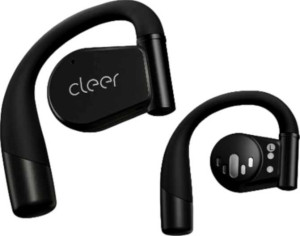
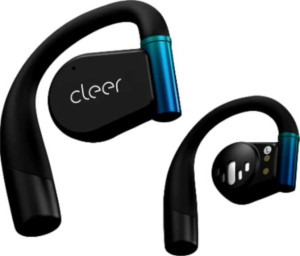
Cleer Audio Arc 3
Cleer Audio Arc 3 Gaming

Cleer Audio Arc 3 Cleer Audio Arc 3 Gaming

Overview

Welcome to this detailed specification comparison between the Cleer Audio Arc 3 and the Cleer Audio Arc 3 Gaming. Both are open-ear, wireless earbuds from Cleer Audio, and on paper they share a striking number of features. In this comparison, we examine their audio capabilities, connectivity options, and build specifications side by side to help you determine which model truly fits your needs.

Common Features

  • Both products have an open-ear fit.
  • Both products carry an IPX7 ingress protection rating, making them waterproof.
  • Neither product uses wires or cables.
  • Neither product is a neckband earbud design.
  • Wingtips are included with both products.
  • Neither product features RGB lighting.
  • Both products have stereo speakers.
  • Neither product has active noise cancellation.
  • Neither product offers passive noise reduction.
  • Both products use a 16.2 mm driver unit.
  • Both products have a lowest frequency of 50 Hz and a highest frequency of 40000 Hz.
  • Neither product supports spatial audio.
  • Dolby Atmos is available on both products.
  • Dirac Virtuo is not available on either product.
  • Both products offer 10 hours of battery life and 40 hours from the charging case.
  • Both products have a charge time of 2 hours.
  • Wireless charging is supported on both products.
  • Neither product has a solar power battery.
  • A battery level indicator is present on both products.
  • Both products have a rechargeable battery.
  • Neither product supports fast pairing.
  • Both products feature a USB Type-C connection.
  • Both products use Bluetooth version 5.4.
  • LDAC is supported on both products.
  • LDHC is not supported on either product.
  • Bluetooth LE Audio is not available on either product.
  • aptX Adaptive is supported on both products.
  • aptX Low Latency is not supported on either product.
  • Neither product has an ambient sound mode.
  • Neither product has in/on-ear detection.
  • A find device feature is available on both products.
  • Fast charging is supported on both products.
  • Both products support multipoint connection with up to 2 devices simultaneously.
  • Neither product can read notifications.
  • A mute function is present on both products.
  • Both products can be used as a headset.
  • Both products have 4 microphones.
  • A noise-canceling microphone is present on both products.
Specs Comparison
Cleer Audio Arc 3

Cleer Audio Arc 3

Cleer Audio Arc 3 Gaming

Cleer Audio Arc 3 Gaming

Design:
Fit Open-ear Open-ear
Ingress Protection (IP) rating IPX7 IPX7
water resistance Waterproof Waterproof
has no wires or cables
are neckband earbuds
wingtips included
has RGB lighting
has stereo speakers
has UV light
Has a display

In terms of design, the Cleer Audio Arc 3 and the Cleer Audio Arc 3 Gaming are virtually identical across every measured specification in this category. Both share an open-ear fit, come with wingtips for a secure hold, are fully wireless, and are rated IPX7 — meaning they can withstand immersion in up to 1 meter of water for 30 minutes. For active users or those who wear these in unpredictable environments, that level of waterproofing is a meaningful practical advantage over earbuds with lower or no IP ratings.

Both models also include a UV light feature and stereo speakers, while neither carries RGB lighting nor a display. The UV light is a relatively uncommon inclusion in earbuds and suggests a hygiene-focused use case, likely for sanitizing the ear tips. The absence of a display and RGB keeps the design minimal and understated on both units.

Based strictly on the provided design specs, these two products are in a complete tie. There is no differentiator in this category — a buyer choosing between them on design criteria alone would have no reason to prefer one over the other.

Sound quality:
has active noise cancellation (ANC)
has passive noise reduction
driver unit size 16.2 mm 16.2 mm
lowest frequency 50 Hz 50 Hz
highest frequency 40000 Hz 40000 Hz
supports spatial audio
has Dolby Atmos
has Dirac Virtuo
has a neodymium magnet

The sound hardware on both the Cleer Audio Arc 3 and the Arc 3 Gaming is spec-for-spec identical. Both use a 16.2 mm driver — a notably large size for open-ear earbuds — which generally translates to greater surface area for air movement and the potential for fuller, more impactful low-end response compared to smaller drivers. The shared frequency range of 50 Hz to 40,000 Hz is worth noting: the upper limit extends well into the ultrasonic range, which is characteristic of high-resolution audio tuning even if most listeners cannot perceive frequencies above 20 kHz directly.

Neither model offers active noise cancellation or passive noise reduction, which is expected given the open-ear form factor — isolation is inherently limited by design. What both do include is Dolby Atmos support, which adds a layer of spatial processing for compatible content. However, neither supports spatial audio more broadly or Dirac Virtuo, so the immersive audio experience is tied specifically to Dolby-encoded sources.

As with the design category, this group results in a complete tie. Every sound quality specification is shared between the two models, meaning neither holds an acoustic advantage over the other based on the available data.

Power:
Battery life 10 hours 10 hours
Battery life of charging case 40 hours 40 hours
charge time 2 hours 2 hours
has wireless charging
Has a solar power battery
has a battery level indicator
has a rechargeable battery

Power endurance is a strong suit for both the Cleer Audio Arc 3 and the Arc 3 Gaming, and the two are perfectly matched here. Each earbud delivers 10 hours of playback on a single charge — a competitive figure for open-ear wireless earbuds — with the charging case extending total usable battery to 40 hours combined. That cumulative total makes either option viable for multi-day use without needing to find a power outlet.

Recharging takes 2 hours for a full cycle, and both support wireless charging, which adds a meaningful convenience factor for users who already have a Qi pad in their workflow. The inclusion of a battery level indicator on both models also means users are never left guessing about remaining charge — a small but practically useful feature.

There is no differentiator to call out here: every power-related specification is shared across both models, making this category another complete tie. Whichever variant a buyer chooses, they can expect identical battery performance and charging convenience.

Connectivity:
has fast pairing
Has USB Type-C
Bluetooth version 5.4 5.4
has LDAC
has LDHC
has Bluetooth LE Audio
has aptX Adaptive
has aptX Low Latency
has aptX HD
has aptX
has aptX Lossless
has aptX Voice
has Auracast
maximum Bluetooth range 10 m 10 m
supports Bluetooth pairing using NFC
Can be used wirelessly
has AAC

Connectivity is a genuine strength for both the Cleer Audio Arc 3 and the Arc 3 Gaming, and once again the two are spec-for-spec identical. Both run on Bluetooth 5.4, the current leading iteration of the standard, which brings improvements in connection stability and efficiency over earlier versions. The 10 m maximum range is fairly typical for consumer earbuds, covering standard use cases like moving around a room or stepping briefly away from a source device.

Where these earbuds genuinely stand out is codec support. Both carry aptX Lossless, aptX Adaptive, LDAC, and AAC — a remarkably broad high-resolution audio stack. aptX Lossless in particular enables CD-quality wireless transmission when the source and conditions support it, while LDAC is Sony's high-bitrate codec widely used on Android. Having all three high-fidelity options means compatibility is maximized across a wide range of source devices and platforms, without forcing the connection to fall back to a lower-quality codec.

No differentiator exists between the two models in this category — the codec lineup, Bluetooth version, and all other connectivity attributes are shared entirely. This is another complete tie, and a strong one at that: both products offer an above-average connectivity package by any measure.

Features:
release date January 2025 January 2025
has ambient sound mode
has in/on-ear detection
has find device feature
Supports fast charging
multipoint count 2 2
can read notifications
has a mute function
can be used as a headset
control panel placed on a device
Has voice prompts
travel bag is included
Has an in-line control panel
Has a temperature sensor
Has a built-in camera remote control function

Across the features category, the Cleer Audio Arc 3 and the Arc 3 Gaming are once again mirror images of each other. Both support multipoint connection to two devices simultaneously — a practical everyday advantage that allows seamless switching between, say, a laptop and a phone without manual re-pairing. Combined with fast charging, on-device controls, and voice prompts, the shared feature set is well-suited for users who want a capable, low-friction daily driver.

A few notable absences apply equally to both models: neither has ambient sound mode nor in-ear detection, which are features commonly found on premium earbuds. The lack of ambient mode is particularly worth flagging for open-ear designs, where situational awareness is often a selling point — users relying on these for outdoor or commuting use should factor that in. Both also skip notification readout, which keeps the experience focused on audio rather than assistant-style functionality.

The inclusion of a find device feature, a travel bag, and headset capability (microphone use for calls) rounds out a practical but not extravagant feature set. Since every specification in this group is shared between the two models, the verdict is a complete tie — no feature advantage exists on either side.

Microphone:
number of microphones 4 4
has a noise-canceling microphone

Both the Cleer Audio Arc 3 and the Arc 3 Gaming deploy a 4-microphone array with noise-canceling capability. For open-ear earbuds — where the lack of physical isolation means ambient sound bleeds in freely — a multi-mic setup is particularly important for call quality. Four microphones allow for more sophisticated beamforming and noise suppression algorithms, giving the hardware a better chance of isolating the speaker's voice in noisy environments compared to single or dual-mic configurations.

The noise-canceling microphone designation refers specifically to outbound voice pickup, not to the listening experience. In practical terms, this means call recipients and voice assistant interactions should benefit from reduced background noise on the sender's end — a meaningful real-world consideration for users who frequently take calls in busy or outdoor settings.

With both models sharing identical microphone hardware and capabilities, this category is a complete tie. Neither the Arc 3 nor the Arc 3 Gaming holds any advantage in call or voice pickup performance based on the available specifications.

Comparison Summary & Verdict

After a thorough review of all available specifications, the Cleer Audio Arc 3 and the Cleer Audio Arc 3 Gaming are remarkably identical across every measured category. Both deliver the same open-ear IPX7 waterproof design, identical 10-hour battery life with wireless charging, and the same Bluetooth 5.4 connectivity with LDAC and aptX Adaptive support. Both models also share a 4-microphone noise-canceling setup and Dolby Atmos audio. Based solely on the evidence available, no measurable specification separates these two products, making either a solid choice for users seeking a feature-rich open-ear earbud. Your decision may ultimately come down to branding preference or availability rather than any technical distinction.

Cleer Audio Arc 3
Buy Cleer Audio Arc 3 if...

Buy the Cleer Audio Arc 3 if you prefer its specific branding and it is available at a better price, as its specifications are identical to the Gaming variant across every measured category.

Cleer Audio Arc 3 Gaming
Buy Cleer Audio Arc 3 Gaming if...

Buy the Cleer Audio Arc 3 Gaming if the gaming-oriented branding appeals to your use case, since it shares every specification with the Cleer Audio Arc 3 and offers no technical trade-offs.