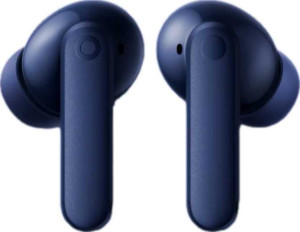
CMF Buds 2 Plus
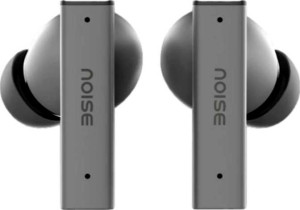
Noise Buds Marine

CMF Buds 2 Plus Noise Buds Marine

Overview

Welcome to our detailed spec comparison between the CMF Buds 2 Plus and the Noise Buds Marine. Both earbuds share a solid foundation of active noise cancellation, ambient sound mode, and multipoint connectivity, but they take noticeably different paths when it comes to battery endurance, audio codec support, and overall feature depth. Read on as we break down every specification to help you decide which of these two contenders truly fits your lifestyle.

Common Features

  • Both products have an in-ear fit.
  • Neither product uses cables or wires.
  • Neither product is a neckband-style earbud.
  • Neither product includes wingtips.
  • Neither product features RGB lighting.
  • Both products have stereo speakers.
  • Neither product has a UV light.
  • Neither product has a display.
  • Both products have active noise cancellation (ANC).
  • Both products have passive noise reduction.
  • Both products share a frequency range of 20 Hz to 20000 Hz.
  • Neither product supports Dolby Atmos.
  • Neither product supports Dirac Virtuo.
  • Both products have a charge time of 1.5 hours.
  • Neither product supports wireless charging.
  • Neither product has a solar power battery.
  • Both products have a battery level indicator.
  • Both products have a rechargeable battery.
  • Both products use USB Type-C.
  • Neither product supports LDHC, Bluetooth LE Audio, aptX Adaptive, aptX Low Latency, aptX HD, aptX, or aptX Lossless.
  • Both products support ambient sound mode.
  • Both products support fast charging.
  • Both products support multipoint connection for 2 devices.
  • Neither product can read notifications.
  • Both products have a mute function.
  • Both products can be used as a headset.
  • Both products have a control panel placed on the device.
  • Both products have voice prompts.
  • Both products have a noise-canceling microphone.

Main Differences

  • Ingress Protection rating is IP55 and IPX2 on CMF Buds 2 Plus, while Noise Buds Marine is rated IPX4.
  • CMF Buds 2 Plus is water resistant, while Noise Buds Marine is sweat resistant.
  • Driver unit size is 12 mm on CMF Buds 2 Plus and 13 mm on Noise Buds Marine.
  • Spatial audio support is present on CMF Buds 2 Plus but not available on Noise Buds Marine.
  • A neodymium magnet is featured in CMF Buds 2 Plus but not present in Noise Buds Marine.
  • Battery life is 14 hours on CMF Buds 2 Plus and 8 hours on Noise Buds Marine.
  • Battery life of the charging case is 43.5 hours on CMF Buds 2 Plus and 27 hours on Noise Buds Marine.
  • Fast pairing is supported on CMF Buds 2 Plus but not available on Noise Buds Marine.
  • Bluetooth version is 5.4 on CMF Buds 2 Plus and 5.3 on Noise Buds Marine.
  • LDAC support is present on CMF Buds 2 Plus but not available on Noise Buds Marine.
  • AAC support is present on CMF Buds 2 Plus but not available on Noise Buds Marine.
  • In-ear/on-ear detection is available on CMF Buds 2 Plus but not present on Noise Buds Marine.
  • A find device feature is available on CMF Buds 2 Plus but not present on Noise Buds Marine.
  • CMF Buds 2 Plus has 6 microphones, while Noise Buds Marine has 4 microphones.
Specs Comparison
CMF Buds 2 Plus

CMF Buds 2 Plus

Noise Buds Marine

Noise Buds Marine

Design:
Fit In-ear In-ear
Ingress Protection (IP) rating IP55, IPX2 IPX4
water resistance Water resistant Sweat resistant
has no wires or cables
are neckband earbuds
wingtips included
has RGB lighting
has stereo speakers
has UV light
Has a display

Both the CMF Buds 2 Plus and the Noise Buds Marine share a fundamentally similar physical design: in-ear, fully wireless (no cables or neckband), no wingtips, and no gimmicks like RGB lighting or displays. For most users, the form factor experience will feel comparable straight out of the box.

Where a meaningful gap emerges is in environmental protection. The CMF Buds 2 Plus carries a dual IP55 + IPX2 rating, which means it is certified to resist both dust ingress and water jets from multiple directions — qualifying it as genuinely water resistant. The Noise Buds Marine, by contrast, holds only an IPX4 rating, covering it against splashes and sweat but offering no dust protection and a lower threshold against water exposure. In practical terms, the CMF can handle rain, gym sessions, and dusty environments more confidently, while the Noise Buds Marine is better suited to controlled indoor workouts.

The CMF Buds 2 Plus has a clear edge in the Design category solely because of its superior IP rating. If you regularly exercise outdoors, commute in varying weather, or work in dusty conditions, that added protection is a tangible real-world advantage rather than a spec-sheet footnote.

Sound quality:
has active noise cancellation (ANC)
has passive noise reduction
driver unit size 12 mm 13 mm
lowest frequency 20 Hz 20 Hz
highest frequency 20000 Hz 20000 Hz
supports spatial audio
has Dolby Atmos
has Dirac Virtuo
has a neodymium magnet

On the fundamentals, these two earbuds are closely matched: both cover the full standard audible range of 20 Hz – 20,000 Hz, feature active noise cancellation alongside passive noise reduction, and use a neodymium-class dynamic driver. That said, two differentiators are worth unpacking.

The Noise Buds Marine edges out with a slightly larger 13 mm driver versus the CMF's 12 mm. In theory, a larger driver can move more air and produce deeper bass, but driver size alone is not a reliable predictor of audio quality — tuning, diaphragm material, and enclosure design matter just as much. The CMF Buds 2 Plus counters this with explicit neodymium magnet confirmation, which typically means a stronger, more focused magnetic field for tighter driver control and improved efficiency. The Noise Buds Marine does not list a neodymium magnet, which is a minor but notable omission at this price tier.

The more decisive differentiator is spatial audio support — available on the CMF Buds 2 Plus but absent on the Noise Buds Marine. For users who stream movies, gaming content, or immersive music mixes, spatial audio adds a perceivable sense of directionality and depth that a standard stereo mix cannot replicate. Factoring in both the neodymium magnet and spatial audio support, the CMF Buds 2 Plus holds a meaningful edge in this category despite the marginally smaller driver.

Power:
Battery life 14 hours 8 hours
Battery life of charging case 43.5 hours 27 hours
charge time 1.5 hours 1.5 hours
has wireless charging
Has a solar power battery
has a battery level indicator
has a rechargeable battery

Battery life is where the gap between these two earbuds becomes impossible to ignore. The CMF Buds 2 Plus delivers 14 hours of playback per charge compared to the Noise Buds Marine's 8 hours — a 75% advantage that translates directly into fewer interruptions during long commutes, flights, or workdays. When you factor in the charging case, the CMF extends that total to 43.5 hours versus the Marine's 27 hours, meaning users can go significantly longer between hunting for a cable.

Charging speed is identical at 1.5 hours for both, and neither offers wireless charging — so that particular convenience is off the table for both buyers equally. The presence of a battery level indicator on both is a small but practical perk, letting users know when a top-up is needed before heading out.

There is no ambiguity here: the CMF Buds 2 Plus has a decisive advantage in the Power category. Whether you are a heavy daily listener or someone who travels frequently and wants to minimize charging anxiety, the CMF's substantially higher earbud and case endurance makes it the stronger choice on this spec group alone.

Connectivity:
has fast pairing
Has USB Type-C
Bluetooth version 5.4 5.3
has LDAC
has LDHC
has Bluetooth LE Audio
has aptX Adaptive
has aptX Low Latency
has aptX HD
has aptX
has aptX Lossless
has aptX Voice
has Auracast
maximum Bluetooth range 10 m 10 m
supports Bluetooth pairing using NFC
Can be used wirelessly
has AAC

Connectivity is another category where the CMF Buds 2 Plus pulls ahead in several meaningful ways. It runs on Bluetooth 5.4 versus the Noise Buds Marine's 5.3 — a generational step that brings modest improvements in connection stability and power efficiency, though not a dramatic real-world leap on its own. More impactful is codec support: the CMF offers both LDAC and AAC, while the Noise Buds Marine supports neither, falling back on the standard SBC codec by default. LDAC in particular allows up to three times the data throughput of SBC, which can yield noticeably higher audio fidelity when streaming high-resolution content on compatible Android devices.

Fast pairing is another practical win exclusive to the CMF Buds 2 Plus — the ability to snap into a connection quickly without navigating Bluetooth menus is a small but daily-use convenience the Marine simply does not offer. Both earbuds share a 10 m Bluetooth range and USB-C charging, so those dimensions are a wash.

Across the board, the CMF Buds 2 Plus holds a clear advantage in connectivity. The combination of a newer Bluetooth version, LDAC high-res audio codec, AAC support, and fast pairing makes it the stronger choice for users who prioritize audio quality and seamless device integration, particularly in the Android ecosystem.

Features:
release date April 2025 July 2025
has ambient sound mode
has in/on-ear detection
has find device feature
Supports fast charging
multipoint count 2 2
can read notifications
has a mute function
can be used as a headset
control panel placed on a device
Has voice prompts
travel bag is included
Has an in-line control panel
Has a temperature sensor
Has a built-in camera remote control function

Much of the feature set here is shared ground: both earbuds offer ambient sound mode, fast charging, dual-device multipoint connectivity, mute, headset functionality, on-device controls, voice prompts, and even a travel bag in the box. For everyday usability, that is a solid and comparable baseline at this tier.

The differentiators are narrow but practical. The CMF Buds 2 Plus adds in/on-ear detection, which automatically pauses playback when an earbud is removed — a convenience that prevents missed audio and saves battery during brief interruptions. It also includes a find device feature, useful for locating a misplaced earbud or case. Neither of these are headline features, but both reduce friction in daily use in ways that become habits quickly. The Noise Buds Marine offers neither.

The two products are evenly matched on the features that matter most to the widest audience, but the CMF Buds 2 Plus holds a modest edge thanks to in/on-ear detection and device-finding capability. These additions reflect a more thoughtful approach to day-to-day usability, and for users who value those small quality-of-life improvements, the CMF is the more refined option in this category.

Microphone:
number of microphones 6 4
has a noise-canceling microphone

Both earbuds include noise-canceling microphones, so call clarity in moderately noisy environments is a baseline expectation for either. The meaningful split is in microphone count: the CMF Buds 2 Plus deploys 6 microphones versus the Noise Buds Marine's 4. In mic array design, more pickup points generally enable more sophisticated beamforming — the ability to isolate the speaker's voice while suppressing ambient noise from multiple directions simultaneously.

Practically, this matters most during voice and video calls in challenging environments: busy streets, open-plan offices, or windy outdoor settings. A 6-mic array gives the CMF's processing algorithms more spatial data to work with, which typically translates to a cleaner, more focused voice signal reaching the other end of the call. The difference may be subtle in quiet rooms but more perceptible when background noise is a real factor.

The CMF Buds 2 Plus has the edge here. While both products check the noise-canceling microphone box, the additional two microphones on the CMF represent a structural advantage in call quality potential, particularly for users who frequently take calls on the move.

Comparison Summary & Verdict

After reviewing every specification, a clear picture emerges for each product. The CMF Buds 2 Plus stands out as the feature-rich choice, offering a remarkable 43.5-hour total battery life, LDAC and AAC codec support, spatial audio, fast pairing, in-ear detection, a find-device feature, and a higher Bluetooth 5.4 connection — making it ideal for audiophiles and power users who want the most from their earbuds. The Noise Buds Marine, on the other hand, keeps things simpler and is a solid pick for users who prioritize a slightly larger 13 mm driver and a no-frills, sweat-resistant daily companion for workouts. Both share strong ANC and fast charging, but if feature depth and endurance matter most, the CMF Buds 2 Plus holds a decisive edge.

CMF Buds 2 Plus
Buy CMF Buds 2 Plus if...

Buy the CMF Buds 2 Plus if you want superior battery life, LDAC audio codec support, spatial audio, and a richer overall feature set including fast pairing and in-ear detection.

Noise Buds Marine
Buy Noise Buds Marine if...

Buy the Noise Buds Marine if you need a straightforward, sweat-resistant earbud with a slightly larger driver for everyday casual listening without requiring advanced audio or connectivity features.