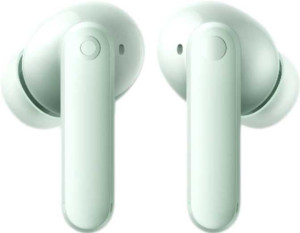
CMF Buds 2
Google Pixel Buds 2a

CMF Buds 2 Google Pixel Buds 2a

Overview

Welcome to our in-depth spec comparison between the CMF Buds 2 and the Google Pixel Buds 2a. Both earbuds share a strong foundation — active noise cancellation, fast pairing, and Bluetooth 5.4 — but key differences emerge when you look closely at battery endurance, audio codec support, and spatial audio capabilities. Whether you are chasing longer listening sessions or a more secure fit for active use, this comparison breaks down every spec to help you make the right call.

Common Features

  • Both products use an in-ear fit.
  • Neither product has wires or cables.
  • Neither product is a neckband earbud style.
  • Neither product has RGB lighting.
  • Both products have stereo speakers.
  • Neither product has a UV light.
  • Neither product has a display.
  • Both products have active noise cancellation (ANC).
  • Both products have passive noise reduction.
  • Both products use an 11 mm driver unit.
  • Both products have a lowest frequency of 20 Hz.
  • Both products have a highest frequency of 20000 Hz.
  • Dolby Atmos support is not available on either product.
  • Dirac Virtuo support is not available on either product.
  • Neither product has a neodymium magnet.
  • Wireless charging is not available on either product.
  • Neither product has a solar power battery.
  • Both products have a battery level indicator.
  • Both products have a rechargeable battery.
  • Both products support fast pairing.
  • Both products have USB Type-C connectivity.
  • Both products use Bluetooth version 5.4.
  • LDAC support is not available on either product.
  • LDHC support is not available on either product.
  • Bluetooth LE Audio is not supported on either product.
  • aptX Adaptive support is not available on either product.
  • aptX Low Latency support is not available on either product.
  • Both products have an ambient sound mode.
  • Both products include a find device feature.
  • Both products support fast charging.
  • Neither product can read notifications.
  • Neither product has a built-in translator.
  • Both products have a mute function.
  • Both products can be used as a headset.
  • Both products have a control panel placed on the device.
  • Both products have a noise-canceling microphone.

Main Differences

  • The ingress protection rating is IP55 on CMF Buds 2 and IP54/IPX4 on Google Pixel Buds 2a.
  • CMF Buds 2 is water resistant while Google Pixel Buds 2a is sweat resistant.
  • The weight is 9 g on CMF Buds 2 and 9.4 g on Google Pixel Buds 2a.
  • Wingtips are included with Google Pixel Buds 2a but not with CMF Buds 2.
  • Spatial audio is supported on CMF Buds 2 but not available on Google Pixel Buds 2a.
  • Battery life is 13.5 hours on CMF Buds 2 and 10 hours on Google Pixel Buds 2a.
  • Battery life of the charging case is 41.5 hours on CMF Buds 2 and 27 hours on Google Pixel Buds 2a.
  • Battery life with ANC enabled is 7.5 hours on CMF Buds 2 and 7 hours on Google Pixel Buds 2a.
  • AAC support is present on CMF Buds 2 but not available on Google Pixel Buds 2a.
  • The number of microphones is 6 on CMF Buds 2 and 4 on Google Pixel Buds 2a.
Specs Comparison
CMF Buds 2

CMF Buds 2

Google Pixel Buds 2a

Google Pixel Buds 2a

Design:
Fit In-ear In-ear
Ingress Protection (IP) rating IP55 IP54, IPX4
water resistance Water resistant Sweat resistant
weight 9 g 9.4 g
has no wires or cables
are neckband earbuds
wingtips included
has RGB lighting
has stereo speakers
has UV light
Has a display

Both the CMF Buds 2 and the Google Pixel Buds 2a share the same fundamental design DNA: fully wireless, in-ear form factors with no neckband, stereo playback, and no gimmicks like RGB lighting or a display. At 9 g versus 9.4 g, the weight difference is negligible in practice and unlikely to be felt during extended wear.

The most meaningful divergence lies in protection and fit security. On ingress protection, the CMF Buds 2 carries an IP55 rating — meaning it is rated against both dust ingress and water jets — while the Pixel Buds 2a holds an IP54/IPX4 rating, offering slightly lower dust resistance (a ″4″ rather than ″5″ on the particulate scale) and sweat/splash resistance rather than full water resistance. In real-world terms, the CMF Buds 2 can handle a light rain or accidental rinse more confidently. On fit, the Pixel Buds 2a ships with wingtips included, which adds an anchor point inside the ear concha for users who struggle with earbuds slipping during workouts — a genuinely useful inclusion that the CMF Buds 2 omits entirely.

Overall, the two products trade blows in this category. The CMF Buds 2 has a slight edge in environmental protection, which matters for outdoor or gym use where rain exposure is possible. The Pixel Buds 2a counters with bundled wingtips, giving it an advantage for users who prioritize a secure, active-use fit. Neither product has a dominant overall design advantage; your preference should hinge on whether protection depth or physical fit security is the higher priority.

Sound quality:
has active noise cancellation (ANC)
has passive noise reduction
driver unit size 11 mm 11 mm
lowest frequency 20 Hz 20 Hz
highest frequency 20000 Hz 20000 Hz
supports spatial audio
has Dolby Atmos
has Dirac Virtuo
has a neodymium magnet

At the hardware level, these two earbuds are virtually identical in their sound architecture. Both deploy an 11 mm driver — a respectable size for in-ear earbuds that generally favors stronger bass response compared to smaller drivers — and both cover the standard human hearing range of 20 Hz to 20,000 Hz. Neither product uses a neodymium magnet, and neither carries Dolby Atmos or Dirac Virtuo certification, so the raw driver and tuning foundations are squarely on equal footing.

Both also combine active noise cancellation with passive noise reduction. ANC uses microphones to generate inverse sound waves that suppress ambient noise electronically, while passive reduction is simply the physical seal of the ear tip blocking sound — having both layers in tandem is the standard approach for effective noise isolation, and the presence of both here is a meaningful shared strength rather than a differentiator.

The single spec that separates them is spatial audio, which the CMF Buds 2 supports and the Pixel Buds 2a does not. Spatial audio simulates a three-dimensional soundstage — making music, movies, and games feel more immersive and directional — and its absence on the Pixel Buds 2a is a tangible gap for users who value that experience. That gives the CMF Buds 2 a clear edge in this category, as it offers a more expansive listening experience despite the two products being otherwise acoustically matched on paper.

Power:
Battery life 13.5 hours 10 hours
Battery life of charging case 41.5 hours 27 hours
Battery life (ANC) 7.5 hours 7 hours
has wireless charging
Has a solar power battery
has a battery level indicator
has a rechargeable battery

Battery endurance is where the CMF Buds 2 pulls ahead decisively. With 13.5 hours of earbud playtime versus 10 hours on the Pixel Buds 2a, the CMF offers over a third more listening time per charge — a gap that translates to real-world differences for long-haul travelers, all-day office users, or anyone who forgets to charge regularly. Factor in the charging case, and the gulf widens further: 41.5 hours of total combined battery on the CMF versus 27 hours for the Pixel Buds 2a, meaning the CMF can go roughly a full extra day and a half longer before needing a wall outlet.

Under ANC — which draws more power and is typically the stress test for earbud battery claims — the gap narrows considerably. The CMF delivers 7.5 hours with ANC on compared to 7 hours for the Pixel Buds 2a, a difference that is modest but consistent. Neither product supports wireless charging, so both require a wired top-up, and both include a battery level indicator, making it easy to track remaining charge before heading out.

The CMF Buds 2 has a clear and unambiguous advantage in this category across every metric — per-session playtime, case capacity, and ANC endurance. For users who prioritize going longer between charges, the CMF is the stronger choice here by a meaningful margin.

Connectivity:
has fast pairing
Has USB Type-C
Bluetooth version 5.4 5.4
has LDAC
has LDHC
has Bluetooth LE Audio
has aptX Adaptive
has aptX Low Latency
has aptX HD
has aptX
has aptX Lossless
has aptX Voice
has Auracast
maximum Bluetooth range 10 m 10 m
supports Bluetooth pairing using NFC
Can be used wirelessly
has AAC

Strip away the codec list and these two earbuds share an identical connectivity foundation: Bluetooth 5.4, a 10 m maximum range, fast pairing, USB-C charging, and no NFC. Bluetooth 5.4 is a modern standard that brings improved connection stability and efficiency over earlier versions, so both products are on equal footing for day-to-day pairing reliability.

Neither earbud supports any of the high-resolution or low-latency codec extensions — no LDAC, no aptX variants, no LE Audio, no Auracast. The one codec distinction that does exist is AAC, which the CMF Buds 2 supports and the Pixel Buds 2a does not. AAC matters most to iPhone users and those streaming from AAC-native sources like Apple Music, as it allows the device and source to exchange audio at higher quality than the baseline SBC codec. Without AAC, the Pixel Buds 2a falls back to SBC for all connections, which is a more compressed, lower-fidelity transmission.

Given how closely matched everything else is, AAC support gives the CMF Buds 2 a narrow but genuine edge in this category — particularly for Apple ecosystem users or anyone streaming from AAC-optimized platforms. For Android users on SBC-only sources, the practical difference diminishes, but the CMF still holds the broader compatibility advantage.

Features:
release date April 2025 August 2025
has ambient sound mode
has find device feature
Supports fast charging
can read notifications
Has a built-in translator
has a mute function
can be used as a headset
control panel placed on a device
Has voice prompts
travel bag is included
Has a temperature sensor
Has a built-in camera remote control function

Rarely does a comparison come down to a flat draw, but the features category offers exactly that. Every single spec listed here is identical between the CMF Buds 2 and the Google Pixel Buds 2a — from ambient sound mode and fast charging to on-device controls, voice prompts, mute function, and even the inclusion of a travel bag.

The shared highlights are worth noting for their practical value. Ambient sound mode — which pipes in external audio so you can stay aware of your surroundings without removing the earbuds — is a genuinely useful daily-use feature. Fast charging reduces the friction of low-battery situations, and the bundled travel bag adds a layer of portability and protection that budget-tier earbuds often omit. Both can also function as a headset for calls, rounding out a solid and well-matched utility profile.

With no differentiating spec anywhere in this group, the verdict is a complete tie. Neither product holds any advantage here — a user choosing between the two based solely on features will find the experience functionally indistinguishable.

Microphone:
number of microphones 6 4
has a noise-canceling microphone

Microphone hardware is lean but telling in this comparison. Both the CMF Buds 2 and the Google Pixel Buds 2a feature noise-canceling microphones, meaning both are designed to suppress background noise during calls — a baseline expectation for modern earbuds used in noisy environments like commutes or open offices.

Where they diverge is microphone count: the CMF Buds 2 packs 6 microphones against the Pixel Buds 2a's 4 microphones. More microphones generally enable more sophisticated beamforming — the technique of combining signals from multiple mics to isolate the speaker's voice and reject ambient noise from different directions. A higher mic count also tends to benefit ANC performance, since more pickup points allow the earbud to more accurately sample and cancel environmental sound. In practice, this can mean cleaner call quality in windy or loud surroundings and more effective active noise cancellation overall.

The CMF Buds 2 holds the edge here by virtue of its additional microphones. While both products share noise-canceling capability in principle, the CMF's denser mic array gives it a structural advantage for call clarity and ANC precision that the Pixel Buds 2a's 4-mic setup cannot match on paper.

Comparison Summary & Verdict

After examining every spec, the CMF Buds 2 and Google Pixel Buds 2a cater to slightly different priorities. The CMF Buds 2 pulls ahead with a significantly longer battery life of 13.5 hours (41.5 hours total with the case), spatial audio support, AAC codec compatibility, and a higher microphone count of 6, making it the stronger pick for audio enthusiasts and commuters who need all-day power. The Google Pixel Buds 2a, on the other hand, offers a more secure fit thanks to included wingtips and carries a dual IP rating (IP54 and IPX4) with explicit sweat resistance — a practical edge for gym-goers and active users. Both earbuds deliver the same 11 mm drivers, ANC, and fast charging, so neither disappoints on core fundamentals. Your choice ultimately comes down to whether battery life and audio features or fit security and workout durability matter more to you.

CMF Buds 2
Buy CMF Buds 2 if...

Buy the CMF Buds 2 if you want longer battery life, spatial audio support, and AAC codec compatibility for an enhanced listening experience throughout the day.

Google Pixel Buds 2a
Buy Google Pixel Buds 2a if...

Buy the Google Pixel Buds 2a if you prioritize a secure, comfortable fit during workouts thanks to the included wingtips and dedicated sweat resistance rating.