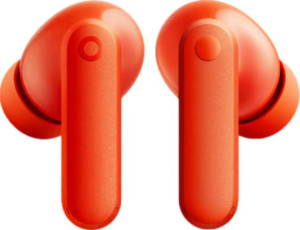
CMF Buds 2a
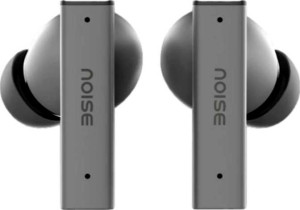
Noise Buds Marine

CMF Buds 2a Noise Buds Marine

Overview

Choosing between the CMF Buds 2a and the Noise Buds Marine means evaluating two wireless earbuds that share a remarkably solid common foundation, including active noise cancellation, a four-microphone system, and multipoint connectivity. Yet beneath the surface, they diverge in meaningful ways across Bluetooth version, codec support, ingress protection, and smart features. Whether your priority is seamless device pairing, driver size, or workout-ready durability, this detailed spec breakdown has everything you need to choose wisely.

Common Features

  • Both products use an in-ear fit design.
  • Neither product has wires or cables.
  • Neither product is a neckband earbud.
  • Wingtips are not included with either product.
  • RGB lighting is not present on either product.
  • Both products have stereo speakers.
  • UV light is not available on either product.
  • Neither product has a display.
  • Both products support active noise cancellation (ANC).
  • Both products offer passive noise reduction.
  • The lowest frequency on both products is 20 Hz.
  • The highest frequency on both products is 20000 Hz.
  • Spatial audio is not supported on either product.
  • Dolby Atmos is not available on either product.
  • Neither product has a neodymium magnet.
  • Both products offer 8 hours of battery life.
  • Both products have a charge time of 1.5 hours.
  • Wireless charging is not available on either product.
  • Both products have a battery level indicator.
  • Both products have a rechargeable battery.
  • Both products include a USB Type-C connector.
  • LDAC is not supported on either product.
  • Bluetooth LE Audio is not supported on either product.
  • aptX Adaptive is not supported on either product.
  • aptX Low Latency is not supported on either product.
  • aptX HD is not supported on either product.
  • aptX is not supported on either product.
  • Both products support ambient sound mode.
  • In-ear/on-ear detection is not available on either product.
  • Both products support fast charging.
  • Both products support multipoint connection with up to 2 devices.
  • Neither product can read notifications.
  • Both products have a mute function.
  • Both products can be used as a headset.
  • Both products have a control panel placed on the device.
  • Both products have 4 microphones.
  • Both products have a noise-canceling microphone.

Main Differences

  • The ingress protection rating is IP54 and IPX2 on CMF Buds 2a, while Noise Buds Marine is rated IPX4.
  • Sweat resistance is present on Noise Buds Marine but not specified on CMF Buds 2a.
  • The driver unit size is 12.4 mm on CMF Buds 2a and 13 mm on Noise Buds Marine.
  • The battery life of the charging case is 27.5 hours on CMF Buds 2a and 27 hours on Noise Buds Marine.
  • Fast pairing is supported on CMF Buds 2a but not available on Noise Buds Marine.
  • The Bluetooth version is 5.4 on CMF Buds 2a and 5.3 on Noise Buds Marine.
  • AAC codec support is present on CMF Buds 2a but not available on Noise Buds Marine.
  • A find device feature is available on CMF Buds 2a but not present on Noise Buds Marine.
Specs Comparison
CMF Buds 2a

CMF Buds 2a

Noise Buds Marine

Noise Buds Marine

Design:
Fit In-ear In-ear
Ingress Protection (IP) rating IP54, IPX2 IPX4
water resistance None Sweat resistant
has no wires or cables
are neckband earbuds
wingtips included
has RGB lighting
has stereo speakers
has UV light
Has a display

Both the CMF Buds 2a and the Noise Buds Marine share the same fundamental design philosophy: true wireless, in-ear fit with stereo audio, and no extras like wingtips, RGB lighting, or a display. For the vast majority of users, the day-to-day form factor will feel essentially identical.

The one meaningful differentiator in this group is environmental protection. The Noise Buds Marine carries an IPX4 rating and is explicitly designated as sweat resistant, making it a straightforward choice for workouts. The CMF Buds 2a lists a dual rating of IP54 and IPX2, yet its water resistance field is marked as ″None″ — a contradiction that creates ambiguity about real-world reliability against moisture. IP54 would normally imply limited dust and splash protection, but since the provided data does not confirm active water resistance, users should not assume the CMF offers a practical advantage here.

On balance, the Noise Buds Marine holds a clearer edge in protection confidence for this group: its IPX4 rating and explicit sweat-resistance designation give users an unambiguous assurance during physical activity, while the CMF's conflicting data points leave its durability story less certain.

Sound quality:
has active noise cancellation (ANC)
has passive noise reduction
driver unit size 12.4 mm 13 mm
lowest frequency 20 Hz 20 Hz
highest frequency 20000 Hz 20000 Hz
supports spatial audio
has Dolby Atmos
has Dirac Virtuo
has a neodymium magnet

At the core of both earbuds sits a very similar audio architecture: a full 20 Hz–20 kHz frequency range, both active and passive noise cancellation, and no spatial audio or premium audio processing like Dolby Atmos. For the listener, this means neither product is targeting audiophile-grade or immersive surround experiences — both are squarely positioned as capable everyday earbuds.

The only differentiator in this group is driver size: the Noise Buds Marine uses a 13 mm driver versus the CMF Buds 2a's 12.4 mm. A larger driver can move more air, which in theory supports deeper bass response and fuller low-end presence — but a 0.6 mm difference is marginal, and real-world tuning and driver quality ultimately matter far more than raw diameter alone. Without additional data such as frequency response curves or sensitivity ratings, this gap cannot be declared a meaningful advantage.

In practice, this group is essentially a near-tie. Both earbuds offer the same frequency coverage, equivalent noise-isolation tools, and no advanced audio enhancements. The Noise Buds Marine's slightly larger driver gives it a nominal edge on paper, but the difference is too slim to be a decisive factor for most buyers.

Power:
Battery life 8 hours 8 hours
Battery life of charging case 27.5 hours 27 hours
charge time 1.5 hours 1.5 hours
has wireless charging
Has a solar power battery
has a battery level indicator
has a rechargeable battery

Power performance is remarkably close between these two earbuds. Both deliver 8 hours of playback per charge and refill in 1.5 hours — a solid result that comfortably covers a full workday or a long-haul flight on a single earbud charge.

Where a difference technically exists is in total combined endurance: the CMF Buds 2a's case extends total listening to 27.5 hours, edging out the Noise Buds Marine's 27 hours. In real-world terms, however, a 30-minute gap across multiple full charge cycles is imperceptible — it amounts to roughly one short top-up session spread over several days of use. Neither product supports wireless charging, so both require a wired connection to the case.

This group is a functional tie. The CMF Buds 2a holds a fractional numerical lead in total case capacity, but the margin is too small to influence a purchase decision. Buyers prioritizing battery life can consider both products equally confident they will perform similarly in daily use.

Connectivity:
has fast pairing
Has USB Type-C
Bluetooth version 5.4 5.3
has LDAC
has LDHC
has Bluetooth LE Audio
has aptX Adaptive
has aptX Low Latency
has aptX HD
has aptX
has aptX Lossless
has aptX Voice
has Auracast
maximum Bluetooth range 10 m 10 m
supports Bluetooth pairing using NFC
Can be used wirelessly
has AAC

Connectivity is where the CMF Buds 2a quietly pulls ahead. It runs on Bluetooth 5.4 versus the Noise Buds Marine's 5.3 — a generational step that brings incremental improvements in connection efficiency and stability, though both versions are modern enough to handle everyday wireless use reliably at the shared maximum range of 10 m.

The more tangible advantages for the CMF lie in two additional features. Fast pairing streamlines the initial setup experience, automatically connecting to nearby devices without manual Bluetooth menu navigation — a small but genuinely appreciated convenience. The CMF also supports the AAC codec, which enables higher-quality audio transmission specifically on Apple devices, making it the stronger pick for iPhone users who want better wireless audio fidelity. The Noise Buds Marine offers neither of these, relying solely on the standard SBC codec by default.

Neither earbud supports advanced codecs like LDAC or any aptX variant, so neither is targeting hi-res wireless audio. Still, the CMF Buds 2a holds a clear edge in this group — the newer Bluetooth version, fast pairing support, and AAC compatibility collectively make it the more refined and versatile connectivity package.

Features:
release date April 2025 July 2025
has ambient sound mode
has in/on-ear detection
has find device feature
Supports fast charging
multipoint count 2 2
can read notifications
has a mute function
can be used as a headset
control panel placed on a device
Has voice prompts
travel bag is included
Has an in-line control panel
Has a temperature sensor
Has a built-in camera remote control function

Across most of the features that define day-to-day usability, these two earbuds are virtually identical. Both offer ambient sound mode, fast charging, 2-device multipoint connection, on-device touch controls, mute, voice prompts, and even a included travel bag — a well-rounded feature set that covers the essentials comfortably for this price segment.

The single differentiator in this group is the find device feature, which the CMF Buds 2a includes and the Noise Buds Marine does not. For users who frequently misplace their earbuds or case, this is a genuinely useful tool — it typically works through a companion app to trigger an audible tone, saving time and frustration. It is not a headline feature, but its absence on the Noise Buds Marine is a noticeable omission when the rest of the spec sheet is this closely matched.

The CMF Buds 2a takes the edge in this group solely on the strength of that find device capability. For buyers who would never use it, the two products are effectively tied on features — but for anyone prone to losing small accessories, it tips the balance meaningfully toward the CMF.

Microphone:
number of microphones 4 4
has a noise-canceling microphone

Microphone hardware is an exact match here. Both the CMF Buds 2a and the Noise Buds Marine are equipped with 4 microphones and noise-canceling mic technology — a configuration typically used to enable beamforming, where multiple mics work in concert to isolate the user's voice and suppress background noise during calls.

A 4-mic setup is a meaningful asset at this price tier, as it generally delivers cleaner call quality in noisy environments compared to simpler 2-mic arrangements. Both products are on equal footing in leveraging that advantage.

This group is a complete tie. With identical mic count and the same noise-canceling capability, there is no basis to favor one over the other for call performance based on the available data.

Comparison Summary & Verdict

After examining every spec, both earbuds prove to be well-matched in core areas: each offers ANC, 8 hours of playback, fast charging, and a four-microphone noise-canceling setup. However, the details reveal two distinct personalities. The CMF Buds 2a stands out for users who value a richer feature set, delivering fast pairing, AAC codec support, a slightly longer 27.5-hour case battery, Bluetooth 5.4, and a handy find-device function. On the other hand, the Noise Buds Marine appeals to those who want a larger 13 mm driver and reliable sweat resistance for active use, backed by an IPX4 rating. In short, the CMF Buds 2a suits tech-forward everyday users, while the Noise Buds Marine is a strong pick for fitness-focused listeners.

CMF Buds 2a
Buy CMF Buds 2a if...

Buy the CMF Buds 2a if you want fast pairing, AAC codec support, a find-device feature, and the latest Bluetooth 5.4 for a more connected everyday experience.

Noise Buds Marine
Buy Noise Buds Marine if...

Buy the Noise Buds Marine if you prioritize a larger 13 mm driver and sweat-resistant IPX4 durability for active or fitness-oriented use.