CMF Phone 2 Pro
Google Pixel 9a

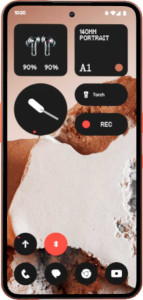
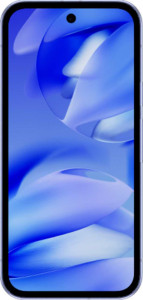
CMF Phone 2 Pro Google Pixel 9a

Overview

Welcome to our in-depth spec comparison between the CMF Phone 2 Pro and the Google Pixel 9a. These two mid-range contenders take notably different approaches across several key areas, including display brightness and size, raw processing performance, camera capabilities, and everyday convenience features like charging and software support. Read on to see how every specification stacks up before making your decision.

Common Features

  • Neither product has a rugged build.
  • Neither product can be folded.
  • Both products feature an OLED/AMOLED display.
  • Both products support a 120Hz refresh rate.
  • Both products have branded damage-resistant glass.
  • Both products support HDR10.
  • Both products include an Always-On Display.
  • Neither product supports Dolby Vision.
  • Both products have a contrast ratio of 1000000:1.
  • Neither product has a secondary screen.
  • Both products come with 256GB of internal storage and 8GB of RAM.
  • Both products have integrated LTE and 5G support.
  • Both products use a 4nm semiconductor.
  • Both products run Android 15.
  • Both products support fast charging but do not come with a charger in the box.
  • Neither product has a removable battery.
  • Neither product has a 3.5mm audio jack.
  • Both products have NFC and a fingerprint scanner.
  • Both products have Bluetooth 5.3 and USB Type-C.
  • Neither product supports emergency SOS via satellite.

Main Differences

  • Water resistance is rated IP54 (water resistant) on CMF Phone 2 Pro and IP68 (waterproof) on Google Pixel 9a.
  • Weight is 185g on CMF Phone 2 Pro and 186g on Google Pixel 9a.
  • Thickness is 7.8mm on CMF Phone 2 Pro and 8.9mm on Google Pixel 9a.
  • Screen size is 6.77″ on CMF Phone 2 Pro and 6.3″ on Google Pixel 9a.
  • Pixel density is 388 ppi on CMF Phone 2 Pro and 422 ppi on Google Pixel 9a.
  • Typical brightness is 800 nits on CMF Phone 2 Pro and 1800 nits on Google Pixel 9a.
  • HDR10+ support is present on CMF Phone 2 Pro but not available on Google Pixel 9a.
  • AnTuTu benchmark score is 711,907 on CMF Phone 2 Pro and 1,071,616 on Google Pixel 9a.
  • The chipset is MediaTek Dimensity 7300 on CMF Phone 2 Pro and Google Tensor G4 on Google Pixel 9a.
  • Geekbench 6 multi-core score is 2,874 on CMF Phone 2 Pro and 4,500 on Google Pixel 9a.
  • Main camera megapixels are 50 & 50 & 8 MP on CMF Phone 2 Pro and 48 & 13 MP on Google Pixel 9a.
  • RAW photo shooting is not available on CMF Phone 2 Pro but is supported on Google Pixel 9a.
  • Maximum video recording is 2160p at 30fps on CMF Phone 2 Pro and 2160p at 60fps on Google Pixel 9a.
  • Direct OS updates are not available on CMF Phone 2 Pro but are supported on Google Pixel 9a.
  • Battery capacity is 5000 mAh on CMF Phone 2 Pro and 5100 mAh on Google Pixel 9a.
  • Wireless charging is not available on CMF Phone 2 Pro but is supported on Google Pixel 9a.
  • Wired charging speed is 33W on CMF Phone 2 Pro and 23W on Google Pixel 9a.
  • Stereo speakers are not present on CMF Phone 2 Pro but are available on Google Pixel 9a.
  • An external memory slot is available on CMF Phone 2 Pro but not on Google Pixel 9a.
  • Crash detection is not available on CMF Phone 2 Pro but is present on Google Pixel 9a.
Specs Comparison
CMF Phone 2 Pro

CMF Phone 2 Pro

Google Pixel 9a

Google Pixel 9a

Design:
water resistance Water resistant Waterproof
weight 185 g 186 g
thickness 7.8 mm 8.9 mm
width 78 mm 73.3 mm
height 164 mm 154.7 mm
volume 99.7776 cm³ 100.921639 cm³
Ingress Protection (IP) rating IP54 IP68
has a rugged build
can be folded

At a glance, both phones weigh nearly the same — 185 g vs 186 g — and occupy almost identical volumes, so neither has a meaningful weight advantage in daily carry. Where they diverge is in how that volume is distributed. The CMF Phone 2 Pro is noticeably slimmer at 7.8 mm thick but spreads that mass across a taller (164 mm) and wider (78 mm) footprint. The Pixel 9a, by contrast, is more compact in hand — shorter at 154.7 mm and narrower at 73.3 mm — but is considerably thicker at 8.9 mm. In practice, the CMF will feel more like a flat slab that's harder to one-hand, while the Pixel 9a's shorter, narrower profile tends to sit more naturally in a palm despite its extra girth.

The most meaningful differentiator in this group is water protection. The CMF Phone 2 Pro carries an IP54 rating, which means it can handle splashes and dust but should not be submerged. The Pixel 9a steps up to IP68, certifying it against full submersion in fresh water. For everyday users, IP54 covers rain and accidental spills just fine, but IP68 provides genuine peace of mind around pools, sinks, or any scenario where the phone might end up underwater — however briefly.

Neither device has a rugged build or foldable form factor, so those traits are a wash. Overall, the Google Pixel 9a holds a clear edge in this group: its IP68 water protection is a material real-world advantage over the CMF's IP54, and its more compact dimensions make it easier to handle, even if it sacrifices some slimness in the process.

Display:
Display type OLED/AMOLED OLED/AMOLED
screen size 6.77" 6.3"
pixel density 388 ppi 422 ppi
resolution 1080 x 2392 px 1080 x 2424 px
refresh rate 120Hz 120Hz
brightness (typical) 800 nits 1800 nits
has branded damage-resistant glass
supports HDR10
supports HDR10+
Always-On Display
supports Dolby Vision
contrast ratio 1000000:1 1000000:1
Has a secondary screen
has a touch screen

Both phones use OLED/AMOLED panels with a 120Hz refresh rate, identical contrast ratios, and matching HDR10 support — so the baseline display experience is competitive on both sides. The most striking difference, however, is brightness: the Pixel 9a outputs 1800 nits typical versus the CMF Phone 2 Pro's 800 nits. That gap is not cosmetic — in direct sunlight, a display at 1800 nits remains comfortably readable while one at 800 nits can wash out significantly. For users who spend a lot of time outdoors, this is a decisive practical advantage for the Pixel 9a.

Screen size cuts the other way. The CMF Phone 2 Pro offers a larger 6.77″ panel, which benefits media consumption, gaming, and multitasking. Yet the Pixel 9a, despite being smaller at 6.3″, achieves a higher pixel density of 422 ppi versus 388 ppi, meaning its image is actually slightly sharper per inch. The resolution figures are nearly identical, so the density difference comes purely from fitting similar pixels into a smaller area — fine text and detail will render with marginally more crispness on the Pixel 9a. The CMF counters with HDR10+ support, which enables dynamic tone mapping for compatible content, an edge the Pixel 9a lacks.

Weighing these factors together, the Google Pixel 9a holds the stronger display advantage overall. Its 1800 nits brightness lead is a real-world differentiator that affects daily usability far more than the CMF's size benefit or HDR10+ support. Users who prioritize a larger screen for entertainment may still prefer the CMF, but purely on display quality and versatility, the Pixel 9a comes out ahead.

Performance:
internal storage 256GB 256GB
RAM 8GB 8GB
AnTuTu benchmark score 711907 1071616
Chipset (SoC) name MediaTek Dimensity 7300 Google Tensor G4
GPU name Mali G615 MC2 ARM Mali-G715 MP7
CPU speed 4 x 2.5 & 4 x 2 GHz 1 x 3.1 & 3 x 2.6 & 4 x 1.92 GHz
Geekbench 6 result (multi) 2874 4500
Geekbench 6 result (single) 1007 1600
GPU clock speed 1047 MHz 940 MHz
Has integrated LTE
RAM speed 6400 MHz 4200 MHz
semiconductor size 4 nm 4 nm
Supports 64-bit
DirectX version DirectX 12 DirectX 12
Has integrated graphics
Uses big.LITTLE technology
CPU threads 8 threads 8 threads
Uses HMP
maximum memory amount 16GB 16GB
DDR memory version 5 5

On paper, these two phones share a surprising amount of common ground — both pack 8GB of RAM, 256GB of storage, an 8-thread CPU with big.LITTLE architecture, DDR5 memory, and a 4 nm process node. But benchmark numbers expose a substantial performance gap beneath that surface similarity. The Pixel 9a's Google Tensor G4 scores 1,071,616 on AnTuTu versus the CMF Phone 2 Pro's 711,907 on its MediaTek Dimensity 7300 — roughly a 50% lead. That kind of margin translates to noticeably snappier app launches, smoother heavy multitasking, and more headroom for demanding workloads.

The CPU story is equally one-sided. The Pixel 9a posts a Geekbench 6 multi-core score of 4,500 against the CMF's 2,874, and its single-core score of 1,600 versus 1,007 is particularly telling — single-core performance governs the responsiveness of everyday tasks like typing, scrolling, and opening apps, so the Pixel 9a should feel meaningfully more fluid in day-to-day use. The CMF counters with faster RAM at 6,400 MHz versus the Pixel 9a's 4,200 MHz, which can aid data-intensive operations, but that advantage is insufficient to offset the raw CPU and overall SoC deficit. On the GPU side, the CMF's higher clock speed (1,047 MHz) does not compensate for the Pixel 9a's broader 7-core GPU configuration, which handles graphics-intensive tasks more capably.

The Google Pixel 9a holds a clear and commanding advantage in this group. The performance gap shown across every major benchmark is large enough to be perceptible in real use — not just in synthetic tests — making this a decisive win for the Pixel 9a for users who prioritize processing power.

Cameras:
megapixels (main camera) 50 & 50 & 8 MP 48 & 13 MP
wide aperture (main camera) 1.9 & 1.9 & 2.2f 2.2 & 1.7f
Has a dual-lens (or multi-lens) main camera
megapixels (front camera) 16MP 13MP
has built-in optical image stabilization
video recording (main camera) 2160 x 30 fps 2160 x 60 fps
Has a dual-tone LED flash
number of flash LEDs 1 2
has a BSI sensor
has a CMOS sensor
has continuous autofocus when recording movies
Has phase-detection autofocus for photos
supports slow-motion video recording
has a built-in HDR mode
has manual exposure
has a flash
has manual ISO
has a serial shot mode
has manual focus
has a front camera
Has laser autofocus
Shoots 360° panorama
has manual white balance
shoots raw
has touch autofocus
has manual shutter speed
can create panoramas in-camera
wide aperture (front camera) 2f 2.2f
Has timelapse function
Has a front-facing LED flash
has a dual-lens (or multi-lens) front camera
supports HDR10 recording
supports Dolby Vision recording
has a front-facing camera under the display
Has a RGB LED flash
has 3D photo/video recording capabilities

The CMF Phone 2 Pro arrives with a triple rear camera system — 50 + 50 + 8 MP — giving it a lens count advantage and a higher-resolution front camera at 16 MP versus the Pixel 9a's 13 MP. Its primary lens also sports a wider f/1.9 aperture compared to the Pixel 9a's f/2.2 main, which is a tangible low-light benefit on that specific sensor. However, raw megapixel counts and lens quantity rarely tell the full story, and several other specs shift the balance meaningfully.

For video and pro-shooting use, the Pixel 9a pulls decisively ahead. Its ability to record 4K at 60 fps — versus the CMF's 4K at 30 fps — doubles the maximum frame rate for smooth motion capture. It also supports HDR10 video recording, shoots in RAW format, and includes manual shutter speed control, none of which the CMF offers. On top of that, the Pixel 9a carries a BSI sensor, which is engineered to capture more light per pixel — a meaningful hardware advantage, especially in low-light stills. Its dual-tone, dual-LED flash also produces more natural-looking illumination than the CMF's single LED.

Both phones cover the fundamentals well — OIS, phase-detection autofocus, slow motion, HDR photos, and panorama — so casual shooters will find either capable. But for users who care about video quality or manual control, the Google Pixel 9a holds a clear edge in this group. Its 4K/60fps recording, RAW support, BSI sensor, and broader manual controls represent a more complete and versatile camera package despite having one fewer rear lens.

Operating system:
Android version Android 15 Android 15
has clipboard warnings
has location privacy options
has camera/microphone privacy options
has Mail Privacy Protection
has theme customization
can block app tracking
blocks cross-site tracking
has on-device machine learning
has notification permissions
has media picker
Can play games while they download
has dark mode
has Wi-Fi password sharing
has battery health check
has an extra dim mode
has focus modes
has dynamic theming
can offload apps
Has customizable notifications
has Live Text
has full-page screenshots
supports split screen
gets direct OS updates
has PiP
Can be used as a PC
Has sharing intents
has a child lock
Supports widgets
Is free and open source
Has offline voice recognition
has voice commands
Tracks the current position of a mobile device
is a multi-user system
has Quick Start

This is one of the most evenly matched spec groups in the entire comparison. Both phones launch on Android 15 and share an identical feature set across privacy controls, customization options, productivity tools, and accessibility features — dynamic theming, split-screen, Picture-in-Picture, offline voice recognition, on-device machine learning, and more. For the vast majority of software capabilities a user would encounter day-to-day, these two phones are functionally indistinguishable.

The single differentiating factor in this group, and it is a significant one in the long run, is OS update delivery. The Pixel 9a gets direct OS updates straight from Google, meaning it receives new Android versions and security patches as soon as they are released. The CMF Phone 2 Pro does not have this designation, which means updates are routed through Nothing's software team first — a process that historically introduces delays and uncertainty around how many major Android versions a device will ultimately receive. Over a two- to three-year ownership cycle, this gap can compound into months of deferred security patches and later access to new features.

Given how closely matched everything else is, the Google Pixel 9a takes the edge in this group solely on the strength of its direct OS update pipeline. It is a single spec line that carries outsized real-world importance for users who care about software longevity and device security.

Battery:
battery power 5000 mAh 5100 mAh
has wireless charging
Supports fast charging
charging speed 33W 23W
comes with a charger
has a removable battery
has a battery level indicator
has a rechargeable battery

Battery capacity is essentially a wash here — 5000 mAh on the CMF Phone 2 Pro versus 5100 mAh on the Pixel 9a is a 2% difference that will never be perceptible in real-world endurance. Where these two phones genuinely diverge is in how they replenish that charge. The CMF charges at 33W while the Pixel 9a caps at 23W, a gap that translates to a meaningfully shorter time plugged into a wall — roughly 30 to 40 minutes faster for a full charge depending on conditions. For users who top up in short bursts throughout the day, that speed advantage is a practical daily convenience.

The Pixel 9a hits back with wireless charging support, a feature the CMF entirely lacks. Wireless charging is slower than wired, but its real value is frictionless convenience — drop the phone on a pad at a desk or nightstand without hunting for a cable. For users already embedded in a wireless charging ecosystem, this is a meaningful quality-of-life feature. Neither phone ships with a charger in the box, so both buyers will need to source their own anyway.

This group comes down to a genuine trade-off rather than a clear winner. The CMF Phone 2 Pro is the better choice for users who want the fastest possible wired top-up, while the Google Pixel 9a suits those who value the flexibility of wireless charging. If forced to pick one edge, wireless charging's ecosystem convenience gives the Pixel 9a a slight overall advantage — but users who prioritize speed will reasonably land on the CMF.

Audio:
has a socket for a 3.5 mm audio jack
has stereo speakers
has aptX
has LDAC
has aptX HD
has aptX Adaptive
Has a radio
number of microphones 2 2

Audio is one of the more lopsided spec groups in this comparison. Both phones drop the 3.5mm headphone jack and share a dual-microphone setup, but the similarities end there. The Pixel 9a adds stereo speakers, which the CMF Phone 2 Pro lacks entirely. This is not a subtle difference — stereo output creates genuine left-right separation that makes media, gaming, and speakerphone calls noticeably more immersive and spatially coherent. The CMF's single speaker, by contrast, produces mono audio that sounds comparatively flat and directional.

For wireless audio, the Pixel 9a again pulls ahead with support for both aptX and LDAC. AptX delivers lower-latency Bluetooth audio — useful for video playback without lip-sync drift — while LDAC is Sony's high-resolution codec capable of transmitting up to three times the data of standard Bluetooth audio. Together, these codecs make the Pixel 9a significantly more capable when paired with compatible high-quality wireless headphones. The CMF Phone 2 Pro supports neither, meaning it is limited to standard Bluetooth audio quality regardless of how premium the headphones connected to it are.

The Google Pixel 9a wins this group without much contest. Stereo speakers, aptX, and LDAC collectively represent a substantially richer audio experience — both for listening out loud and through wireless headphones — while the CMF Phone 2 Pro offers no compensating audio advantages based on the provided specs.

Connectivity & Features:
release date April 2025 March 2025
has 5G support
Wi-Fi version Wi-Fi 4 (802.11n), Wi-Fi 6 (802.11ax), Wi-Fi 5 (802.11ac) Wi-Fi 6E (802.11ax), Wi-Fi 6 (802.11ax), Wi-Fi 5 (802.11ac), Wi-Fi 4 (802.11n)
SIM cards 2 SIM 1 SIM, 1 eSIM
Bluetooth version 5.3 5.3
has an external memory slot
Has USB Type-C
has NFC
Has a fingerprint scanner
has emergency SOS via satellite
has crash detection
has a gyroscope
supports ANT+
Has a heart rate monitor
has GPS
has a compass
supports Wi-Fi
Has an infrared sensor
has an accelerometer
has a cellular module
Has a barometer
has an HDMI output
Uses 3D facial recognition
Has an iris scanner
Stylus included
supports Galileo
Has motion tracking
Has optical tracking
Has a built-in projector

The core connectivity stack is well-matched: both phones support 5G, Bluetooth 5.3, NFC, USB-C, GPS, Galileo, and a full suite of motion sensors. The differences that do exist, however, are meaningful. On Wi-Fi, the Pixel 9a supports Wi-Fi 6E in addition to the standards both phones share, granting access to the uncongested 6 GHz band. In dense environments like apartments or offices with many competing networks, Wi-Fi 6E can deliver faster, more stable connections where Wi-Fi 6 devices like the CMF are left competing for crowded spectrum.

The CMF Phone 2 Pro counters with an external memory slot — a feature the Pixel 9a omits entirely. For users who want to expand storage cheaply, store large media libraries offline, or transfer files between devices via card, this is a tangible practical advantage. The SIM situation also differs: the CMF accommodates two physical SIMs, useful for travelers or dual-line users who prefer physical cards, while the Pixel 9a pairs one physical SIM with an eSIM, which is more flexible for digital carrier switching but less accommodating of international SIM swapping. On sensors, the Pixel 9a adds a barometer and crash detection — the latter being a genuine safety feature that can automatically contact emergency services after a detected vehicle collision, with no equivalent on the CMF.

This group is genuinely split by user priorities. The CMF Phone 2 Pro wins on expandable storage and dual physical SIM flexibility, while the Pixel 9a leads on Wi-Fi 6E, the barometer, and notably crash detection. Weighed together, the Google Pixel 9a holds a slight overall edge — Wi-Fi 6E and crash detection are broadly useful advantages, whereas expandable storage and dual physical SIM appeal to a more specific subset of users.
Miscellaneous:
has a video light
Has sapphire glass display
Has a curved display
Has an e-paper display

The Miscellaneous group offers no differentiation whatsoever between these two phones. Every spec listed — video light, display type variants, and glass tier — is identical across both the CMF Phone 2 Pro and the Google Pixel 9a. Neither features sapphire glass, a curved display, or an e-paper display, and both include a video light.

This is a complete tie. Based strictly on the data provided for this group, neither phone holds any advantage over the other.

Comparison Summary & Verdict

After examining the full spec sheet, both phones serve distinct audiences. The CMF Phone 2 Pro stands out with its larger 6.77″ display, slimmer 7.8mm profile, faster 33W wired charging, HDR10+ support, and an external memory slot, making it a compelling pick for media enthusiasts who value expandable storage and a bigger screen. The Google Pixel 9a, on the other hand, pulls ahead with a significantly brighter 1800-nit display, a stronger Tensor G4 chipset, superior IP68 waterproofing, wireless charging, stereo speakers, direct OS updates, and more advanced camera features including RAW shooting and 4K 60fps video. If longevity, performance, and all-round versatility matter most, the Pixel 9a is the smarter long-term investment.

CMF Phone 2 Pro
Buy CMF Phone 2 Pro if...

Buy the CMF Phone 2 Pro if you want a larger screen, a slimmer design, faster 33W wired charging, and the flexibility of expandable storage at a competitive price point.

Google Pixel 9a
Buy Google Pixel 9a if...

Buy the Google Pixel 9a if you prioritize a brighter display, stronger overall performance, IP68 waterproofing, wireless charging, stereo speakers, and guaranteed direct OS updates.