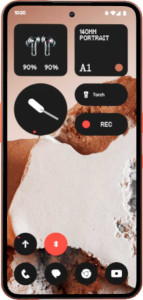
The camera hardware gap here is substantial. The CMF Phone 2 Pro deploys a triple rear camera system — a 50 MP main, a 50 MP secondary, and an 8 MP tertiary lens — while the Honor X70 fields a single 50 MP shooter. More meaningfully, the CMF includes 2x optical zoom, whereas the X70 lists 0x optical zoom, meaning it has no dedicated zoom lens at all. Optical zoom preserves image quality when closing in on a subject; digital zoom, which is the only fallback on the X70, simply crops and upscales, resulting in noticeably softer images. For anyone who regularly shoots portraits, wildlife, or distant subjects, this is a concrete functional deficit on the Honor.
The selfie camera tells a similar story. The CMF Phone 2 Pro's 16 MP front camera is double the resolution of the Honor X70's 8 MP unit, which matters for detail retention when shooting in good light or cropping selfies. One area where the X70 does hold a sensor-level advantage is its BSI (Back-Side Illuminated) sensor, which is designed to capture more light by repositioning circuitry away from the pixel area. The CMF's sensor lacks this designation. In practice, BSI can help in low-light conditions, partially offsetting the resolution gap on the rear — though the CMF's additional lenses and optical zoom remain unmatched advantages.
Across video and shooting features — 4K at 30fps, OIS, phase-detection autofocus, slow-motion, HDR mode, and manual controls — both phones are evenly matched, offering a solid and comparable feature set for everyday videography. The overall edge in this category belongs clearly to the CMF Phone 2 Pro, thanks to its versatile multi-lens system, optical zoom capability, and higher-resolution front camera, which collectively make it the more capable imaging device based on these specs alone.