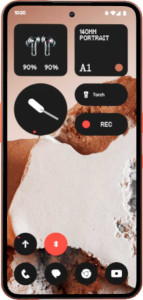
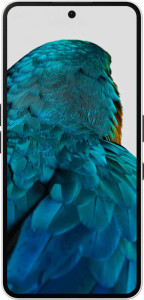
CMF Phone 2 Pro
Nothing Phone (3a)

CMF Phone 2 Pro Nothing Phone (3a)

Common Features

  • Both phones have a 6.77″ display.
  • Both phones have a resolution of 1080 x 2392 px.
  • Both phones support HDR10.
  • Both phones support HDR10+.
  • Both phones have an Always-On Display.
  • Both phones have a 5000 mAh battery.
  • Both phones support fast charging.
  • Both phones have a 3.5 mm audio jack.
  • Both phones have a fingerprint scanner.
  • Both phones support 5G.
  • Both phones use USB Type-C.
  • Both phones have dual SIM support.
  • Both phones run Android 15.
  • Both phones have a charger in the box.
  • Both phones have a rechargeable battery.
  • Both phones support clipboard warnings.
  • Both phones have location privacy options.
  • Both phones have camera/microphone privacy options.

Main Differences

  • CMF Phone 2 Pro weighs 185 g, while Nothing Phone (3a) weighs 201 g.
  • CMF Phone 2 Pro is 7.8 mm thick, while Nothing Phone (3a) is 8.4 mm thick.
  • CMF Phone 2 Pro has a width of 78 mm, while Nothing Phone (3a) has a width of 77.5 mm.
  • CMF Phone 2 Pro is 164 mm tall, while Nothing Phone (3a) is 163.5 mm tall.
  • CMF Phone 2 Pro has a volume of 99.7776 cm³, while Nothing Phone (3a) has a volume of 106.4385 cm³.
  • CMF Phone 2 Pro has an IP54 Ingress Protection rating, while Nothing Phone (3a) has an IP64 rating.
  • CMF Phone 2 Pro has a pixel density of 388 ppi, while Nothing Phone (3a) has a pixel density of 387 ppi.
  • CMF Phone 2 Pro has a touch sampling rate of 1000Hz, while Nothing Phone (3a) has a touch sampling rate of 240Hz.
  • CMF Phone 2 Pro features branded damage-resistant glass, while Nothing Phone (3a) does not.
  • CMF Phone 2 Pro has a contrast ratio of 1000000:1, while Nothing Phone (3a) has a contrast ratio of 5000000:1.
  • CMF Phone 2 Pro has 8GB of RAM, while Nothing Phone (3a) has 12GB of RAM.
  • CMF Phone 2 Pro has an AnTuTu benchmark score of 711907, while Nothing Phone (3a) has a score of 816384.
  • CMF Phone 2 Pro uses the MediaTek Dimensity 7300 chipset, while Nothing Phone (3a) uses the Qualcomm Snapdragon 7s Gen 3 chipset.
  • CMF Phone 2 Pro has a Mali G615 MC2 GPU, while Nothing Phone (3a) has an Adreno 710 GPU.
  • CMF Phone 2 Pro has a CPU speed of 4 x 2.5 & 4 x 2 GHz, while Nothing Phone (3a) has a CPU speed of 1 x 2.5 & 3 x 2.4 & 4 x 1.8 GHz.
  • CMF Phone 2 Pro achieves a Geekbench 6 multi-core result of 2874, while Nothing Phone (3a) achieves a result of 3239.
  • CMF Phone 2 Pro achieves a Geekbench 6 single-core result of 1007, while Nothing Phone (3a) achieves a result of 1162.
  • CMF Phone 2 Pro achieves a Geekbench 5 multi-core result of 8046, while Nothing Phone (3a) achieves a result of 3242.
  • CMF Phone 2 Pro achieves a Geekbench 5 single-core result of 1179, while Nothing Phone (3a) achieves a result of 893.
  • CMF Phone 2 Pro has a GPU clock speed of 1047 MHz, while Nothing Phone (3a) has a GPU clock speed of 1050 MHz.
  • CMF Phone 2 Pro has RAM speed of 6400 MHz, while Nothing Phone (3a) has RAM speed of 3200 MHz.
  • CMF Phone 2 Pro has a 16MP front camera, while Nothing Phone (3a) has a 32MP front camera.
  • CMF Phone 2 Pro has a wide aperture of 2f on the front camera, while Nothing Phone (3a) has a wide aperture of 2.2f on the front camera.
  • CMF Phone 2 Pro supports charging at 33W, while Nothing Phone (3a) supports charging at 50W.
  • CMF Phone 2 Pro does not have stereo speakers, while Nothing Phone (3a) features stereo speakers.
  • CMF Phone 2 Pro has 2 microphones, while Nothing Phone (3a) has 3 microphones.
  • CMF Phone 2 Pro supports Wi-Fi 4, Wi-Fi 6, and Wi-Fi 5, while Nothing Phone (3a) supports Wi-Fi 4, Wi-Fi 5, and Wi-Fi 6.
  • CMF Phone 2 Pro uses Bluetooth version 5.3, while Nothing Phone (3a) uses Bluetooth version 5.4.
  • CMF Phone 2 Pro has an external memory slot, while Nothing Phone (3a) does not.
Specs Comparison
CMF Phone 2 Pro

CMF Phone 2 Pro

Nothing Phone (3a)

Nothing Phone (3a)

Design:
water resistance Water resistant Water resistant
weight 185 g 201 g
thickness 7.8 mm 8.4 mm
width 78 mm 77.5 mm
height 164 mm 163.5 mm
volume 99.7776 cm³ 106.4385 cm³
Ingress Protection (IP) rating IP54 IP64
has a rugged build
can be folded

Both phones share a broadly similar footprint — nearly identical width and height — but diverge meaningfully in bulk and protection. The CMF Phone 2 Pro is noticeably slimmer at 7.8 mm thick and lighter at 185 g, compared to the Nothing Phone (3a)'s 8.4 mm and 201 g. That 16-gram difference is perceptible in daily one-handed use, and the tighter volume (99.8 cm³ vs 106.4 cm³) means the CMF simply feels less imposing in a pocket or palm.

Where the Nothing Phone (3a) fights back is in its IP64 rating versus the CMF's IP54. The critical digit here is the first number — dust ingress protection. A rating of 6 means full dust-tight protection, while the CMF's rating of 5 means only partial dust resistance. In practice, this matters if you regularly use your phone in sandy, dusty, or dirty environments. Both are equally rated for water resistance at level 4 (splash and light rain), so neither is suited for submersion.

In summary, the CMF Phone 2 Pro has a clear design and ergonomics edge — it is lighter, thinner, and more pocketable. However, the Nothing Phone (3a) holds a meaningful advantage in environmental durability thanks to its superior dust protection. Your priority decides the winner: form factor favors CMF, ruggedness for dusty conditions favors the Nothing Phone (3a).

Display:
Display type OLED/AMOLED OLED/AMOLED
screen size 6.77" 6.77"
pixel density 388 ppi 387 ppi
resolution 1080 x 2392 px 1080 x 2392 px
refresh rate 120Hz 120Hz
touch sampling rate 1000Hz 240Hz
brightness (typical) 800 nits 800 nits
has branded damage-resistant glass
supports HDR10
supports HDR10+
Always-On Display
supports Dolby Vision
contrast ratio 1000000:1 5000000:1
Has a secondary screen
has a touch screen

On paper, these two displays are nearly twins — both are 6.77″ OLED panels running at 1080 x 2392 px, 120Hz, with essentially identical pixel density (~388 vs 387 ppi) and the same 800 nits typical brightness. For everyday viewing, scrolling, and media consumption, users of either phone will have a practically indistinguishable experience.

The meaningful splits emerge in three specific areas. First, the Nothing Phone (3a) claims a significantly higher contrast ratio of 5,000,000:1 versus the CMF's 1,000,000:1 — a spec that, if accurate in real-world output, would translate to deeper, more inky blacks and more vivid HDR content. Second, the CMF Phone 2 Pro counters with a dramatically faster touch sampling rate of 1000Hz compared to the Nothing's 240Hz. This matters primarily for mobile gamers who need ultra-responsive input recognition; for general users, 240Hz is already more than sufficient. Third, only the CMF ships with branded damage-resistant glass, offering a tangible edge in everyday drop and scratch resilience that the Nothing Phone (3a) lacks.

This group is closely contested. The Nothing Phone (3a) has the edge for media enthusiasts who prioritize display depth and contrast, while the CMF Phone 2 Pro wins for gamers and users who want screen durability. Neither phone dominates outright — the right call depends squarely on which of these two differentiators aligns with your use case.

Performance:
internal storage 256GB 256GB
RAM 8GB 12GB
AnTuTu benchmark score 711907 816384
Chipset (SoC) name MediaTek Dimensity 7300 Qualcomm Snapdragon 7s Gen 3
GPU name Mali G615 MC2 Adreno 710
CPU speed 4 x 2.5 & 4 x 2 GHz 1 x 2.5 & 3 x 2.4 & 4 x 1.8 GHz
Geekbench 6 result (multi) 2874 3239
Geekbench 6 result (single) 1007 1162
Geekbench 5 result (multi) 8046 3242
Geekbench 5 result (single) 1179 893
GPU clock speed 1047 MHz 1050 MHz
Has integrated LTE
RAM speed 6400 MHz 3200 MHz
semiconductor size 4 nm 4 nm
Supports 64-bit
DirectX version DirectX 12 DirectX 12
Has integrated graphics
Uses big.LITTLE technology
CPU threads 8 threads 8 threads
Uses HMP
maximum memory amount 16GB 16GB
DDR memory version 5 5

Both phones are built on 4nm chips, but the silicon underneath tells very different stories. The Nothing Phone (3a)'s Snapdragon 7s Gen 3 pulls ahead of the CMF's Dimensity 7300 in every modern benchmark that matters: its AnTuTu score of 816,384 beats the CMF's 711,907 by roughly 15%, and its Geekbench 6 results — 1162 single-core and 3239 multi-core — are meaningfully higher. Geekbench 6 is the more current and representative test, so these figures carry real weight.

The CMF Phone 2 Pro does show surprising strength in Geekbench 5 multi-core (8046 vs the Nothing's 3242), but this is largely an artifact of how older benchmark versions interact with MediaTek's CPU core configurations, and should not be interpreted as a practical performance lead. What is genuinely notable on the CMF side is its significantly faster RAM speed at 6400 MHz versus the Nothing's 3200 MHz — though this advantage is partially offset by the Nothing Phone (3a) shipping with 12GB of RAM compared to the CMF's 8GB. More RAM headroom directly translates to smoother true multitasking and fewer app reloads when switching between demanding applications.

The Nothing Phone (3a) holds a clear performance edge in this group. Its combination of stronger real-world benchmark results and greater RAM capacity makes it the more capable device for demanding workloads, gaming, and heavy multitasking. The CMF is no slouch for everyday use, but the data consistently points in one direction here.

Cameras:
megapixels (main camera) 50 & 50 & 8 MP 50 & 50 & 8 MP
wide aperture (main camera) 1.9 & 1.9 & 2.2f 1.9 & 2 & 2.2f
Has a dual-lens (or multi-lens) main camera
megapixels (front camera) 16MP 32MP
has built-in optical image stabilization
video recording (main camera) 2160 x 30 fps 2160 x 30 fps
Has a dual-tone LED flash
number of flash LEDs 1 1
has a BSI sensor
has a CMOS sensor
has continuous autofocus when recording movies
Has phase-detection autofocus for photos
supports slow-motion video recording
has a built-in HDR mode
has manual exposure
has a flash
optical zoom 2x 2x
has manual ISO
has a serial shot mode
has manual focus
has a front camera
Has laser autofocus
Shoots 360° panorama
has manual white balance
shoots raw
has touch autofocus
has manual shutter speed
can create panoramas in-camera
wide aperture (front camera) 2f 2.2f
Has timelapse function
Has a front-facing LED flash
has a dual-lens (or multi-lens) front camera
supports HDR10 recording
supports Dolby Vision recording
has a front-facing camera under the display
Has a RGB LED flash
has 3D photo/video recording capabilities

The rear camera systems on these two phones are remarkably close. Both feature a triple-lens setup with identical 50 + 50 + 8 MP configurations, 2x optical zoom, OIS, 4K/30fps video, and the same suite of manual controls and autofocus technologies. The only rear-camera distinction is a marginal aperture difference on the secondary lens — f/1.9 on the CMF versus f/2.0 on the Nothing — which is too small a gap to translate into any meaningful real-world light-gathering advantage.

The front camera is where a genuine split emerges. The Nothing Phone (3a) packs a 32MP selfie shooter versus the CMF's 16MP, which means the Nothing can resolve significantly more detail in portraits and group shots — particularly useful when cropping. The tradeoff is aperture: the CMF's front lens opens to f/2.0 compared to the Nothing's f/2.2, giving the CMF a slight low-light edge up front. Whether that extra light intake compensates for a 2x pixel count deficit in practice is debatable, but for users who prioritize sharp, high-resolution selfies in good lighting, the Nothing's sensor is the stronger spec on paper.

The Nothing Phone (3a) takes a narrow but clear edge in cameras, driven entirely by its superior front camera resolution. If selfie quality is a priority, the gap is meaningful. For rear photography, these phones are effectively spec-for-spec identical based on the available data.

Operating system:
Android version Android 15 Android 15
has clipboard warnings
has location privacy options
has camera/microphone privacy options
has Mail Privacy Protection
has theme customization
can block app tracking
blocks cross-site tracking
has on-device machine learning
has notification permissions
has media picker
Can play games while they download
has dark mode
has Wi-Fi password sharing
has battery health check
has an extra dim mode
has focus modes
has dynamic theming
can offload apps
Has customizable notifications
has Live Text
has full-page screenshots
supports split screen
gets direct OS updates
has PiP
Can be used as a PC
Has sharing intents
has a child lock
Supports widgets
Is free and open source
Has offline voice recognition
has voice commands
Tracks the current position of a mobile device
is a multi-user system
has Quick Start

This is the rarest outcome in a spec comparison: a complete tie. Every single data point in this group is identical across the CMF Phone 2 Pro and the Nothing Phone (3a). Both ship with Android 15, share the same privacy controls, productivity features, and system capabilities — from split-screen and picture-in-picture to dynamic theming, on-device machine learning, and offline voice recognition.

Notably, neither phone receives direct OS updates from Google, meaning both rely on their respective manufacturers for software rollouts. Neither supports Wi-Fi password sharing or focus modes, and both lack Quick Start. These shared omissions are worth flagging, but they apply equally and therefore do not differentiate the two devices.

The verdict here is an unambiguous draw. Based strictly on the provided data, the operating system experience these two phones offer is functionally identical. Any real-world software differences — such as custom UI layers, update cadence commitments, or exclusive software features — fall outside the scope of this dataset and cannot be factored into the conclusion.

Battery:
battery power 5000 mAh 5000 mAh
has wireless charging
Supports fast charging
charging speed 33W 50W
comes with a charger
has a removable battery
has a battery level indicator
has a rechargeable battery

Battery capacity is a non-debate: both phones carry an identical 5000 mAh cell, meaning neither has an inherent advantage in how long it lasts between charges. Similarly, both omit wireless charging and ship without a charger in the box — shared compromises that affect buyers of either device equally.

The one area where these phones part ways is charging speed. The Nothing Phone (3a) supports 50W fast charging versus the CMF's 33W. That gap is practically meaningful — at 50W, you can expect to recover a significantly larger percentage of battery in a short top-up session. For users who frequently charge in tight windows (a 20-minute break, before heading out), the Nothing's faster refill rate is a genuine daily convenience advantage.

The Nothing Phone (3a) takes a clear edge in this category, and it comes down entirely to that 50W vs 33W charging differential. Both phones start on equal footing in capacity, but the Nothing gets you back to full — or close to it — faster. It's a straightforward win with a tangible real-world payoff.

Audio:
has a socket for a 3.5 mm audio jack
has stereo speakers
has aptX
has LDAC
has aptX HD
has aptX Adaptive
has aptX Lossless
Has a radio
number of microphones 2 3

Audio is a short but decisive category. Both phones drop the 3.5mm headphone jack and share the same absence of advanced Bluetooth codecs — no aptX, no LDAC, no lossless wireless audio on either device. For wired or high-fidelity wireless listeners, neither phone offers a meaningful advantage.

Where they diverge is in speaker configuration and microphone count. The Nothing Phone (3a) features stereo speakers, while the CMF Phone 2 Pro makes do with a single speaker. Stereo output is a significant upgrade for media consumption — videos, music, and gaming all benefit from the spatial separation that a dual-speaker setup provides, producing a fuller, more immersive soundstage. The Nothing also carries 3 microphones versus the CMF's 2, which typically enables better noise cancellation and more accurate voice pickup during calls, recordings, and video.

The Nothing Phone (3a) wins this group without much contest. Its stereo speakers and additional microphone represent real, everyday advantages for anyone who consumes media or makes frequent calls without headphones. The CMF has no offsetting audio advantage in the provided data.

Connectivity & Features:
release date April 2025 March 2025
has 5G support
Wi-Fi version Wi-Fi 4 (802.11n), Wi-Fi 6 (802.11ax), Wi-Fi 5 (802.11ac) Wi-Fi 4 (802.11n), Wi-Fi 5 (802.11ac), Wi-Fi 6 (802.11ax)
SIM cards 2 SIM 2 SIM
Bluetooth version 5.3 5.4
has an external memory slot
Has USB Type-C
has NFC
download speed 3270 MBits/s 2900 MBits/s
Has a fingerprint scanner
has emergency SOS via satellite
has crash detection
is DLNA-certified
has a gyroscope
supports ANT+
Has a heart rate monitor
has GPS
has a compass
supports Wi-Fi
Has an infrared sensor
has an accelerometer
has a cellular module
Has a barometer
has an HDMI output
Uses 3D facial recognition
Has an iris scanner
Stylus included
supports Galileo
Has motion tracking
Has optical tracking
Has a built-in projector

The connectivity foundations are largely shared — both phones support 5G, dual SIM, NFC, USB-C, Wi-Fi 6, GPS with Galileo, and an identical sensor suite covering gyroscope, accelerometer, and compass. For most users, day-to-day connectivity will feel indistinguishable between the two.

The meaningful splits come in three areas. First, the CMF Phone 2 Pro includes a microSD card slot, while the Nothing Phone (3a) does not — a significant practical advantage for users who want affordable, expandable storage. Second, the CMF edges ahead in peak download speed at 3270 Mbps versus the Nothing's 2900 Mbps, though both figures are well beyond what real-world 5G networks can currently deliver, making this difference largely theoretical. Third, the Nothing Phone (3a) carries the newer Bluetooth 5.4 against the CMF's 5.3 — a minor generational step that brings incremental improvements in connection efficiency, though not a gap that most users would notice in practice.

This group ends in a narrow edge for the CMF Phone 2 Pro, driven primarily by its expandable storage support — a feature that directly and tangibly benefits users who need more space without paying for a higher-tier model. The Nothing's Bluetooth 5.4 is a marginal counter that doesn't outweigh that practical storage flexibility.

Miscellaneous:
has a video light
Has sapphire glass display
Has a curved display
Has an e-paper display

The Miscellaneous group offers no differentiating signal whatsoever. Every data point is identical: both phones include a video light, and neither features sapphire glass, a curved display, or an e-paper display. This is a complete tie by every available measure in this category.

Comparison Summary & Verdict

This is a specification comparison between the CMF Phone 2 Pro and the Nothing Phone (3a). Both phones have a 6.77″ display with a resolution of 1080 x 2392 px and support HDR10+ content. They also share a 5000 mAh battery and run Android 15. The CMF Phone 2 Pro is lighter at 185 g, while the Nothing Phone (3a) weighs 201 g. The CMF Phone 2 Pro features a 33W charging speed, while the Nothing Phone (3a) supports 50W charging. The CMF Phone 2 Pro has 8GB of RAM, whereas the Nothing Phone (3a) comes with 12GB. The CMF Phone 2 Pro uses a MediaTek Dimensity 7300 chipset, while the Nothing Phone (3a) is powered by the Qualcomm Snapdragon 7s Gen 3.