CMF Phone 2 Pro
Nothing Phone (3a) Pro

CMF Phone 2 Pro Nothing Phone (3a) Pro

Overview

Welcome to our in-depth spec comparison of the CMF Phone 2 Pro and the Nothing Phone (3a) Pro — two mid-range contenders that share more common ground than you might expect, yet diverge in ways that could be decisive for different types of buyers. From their display quality and camera capabilities to raw performance benchmarks and everyday usability features, this comparison examines every major specification to help you make a confident, informed decision.

Common Features

  • Both phones are water resistant.
  • Neither phone has a rugged build.
  • Neither phone can be folded.
  • Both phones feature an OLED/AMOLED display.
  • Both phones have a 6.77″ screen size.
  • Both phones share a 1080 x 2392 px resolution.
  • Both phones support a 120Hz refresh rate.
  • Both phones have a 1000Hz touch sampling rate.
  • Both phones offer 800 nits of typical brightness.
  • HDR10 support is available on both phones.
  • HDR10+ support is available on both phones.
  • Both phones come with 256GB of internal storage.
  • Both phones have integrated LTE.
  • Both phones are built on a 4 nm semiconductor process.
  • Both phones support 64-bit computing.
  • Both phones support DirectX 12.
  • Both phones feature integrated graphics.
  • Both phones use big.LITTLE CPU technology.
  • Both phones have 8 CPU threads.
  • Both phones have a 50 & 50 & 8 MP multi-lens main camera.
  • Both phones have built-in optical image stabilization.
  • Both phones can record video at 2160 x 30 fps.
  • Neither phone has a dual-tone LED flash.
  • Both phones have a single flash LED.
  • Neither phone has a BSI sensor.
  • Both phones use a CMOS sensor.
  • Both phones run Android 15.
  • Both phones have clipboard warnings.
  • Both phones offer location privacy options.
  • Both phones offer camera and microphone privacy options.
  • Mail Privacy Protection is not available on either phone.
  • Both phones support theme customization.
  • Both phones can block app tracking.
  • Cross-site tracking blocking is not available on either phone.
  • Both phones have a 5000 mAh battery.
  • Neither phone supports wireless charging.
  • Both phones support fast charging.
  • Neither phone comes with a charger in the box.
  • Neither phone has a removable battery.
  • Both phones have a battery level indicator.
  • Both phones have a rechargeable battery.
  • Neither phone has a 3.5mm audio jack.
  • Neither phone supports aptX, aptX HD, aptX Adaptive, aptX Lossless, or LDAC.
  • Neither phone has a built-in radio.
  • Both phones support 5G.
  • Both phones have dual SIM capability.
  • Both phones feature USB Type-C.
  • Both phones have NFC.
  • Both phones have a fingerprint scanner.
  • Neither phone has emergency SOS via satellite.
  • Neither phone has crash detection.
  • Neither phone is DLNA-certified.
  • Both phones have the same Wi-Fi version support: Wi-Fi 4, Wi-Fi 5, and Wi-Fi 6.
  • Both phones have a video light.
  • Neither phone has a sapphire glass display.
  • Neither phone has a curved display.
  • Neither phone has an e-paper display.

Main Differences

  • Weight is 185 g on CMF Phone 2 Pro and 211 g on Nothing Phone (3a) Pro.
  • Thickness is 7.8 mm on CMF Phone 2 Pro and 8.4 mm on Nothing Phone (3a) Pro.
  • Width is 78 mm on CMF Phone 2 Pro and 77.5 mm on Nothing Phone (3a) Pro.
  • Height is 164 mm on CMF Phone 2 Pro and 163.5 mm on Nothing Phone (3a) Pro.
  • Volume is 99.7776 cm³ on CMF Phone 2 Pro and 106.4385 cm³ on Nothing Phone (3a) Pro.
  • IP rating is IP54 on CMF Phone 2 Pro and IP64 on Nothing Phone (3a) Pro.
  • Pixel density is 388 ppi on CMF Phone 2 Pro and 387 ppi on Nothing Phone (3a) Pro.
  • Damage-resistant glass is present on CMF Phone 2 Pro but not available on Nothing Phone (3a) Pro.
  • Contrast ratio is 1,000,000:1 on CMF Phone 2 Pro and 5,000,000:1 on Nothing Phone (3a) Pro.
  • RAM is 8GB on CMF Phone 2 Pro and 12GB on Nothing Phone (3a) Pro.
  • AnTuTu benchmark score is 711,907 on CMF Phone 2 Pro and 750,673 on Nothing Phone (3a) Pro.
  • The chipset is MediaTek Dimensity 7300 on CMF Phone 2 Pro and Qualcomm Snapdragon 7s Gen 3 on Nothing Phone (3a) Pro.
  • The GPU is Mali G615 MC2 on CMF Phone 2 Pro and Adreno 710 on Nothing Phone (3a) Pro.
  • CPU speed is 4 x 2.5 & 4 x 2 GHz on CMF Phone 2 Pro and 1 x 2.5 & 3 x 2.4 & 4 x 1.8 GHz on Nothing Phone (3a) Pro.
  • Geekbench 6 multi-core score is 2874 on CMF Phone 2 Pro and 3239 on Nothing Phone (3a) Pro.
  • Geekbench 6 single-core score is 1007 on CMF Phone 2 Pro and 1162 on Nothing Phone (3a) Pro.
  • Geekbench 5 multi-core score is 8046 on CMF Phone 2 Pro and 3242 on Nothing Phone (3a) Pro.
  • Geekbench 5 single-core score is 1179 on CMF Phone 2 Pro and 893 on Nothing Phone (3a) Pro.
  • RAM speed is 6400 MHz on CMF Phone 2 Pro and 3200 MHz on Nothing Phone (3a) Pro.
  • Main camera wide aperture is 1.9 & 1.9 & 2.2f on CMF Phone 2 Pro and 1.9 & 2 & 2.2f on Nothing Phone (3a) Pro.
  • Front camera resolution is 16MP on CMF Phone 2 Pro and 50MP on Nothing Phone (3a) Pro.
  • Optical zoom is 2x on CMF Phone 2 Pro and 3x on Nothing Phone (3a) Pro.
  • RAW photo capture is not available on CMF Phone 2 Pro but is supported on Nothing Phone (3a) Pro.
  • Front camera aperture is 2f on CMF Phone 2 Pro and 2.2f on Nothing Phone (3a) Pro.
  • Charging speed is 33W on CMF Phone 2 Pro and 50W on Nothing Phone (3a) Pro.
  • Stereo speakers are not available on CMF Phone 2 Pro but are present on Nothing Phone (3a) Pro.
  • Number of microphones is 2 on CMF Phone 2 Pro and 3 on Nothing Phone (3a) Pro.
  • Bluetooth version is 5.3 on CMF Phone 2 Pro and 5.4 on Nothing Phone (3a) Pro.
  • An external memory slot is available on CMF Phone 2 Pro but not on Nothing Phone (3a) Pro.
  • Download speed is 3270 MBits/s on CMF Phone 2 Pro and 2900 MBits/s on Nothing Phone (3a) Pro.
Specs Comparison
CMF Phone 2 Pro

CMF Phone 2 Pro

Nothing Phone (3a) Pro

Nothing Phone (3a) Pro

Design:
water resistance Water resistant Water resistant
weight 185 g 211 g
thickness 7.8 mm 8.4 mm
width 78 mm 77.5 mm
height 164 mm 163.5 mm
volume 99.7776 cm³ 106.4385 cm³
Ingress Protection (IP) rating IP54 IP64
has a rugged build
can be folded

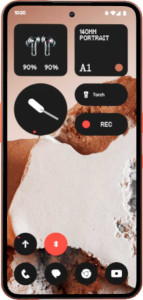
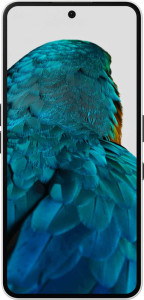
In terms of physical form, these two phones share a nearly identical footprint — both sit at roughly 164 mm tall and 77–78 mm wide — meaning neither will feel dramatically larger in the hand. Where they diverge meaningfully is in mass and bulk: the CMF Phone 2 Pro comes in at 185 g with a 7.8 mm profile, while the Nothing Phone (3a) Pro is noticeably heavier at 211 g and thicker at 8.4 mm. That 26 g difference is perceptible during extended one-handed use or when carrying the phone in a pocket for hours — the CMF simply feels less fatiguing over time.

On water resistance, both phones carry an IP54 and IP64 rating respectively. The shared ″4″ suffix means both handle splashes and rain equally well, but the leading digit is where they split: IP5x offers partial dust resistance, while the Nothing Phone (3a) Pro's IP64 rating provides full dust ingress protection. In practice, neither device is rated for submersion, but the Nothing has a real-world edge in dusty or sandy environments — a factor worth considering for users in those conditions.

Overall, the CMF Phone 2 Pro holds a clear advantage in ergonomics and portability — it is lighter, slimmer, and occupies less volume — making it the better pick for comfort-conscious users. However, the Nothing Phone (3a) Pro counters with a superior IP64 dust rating, giving it a slight durability edge in harsh environments. Neither phone has a rugged build or foldable form factor, so the choice between them on design comes down to whether you prioritize everyday handling comfort or broader environmental protection.

Display:
Display type OLED/AMOLED OLED/AMOLED
screen size 6.77" 6.77"
pixel density 388 ppi 387 ppi
resolution 1080 x 2392 px 1080 x 2392 px
refresh rate 120Hz 120Hz
touch sampling rate 1000Hz 1000Hz
brightness (typical) 800 nits 800 nits
has branded damage-resistant glass
supports HDR10
supports HDR10+
Always-On Display
supports Dolby Vision
contrast ratio 1000000:1 5000000:1
Has a secondary screen
has a touch screen

For all practical purposes, these two displays are twins: both offer a 6.77″ OLED panel at 1080 x 2392 px, landing at virtually the same 387–388 ppi pixel density. Pair that with identical 120Hz refresh rates, 1000Hz touch sampling, and 800 nits typical brightness, and day-to-day usage will look and feel indistinguishable between the two. HDR10+ support on both further ensures consistent rendering of high-dynamic-range content from streaming platforms.

The two meaningful differentiators lie in contrast ratio and glass protection. The Nothing Phone (3a) Pro specifies a 5,000,000:1 contrast ratio versus the CMF's 1,000,000:1 — a fivefold difference on paper. On OLED panels, contrast ratio reflects how deeply blacks are rendered; a higher figure suggests richer shadow detail and more vivid perceived color in dark scenes, though both panels will already produce true blacks by nature of OLED pixel-level shutoff. The real-world gap may be subtle, but it favors the Nothing in media consumption scenarios. Swinging the other way, the CMF Phone 2 Pro ships with branded damage-resistant glass — a meaningful long-term durability advantage that the Nothing Phone (3a) Pro lacks, making the CMF's screen inherently more resistant to everyday scratches and drops.

This group ends in a near-draw with two distinct trade-offs: the Nothing edges ahead on contrast ratio for a potentially richer visual output, while the CMF counters with superior screen protection. Users who prioritize display longevity and scratch resistance should lean toward the CMF Phone 2 Pro, while those who consume a lot of dark-themed or HDR content may appreciate the Nothing Phone (3a) Pro's contrast advantage.

Performance:
internal storage 256GB 256GB
RAM 8GB 12GB
AnTuTu benchmark score 711907 750673
Chipset (SoC) name MediaTek Dimensity 7300 Qualcomm Snapdragon 7s Gen 3
GPU name Mali G615 MC2 Adreno 710
CPU speed 4 x 2.5 & 4 x 2 GHz 1 x 2.5 & 3 x 2.4 & 4 x 1.8 GHz
Geekbench 6 result (multi) 2874 3239
Geekbench 6 result (single) 1007 1162
Geekbench 5 result (multi) 8046 3242
Geekbench 5 result (single) 1179 893
GPU clock speed 1047 MHz 1050 MHz
Has integrated LTE
RAM speed 6400 MHz 3200 MHz
semiconductor size 4 nm 4 nm
Supports 64-bit
DirectX version DirectX 12 DirectX 12
Has integrated graphics
Uses big.LITTLE technology
CPU threads 8 threads 8 threads
Uses HMP
maximum memory amount 16GB 16GB
DDR memory version 5 5

Both phones are built on 4 nm chips with 8-thread big.LITTLE architectures and ship with 256GB of storage, but the silicon underneath tells two different stories. The Nothing Phone (3a) Pro runs on the Snapdragon 7s Gen 3 and pulls ahead in the benchmarks that matter most today: its AnTuTu score of 750,673 beats the CMF's 711,907, and it leads decisively in Geekbench 6 — both single-core (1162 vs 1007) and multi-core (3239 vs 2874). Geekbench 6 is the more current and reliable test for modern CPU behavior, so these figures carry real weight for sustained app performance and future-proofing.

The CMF Phone 2 Pro and its Dimensity 7300 do punch back in one area: its RAM runs at a striking 6400 MHz, versus the Nothing's 3200 MHz — double the memory bandwidth. This matters for tasks that move large amounts of data between processor and memory quickly, such as image processing or gaming asset streaming. However, the Nothing counters with 12GB of RAM versus the CMF's 8GB, which translates to more apps staying resident in memory simultaneously and smoother true multitasking over extended sessions. The CMF's Geekbench 5 multi-core score of 8046 looks extraordinary against the Nothing's 3242, but given that Geekbench 5 is an older, less representative test and the trend reverses entirely in Geekbench 6, this disparity likely reflects benchmark-specific behavior rather than a meaningful real-world gap.

On balance, the Nothing Phone (3a) Pro holds the clearer performance advantage: it leads in current-generation benchmarks and carries significantly more RAM for multitasking headroom. The CMF's faster RAM speed is a genuine technical asset but not enough to offset those deficits for most users. Gamers and heavy multitaskers will likely find the Nothing the more capable device over time.

Cameras:
megapixels (main camera) 50 & 50 & 8 MP 50 & 50 & 8 MP
wide aperture (main camera) 1.9 & 1.9 & 2.2f 1.9 & 2 & 2.2f
Has a dual-lens (or multi-lens) main camera
megapixels (front camera) 16MP 50MP
has built-in optical image stabilization
video recording (main camera) 2160 x 30 fps 2160 x 30 fps
Has a dual-tone LED flash
number of flash LEDs 1 1
has a BSI sensor
has a CMOS sensor
has continuous autofocus when recording movies
Has phase-detection autofocus for photos
supports slow-motion video recording
has a built-in HDR mode
has manual exposure
has a flash
optical zoom 2x 3x
has manual ISO
has a serial shot mode
has manual focus
has a front camera
Has laser autofocus
Shoots 360° panorama
has manual white balance
shoots raw
has touch autofocus
has manual shutter speed
can create panoramas in-camera
wide aperture (front camera) 2f 2.2f
Has timelapse function
Has a front-facing LED flash
has a dual-lens (or multi-lens) front camera
supports HDR10 recording
supports Dolby Vision recording
has a front-facing camera under the display
Has a RGB LED flash
has 3D photo/video recording capabilities

The rear camera systems start from an identical foundation — 50 + 50 + 8 MP triple arrays with matching 4K/30fps video, OIS, and phase-detection autofocus on both phones — but diverge in two important ways. The Nothing Phone (3a) Pro offers 3x optical zoom against the CMF's 2x, meaning the Nothing can reach farther subjects with genuinely lossless magnification. That extra zoom step is consistently the one users wish they had when shooting portraits at distance or isolating details in a scene. Additionally, the Nothing's telephoto aperture is f/2.0 versus the CMF's matching f/1.9 on its second lens — a negligible difference — but the broader zoom range advantage is real and practical.

Where the Nothing Phone (3a) Pro separates itself most decisively is in two features that matter to photography-minded users. First, it supports RAW capture — something the CMF Phone 2 Pro lacks entirely. RAW files preserve unprocessed sensor data, giving users who edit in Lightroom or similar apps dramatically more dynamic range and color control in post-processing. Second, its 50MP front camera dwarfs the CMF's 16MP selfie shooter, offering substantially more detail and cropping flexibility — a significant gap for anyone who shoots a lot of selfies or video calls.

The CMF Phone 2 Pro does have a marginally wider front aperture (f/2.0 vs f/2.2), which offers a slight low-light advantage for selfies, but this is a modest consolation against a sensor with three times fewer megapixels. The Nothing Phone (3a) Pro holds a clear and well-rounded camera advantage: superior telephoto reach, RAW file support for enthusiasts, and a vastly higher-resolution front camera make it the stronger imaging device across the board.

Operating system:
Android version Android 15 Android 15
has clipboard warnings
has location privacy options
has camera/microphone privacy options
has Mail Privacy Protection
has theme customization
can block app tracking
blocks cross-site tracking
has on-device machine learning
has notification permissions
has media picker
Can play games while they download
has dark mode
has Wi-Fi password sharing
has battery health check
has an extra dim mode
has focus modes
has dynamic theming
can offload apps
Has customizable notifications
has Live Text
has full-page screenshots
supports split screen
gets direct OS updates
has PiP
Can be used as a PC
Has sharing intents
has a child lock
Supports widgets
Is free and open source
Has offline voice recognition
has voice commands
Tracks the current position of a mobile device
is a multi-user system
has Quick Start

This is a rare instance of a complete dead heat: every single operating system specification provided is identical between the CMF Phone 2 Pro and the Nothing Phone (3a) Pro. Both ship with Android 15, support the same privacy controls — including camera/microphone permissions, location options, and app tracking blocks — and share the same feature set covering split-screen multitasking, Picture-in-Picture, dynamic theming, offline voice recognition, and on-device machine learning. Neither receives direct OS updates, meaning both rely on their respective manufacturers for patch distribution rather than getting updates pushed straight from Google.

The shared feature set is broadly strong for an Android implementation: dynamic theming adapts the UI palette system-wide, on-device machine learning enables smarter suggestions without sending data to the cloud, and the included privacy toolkit gives users meaningful control over what apps can access. The absence of focus modes and Wi-Fi password sharing are minor gaps that apply equally to both, so neither phone is disadvantaged relative to the other.

From a software standpoint, this group offers no basis for choosing one phone over the other — it is an absolute tie. Users should weigh the other specification groups — design, performance, and cameras — when making their decision, as the operating system experience will be functionally equivalent out of the box on both devices.

Battery:
battery power 5000 mAh 5000 mAh
has wireless charging
Supports fast charging
charging speed 33W 50W
comes with a charger
has a removable battery
has a battery level indicator
has a rechargeable battery

Battery capacity is a non-debate here — both phones carry identical 5000 mAh cells, meaning expected screen-on time and overall endurance will be comparable under equivalent usage conditions. Neither supports wireless charging, and neither ships with a charger in the box, putting them on equal footing for out-of-the-box convenience (or lack thereof).

The one area where these phones genuinely diverge is wired charging speed. The Nothing Phone (3a) Pro supports 50W fast charging, compared to the CMF Phone 2 Pro's 33W. That 17W gap has tangible real-world consequences: at 50W, a depleted 5000 mAh battery can typically reach a usable charge in well under an hour, whereas 33W will take noticeably longer to hit the same threshold. For users who rely on quick top-ups between meetings or commutes, this difference is felt daily rather than just on paper.

The Nothing Phone (3a) Pro takes a clear edge in this category purely on charging speed — it is the only differentiator, but it is a meaningful one for anyone who does not have the luxury of long, uninterrupted charging windows. For users who charge overnight and rarely need a fast refill, the gap becomes largely irrelevant, and the two phones are effectively equivalent in battery terms.

Audio:
has a socket for a 3.5 mm audio jack
has stereo speakers
has aptX
has LDAC
has aptX HD
has aptX Adaptive
has aptX Lossless
Has a radio
number of microphones 2 3

Neither phone offers a 3.5mm headphone jack, FM radio, or any high-resolution Bluetooth audio codec — no aptX, LDAC, or their variants — so wired listening requires an adapter and wireless audio tops out at standard Bluetooth quality on both devices. That common ground established, the two phones split on the specs that define the everyday audio experience.

The most impactful difference is speaker configuration: the Nothing Phone (3a) Pro has stereo speakers, while the CMF Phone 2 Pro is limited to a single speaker. Stereo output creates a genuine sense of width and spatial separation when watching videos, gaming, or listening to music without headphones — a mono speaker simply cannot replicate that, producing a flatter, more directional sound. For anyone who regularly uses their phone as a media device without earphones, this is a significant quality-of-life gap. The Nothing also carries 3 microphones versus the CMF's 2, which typically enables more effective noise cancellation, better directional audio capture for video recording, and cleaner voice pickup on calls in noisy environments.

The Nothing Phone (3a) Pro wins this category without ambiguity — stereo speakers and an additional microphone are both meaningful, practical upgrades over what the CMF Phone 2 Pro offers. For users who value media playback quality and call clarity, the audio gap here is one of the more tangible differences between these two phones.

Connectivity & Features:
release date April 2025 March 2025
has 5G support
Wi-Fi version Wi-Fi 4 (802.11n), Wi-Fi 6 (802.11ax), Wi-Fi 5 (802.11ac) Wi-Fi 4 (802.11n), Wi-Fi 5 (802.11ac), Wi-Fi 6 (802.11ax)
SIM cards 2 SIM 2 SIM
Bluetooth version 5.3 5.4
has an external memory slot
Has USB Type-C
has NFC
download speed 3270 MBits/s 2900 MBits/s
Has a fingerprint scanner
has emergency SOS via satellite
has crash detection
is DLNA-certified
has a gyroscope
supports ANT+
Has a heart rate monitor
has GPS
has a compass
supports Wi-Fi
Has an infrared sensor
has an accelerometer
has a cellular module
Has a barometer
has an HDMI output
Uses 3D facial recognition
Has an iris scanner
Stylus included
supports Galileo
Has motion tracking
Has optical tracking
Has a built-in projector

The connectivity foundation is largely shared: both phones support 5G, dual SIM, Wi-Fi 6, NFC, USB-C, GPS with Galileo, and an identical sensor suite covering gyroscope, accelerometer, and compass. For the vast majority of users, the day-to-day connectivity experience will be indistinguishable between the two.

Three specs separate them. The CMF Phone 2 Pro holds a notable advantage with its external memory card slot — something the Nothing Phone (3a) Pro entirely lacks. For users who want to cheaply expand storage, transfer files via card, or keep large media libraries offline, this is a genuine functional differentiator. The CMF also edges ahead in peak download speed at 3270 Mbits/s versus the Nothing's 2900 Mbits/s, though in practice both figures far exceed what real-world 5G networks deliver, making this gap academic for most users. The Nothing Phone (3a) Pro counters with Bluetooth 5.4 against the CMF's 5.3 — a minor generational step that brings marginally improved connection stability and efficiency, though the practical difference in daily use is minimal.

This category leans toward the CMF Phone 2 Pro, and the reason is straightforward: the external memory slot is a tangible, user-facing feature that adds flexibility the Nothing simply cannot match. The Nothing's Bluetooth 5.4 advantage is too incremental to offset losing expandable storage, making the CMF the stronger pick for connectivity versatility.
Miscellaneous:
has a video light
Has sapphire glass display
Has a curved display
Has an e-paper display

The miscellaneous specifications for these two phones are identical across every data point provided: both feature a video light, and neither has a sapphire glass display, curved display, or e-paper display. There is simply nothing in this group that distinguishes the CMF Phone 2 Pro from the Nothing Phone (3a) Pro.

This is a complete tie, and the group carries little weight in an overall buying decision. Users should look to the more substantive categories — cameras, performance, audio, and design — where the two phones demonstrate real, meaningful differences.

Comparison Summary & Verdict

Both phones offer a 6.77″ OLED display, 256GB of storage, and a 5000 mAh battery, making them closely matched on paper. However, the differences are meaningful. The CMF Phone 2 Pro stands out with its lighter 185 g body, slimmer 7.8 mm profile, expandable storage, and higher download speeds — ideal for users who value portability and flexibility. The Nothing Phone (3a) Pro counters with 12GB of RAM, a superior 50MP front camera, 3x optical zoom, RAW photo capture, stereo speakers, and faster 50W charging — making it the stronger pick for multimedia enthusiasts and power users. The Nothing Phone (3a) Pro also edges ahead in overall performance benchmarks and offers a higher contrast ratio display. Choose the CMF Phone 2 Pro for a compact, versatile everyday device; choose the Nothing Phone (3a) Pro if camera quality and performance headroom are your priorities.

CMF Phone 2 Pro
Buy CMF Phone 2 Pro if...

Buy the CMF Phone 2 Pro if you want a lighter, slimmer phone with expandable storage and you prioritize portability over multimedia features.

Nothing Phone (3a) Pro
Buy Nothing Phone (3a) Pro if...

Buy the Nothing Phone (3a) Pro if you want a more powerful performer with a 50MP front camera, 3x optical zoom, stereo speakers, and faster 50W charging.