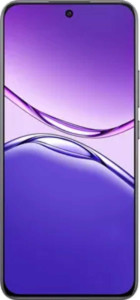
The foundational specs here are strikingly alike — both phones pack 8GB of RAM, 256GB of storage, a 4nm process node, DDR5 memory, and an 8-thread CPU with big.LITTLE architecture. That common ground means day-to-day tasks like app switching, browsing, and social media will feel comparable on either device. The real separation emerges when you look at the benchmark scores: the Oppo K13 5G's Snapdragon 6 Gen 4 posts an AnTuTu score of approximately 790,000, versus 711,907 for the CMF Phone 2 Pro's Dimensity 7300 — roughly an 11% lead that reflects genuine chip-level performance headroom, particularly in sustained workloads like gaming or video rendering.
One counterintuitive advantage lands with the CMF: its RAM operates at 6400 MHz, more than double the Oppo's 2750 MHz. Faster memory bandwidth accelerates data transfers between the CPU and RAM, which benefits multitasking responsiveness and loading times for memory-intensive applications. The Oppo's higher overall benchmark is therefore partly offset by its slower memory subsystem. On the GPU side, the CMF's Mali G615 MC2 runs at a higher clock speed (1047 MHz vs 800 MHz), but clock speed alone doesn't define GPU output — architecture matters equally, and the Adreno 810 in the Oppo is a competitive graphics core.
Taking everything together, the Oppo K13 5G holds the performance edge in this group, driven by its higher AnTuTu score and the real-world headroom that implies for demanding tasks. The CMF Phone 2 Pro's faster RAM is a notable bright spot, but it is not enough to fully close the gap established by the Snapdragon 6 Gen 4's overall throughput advantage.