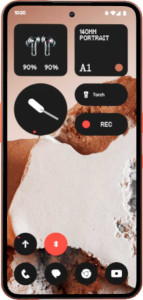
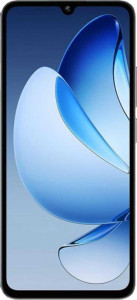
Cellular connectivity is a defining split between these two devices. The CMF Phone 2 Pro supports 5G, while the Oukitel C60 is limited to 4G LTE — and the real-world consequences extend beyond raw speed. The CMF's peak download and upload speeds reach 3270 Mbits/s, compared to the Oukitel's 300 Mbits/s down and a mere 100 Mbits/s up. Even in areas where 5G coverage is still maturing, this gap signals a meaningful difference in future-proofing: a 4G-only device purchased today will be operating on an increasingly deprioritized network tier as carriers continue their 5G rollouts. The CMF also supports Wi-Fi 6 alongside Wi-Fi 5 and Wi-Fi 4, whereas the Oukitel tops out at Wi-Fi 5 — giving the CMF faster, lower-latency wireless connectivity on compatible routers.
Sensor depth further separates the two. The CMF includes a gyroscope and compass, both absent on the Oukitel. A gyroscope enables accurate motion-based features — augmented reality apps, immersive gaming, and smooth image stabilization in software — while a compass is essential for reliable map orientation without needing to move the phone to calibrate direction. The Oukitel's lack of both limits its utility in navigation and motion-sensitive applications. Bluetooth also favors the CMF: version 5.3 versus 5.0 on the Oukitel, offering improved connection stability and slightly better efficiency with wireless peripherals.
Shared features — dual SIM, USB Type-C, NFC, fingerprint scanner, GPS, expandable storage, and accelerometer — are evenly matched and represent a solid common baseline. But taken as a whole, the CMF Phone 2 Pro wins this category convincingly. Its 5G support, Wi-Fi 6, superior data speeds, newer Bluetooth, and additional sensors collectively add up to a considerably more capable and future-ready connectivity profile than the Oukitel C60 can offer.