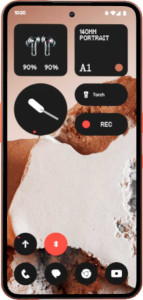
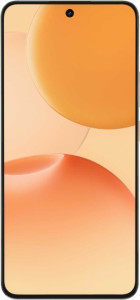
The two phones share an identical display foundation — the same 6.77″ OLED/AMOLED panel, the same 1080 x 2392 resolution, and the same 388 ppi density — so the raw visual canvas is a wash. The meaningful gaps emerge in how each panel performs under different conditions. The Realme P4 5G pulls ahead with a 144Hz refresh rate versus the CMF Phone 2 Pro's 120Hz, which produces marginally smoother scrolling and animations, particularly noticeable in gaming or fast-paced content. The CMF, however, counters with a striking 1000Hz touch sampling rate against the Realme's 240Hz — making touch input feel near-instantaneous and giving the CMF a genuine edge for precision gaming and fast gesture recognition.
Outdoor usability and content quality tell a different story. The Realme P4 5G's 1600 nits typical brightness nearly doubles the CMF's 800 nits, which has a real-world consequence: the Realme will remain comfortably readable in direct sunlight where the CMF may struggle. The Realme also claims a higher contrast ratio of 5,000,000:1 versus 1,000,000:1, meaning deeper blacks and more punch in dark scenes on OLED. Conversely, the CMF Phone 2 Pro supports HDR10 and HDR10+, enabling richer, tone-mapped visuals on compatible streaming content — an advantage the Realme lacks entirely. The CMF also features branded damage-resistant glass, adding a layer of everyday durability that the Realme does not offer.
This group is genuinely split by use case. The Realme P4 5G wins on brightness and contrast, making it the better everyday outdoor screen. The CMF Phone 2 Pro wins on HDR content support and touch responsiveness, making it the stronger pick for media consumption and gaming precision. Neither product dominates outright, but users who watch a lot of streaming content or value screen longevity will lean toward the CMF, while those who spend more time outdoors or prioritize raw display punch will prefer the Realme.