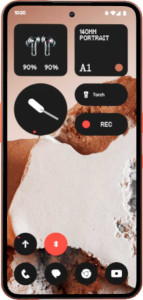
CMF Phone 2 Pro
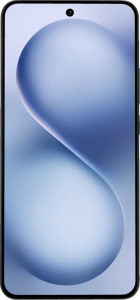
Vivo S30

CMF Phone 2 Pro Vivo S30

Overview

When choosing between the CMF Phone 2 Pro and the Vivo S30, buyers are faced with two distinct mid-range Android smartphones that share a solid foundation yet diverge sharply in several key areas. From display sharpness and battery capacity to audio capabilities and water resistance, this comparison breaks down exactly where these two devices agree and where they pull apart, helping you make a truly informed decision.

Common Features

  • Neither product has a rugged build.
  • Neither product can be folded.
  • Both products feature an OLED/AMOLED display.
  • Both products support a 120Hz refresh rate.
  • Both products use branded damage-resistant glass.
  • Always-On Display is available on both products.
  • Dolby Vision support is not available on either product.
  • Neither product has a secondary screen.
  • Both products have a touchscreen.
  • Both products have integrated LTE.
  • Both products use a 4 nm semiconductor.
  • Both products support 64-bit processing.
  • Both products support DirectX 12.
  • Both products have integrated graphics.
  • Both products use big.LITTLE technology.
  • Both products use DDR5 memory.
  • Both products have a main camera with 50 & 50 & 8 MP.
  • Both products feature a multi-lens main camera.
  • Both products have built-in optical image stabilization.
  • Both products support 4K video recording at 30 fps.
  • Neither product has a dual-tone LED flash.
  • Both products have a single LED flash.
  • Neither product has a BSI sensor.
  • Both products have a CMOS sensor.
  • Both products run Android 15.
  • Both products have clipboard warnings.
  • Both products offer location privacy options.
  • Both products have camera and microphone privacy options.
  • Mail Privacy Protection is not available on either product.
  • Both products support theme customization.
  • Both products can block app tracking.
  • Cross-site tracking blocking is not available on either product.
  • Neither product supports wireless charging.
  • Both products support fast charging.
  • Neither product has a removable battery.
  • Both products have a battery level indicator.
  • Both products have a rechargeable battery.
  • Neither product has a 3.5 mm audio jack.
  • LDAC support is not available on either product.
  • aptX Lossless support is not available on either product.
  • Neither product has a built-in radio.
  • Both products support 5G.
  • Both products support Wi-Fi 4, Wi-Fi 5, and Wi-Fi 6.
  • Both products have dual SIM support.
  • Both products have a USB Type-C port.
  • Both products have NFC.
  • Both products have a fingerprint scanner.
  • Emergency SOS via satellite is not available on either product.
  • Crash detection is not available on either product.
  • Both products have a video light.
  • Neither product has a sapphire glass display.
  • Neither product has a curved display.
  • Neither product has an e-paper display.

Main Differences

  • Water resistance is rated as water resistant on CMF Phone 2 Pro and waterproof on Vivo S30.
  • The IP rating is IP54 on CMF Phone 2 Pro and IP67 on Vivo S30.
  • Weight is 185 g on CMF Phone 2 Pro and 192 g on Vivo S30.
  • Thickness is 7.8 mm on CMF Phone 2 Pro and 7.5 mm on Vivo S30.
  • Width is 78 mm on CMF Phone 2 Pro and 74.4 mm on Vivo S30.
  • Height is 164 mm on CMF Phone 2 Pro and 160.2 mm on Vivo S30.
  • Volume is 99.7776 cm³ on CMF Phone 2 Pro and 89.3916 cm³ on Vivo S30.
  • Screen size is 6.77″ on CMF Phone 2 Pro and 6.67″ on Vivo S30.
  • Pixel density is 388 ppi on CMF Phone 2 Pro and 460 ppi on Vivo S30.
  • Resolution is 1080 x 2392 px on CMF Phone 2 Pro and 1260 x 2800 px on Vivo S30.
  • Typical brightness is 800 nits on CMF Phone 2 Pro and 1300 nits on Vivo S30.
  • HDR10 support is present on CMF Phone 2 Pro but not available on Vivo S30.
  • HDR10+ support is present on CMF Phone 2 Pro but not available on Vivo S30.
  • Contrast ratio is 1,000,000:1 on CMF Phone 2 Pro and 8,000,000:1 on Vivo S30.
  • Internal storage is 256 GB on CMF Phone 2 Pro and 512 GB on Vivo S30.
  • RAM is 8 GB on CMF Phone 2 Pro and 16 GB on Vivo S30.
  • The chipset is MediaTek Dimensity 7300 on CMF Phone 2 Pro and Qualcomm Snapdragon 7 Gen 4 on Vivo S30.
  • CPU speed is 4 x 2.5 & 4 x 2 GHz on CMF Phone 2 Pro and 1 x 2.8 & 4 x 2.4 & 3 x 1.8 GHz on Vivo S30.
  • GPU clock speed is 1047 MHz on CMF Phone 2 Pro and 1000 MHz on Vivo S30.
  • RAM speed is 6400 MHz on CMF Phone 2 Pro and 4200 MHz on Vivo S30.
  • Wide aperture of the main camera is 1.9 & 1.9 & 2.2f on CMF Phone 2 Pro and 1.9 & 2.7 & 2.2f on Vivo S30.
  • Front camera resolution is 16 MP on CMF Phone 2 Pro and 50 MP on Vivo S30.
  • Optical zoom is 2x on CMF Phone 2 Pro and 3x on Vivo S30.
  • Minimum focal length is 15 mm on CMF Phone 2 Pro and 23 mm on Vivo S30.
  • Maximum focal length is 50 mm on CMF Phone 2 Pro and 70 mm on Vivo S30.
  • Battery capacity is 5000 mAh on CMF Phone 2 Pro and 6500 mAh on Vivo S30.
  • Charging speed is 33W on CMF Phone 2 Pro and 90W on Vivo S30.
  • A charger is not included with CMF Phone 2 Pro but is included with Vivo S30.
  • Stereo speakers are not present on CMF Phone 2 Pro but are available on Vivo S30.
  • aptX support is absent on CMF Phone 2 Pro but present on Vivo S30.
  • aptX HD support is absent on CMF Phone 2 Pro but present on Vivo S30.
  • aptX Adaptive support is absent on CMF Phone 2 Pro but present on Vivo S30.
  • Bluetooth version is 5.3 on CMF Phone 2 Pro and 5.4 on Vivo S30.
  • An external memory slot is available on CMF Phone 2 Pro but not on Vivo S30.
  • An infrared sensor is not present on CMF Phone 2 Pro but is available on Vivo S30.
Specs Comparison
CMF Phone 2 Pro

CMF Phone 2 Pro

Vivo S30

Vivo S30

Design:
water resistance Water resistant Waterproof
weight 185 g 192 g
thickness 7.8 mm 7.5 mm
width 78 mm 74.4 mm
height 164 mm 160.2 mm
volume 99.7776 cm³ 89.3916 cm³
Ingress Protection (IP) rating IP54 IP67
has a rugged build
can be folded

The most consequential difference in this category is water protection. The Vivo S30 carries an IP67 rating, meaning it can withstand submersion in up to 1 meter of water for 30 minutes — genuine waterproofing that covers accidental drops in a sink or pool. The CMF Phone 2 Pro is rated IP54, which only guarantees protection against splashes and dust ingress from any direction. In practice, this means the CMF can handle rain or a quick splash, but should never be submerged. For users who frequently use their phone near water or in unpredictable environments, this is a meaningful real-world gap.

On physical dimensions, the two phones tell an interesting story. The Vivo S30 is notably more compact — shorter at 160.2 mm versus 164 mm, narrower at 74.4 mm versus 78 mm, and has a significantly smaller overall volume (89.4 cm³ vs 99.8 cm³). The CMF Phone 2 Pro is, however, slightly lighter at 185 g compared to the Vivo's 192 g, despite being the larger device. The Vivo is also marginally thinner at 7.5 mm vs 7.8 mm. In hand, the Vivo S30 will feel noticeably more pocketable and easier to reach across with one hand, while the CMF's size advantage is limited to a modest weight reduction.

Neither phone has a rugged build or a foldable form factor, so neither targets those niches. Overall, the Vivo S30 holds a clear design edge: it is more compact and meaningfully better protected against water ingress. The CMF Phone 2 Pro's slight weight advantage does not offset the Vivo's superior IP rating and smaller footprint for most users.

Display:
Display type OLED/AMOLED OLED/AMOLED
screen size 6.77" 6.67"
pixel density 388 ppi 460 ppi
resolution 1080 x 2392 px 1260 x 2800 px
refresh rate 120Hz 120Hz
brightness (typical) 800 nits 1300 nits
has branded damage-resistant glass
supports HDR10
supports HDR10+
Always-On Display
supports Dolby Vision
contrast ratio 1000000:1 8000000:1
Has a secondary screen
has a touch screen

Both phones use OLED/AMOLED panels with a 120Hz refresh rate, so the baseline experience — smooth scrolling, deep blacks, infinite contrast — is shared. The differences emerge in the finer details. The Vivo S30 packs a 1260 x 2800 px resolution into a 6.67″ screen, yielding a remarkably sharp 460 ppi pixel density. The CMF Phone 2 Pro stretches to 6.77″ but at a lower 1080 x 2392 px resolution, landing at 388 ppi. In everyday use the CMF's sharpness is perfectly adequate, but the Vivo's display is noticeably crisper — a difference most visible when reading small text or viewing fine detail in photos.

Brightness is another area where the Vivo S30 pulls ahead meaningfully. Its 1300 nits typical brightness significantly outpaces the CMF's 800 nits, which translates directly to better legibility in bright sunlight. The contrast ratio gap is even more dramatic on paper — the Vivo claims 8,000,000:1 versus the CMF's 1,000,000:1 — though both ratios are high enough that the practical difference in everyday viewing is subtle. Where the CMF reclaims some ground is HDR content support: it covers both HDR10 and HDR10+, while the Vivo S30 supports neither standard. This means streaming HDR content from compatible services will render with greater dynamic range and color accuracy on the CMF.

The verdict here is a genuine split. For raw display quality — sharpness, brightness, and outdoor usability — the Vivo S30 has a clear edge. But if consuming HDR video from platforms like Amazon Prime or YouTube is a priority, the CMF Phone 2 Pro's HDR10+ support is a tangible advantage the Vivo simply cannot match.

Performance:
internal storage 256GB 512GB
RAM 8GB 16GB
Chipset (SoC) name MediaTek Dimensity 7300 Qualcomm Snapdragon 7 Gen 4
CPU speed 4 x 2.5 & 4 x 2 GHz 1 x 2.8 & 4 x 2.4 & 3 x 1.8 GHz
GPU clock speed 1047 MHz 1000 MHz
Has integrated LTE
RAM speed 6400 MHz 4200 MHz
semiconductor size 4 nm 4 nm
Supports 64-bit
DirectX version DirectX 12 DirectX 12
Has integrated graphics
Uses big.LITTLE technology
DDR memory version 5 5

Both phones are built on a 4nm process node and share the same DDR5 memory standard, so they start from a similar architectural foundation. Beyond that baseline, the chipsets diverge in meaningful ways. The CMF Phone 2 Pro runs on the MediaTek Dimensity 7300, a capable mid-range chip with a straightforward dual-cluster CPU design. The Vivo S30 steps up to the Qualcomm Snapdragon 7 Gen 4, which uses a more sophisticated tri-cluster CPU arrangement — one high-performance core at 2.8 GHz, four efficiency-oriented cores, and three low-power cores. This architecture is better tuned to balance peak performance with battery efficiency across varied workloads.

The RAM story is where the gap becomes most tangible for everyday use. The Vivo S30 ships with 16GB of RAM versus the CMF's 8GB — double the headroom for keeping apps alive in the background, which directly reduces reload times when multitasking. The CMF counters with a notably faster RAM speed of 6400 MHz compared to the Vivo's 4200 MHz, meaning individual memory operations are quicker even if total capacity is lower. Storage follows a similar pattern: the Vivo offers 512GB of internal space against the CMF's 256GB, a significant advantage for users who store large media libraries locally.

GPU clock speeds are nearly identical — 1047 MHz on the CMF versus 1000 MHz on the Vivo — so neither holds a meaningful graphics edge on that metric alone. On balance, the Vivo S30 holds the stronger performance profile: its more capable chipset, double the RAM, and double the storage represent a substantial real-world upgrade, even if the CMF's faster RAM speed keeps it competitive in raw memory throughput.

Cameras:
megapixels (main camera) 50 & 50 & 8 MP 50 & 50 & 8 MP
wide aperture (main camera) 1.9 & 1.9 & 2.2f 1.9 & 2.7 & 2.2f
Has a dual-lens (or multi-lens) main camera
megapixels (front camera) 16MP 50MP
has built-in optical image stabilization
video recording (main camera) 2160 x 30 fps 2160 x 30 fps
Has a dual-tone LED flash
number of flash LEDs 1 1
has a BSI sensor
has a CMOS sensor
has continuous autofocus when recording movies
Has phase-detection autofocus for photos
supports slow-motion video recording
has a built-in HDR mode
has manual exposure
has a flash
optical zoom 2x 3x
has manual ISO
has a serial shot mode
has manual focus
has a front camera
Has laser autofocus
Shoots 360° panorama
has manual white balance
shoots raw
has touch autofocus
has manual shutter speed
can create panoramas in-camera
wide aperture (front camera) 2f 2f
Has timelapse function
minimum focal length 15 mm 23 mm
maximum focal length 50 mm 70 mm
Has a front-facing LED flash
has a dual-lens (or multi-lens) front camera
supports HDR10 recording
supports Dolby Vision recording
has a front-facing camera under the display
Has a RGB LED flash
has 3D photo/video recording capabilities

The rear camera systems share the same headline megapixel count — 50 & 50 & 8 MP across three lenses — along with OIS, phase-detection autofocus, and identical 4K/30fps video capability. The meaningful divergence is in zoom reach and aperture trade-offs. The Vivo S30 offers 3x optical zoom versus the CMF Phone 2 Pro's 2x, and its focal length range extends to 70 mm compared to the CMF's 50 mm. For portrait and telephoto shots, the Vivo can compress backgrounds more naturally and get closer to a subject without cropping. However, there is a real trade-off: the Vivo's telephoto lens has a narrower f/2.7 aperture, while the CMF's second lens opens to a wider f/1.9 — meaning the CMF lets in significantly more light through that lens, which matters in lower-light zoom scenarios. The CMF also starts wider at a 15 mm minimum focal length versus the Vivo's 23 mm, giving it more versatility for environmental and architectural shots.

The front camera is where the Vivo S30 establishes an unambiguous advantage. Its 50 MP selfie sensor dwarfs the CMF's 16 MP shooter — more than three times the resolution. For users who prioritize selfie quality, video calls, or front-camera content creation, this gap is substantial: the Vivo can resolve far more detail and offers much greater cropping flexibility without losing clarity.

Tallying it up, neither phone dominates across every dimension. The CMF Phone 2 Pro has a wider field of view and a brighter telephoto aperture, while the Vivo S30 reaches further with its zoom and excels dramatically up front. For users who value selfie performance or telephoto reach, the Vivo S30 holds the overall camera edge; for those who shoot wide scenes or prioritize low-light zoom, the CMF's configuration is more accommodating.

Operating system:
Android version Android 15 Android 15
has clipboard warnings
has location privacy options
has camera/microphone privacy options
has Mail Privacy Protection
has theme customization
can block app tracking
blocks cross-site tracking
has on-device machine learning
has notification permissions
has media picker
Can play games while they download
has dark mode
has Wi-Fi password sharing
has battery health check
has an extra dim mode
has focus modes
has dynamic theming
can offload apps
Has customizable notifications
has Live Text
has full-page screenshots
supports split screen
gets direct OS updates
has PiP
Can be used as a PC
Has sharing intents
has a child lock
Supports widgets
Is free and open source
Has offline voice recognition
has voice commands
Tracks the current position of a mobile device
is a multi-user system
has Quick Start

Across every single specification in this category, the CMF Phone 2 Pro and Vivo S30 are identical — both ship with Android 15 and share the exact same feature set without a single point of divergence. Privacy controls, multitasking capabilities, customization options, and accessibility features all match one-for-one.

This is a complete tie. Neither phone holds any advantage over the other in operating system features based on the provided data, and any differences a user might experience in practice would come down to each manufacturer's custom Android skin — which falls outside the scope of these specs.

Battery:
battery power 5000 mAh 6500 mAh
has wireless charging
Supports fast charging
charging speed 33W 90W
comes with a charger
has a removable battery
has a battery level indicator
has a rechargeable battery

The Vivo S30 dominates this category on two fronts. Its 6500 mAh battery is 30% larger than the CMF Phone 2 Pro's 5000 mAh cell — a gap that, in practical terms, can translate to several additional hours of screen-on time before needing to reach for a cable. For heavy users or those who travel without reliable access to a charger, that extra capacity is a genuine daily-life advantage.

Charging speed compounds the lead further. The Vivo S30 supports 90W fast charging, nearly three times the CMF's 33W. Despite carrying a significantly larger battery, the Vivo is capable of replenishing it in a fraction of the time it would take to charge the CMF. The Vivo also ships with a charger included in the box, while CMF Phone 2 Pro buyers need to source one separately — an added cost and inconvenience worth factoring into the total ownership picture. Neither phone supports wireless charging, so that is a non-factor for this comparison.

The verdict is straightforward: the Vivo S30 holds a commanding battery advantage in every measurable dimension — more capacity, dramatically faster charging, and a charger included out of the box. The CMF Phone 2 Pro has no offsetting strengths in this category.

Audio:
has a socket for a 3.5 mm audio jack
has stereo speakers
has aptX
has LDAC
has aptX HD
has aptX Adaptive
has aptX Lossless
Has a radio

Audio is another category where the Vivo S30 pulls clearly ahead. It features stereo speakers — a capability the CMF Phone 2 Pro entirely lacks, relying instead on a single mono speaker. For media consumption, gaming, or simply playing music without headphones, stereo output creates a noticeably wider, more immersive soundstage. The CMF's mono setup, by contrast, compresses all audio to a single channel.

The wireless audio codec support tells a similar story. The Vivo S30 supports aptX, aptX HD, and aptX Adaptive, enabling significantly higher-quality Bluetooth audio transmission to compatible headphones — aptX HD targets 24-bit lossless-grade wireless audio, while aptX Adaptive dynamically adjusts bitrate for stability and quality. The CMF Phone 2 Pro supports none of these codecs, meaning users with premium Bluetooth headphones will be unable to unlock their full audio potential when paired with the CMF. Notably, neither phone supports LDAC, so Sony-ecosystem users are equally limited on both devices.

Both phones drop the 3.5mm headphone jack, so wired audio options are equally constrained. That shared omission aside, the Vivo S30 wins this category decisively — stereo speakers for everyday listening and a strong aptX codec stack for wireless audio make it the substantially better-equipped phone for users who care about sound quality.

Connectivity & Features:
release date April 2025 May 2025
has 5G support
Wi-Fi version Wi-Fi 4 (802.11n), Wi-Fi 6 (802.11ax), Wi-Fi 5 (802.11ac) Wi-Fi 4 (802.11n), Wi-Fi 6 (802.11ax), Wi-Fi 5 (802.11ac)
SIM cards 2 SIM 2 SIM
Bluetooth version 5.3 5.4
has an external memory slot
Has USB Type-C
has NFC
Has a fingerprint scanner
has emergency SOS via satellite
has crash detection
is DLNA-certified
has a gyroscope
supports ANT+
Has a heart rate monitor
has GPS
has a compass
supports Wi-Fi
Has an infrared sensor
has an accelerometer
has a cellular module
Has a barometer
has an HDMI output
Uses 3D facial recognition
Has an iris scanner
Stylus included
supports Galileo
Has motion tracking
Has optical tracking
Has a built-in projector

The connectivity foundations are nearly identical — both phones offer 5G, the same tri-band Wi-Fi stack (Wi-Fi 4/5/6), dual SIM, NFC, USB-C, and an identical sensor suite including GPS, gyroscope, and accelerometer. Given how much ground these two cover in common, the differentiators here are few but worth understanding clearly.

Each phone claims one exclusive feature the other lacks. The CMF Phone 2 Pro includes an external memory slot, allowing users to expand storage via a microSD card — a meaningful practical advantage for anyone who shoots lots of video or stores large local media libraries, especially given the CMF's more limited 256GB internal storage. The Vivo S30 counters with an infrared sensor, which lets the phone function as a universal remote for TVs, air conditioners, and other IR-compatible appliances — a niche but genuinely useful convenience for users in IR-heavy households. The Vivo also edges ahead on Bluetooth 5.4 versus the CMF's 5.3, though in practice the real-world difference between these two adjacent versions is negligible for most users.

This category is effectively a wash with different trade-offs: the CMF Phone 2 Pro appeals to users who prioritize storage flexibility, while the Vivo S30 suits those who value smart-home device control. Neither advantage is universally more important — it comes down entirely to individual use patterns.

Miscellaneous:
has a video light
Has sapphire glass display
Has a curved display
Has an e-paper display

Every specification in this group matches exactly between the two phones — both have a video light, neither features sapphire glass, a curved display, or an e-paper display. There is simply nothing to separate them here, making this a complete tie with no advantage to either device.

Comparison Summary & Verdict

After a thorough look at the specs, both phones run Android 15, use OLED panels with 120Hz refresh rates, and support 5G — but their strengths cater to different users. The CMF Phone 2 Pro stands out with its HDR10 and HDR10+ support, expandable storage, lighter body, and higher RAM speed, making it appealing for media enthusiasts on a budget. The Vivo S30, however, pulls ahead in nearly every other category: its IP67 waterproofing, sharper 460 ppi display, much brighter 1300-nit screen, larger 6500 mAh battery, 90W fast charging (with charger included), 50 MP front camera, stereo speakers, and full aptX Adaptive audio support make it the more feature-complete package for power users and content creators alike.

CMF Phone 2 Pro
Buy CMF Phone 2 Pro if...

Buy the CMF Phone 2 Pro if you value HDR10 and HDR10+ display support, want expandable storage for extra flexibility, or prefer a lighter and slightly more compact device.

Vivo S30
Buy Vivo S30 if...

Buy the Vivo S30 if you need a brighter and sharper display, superior IP67 waterproofing, a much larger battery with faster 90W charging, a high-resolution 50 MP selfie camera, and premium stereo audio with aptX Adaptive support.