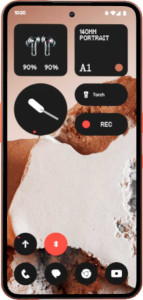
CMF Phone 2 Pro
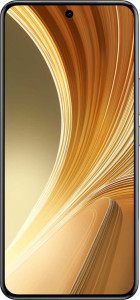
Vivo T4 Ultra 5G

CMF Phone 2 Pro Vivo T4 Ultra 5G

Overview

Welcome to our in-depth comparison of the CMF Phone 2 Pro and the Vivo T4 Ultra 5G — two feature-packed Android smartphones that share some common ground but differ significantly in key areas. Both devices run Android 15, sport OLED displays with 120Hz refresh rates, and offer multi-lens camera systems, yet they take very different approaches when it comes to raw performance, display quality, and charging capabilities. Read on to see how every spec stacks up before making your decision.

Common Features

  • Both phones are water resistant.
  • Neither phone has a rugged build.
  • Neither phone can be folded.
  • Both phones feature an OLED/AMOLED display.
  • Both phones support a 120Hz refresh rate.
  • Always-On Display is available on both phones.
  • Neither phone supports Dolby Vision.
  • Neither phone has a secondary screen.
  • Both phones have a touchscreen.
  • Both phones have integrated LTE.
  • Both phones use a 4 nm semiconductor.
  • Both phones support 64-bit processing.
  • Both phones support DirectX 12.
  • Both phones have integrated graphics.
  • Both phones use big.LITTLE technology with 8 CPU threads and HMP.
  • Both phones have a 50 & 50 & 8 MP multi-lens main camera with OIS.
  • Both phones support 4K video recording at 30 fps on the main camera.
  • Both phones run Android 15.
  • Neither phone supports wireless charging, but both support fast charging.
  • Neither phone has a removable battery.
  • Neither phone has a 3.5 mm audio jack.
  • Neither phone supports aptX, LDAC, aptX HD, aptX Adaptive, aptX Lossless, or a radio.
  • Both phones support 5G, dual SIM, USB Type-C, NFC, and a fingerprint scanner.
  • Neither phone has emergency SOS via satellite or crash detection.

Main Differences

  • Weight is 185 g on CMF Phone 2 Pro and 192 g on Vivo T4 Ultra 5G.
  • Thickness is 7.8 mm on CMF Phone 2 Pro and 7.5 mm on Vivo T4 Ultra 5G.
  • Width is 78 mm on CMF Phone 2 Pro and 75 mm on Vivo T4 Ultra 5G.
  • Height is 164 mm on CMF Phone 2 Pro and 160.6 mm on Vivo T4 Ultra 5G.
  • Ingress Protection rating is IP54 on CMF Phone 2 Pro and IP64 on Vivo T4 Ultra 5G.
  • Screen size is 6.77″ on CMF Phone 2 Pro and 6.67″ on Vivo T4 Ultra 5G.
  • Pixel density is 388 ppi on CMF Phone 2 Pro and 460 ppi on Vivo T4 Ultra 5G.
  • Resolution is 1080 x 2392 px on CMF Phone 2 Pro and 1260 x 2800 px on Vivo T4 Ultra 5G.
  • Typical brightness is 800 nits on CMF Phone 2 Pro and 1600 nits on Vivo T4 Ultra 5G.
  • Damage-resistant glass is present on CMF Phone 2 Pro but not available on Vivo T4 Ultra 5G.
  • HDR10 support is present on CMF Phone 2 Pro but not available on Vivo T4 Ultra 5G.
  • HDR10+ support is present on CMF Phone 2 Pro but not available on Vivo T4 Ultra 5G.
  • Internal storage is 256GB on CMF Phone 2 Pro and 512GB on Vivo T4 Ultra 5G.
  • RAM is 8GB on CMF Phone 2 Pro and 12GB on Vivo T4 Ultra 5G.
  • AnTuTu benchmark score is 711,907 on CMF Phone 2 Pro and 2,136,863 on Vivo T4 Ultra 5G.
  • The chipset is MediaTek Dimensity 7300 on CMF Phone 2 Pro and Mediatek Dimensity 9300 Plus on Vivo T4 Ultra 5G.
  • Geekbench 6 multi-core score is 2,874 on CMF Phone 2 Pro and 7,547 on Vivo T4 Ultra 5G.
  • Geekbench 6 single-core score is 1,007 on CMF Phone 2 Pro and 2,302 on Vivo T4 Ultra 5G.
  • Optical zoom is 2x on CMF Phone 2 Pro and 3x on Vivo T4 Ultra 5G.
  • Front camera resolution is 16MP on CMF Phone 2 Pro and 32MP on Vivo T4 Ultra 5G.
  • Battery capacity is 5000 mAh on CMF Phone 2 Pro and 5500 mAh on Vivo T4 Ultra 5G.
  • Charging speed is 33W on CMF Phone 2 Pro and 90W on Vivo T4 Ultra 5G.
  • A charger is not included with CMF Phone 2 Pro but is included with Vivo T4 Ultra 5G.
  • Stereo speakers are not present on CMF Phone 2 Pro but are available on Vivo T4 Ultra 5G.
  • An external memory slot is available on CMF Phone 2 Pro but not on Vivo T4 Ultra 5G.
  • Bluetooth version is 5.3 on CMF Phone 2 Pro and 5.4 on Vivo T4 Ultra 5G.
  • Download speed is 3270 MBits/s on CMF Phone 2 Pro and 10,000 MBits/s on Vivo T4 Ultra 5G.
  • Upload speed is 3270 MBits/s on CMF Phone 2 Pro and 7000 MBits/s on Vivo T4 Ultra 5G.
Specs Comparison
CMF Phone 2 Pro

CMF Phone 2 Pro

Vivo T4 Ultra 5G

Vivo T4 Ultra 5G

Design:
water resistance Water resistant Water resistant
weight 185 g 192 g
thickness 7.8 mm 7.5 mm
width 78 mm 75 mm
height 164 mm 160.6 mm
volume 99.7776 cm³ 90.3375 cm³
Ingress Protection (IP) rating IP54 IP64
has a rugged build
can be folded

Both the CMF Phone 2 Pro and the Vivo T4 Ultra 5G share a water-resistant build with no rugged or foldable form factor, but they diverge in meaningful ways when it comes to size, weight, and protection level. The Vivo is the more compact device across every physical dimension — shorter at 160.6 mm vs. 164 mm, narrower at 75 mm vs. 78 mm, and its total volume of 90.34 cm³ is notably smaller than the CMF's 99.78 cm³. In practical terms, the Vivo will feel more pocketable and easier to grip one-handed, especially for users with smaller hands.

The CMF Phone 2 Pro, however, is the lighter phone at 185 g versus the Vivo's 192 g. That 7-gram difference is modest but perceptible over long usage sessions. Interestingly, the CMF is also slightly thicker at 7.8 mm compared to the Vivo's 7.5 mm, which is a common trade-off when a larger footprint is paired with a lighter chassis — suggesting different internal layout choices by each manufacturer.

The most significant differentiator in this group is the IP rating. The Vivo T4 Ultra carries an IP64 rating, while the CMF Phone 2 Pro is rated IP54. The first digit — dust protection — is where they differ: a rating of 6 means fully dust-tight, whereas 5 only means dust-protected (partial ingress allowed). For users in dusty environments or those who want greater long-term reliability, the Vivo's stronger dust protection is a tangible advantage. Overall, the Vivo T4 Ultra 5G holds a clear edge in this group, combining a more compact form factor with superior ingress protection, even if the CMF is marginally lighter.

Display:
Display type OLED/AMOLED OLED/AMOLED
screen size 6.77" 6.67"
pixel density 388 ppi 460 ppi
resolution 1080 x 2392 px 1260 x 2800 px
refresh rate 120Hz 120Hz
brightness (typical) 800 nits 1600 nits
has branded damage-resistant glass
supports HDR10
supports HDR10+
Always-On Display
supports Dolby Vision
Has a secondary screen
has a touch screen

At a glance, these two phones share the same OLED/AMOLED panel technology and a 120Hz refresh rate, but beneath those surface-level similarities lie some meaningful differences. The Vivo T4 Ultra's 1260 x 2800 px resolution on a 6.67″ screen translates to a pixel density of 460 ppi — noticeably sharper than the CMF Phone 2 Pro's 388 ppi on its slightly larger 6.77″ panel. In everyday use, that gap becomes visible when reading fine text, viewing detailed photos, or watching high-resolution video content.

Where the gap becomes harder to ignore is brightness. The Vivo delivers 1600 nits of typical brightness — double the CMF's 800 nits. This is not a marginal difference; in direct sunlight or bright outdoor environments, the Vivo will remain far more legible. For users who frequently use their phone outdoors, this is one of the most impactful real-world display distinctions possible. On the flip side, the CMF Phone 2 Pro counters with HDR10 and HDR10+ support, which enables richer contrast and color depth when streaming compatible content — a feature the Vivo entirely lacks. The CMF also includes branded damage-resistant glass, adding a layer of long-term durability that the Vivo does not offer.

Neither phone supports Dolby Vision, and both feature Always-On Display, so those factors are a wash. On balance, the Vivo T4 Ultra holds the stronger display advantage for most users — its superior sharpness and dramatically higher brightness cover the two metrics that affect daily visibility most. The CMF's HDR10+ support is a genuine perk for media consumption, but it doesn't outweigh the Vivo's lead in core display performance.

Performance:
internal storage 256GB 512GB
RAM 8GB 12GB
AnTuTu benchmark score 711907 2136863
Chipset (SoC) name MediaTek Dimensity 7300 Mediatek Dimensity 9300 Plus
GPU name Mali G615 MC2 Arm Immortalis-G720 MC12
CPU speed 4 x 2.5 & 4 x 2 GHz 1 x 3.4 & 3 x 2.85 & 4 x 2 GHz
Geekbench 6 result (multi) 2874 7547
Geekbench 6 result (single) 1007 2302
GPU clock speed 1047 MHz 1300 MHz
Has integrated LTE
RAM speed 6400 MHz 4800 MHz
semiconductor size 4 nm 4 nm
Supports 64-bit
DirectX version DirectX 12 DirectX 12
Has integrated graphics
Uses big.LITTLE technology
CPU threads 8 threads 8 threads
Uses HMP
maximum memory amount 16GB 24GB
number of transistors 6200 million 22700 million
DDR memory version 5 5

The chipset divide here is stark. The CMF Phone 2 Pro runs on a MediaTek Dimensity 7300 — a capable mid-range processor — while the Vivo T4 Ultra is powered by the Dimensity 9300 Plus, a flagship-tier chip. That distinction cascades through every performance metric in this group. The Vivo's AnTuTu score of 2,136,863 is nearly three times the CMF's 711,907, and the Geekbench 6 multi-core result tells a similar story: 7,547 versus 2,874. These aren't marginal gains — they represent a fundamentally different performance tier, meaning the Vivo will handle demanding workloads, heavy multitasking, and graphically intensive games with considerably more headroom.

The GPU gap reinforces this further. The Vivo's Arm Immortalis-G720 MC12 running at 1300 MHz is a top-tier graphics unit, compared to the CMF's Mali G615 MC2 at 1047 MHz. For gaming and GPU-accelerated tasks, the difference in real-world frame rates and visual fidelity will be substantial. The transistor count also reflects the generational gap — 22,700 million on the Vivo versus 6,200 million on the CMF — which speaks to the architectural complexity and efficiency potential of the Dimensity 9300 Plus. Storage and memory also favor the Vivo, with 512GB of internal storage and 12GB of RAM against the CMF's 256GB and 8GB.

One nuance worth noting: the CMF's RAM runs at 6400 MHz versus the Vivo's 4800 MHz, meaning the CMF's memory has higher bandwidth per module — but this advantage is far outweighed by the Vivo's larger RAM pool and superior CPU throughput. The verdict in this group is unambiguous: the Vivo T4 Ultra holds a dominant performance advantage at every level, from raw compute to graphics to storage capacity.

Cameras:
megapixels (main camera) 50 & 50 & 8 MP 50 & 50 & 8 MP
wide aperture (main camera) 1.9 & 1.9 & 2.2f 1.9 & 2.6 & 2.2f
Has a dual-lens (or multi-lens) main camera
megapixels (front camera) 16MP 32MP
has built-in optical image stabilization
video recording (main camera) 2160 x 30 fps 2160 x 30 fps
number of flash LEDs 1 1
has a BSI sensor
has a CMOS sensor
has continuous autofocus when recording movies
Has phase-detection autofocus for photos
supports slow-motion video recording
has a built-in HDR mode
has manual exposure
has a flash
optical zoom 2x 3x
has manual ISO
has a serial shot mode
has manual focus
has a front camera
Has laser autofocus
Shoots 360° panorama
has manual white balance
has touch autofocus
has manual shutter speed
can create panoramas in-camera
wide aperture (front camera) 2f 2.5f
Has timelapse function
minimum focal length 15 mm 23 mm
maximum focal length 50 mm 85 mm
Has a front-facing LED flash
has a dual-lens (or multi-lens) front camera
supports HDR10 recording
supports Dolby Vision recording
has a front-facing camera under the display
Has a RGB LED flash
has 3D photo/video recording capabilities

On paper, the two rear camera systems look almost identical — both sport a 50 + 50 + 8 MP triple-lens array, OIS, phase-detection autofocus, and 4K 30fps video recording. But dig into the details and some real trade-offs emerge. The most practically significant is optical zoom: the Vivo T4 Ultra offers 3x optical zoom versus the CMF Phone 2 Pro's 2x, and this is reinforced by their focal length ranges — the Vivo reaches up to 85 mm on the telephoto end compared to the CMF's 50 mm. For users who frequently shoot subjects at a distance, the Vivo will produce sharper, more detail-retaining zoomed shots without relying on digital cropping.

The wide-angle story flips things around. The CMF's minimum focal length of 15 mm versus the Vivo's 23 mm means the CMF can capture significantly wider scenes — an advantage for architecture, landscapes, or tight indoor spaces. There's also an aperture nuance on the secondary 50 MP lens: the CMF offers f/1.9 compared to the Vivo's f/2.6, which means more light intake and potentially better low-light performance on that specific lens. For selfie shooters, the Vivo counters with a 32 MP front camera against the CMF's 16 MP, though the CMF's front aperture of f/2.0 is wider than the Vivo's f/2.5, partially offsetting the resolution gap in dimmer conditions.

This is genuinely one of the closer category matchups between these two devices. The Vivo T4 Ultra has a slight overall edge thanks to its more versatile telephoto reach, but the CMF Phone 2 Pro carves out clear advantages in ultra-wide coverage and secondary lens aperture. Which phone wins here depends heavily on shooting style — zoom-focused users lean Vivo, wide-angle and low-light users lean CMF.

Operating system:
Android version Android 15 Android 15
has clipboard warnings
has location privacy options
has camera/microphone privacy options
has Mail Privacy Protection
has theme customization
can block app tracking
blocks cross-site tracking
has on-device machine learning
has notification permissions
has media picker
Can play games while they download
has dark mode
has Wi-Fi password sharing
has battery health check
has an extra dim mode
has focus modes
has dynamic theming
can offload apps
Has customizable notifications
has Live Text
has full-page screenshots
supports split screen
gets direct OS updates
has PiP
Can be used as a PC
Has sharing intents
has a child lock
Supports widgets
Is free and open source
Has offline voice recognition
has voice commands
Tracks the current position of a mobile device
is a multi-user system
has Quick Start

Rarely does a spec group produce a result this conclusive: every single data point in this category is identical between the two phones. Both run Android 15, both lack direct OS updates, and both share the same full feature set — including dark mode, dynamic theming, split-screen multitasking, Picture-in-Picture, on-device machine learning, offline voice recognition, and a comprehensive suite of privacy controls covering location, camera, and microphone access.

The absence of differentiators here is itself informative. Neither phone gets direct OS updates from Google, meaning both rely on their respective manufacturers for software patches and version upgrades — a consideration for users who prioritize long-term software support. Neither supports Wi-Fi password sharing or focus modes, and neither can be used as a PC substitute. These shared omissions apply equally and do not favor either device.

This group is an unambiguous tie. From a software and OS feature perspective, there is no basis to prefer one phone over the other — the decision here comes down entirely to the hardware and ecosystem comparisons made in other spec groups.

Battery:
battery power 5000 mAh 5500 mAh
has wireless charging
Supports fast charging
charging speed 33W 90W
comes with a charger
has a removable battery
has a battery level indicator
has a rechargeable battery

The Vivo T4 Ultra edges ahead on capacity with a 5500 mAh battery versus the CMF Phone 2 Pro's 5000 mAh. That 10% difference is modest in isolation, but combined with the Vivo's larger overall cell, it translates to a meaningful buffer for heavy users pushing through a full day and into the evening. Both phones lack wireless charging, so neither caters to that increasingly common convenience feature.

Charging speed is where the gap becomes decisive. The Vivo supports 90W fast charging — nearly three times the CMF's 33W. In practical terms, a 90W charger can take a depleted battery to a usable level in a fraction of the time, making the Vivo far more forgiving for users with busy schedules or limited access to power outlets. The CMF's 33W is adequate but increasingly pedestrian at this point in the market. Adding further value, the Vivo comes bundled with a charger in the box, while the CMF does not — a not-insignificant cost consideration given that a compatible fast charger must be purchased separately.

Across every dimension of this category — capacity, charging speed, and out-of-box readiness — the Vivo T4 Ultra holds a clear and well-rounded advantage. The CMF Phone 2 Pro has no meaningful battery counterpoint based on the provided specs.

Audio:
has a socket for a 3.5 mm audio jack
has stereo speakers
has aptX
has LDAC
has aptX HD
has aptX Adaptive
has aptX Lossless
Has a radio

Audio is a lean category for both phones, with one differentiator that matters. Neither device includes a 3.5mm headphone jack, a radio, or any high-resolution wireless audio codec — no aptX, LDAC, or their variants. For wired audio purists or radio listeners, both phones fall equally short.

The single meaningful distinction is that the Vivo T4 Ultra features stereo speakers, while the CMF Phone 2 Pro does not. Stereo output — typically one speaker at the earpiece and one at the bottom — creates a noticeably wider, more immersive soundstage for media consumption, video calls, and casual music playback. A mono speaker, by contrast, projects sound in one direction only, which feels comparatively flat when watching videos or playing games without headphones.

Given how thin the data is here, the conclusion is straightforward: the Vivo T4 Ultra has the edge in this group solely on the strength of its stereo speakers. For users who regularly consume media on their phone without headphones, that distinction is genuinely impactful. The CMF Phone 2 Pro offers no audio advantage based on the provided specs.

Connectivity & Features:
release date April 2025 June 2025
has 5G support
Wi-Fi version Wi-Fi 4 (802.11n), Wi-Fi 6 (802.11ax), Wi-Fi 5 (802.11ac) Wi-Fi 4 (802.11n), Wi-Fi 5 (802.11ac), Wi-Fi 6 (802.11ax)
SIM cards 2 SIM 2 SIM
Bluetooth version 5.3 5.4
has an external memory slot
Has USB Type-C
has NFC
download speed 3270 MBits/s 10000 MBits/s
upload speed 3270 MBits/s 7000 MBits/s
Has a fingerprint scanner
has emergency SOS via satellite
has crash detection
is DLNA-certified
has a gyroscope
supports ANT+
Has a heart rate monitor
has GPS
has a compass
supports Wi-Fi
Has an infrared sensor
has an accelerometer
has a cellular module
Has a barometer
has an HDMI output
Uses 3D facial recognition
Has an iris scanner
Stylus included
supports Galileo
Has motion tracking
Has optical tracking
Has a built-in projector

Much of the connectivity foundation is shared — both phones support 5G, dual SIM, NFC, USB Type-C, Wi-Fi 6, GPS with Galileo, and an identical sensor package including gyroscope, accelerometer, and compass. For everyday connectivity needs, either phone covers the essentials without compromise. The Bluetooth gap is minor: the Vivo carries version 5.4 versus the CMF's 5.3, a modest generational step that brings incremental improvements in connection stability and efficiency but is unlikely to be perceptible in daily use.

The most dramatic divergence in this group is cellular data throughput. The Vivo T4 Ultra's modem supports download speeds up to 10,000 Mbits/s and uploads up to 7,000 Mbits/s, compared to the CMF Phone 2 Pro's 3,270 Mbits/s symmetrically. This reflects a significantly more capable modem — relevant in dense urban environments with advanced 5G infrastructure, or for users who regularly transfer large files over cellular. In typical real-world conditions the difference will rarely be felt, but it signals a higher-tier modem architecture in the Vivo.

The one area where the CMF Phone 2 Pro flips the advantage is expandable storage: it includes an external memory card slot, which the Vivo entirely omits. For users who want to cheaply expand storage or transfer files via physical media, this is a genuine practical benefit. That said, taken as a whole, the Vivo T4 Ultra holds the stronger position in this group — its superior modem speeds and marginally newer Bluetooth outweigh the CMF's memory card slot for most connectivity-focused use cases.
Miscellaneous:
has a video light
Has sapphire glass display
Has a curved display
Has an e-paper display

This is the smallest spec group in the comparison, and it yields no differentiation whatsoever. Both the CMF Phone 2 Pro and the Vivo T4 Ultra share every attribute here identically — both have a video light, and neither features sapphire glass, a curved display, or an e-paper panel.

This group is a complete tie. None of the data points here provide a basis for preferring one device over the other, and the decision should rest entirely on the more substantive categories covered elsewhere in this comparison.

Comparison Summary & Verdict

After examining every specification, it is clear that these two phones target different types of users. The CMF Phone 2 Pro stands out for its damage-resistant glass display, HDR10 and HDR10+ support, expandable storage, and a slightly larger screen — making it a compelling option for media enthusiasts on a tighter budget who value display versatility and flexibility. The Vivo T4 Ultra 5G, on the other hand, dominates in raw power thanks to the Dimensity 9300 Plus chipset, delivering dramatically higher benchmark scores, a sharper 460 ppi display with 1600 nits brightness, 90W fast charging, stereo speakers, a larger 5500 mAh battery, and significantly faster download speeds. Users who demand top-tier performance and a premium all-round experience will find the Vivo T4 Ultra 5G hard to beat, while those who prioritize display standard support and storage flexibility may lean toward the CMF Phone 2 Pro.

CMF Phone 2 Pro
Buy CMF Phone 2 Pro if...

Buy the CMF Phone 2 Pro if you value a display with HDR10+ support and damage-resistant glass, want the flexibility of expandable storage, or prefer a slightly larger screen.

Vivo T4 Ultra 5G
Buy Vivo T4 Ultra 5G if...

Buy the Vivo T4 Ultra 5G if you want significantly faster performance, a brighter and sharper display, 90W fast charging, stereo speakers, and a larger battery for all-day power.