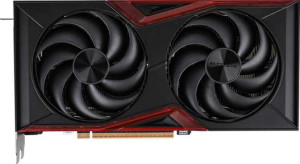
Colorful GeForce RTX 5050 Battle AX Duo
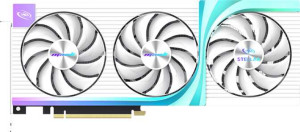
Manli Stellar GeForce RTX 5060 Ti OC 16GB

Colorful GeForce RTX 5050 Battle AX Duo Manli Stellar GeForce RTX 5060 Ti OC 16GB

Overview

Welcome to our in-depth specification face-off between the Colorful GeForce RTX 5050 Battle AX Duo and the Manli Stellar GeForce RTX 5060 Ti OC 16GB. Both cards share the same Blackwell architecture and a rich feature set including ray tracing and DLSS support, yet they diverge significantly when it comes to raw compute power, VRAM capacity, and overall card size. Read on to see how these two GPUs stack up across every key specification.

Common Features

  • Both cards support Double Precision Floating Point (DPFP).
  • Both cards share a 128-bit memory bus width.
  • Both cards support ECC memory.
  • Both cards are based on the Blackwell GPU architecture.
  • Both cards are built on a 5 nm semiconductor process.
  • Both cards use PCIe 5.0.
  • Both cards do not feature air-water cooling.
  • Both cards support DirectX 12 Ultimate.
  • Both cards support OpenGL 4.6.
  • Both cards support OpenCL 3.
  • Both cards support multi-display technology.
  • Both cards support ray tracing.
  • Both cards support 3D.
  • Both cards support DLSS.
  • XeSS (XMX) support is not available on either card.
  • Both cards include one HDMI 2.1b output.
  • Both cards feature three DisplayPort outputs.
  • Neither card includes a USB-C port.
  • Neither card includes a DVI output.
  • Neither card includes a mini DisplayPort output.

Main Differences

  • GPU base clock speed is 2317 MHz on Colorful GeForce RTX 5050 Battle AX Duo and 2407 MHz on Manli Stellar GeForce RTX 5060 Ti OC 16GB.
  • GPU turbo clock speed is 2572 MHz on Colorful GeForce RTX 5050 Battle AX Duo and 2632 MHz on Manli Stellar GeForce RTX 5060 Ti OC 16GB.
  • Pixel rate is 82.3 GPixel/s on Colorful GeForce RTX 5050 Battle AX Duo and 126.3 GPixel/s on Manli Stellar GeForce RTX 5060 Ti OC 16GB.
  • Floating-point performance is 13.17 TFLOPS on Colorful GeForce RTX 5050 Battle AX Duo and 24.26 TFLOPS on Manli Stellar GeForce RTX 5060 Ti OC 16GB.
  • Texture rate is 205.8 GTexels/s on Colorful GeForce RTX 5050 Battle AX Duo and 379 GTexels/s on Manli Stellar GeForce RTX 5060 Ti OC 16GB.
  • GPU memory speed is 2500 MHz on Colorful GeForce RTX 5050 Battle AX Duo and 1750 MHz on Manli Stellar GeForce RTX 5060 Ti OC 16GB.
  • Shading units number 2560 on Colorful GeForce RTX 5050 Battle AX Duo and 4608 on Manli Stellar GeForce RTX 5060 Ti OC 16GB.
  • Texture mapping units (TMUs) total 80 on Colorful GeForce RTX 5050 Battle AX Duo and 144 on Manli Stellar GeForce RTX 5060 Ti OC 16GB.
  • Render output units (ROPs) total 32 on Colorful GeForce RTX 5050 Battle AX Duo and 48 on Manli Stellar GeForce RTX 5060 Ti OC 16GB.
  • Effective memory speed is 20000 MHz on Colorful GeForce RTX 5050 Battle AX Duo and 28000 MHz on Manli Stellar GeForce RTX 5060 Ti OC 16GB.
  • Maximum memory bandwidth is 320 GB/s on Colorful GeForce RTX 5050 Battle AX Duo and 448 GB/s on Manli Stellar GeForce RTX 5060 Ti OC 16GB.
  • VRAM is 8GB on Colorful GeForce RTX 5050 Battle AX Duo and 16GB on Manli Stellar GeForce RTX 5060 Ti OC 16GB.
  • Memory type is GDDR6 on Colorful GeForce RTX 5050 Battle AX Duo and GDDR7 on Manli Stellar GeForce RTX 5060 Ti OC 16GB.
  • Thermal Design Power (TDP) is 130W on Colorful GeForce RTX 5050 Battle AX Duo and 180W on Manli Stellar GeForce RTX 5060 Ti OC 16GB.
  • Transistor count is 16900 million on Colorful GeForce RTX 5050 Battle AX Duo and 21900 million on Manli Stellar GeForce RTX 5060 Ti OC 16GB.
  • Card width is 231 mm on Colorful GeForce RTX 5050 Battle AX Duo and 315 mm on Manli Stellar GeForce RTX 5060 Ti OC 16GB.
  • Card height is 120 mm on Colorful GeForce RTX 5050 Battle AX Duo and 127 mm on Manli Stellar GeForce RTX 5060 Ti OC 16GB.
Specs Comparison
Colorful GeForce RTX 5050 Battle AX Duo

Colorful GeForce RTX 5050 Battle AX Duo

Manli Stellar GeForce RTX 5060 Ti OC 16GB

Manli Stellar GeForce RTX 5060 Ti OC 16GB

Performance:
GPU clock speed 2317 MHz 2407 MHz
GPU turbo 2572 MHz 2632 MHz
pixel rate 82.3 GPixel/s 126.3 GPixel/s
floating-point performance 13.17 TFLOPS 24.26 TFLOPS
texture rate 205.8 GTexels/s 379 GTexels/s
GPU memory speed 2500 MHz 1750 MHz
shading units 2560 4608
texture mapping units (TMUs) 80 144
render output units (ROPs) 32 48
Has Double Precision Floating Point (DPFP)

The most telling performance gap between the RTX 5050 Battle AX Duo and the RTX 5060 Ti OC 16GB lies in their shader and compute resources. The 5060 Ti fields 4608 shading units, 144 TMUs, and 48 ROPs against the 5050's 2560 shaders, 80 TMUs, and 32 ROPs — roughly 80% more of each. These units are the raw muscle behind rendering pixels and applying textures, so the gulf translates directly into real-world frame rates and the ability to handle higher resolutions. The floating-point performance figures crystallize this: 24.26 TFLOPS for the 5060 Ti versus 13.17 TFLOPS for the 5050 — nearly double the compute throughput, which also matters for AI-accelerated workloads and ray-tracing calculations.

Clock speeds are far closer, with the 5060 Ti running a base of 2407 MHz and a turbo of 2632 MHz compared to 2317 MHz / 2572 MHz on the 5050. This ~2–3% clock advantage is marginal and is not the driver of the performance difference; the unit count is. One area where the 5050 holds a counterintuitive edge is GPU memory speed — its 2500 MHz versus the 5060 Ti's 1750 MHz — though this figure must be interpreted alongside bus width and bandwidth, which are not provided here, so its net impact cannot be fully assessed from these specs alone.

Overall, the Manli RTX 5060 Ti OC 16GB holds a clear and decisive performance advantage in this group. Its substantially larger shader array and near-double compute output make it the stronger card for demanding games, high-resolution rendering, and GPU compute tasks. The 5050 is not without merit for lighter workloads, but purely on these performance metrics, the 5060 Ti wins by a wide margin.
Memory:
effective memory speed 20000 MHz 28000 MHz
maximum memory bandwidth 320 GB/s 448 GB/s
VRAM 8GB 16GB
GDDR version GDDR6 GDDR7
memory bus width 128-bit 128-bit
Supports ECC memory

Both cards share a 128-bit memory bus, which makes the generational memory technology the defining factor here. The RTX 5050 Battle AX Duo uses GDDR6, while the RTX 5060 Ti OC 16GB steps up to GDDR7 — a meaningful architectural leap, not just a spec bump. GDDR7 achieves higher data rates per pin, which is exactly why the 5060 Ti reaches an effective memory speed of 28000 MHz versus 20000 MHz on the 5050, despite both running the same bus width. The practical result is 448 GB/s of memory bandwidth on the 5060 Ti against 320 GB/s on the 5050 — a 40% bandwidth advantage that directly feeds its larger shader array with data faster, sustaining higher frame rates especially at elevated resolutions.

Capacity is the other major dividing line: 16GB of VRAM on the 5060 Ti versus 8GB on the 5050. In modern gaming, 8GB is increasingly a pressure point — some titles at high settings with texture packs or ray tracing active can brush against or exceed that ceiling, causing stutters as assets spill beyond the frame buffer. The 5060 Ti's 16GB provides comfortable headroom not just for current titles but for workloads like AI inference and 3D rendering where large model or scene data must reside in VRAM.

On this spec group, the Manli RTX 5060 Ti OC 16GB wins decisively on every meaningful dimension — faster memory technology, greater bandwidth, and double the capacity. The shared bus width and ECC support are table-stakes features that cancel out. For any user anticipating demanding or future-facing workloads, the 5060 Ti's memory subsystem is in a different league.

Features:
DirectX version DirectX 12 Ultimate DirectX 12 Ultimate
OpenGL version 4.6 4.6
OpenCL version 3 3
Supports multi-display technology
supports ray tracing
Supports 3D
supports DLSS
has XeSS (XMX)
AMD SAM / Intel Resizable BAR Intel Resizable BAR Intel Resizable BAR
has LHR
has RGB lighting
supported displays 4 4

Across every feature in this group, the two cards are in complete lockstep. Both support DirectX 12 Ultimate, ray tracing, and DLSS — the trio that defines the modern NVIDIA feature set. DirectX 12 Ultimate ensures compatibility with the full range of current-gen rendering techniques, while DLSS is particularly valuable as it uses AI upscaling to recover frame rates lost to demanding settings or ray tracing loads. Neither card supports XeSS, which is an Intel-specific technology and unsurprising to be absent here.

On the practical side, both cards support up to 4 simultaneous displays and include Intel Resizable BAR, which allows the CPU to access the full GPU frame buffer at once rather than in small chunks — a feature that can provide modest but real frame rate gains in supported games. RGB lighting is present on both, so aesthetic customization is equally available regardless of which card you choose.

This group is a clear tie. There is not a single feature differentiator between the Colorful RTX 5050 Battle AX Duo and the Manli RTX 5060 Ti OC 16GB in this category — every capability, API version, and supported technology is identical. The choice between them on features alone is purely neutral; buyers should weight other spec groups to make their decision.

Ports:
has an HDMI output
HDMI ports 1 1
HDMI version HDMI 2.1b HDMI 2.1b
DisplayPort outputs 3 3
USB-C ports 0 0
DVI outputs 0 0
mini DisplayPort outputs 0 0

Port selection is identical on both cards: one HDMI 2.1b output and three DisplayPort outputs, for a total of four display connections — matching the four-display limit noted in the Features group. HDMI 2.1b is the latest revision of the standard, bringing support for very high bandwidth output including 4K at high refresh rates and 8K, which means neither card will be a bottleneck when connecting to a modern monitor or TV.

The three DisplayPort outputs add flexibility for multi-monitor productivity setups or daisy-chaining compatible displays. Neither card offers USB-C, mini DisplayPort, or DVI — the absence of USB-C in particular means direct connection to USB-C monitors requires an adapter on both cards equally, so this is not a differentiator between them.

This is another complete tie. The Colorful RTX 5050 Battle AX Duo and the Manli RTX 5060 Ti OC 16GB offer an identical port layout with no variation whatsoever. Connectivity preferences will not factor into a choice between these two cards.

General info:
GPU architecture Blackwell Blackwell
release date June 2025 April 2025
Thermal Design Power (TDP) 130W 180W
PCI Express (PCIe) version 5 5
semiconductor size 5 nm 5 nm
number of transistors 16900 million 21900 million
Has air-water cooling
width 231 mm 315 mm
height 120 mm 127 mm

Sharing the same Blackwell architecture, 5nm process node, and PCIe 5.0 interface, both cards come from the same generational platform — but the silicon underneath them differs meaningfully. The RTX 5060 Ti packs 21,900 million transistors against the RTX 5050's 16,900 million, a 30% larger die that directly enables the greater shader count and compute resources seen in the Performance group. More transistors on the same process node means more functional units, not greater efficiency per transistor — so this gap is purely about scale.

That scale comes with a power cost. The RTX 5060 Ti OC 16GB carries a 180W TDP versus the RTX 5050 Battle AX Duo's 130W — a 50W difference that has real practical implications. Users will need to ensure their power supply and system cooling can accommodate the higher draw, and in small form factor or budget builds, the 5050's lower thermal envelope is a genuine advantage. Physical size reinforces this: the 5060 Ti measures 315mm in length compared to 231mm for the 5050, an 84mm difference that could be decisive in compact cases.

Neither card edges the other here without context — the answer depends on the build. For users prioritizing compact dimensions and lower power consumption, the RTX 5050 Battle AX Duo holds a real advantage. For those with a full-size case and adequate PSU headroom, the 5060 Ti's larger footprint and higher TDP are acceptable trade-offs for the performance gains established in other groups. On shared fundamentals like architecture and PCIe version, they are fully equal.

Comparison Summary & Verdict

After examining every specification, a clear picture emerges for each card. The Colorful GeForce RTX 5050 Battle AX Duo stands out as the more compact and power-efficient option, drawing only 130W TDP and measuring just 231 mm in length, making it an excellent fit for smaller builds or budget-conscious users who still want modern Blackwell features. The Manli Stellar GeForce RTX 5060 Ti OC 16GB, on the other hand, pulls ahead decisively in virtually every performance metric, offering nearly double the floating-point performance at 24.26 TFLOPS, a larger 16GB GDDR7 memory pool with 448 GB/s bandwidth, 4608 shading units, and higher pixel and texture rates. For gamers and creators who demand maximum throughput and future-proof VRAM headroom, the Manli card is the stronger long-term investment, while the Colorful card remains a sensible, space-saving choice for everyday gaming at a lower power envelope.

Colorful GeForce RTX 5050 Battle AX Duo
Buy Colorful GeForce RTX 5050 Battle AX Duo if...

Buy the Colorful GeForce RTX 5050 Battle AX Duo if you are building a compact PC with limited space and want a power-efficient Blackwell GPU that keeps TDP at 130W within a 231 mm form factor.

Manli Stellar GeForce RTX 5060 Ti OC 16GB
Buy Manli Stellar GeForce RTX 5060 Ti OC 16GB if...

Buy the Manli Stellar GeForce RTX 5060 Ti OC 16GB if you need maximum graphics performance, with nearly twice the compute power, 16GB of faster GDDR7 memory, and significantly higher bandwidth for demanding games and creative workloads.