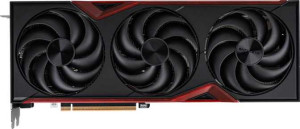
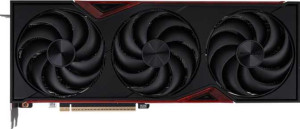
Despite sharing the same 128-bit memory bus width, these two cards arrive at very different memory configurations. The RTX 5060 Ti NB EX 16GB equips GDDR7 with an effective speed of 28000 MHz, while the RTX 5050 Battle AX uses GDDR6 at 20000 MHz. That generational leap in memory technology is consequential — GDDR7 delivers not just higher clock rates but improved efficiency and signal integrity, and the result shows directly in bandwidth: 448 GB/s versus 320 GB/s on the 5050. On a 128-bit bus, bandwidth is a finite resource, so the 5060 Ti's 40% bandwidth advantage gives it meaningfully more headroom when feeding its larger shader array with data.
The VRAM gap is equally significant. The 5060 Ti's 16GB frame buffer is double the 5050's 8GB, and this has practical consequences that extend beyond benchmarks. Modern titles with high-resolution texture packs, ray tracing, or AI-driven upscaling features can routinely push well past 8GB of VRAM usage — running out causes stuttering and sharp performance drops as the GPU spills data to system memory. The 5060 Ti is substantially better insulated against this outcome, both today and as games continue to grow in memory demands.
Both cards support ECC memory, a feature relevant to compute and workstation use cases requiring data integrity. That said, in every dimension that defines day-to-day performance — capacity, speed, and bandwidth — the RTX 5060 Ti NB EX 16GB holds a clear and decisive advantage in this group.