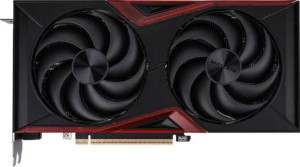
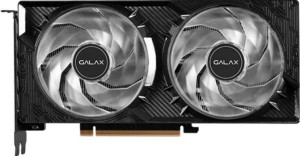
At the core, these two cards share the same fundamental silicon configuration: identical 3840 shading units, 120 TMUs, 48 ROPs, and a matching base clock of 2280 MHz with 1750 MHz memory speed. This means their day-to-day rendering pipeline — how many pixels, textures, and geometry operations they can dispatch per cycle — is structurally equivalent. Both also support Double Precision Floating Point, which matters for compute workloads like simulation or machine learning inference, though it is a shared trait here rather than a differentiator.
The only meaningful separation comes from the GPU turbo clock. The Galax RTX 5060 1-Click OC boosts to 2512 MHz, while the Colorful RTX 5060 NB Duo tops out at 2497 MHz — a difference of just 15 MHz. This translates directly into the compute and throughput figures: the Galax edges ahead with 19.29 TFLOPS of floating-point performance versus 19.18 TFLOPS, and a texture rate of 301.4 GTexels/s compared to 299.6 GTexels/s. In practice, these are sub-1% gaps, and a user would not perceive a difference in real gaming or rendering workloads.
The Galax holds a technical edge in this group purely on paper, driven by its marginally higher boost clock. However, the advantage is so slim that it is effectively a tie in any real-world scenario. Neither card pulls ahead in a way that should influence a purchasing decision based on performance alone — other factors such as cooling, acoustics, or price will matter far more.