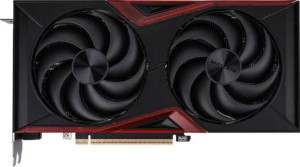
Colorful GeForce RTX 5060 NB Duo
Inno3D GeForce RTX 5060 Twin X2

Colorful GeForce RTX 5060 NB Duo Inno3D GeForce RTX 5060 Twin X2

Overview

Welcome to our in-depth spec comparison of the Colorful GeForce RTX 5060 NB Duo and the Inno3D GeForce RTX 5060 Twin X2, two cards built on the same Blackwell architecture. While they share an identical GPU engine and memory configuration, the real question comes down to physical dimensions and aesthetic features — areas where these two cards quietly diverge in ways that may matter more than you expect.

Common Features

  • Both cards have a GPU clock speed of 2280 MHz.
  • Both cards have a GPU turbo speed of 2497 MHz.
  • Both cards deliver a pixel rate of 119.9 GPixel/s.
  • Both cards offer 19.18 TFLOPS of floating-point performance.
  • Both cards provide a texture rate of 299.6 GTexels/s.
  • Both cards have a GPU memory speed of 1750 MHz.
  • Both cards feature 3840 shading units.
  • Both cards have 120 texture mapping units (TMUs).
  • Both cards have an effective memory speed of 28000 MHz.
  • Both cards offer a maximum memory bandwidth of 448 GB/s.
  • Both cards come with 8GB of VRAM.
  • Both cards use GDDR7 memory.
  • Both cards have a 128-bit memory bus width.
  • ECC memory support is available on both cards.
  • Both cards support DirectX 12 Ultimate.
  • Both cards support OpenGL version 4.6.
  • Both cards support OpenCL version 3.
  • Multi-display technology support is available on both cards.
  • Ray tracing support is available on both cards.
  • 3D support is available on both cards.
  • DLSS support is available on both cards.
  • XeSS (XMX) support is not available on either card.
  • Both cards have one HDMI 2.1b output.
  • Both cards have three DisplayPort outputs.
  • Neither card has USB-C ports, DVI outputs, or mini DisplayPort outputs.
  • Both cards are based on the Blackwell GPU architecture.
  • Both cards have a Thermal Design Power (TDP) of 145W.
  • Both cards use PCIe version 5.
  • Both cards are manufactured on a 5 nm semiconductor process.
  • Both cards feature 21900 million transistors.
  • Air-water cooling is not available on either card.

Main Differences

  • RGB lighting is present on the Colorful GeForce RTX 5060 NB Duo but not available on the Inno3D GeForce RTX 5060 Twin X2.
  • Width is 231 mm on the Colorful GeForce RTX 5060 NB Duo and 225 mm on the Inno3D GeForce RTX 5060 Twin X2.
  • Height is 120 mm on the Colorful GeForce RTX 5060 NB Duo and 116 mm on the Inno3D GeForce RTX 5060 Twin X2.
Specs Comparison
Colorful GeForce RTX 5060 NB Duo

Colorful GeForce RTX 5060 NB Duo

Inno3D GeForce RTX 5060 Twin X2

Inno3D GeForce RTX 5060 Twin X2

Performance:
GPU clock speed 2280 MHz 2280 MHz
GPU turbo 2497 MHz 2497 MHz
pixel rate 119.9 GPixel/s 119.9 GPixel/s
floating-point performance 19.18 TFLOPS 19.18 TFLOPS
texture rate 299.6 GTexels/s 299.6 GTexels/s
GPU memory speed 1750 MHz 1750 MHz
shading units 3840 3840
texture mapping units (TMUs) 120 120
render output units (ROPs) 48 48
Has Double Precision Floating Point (DPFP)

In the Performance category, the Colorful GeForce RTX 5060 NB Duo and the Inno3D GeForce RTX 5060 Twin X2 are built on identical GPU silicon with no meaningful differentiation whatsoever. Both cards share a base clock of 2280 MHz, a boost clock of 2497 MHz, and deliver the same 19.18 TFLOPS of floating-point throughput — the core metric for raw computational horsepower in gaming and GPU-accelerated workloads.

Digging deeper into the rendering pipeline, both GPUs are equipped with 3840 shading units, 120 TMUs, and 48 ROPs, yielding identical texture and pixel fill rates of 299.6 GTexels/s and 119.9 GPixel/s respectively. Memory bandwidth potential is also locked in step, with both running at 1750 MHz memory speed. These figures together determine how quickly a GPU can shade geometry, apply textures, and write pixels to the framebuffer — and here, there is zero gap between the two.

The verdict for this group is a complete tie. Every single performance specification is numerically identical, including Double Precision Floating Point support on both cards. Neither product holds any performance edge over the other based solely on these specs. Buyers should look to other spec groups — such as cooling, memory capacity, or power design — to differentiate between these two cards.

Memory:
effective memory speed 28000 MHz 28000 MHz
maximum memory bandwidth 448 GB/s 448 GB/s
VRAM 8GB 8GB
GDDR version GDDR7 GDDR7
memory bus width 128-bit 128-bit
Supports ECC memory

Both the Colorful RTX 5060 NB Duo and the Inno3D RTX 5060 Twin X2 carry an identical memory configuration from top to bottom. Each card pairs 8GB of GDDR7 VRAM with a 128-bit memory bus, yielding a maximum bandwidth of 448 GB/s at an effective speed of 28000 MHz. GDDR7 is the latest generation of graphics memory, and that bandwidth figure is notably high for a 128-bit bus — a direct result of GDDR7′s efficiency gains over its predecessor, GDDR6X.

In practical terms, 448 GB/s of memory bandwidth helps sustain high frame rates in texture-heavy scenes and supports modern rendering techniques like ray tracing and AI-driven upscaling, both of which are bandwidth-sensitive. The 8GB VRAM capacity is sufficient for 1080p and most 1440p workloads today, though it can become a limiting factor in the most demanding titles at higher resolutions with maxed-out texture settings. Both cards also support ECC memory, a feature typically valued in professional and compute workloads where data integrity is critical.

As with the Performance group, this is an absolute tie. There is no distinction between the two cards across any memory specification — capacity, speed, bus width, generation, and ECC support are all identical. Memory configuration will not be a deciding factor between these two products.

Features:
DirectX version DirectX 12 Ultimate DirectX 12 Ultimate
OpenGL version 4.6 4.6
OpenCL version 3 3
Supports multi-display technology
supports ray tracing
Supports 3D
supports DLSS
has XeSS (XMX)
AMD SAM / Intel Resizable BAR Intel Resizable BAR Intel Resizable BAR
has LHR
has RGB lighting
supported displays 4 4

At the software and API feature level, these two cards are virtually identical. Both support DirectX 12 Ultimate, ray tracing, and DLSS — NVIDIA′s AI-powered upscaling technology that is one of the most compelling reasons to choose a GeForce card for gaming. Intel Resizable BAR support is present on both, which allows the CPU to access the full GPU frame buffer simultaneously, offering modest but real performance gains in supported titles. Neither card supports XeSS, which is expected given that is Intel′s competing upscaling solution.

The one concrete differentiator in this group is RGB lighting: the Colorful RTX 5060 NB Duo includes it, while the Inno3D RTX 5060 Twin X2 does not. For users building aesthetics-focused systems with themed lighting setups, this is a meaningful distinction. For those who prioritize a clean, understated look — or are fitting into a case where the GPU is not visible — the absence of RGB on the Twin X2 may actually be preferred.

Functionally, the Colorful NB Duo holds a narrow edge here solely due to its RGB support, which adds aesthetic value that the Inno3D lacks. However, this advantage is entirely cosmetic — it has no bearing on gaming performance, compatibility, or software capability. Buyers who care about lighting integration should lean toward the Colorful; those who do not will find no functional difference between the two.

Ports:
has an HDMI output
HDMI ports 1 1
HDMI version HDMI 2.1b HDMI 2.1b
DisplayPort outputs 3 3
USB-C ports 0 0
DVI outputs 0 0
mini DisplayPort outputs 0 0

The port configuration on both cards is exactly the same: one HDMI 2.1b output and three DisplayPort outputs, for a total of four display connections — matching the four-display limit noted in the Features group. HDMI 2.1b is the latest revision of the standard, bringing support for higher refresh rates at 4K and beyond, as well as improved variable refresh rate handling, which matters for users connecting to high-end gaming monitors or modern TVs.

The three DisplayPort outputs make both cards well-suited for multi-monitor productivity setups without the need for adapters. Neither card offers USB-C, mini DisplayPort, or legacy DVI connectivity, which is consistent with modern GPU design trends that have phased out those interfaces. The absence of USB-C is worth noting for users who own monitors that accept video over USB-C, as an adapter would be required.

This group is a complete tie — every port type, count, and version is identical across the Colorful NB Duo and the Inno3D Twin X2. Display connectivity will not factor into any decision between these two cards.

General info:
GPU architecture Blackwell Blackwell
release date May 2025 May 2025
Thermal Design Power (TDP) 145W 145W
PCI Express (PCIe) version 5 5
semiconductor size 5 nm 5 nm
number of transistors 21900 million 21900 million
Has air-water cooling
width 231 mm 225 mm
height 120 mm 116 mm

Sharing the same Blackwell architecture, 5nm process node, and 21.9 billion transistors, both cards are built on identical silicon with a matched 145W TDP. That power envelope is moderate for a modern mid-range GPU, meaning neither card should place unusual demands on a system PSU or push thermals to extremes in a reasonably ventilated case. Both also use PCIe 5.0, ensuring full compatibility with current-generation motherboards while remaining backward compatible with PCIe 4.0 and 3.0 slots.

The only measurable difference in this group comes down to physical dimensions. The Colorful RTX 5060 NB Duo measures 231 × 120 mm, while the Inno3D RTX 5060 Twin X2 is slightly more compact at 225 × 116 mm. That 6mm difference in length and 4mm in height is small in absolute terms, but it can matter in tighter Mini-ITX or compact Micro-ATX builds where GPU clearance is limited.

For general build compatibility, the Inno3D Twin X2 holds a slight practical edge by virtue of its smaller footprint — it will fit comfortably anywhere the Colorful NB Duo does, plus a handful of cases where the extra few millimeters would otherwise be a problem. For users in standard mid-tower or full-tower builds, this distinction is inconsequential. All other general specifications are identical between the two.

Comparison Summary & Verdict

After a thorough comparison, it is clear that the Colorful GeForce RTX 5060 NB Duo and the Inno3D GeForce RTX 5060 Twin X2 are remarkably evenly matched at their core, sharing the same 2497 MHz boost clock, 8GB GDDR7 memory, 145W TDP, and identical port configurations. The differences are physical and cosmetic: the Colorful card is slightly larger at 231 x 120 mm versus the Inno3D at 225 x 116 mm, and it adds RGB lighting that the Inno3D omits. Choose the Colorful GeForce RTX 5060 NB Duo if aesthetics and lighting customization matter to you. Opt for the Inno3D GeForce RTX 5060 Twin X2 if you prefer a more compact, understated card that fits tighter cases more easily.

Colorful GeForce RTX 5060 NB Duo
Buy Colorful GeForce RTX 5060 NB Duo if...

Buy the Colorful GeForce RTX 5060 NB Duo if you want RGB lighting and do not have tight size constraints in your PC case.

Inno3D GeForce RTX 5060 Twin X2
Buy Inno3D GeForce RTX 5060 Twin X2 if...

Buy the Inno3D GeForce RTX 5060 Twin X2 if you prefer a more compact card with a cleaner, no-RGB aesthetic that fits smaller builds more easily.