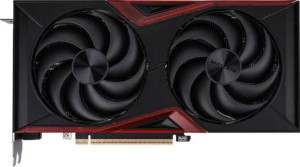
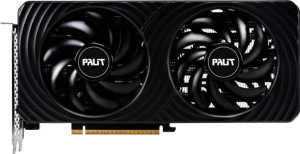
In the Performance category, the Colorful GeForce RTX 5060 NB Duo and the Palit GeForce RTX 5060 Dual are built on an identical silicon foundation. Both cards share the same 2280 MHz base clock and 2497 MHz boost clock, meaning neither card has a factory overclock advantage out of the box. This translates directly to equivalent real-world frame rates under sustained GPU-limited workloads.
The parity extends across every computed throughput metric: both deliver 19.18 TFLOPS of floating-point performance, 299.6 GTexels/s of texture throughput, and 119.9 GPixel/s of pixel fill rate. These figures stem from the same underlying counts — 3840 shading units, 120 TMUs, and 48 ROPs — running at the same frequencies. In practical terms, users can expect equivalent rasterization performance, texture detail throughput, and anti-aliasing capability from both cards. The shared 1750 MHz memory speed also means bandwidth feeding the GPU cores is identical, so neither card gains an edge in memory-bound scenarios.
This group is a complete tie. There is no measurable performance advantage on either side based on the provided specifications. Both cards support Double Precision Floating Point, which is relevant for compute and scientific workloads but does not differentiate them here. Buyers deciding between these two should look to other factors — such as cooling design, dimensions, or pricing — since raw GPU performance will be indistinguishable in practice.