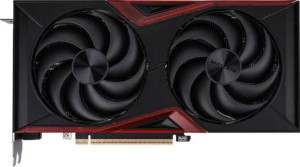
Colorful GeForce RTX 5060 NB Duo
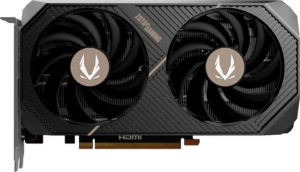
Zotac Gaming GeForce RTX 5060 AMP

Colorful GeForce RTX 5060 NB Duo Zotac Gaming GeForce RTX 5060 AMP

Overview

Welcome to our detailed spec comparison between the Colorful GeForce RTX 5060 NB Duo and the Zotac Gaming GeForce RTX 5060 AMP. Both cards are built on the modern Blackwell architecture with identical memory configurations, yet they diverge in areas like boost clock speeds, raw throughput figures, physical dimensions, and aesthetic features. Read on to discover how these two RTX 5060 variants stack up across performance, features, and design.

Common Features

  • Both cards share a base GPU clock speed of 2280 MHz.
  • Both cards have a GPU memory speed of 1750 MHz.
  • Both cards feature 3840 shading units.
  • Both cards include 120 texture mapping units (TMUs).
  • Both cards have 48 render output units (ROPs).
  • Double Precision Floating Point (DPFP) is supported on both cards.
  • Both cards have an effective memory speed of 28000 MHz.
  • Both cards offer a maximum memory bandwidth of 448 GB/s.
  • Both cards come with 8GB of VRAM.
  • Both cards use GDDR7 memory.
  • Both cards have a 128-bit memory bus width.
  • ECC memory is supported on both cards.
  • Both cards support DirectX 12 Ultimate.
  • Both cards support OpenGL version 4.6.
  • Both cards support OpenCL version 3.
  • Multi-display technology is supported on both cards.
  • Ray tracing is supported on both cards.
  • 3D support is available on both cards.
  • DLSS is supported on both cards.
  • XeSS (XMX) is not available on either card.
  • Both cards include one HDMI 2.1b output and three DisplayPort outputs, with no USB-C or DVI outputs.
  • Both cards are built on the Blackwell GPU architecture.
  • Both cards have a Thermal Design Power (TDP) of 145W.
  • Both cards use PCIe version 5.
  • Both cards are manufactured on a 5 nm semiconductor process.
  • Both cards contain 21900 million transistors.
  • Air-water cooling is not available on either card.
  • Both cards share a height of approximately 120 mm.

Main Differences

  • GPU turbo clock speed is 2497 MHz on the Colorful GeForce RTX 5060 NB Duo and 2550 MHz on the Zotac Gaming GeForce RTX 5060 AMP.
  • Pixel rate is 119.9 GPixel/s on the Colorful GeForce RTX 5060 NB Duo and 122.4 GPixel/s on the Zotac Gaming GeForce RTX 5060 AMP.
  • Floating-point performance is 19.18 TFLOPS on the Colorful GeForce RTX 5060 NB Duo and 19.58 TFLOPS on the Zotac Gaming GeForce RTX 5060 AMP.
  • Texture rate is 299.6 GTexels/s on the Colorful GeForce RTX 5060 NB Duo and 306 GTexels/s on the Zotac Gaming GeForce RTX 5060 AMP.
  • RGB lighting is present on the Colorful GeForce RTX 5060 NB Duo but not available on the Zotac Gaming GeForce RTX 5060 AMP.
  • Width is 231 mm on the Colorful GeForce RTX 5060 NB Duo and 220.5 mm on the Zotac Gaming GeForce RTX 5060 AMP.
Specs Comparison
Colorful GeForce RTX 5060 NB Duo

Colorful GeForce RTX 5060 NB Duo

Zotac Gaming GeForce RTX 5060 AMP

Zotac Gaming GeForce RTX 5060 AMP

Performance:
GPU clock speed 2280 MHz 2280 MHz
GPU turbo 2497 MHz 2550 MHz
pixel rate 119.9 GPixel/s 122.4 GPixel/s
floating-point performance 19.18 TFLOPS 19.58 TFLOPS
texture rate 299.6 GTexels/s 306 GTexels/s
GPU memory speed 1750 MHz 1750 MHz
shading units 3840 3840
texture mapping units (TMUs) 120 120
render output units (ROPs) 48 48
Has Double Precision Floating Point (DPFP)

At their core, both the Colorful RTX 5060 NB Duo and the Zotac Gaming RTX 5060 AMP share identical silicon foundations: the same 3840 shading units, 120 TMUs, 48 ROPs, and a matching base clock of 2280 MHz with memory running at 1750 MHz. This tells us both cards are built on the exact same GPU die with no hardware-level cuts or additions separating them at rest.

The only differentiator in this group comes down to the boost clock. The Zotac AMP boosts to 2550 MHz versus the Colorful NB Duo's 2497 MHz — a gap of 53 MHz, or roughly 2.1%. This directly cascades into every throughput metric: the Zotac edges ahead with 19.58 TFLOPS of floating-point performance versus 19.18 TFLOPS, a 306 GTexels/s texture rate versus 299.6 GTexels/s, and a 122.4 GPixel/s pixel fill rate versus 119.9 GPixel/s. In real-world terms, a ~2% boost headroom advantage rarely translates into a perceptible frame-rate difference in games, but it does suggest the Zotac's cooler or power delivery is tuned to sustain slightly higher sustained clocks under load.

On balance, the Zotac Gaming RTX 5060 AMP holds a narrow but consistent edge across every computed performance metric in this group, all stemming from its higher GPU turbo clock. The advantage is real but modest — buyers prioritizing pure clock-for-clock performance should lean toward the Zotac, while those indifferent to a sub-2% delta can treat these two cards as effectively equivalent in raw GPU throughput.

Memory:
effective memory speed 28000 MHz 28000 MHz
maximum memory bandwidth 448 GB/s 448 GB/s
VRAM 8GB 8GB
GDDR version GDDR7 GDDR7
memory bus width 128-bit 128-bit
Supports ECC memory

Memory is where any remaining question of differentiation between these two cards evaporates entirely. Both the Colorful RTX 5060 NB Duo and the Zotac Gaming RTX 5060 AMP carry 8GB of GDDR7 over a 128-bit bus, running at an effective 28000 MHz and delivering 448 GB/s of peak memory bandwidth. Every single memory specification is a carbon copy.

The numbers themselves deserve some context. GDDR7 is a meaningful generational leap over GDDR6X, and achieving 448 GB/s through a 128-bit interface — traditionally a bandwidth-constrained configuration — demonstrates how much GDDR7's raw speed compensates for the narrow bus. This makes both cards far more competitive in memory-intensive workloads than prior-generation 128-bit designs. The inclusion of ECC memory support on both is a bonus for users running compute or content creation tasks where data integrity matters.

This group is an unambiguous dead heat. There is no basis in the provided specs to favor one card over the other on memory grounds — buyers should look entirely to other specification groups, such as performance clocks or cooling, to make their decision.

Features:
DirectX version DirectX 12 Ultimate DirectX 12 Ultimate
OpenGL version 4.6 4.6
OpenCL version 3 3
Supports multi-display technology
supports ray tracing
Supports 3D
supports DLSS
has XeSS (XMX)
AMD SAM / Intel Resizable BAR Intel Resizable BAR Intel Resizable BAR
has LHR
has RGB lighting
supported displays 4 4

Across the software and API feature set, these two cards are functionally identical. Both support DirectX 12 Ultimate, ray tracing, and DLSS — the trio that defines a modern, future-capable GeForce card. Ray tracing enablement means both can handle hardware-accelerated lighting and shadow effects in supported titles, while DLSS provides AI-driven upscaling that can recover significant frame rates at higher resolutions. Neither card carries LHR restrictions, and both support up to 4 simultaneous displays, making either a competent choice for multi-monitor setups.

The sole distinguishing spec in this group is aesthetic: the Colorful RTX 5060 NB Duo includes RGB lighting, while the Zotac Gaming RTX 5060 AMP does not. For builders who care about a lit, themed system interior, this is a tangible difference — the Colorful card offers visual customization that the Zotac simply cannot provide. For those indifferent to aesthetics, it is a non-factor.

On functional features, this group is a tie. The Colorful NB Duo claims a minor edge solely on the basis of RGB lighting, which is purely a lifestyle consideration rather than a performance or capability advantage. Buyers who want a visually expressive build should note this difference; everyone else can disregard it entirely.

Ports:
has an HDMI output
HDMI ports 1 1
HDMI version HDMI 2.1b HDMI 2.1b
DisplayPort outputs 3 3
USB-C ports 0 0
DVI outputs 0 0
mini DisplayPort outputs 0 0

Port configuration is another area where these two cards offer zero differentiation. Both the Colorful RTX 5060 NB Duo and the Zotac Gaming RTX 5060 AMP feature an identical output array: three DisplayPort outputs and one HDMI 2.1b port, totaling four physical connectors — which aligns with their shared four-display support noted in the features group.

The presence of HDMI 2.1b is worth highlighting: it supports up to 4K at high refresh rates and 8K output, making both cards ready for current and near-future display standards without requiring an adapter. The three DisplayPort outputs give multi-monitor users plenty of flexibility for daisy-chaining or running independent high-refresh displays simultaneously. The absence of USB-C is the one thing productivity-oriented users might notice, as it rules out direct connection to USB-C monitors without an adapter — but this is equally true for both cards.

This group is a complete tie with no distinguishing factors whatsoever. Connectivity decisions will play no role in choosing between these two cards.

General info:
GPU architecture Blackwell Blackwell
release date May 2025 May 2025
Thermal Design Power (TDP) 145W 145W
PCI Express (PCIe) version 5 5
semiconductor size 5 nm 5 nm
number of transistors 21900 million 21900 million
Has air-water cooling
width 231 mm 220.5 mm
height 120 mm 120.25 mm

Underneath the heatsink, both cards are built on identical silicon: the Blackwell architecture, fabbed on a 5nm process with 21.9 billion transistors, running at a 145W TDP over a PCIe 5.0 interface. This shared foundation means identical power requirements, the same slot and power connector planning, and equivalent platform compatibility — there are no surprises for either card at the system integration level.

The only measurable difference in this group is physical length. The Colorful RTX 5060 NB Duo measures 231mm while the Zotac Gaming RTX 5060 AMP comes in at 220.5mm — a gap of about 10.5mm. In practical terms, this could matter in compact or mini-ITX cases with tight GPU clearance limits, where the Zotac's slightly shorter footprint gives it a marginal fitment advantage. In a standard mid-tower, neither dimension poses any real challenge.

This group is effectively a tie for the vast majority of users, with the Zotac AMP holding a slim edge for small-form-factor builders due to its marginally shorter length. Anyone building in a space-constrained case should measure clearance carefully and may find the Zotac the safer choice, but for standard builds the difference is inconsequential.

Comparison Summary & Verdict

After examining the full specification set, both cards share a remarkably similar foundation: the same Blackwell architecture, 8GB GDDR7 VRAM on a 128-bit bus, a 145W TDP, and an identical port layout. Where they part ways is in the finer details. The Zotac Gaming GeForce RTX 5060 AMP edges ahead with a higher GPU turbo clock of 2550 MHz, a superior floating-point performance of 19.58 TFLOPS, and a slightly more compact 220.5 mm width, making it the stronger pick for users who prioritize peak compute throughput and a smaller footprint. On the other hand, the Colorful GeForce RTX 5060 NB Duo is the clear choice for builders who want RGB lighting integrated into their card without sacrificing the same core memory and feature set. Neither card is objectively better for every buyer — your decision should hinge on whether raw performance headroom or aesthetic customization matters more to you.

Colorful GeForce RTX 5060 NB Duo
Buy Colorful GeForce RTX 5060 NB Duo if...

Buy the Colorful GeForce RTX 5060 NB Duo if RGB lighting is important to your build aesthetic and you are satisfied with a capable, feature-complete RTX 5060 experience.

Zotac Gaming GeForce RTX 5060 AMP
Buy Zotac Gaming GeForce RTX 5060 AMP if...

Buy the Zotac Gaming GeForce RTX 5060 AMP if you want the higher boost clock, better floating-point performance, and a slightly more compact card size.