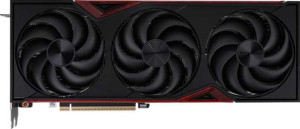
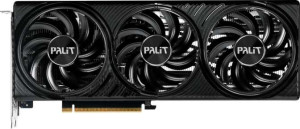
Colorful GeForce RTX 5060 NB EX
Palit GeForce RTX 5060 Ti Infinity 3 OC 16GB

Colorful GeForce RTX 5060 NB EX Palit GeForce RTX 5060 Ti Infinity 3 OC 16GB

Overview

Welcome to this in-depth specification comparison between the Colorful GeForce RTX 5060 NB EX and the Palit GeForce RTX 5060 Ti Infinity 3 OC 16GB. Both cards share the same Blackwell architecture and GDDR7 memory technology, yet they diverge notably across raw compute performance, VRAM capacity, and power consumption. Whether you prioritize efficiency and aesthetics or maximum throughput and memory headroom, this comparison will help you identify which GPU best suits your needs.

Common Features

  • Both GPUs have a memory speed of 1750 MHz.
  • Both GPUs have 48 render output units (ROPs).
  • Double Precision Floating Point (DPFP) is supported on both products.
  • Both GPUs have an effective memory speed of 28000 MHz.
  • Both GPUs have a maximum memory bandwidth of 448 GB/s.
  • Both GPUs use GDDR7 memory.
  • Both GPUs have a 128-bit memory bus width.
  • ECC memory is supported on both products.
  • Both GPUs support DirectX 12 Ultimate.
  • Both GPUs support OpenGL version 4.6.
  • Both GPUs support OpenCL version 3.
  • Multi-display technology is supported on both products.
  • Ray tracing is supported on both products.
  • 3D support is available on both products.
  • DLSS is supported on both products.
  • XeSS (XMX) support is not available on either product.
  • Both GPUs have one HDMI output using HDMI 2.1b.
  • Both GPUs have 3 DisplayPort outputs.
  • Neither GPU has USB-C, DVI, or mini DisplayPort outputs.
  • Both GPUs are based on the Blackwell architecture, built on a 5 nm process with 21900 million transistors, using PCIe 5, and neither features air-water cooling.

Main Differences

  • GPU base clock speed is 2280 MHz on Colorful GeForce RTX 5060 NB EX and 2407 MHz on Palit GeForce RTX 5060 Ti Infinity 3 OC 16GB.
  • GPU turbo clock speed is 2497 MHz on Colorful GeForce RTX 5060 NB EX and 2662 MHz on Palit GeForce RTX 5060 Ti Infinity 3 OC 16GB.
  • Pixel rate is 119.9 GPixel/s on Colorful GeForce RTX 5060 NB EX and 127.8 GPixel/s on Palit GeForce RTX 5060 Ti Infinity 3 OC 16GB.
  • Floating-point performance is 19.18 TFLOPS on Colorful GeForce RTX 5060 NB EX and 24.53 TFLOPS on Palit GeForce RTX 5060 Ti Infinity 3 OC 16GB.
  • Texture rate is 299.6 GTexels/s on Colorful GeForce RTX 5060 NB EX and 383.3 GTexels/s on Palit GeForce RTX 5060 Ti Infinity 3 OC 16GB.
  • Shading units count is 3840 on Colorful GeForce RTX 5060 NB EX and 4608 on Palit GeForce RTX 5060 Ti Infinity 3 OC 16GB.
  • Texture mapping units (TMUs) number 120 on Colorful GeForce RTX 5060 NB EX and 144 on Palit GeForce RTX 5060 Ti Infinity 3 OC 16GB.
  • VRAM is 8GB on Colorful GeForce RTX 5060 NB EX and 16GB on Palit GeForce RTX 5060 Ti Infinity 3 OC 16GB.
  • RGB lighting is present on Colorful GeForce RTX 5060 NB EX but not available on Palit GeForce RTX 5060 Ti Infinity 3 OC 16GB.
  • Thermal Design Power (TDP) is 145W on Colorful GeForce RTX 5060 NB EX and 180W on Palit GeForce RTX 5060 Ti Infinity 3 OC 16GB.
  • Card width is 301.4 mm on Colorful GeForce RTX 5060 NB EX and 291.9 mm on Palit GeForce RTX 5060 Ti Infinity 3 OC 16GB.
  • Card height is 120 mm on Colorful GeForce RTX 5060 NB EX and 116.6 mm on Palit GeForce RTX 5060 Ti Infinity 3 OC 16GB.
Specs Comparison
Colorful GeForce RTX 5060 NB EX

Colorful GeForce RTX 5060 NB EX

Palit GeForce RTX 5060 Ti Infinity 3 OC 16GB

Palit GeForce RTX 5060 Ti Infinity 3 OC 16GB

Performance:
GPU clock speed 2280 MHz 2407 MHz
GPU turbo 2497 MHz 2662 MHz
pixel rate 119.9 GPixel/s 127.8 GPixel/s
floating-point performance 19.18 TFLOPS 24.53 TFLOPS
texture rate 299.6 GTexels/s 383.3 GTexels/s
GPU memory speed 1750 MHz 1750 MHz
shading units 3840 4608
texture mapping units (TMUs) 120 144
render output units (ROPs) 48 48
Has Double Precision Floating Point (DPFP)

The most telling gap between these two cards lies in their shader and compute muscle. The Palit RTX 5060 Ti fields 4608 shading units and 144 TMUs against the Colorful RTX 5060's 3840 shading units and 120 TMUs — a roughly 20% advantage in raw parallel processing resources. Combined with meaningfully higher clock speeds (2662 MHz boost vs. 2497 MHz), that gap compounds into a 24.53 TFLOPS floating-point throughput for the Ti versus 19.18 TFLOPS for the base 5060 — a ~28% lead that translates directly into heavier compute workloads: more complex shading, denser geometry, and AI-accelerated tasks all benefit from that wider execution margin.

Where the two cards converge is telling. Both share an identical 1750 MHz memory speed, identical 48 ROPs, and both support Double Precision Floating Point — meaning pixel output throughput is only modestly different (127.8 vs. 119.9 GPixel/s), and neither card has an inherent advantage in anti-aliasing throughput or memory bandwidth efficiency. The texture rate gap mirrors the shader gap (~28%), so the Ti will handle more texel operations per frame, relevant for high-resolution and highly detailed scene rendering.

Overall, the Palit RTX 5060 Ti holds a clear and significant performance advantage in this group. Its higher shader count, faster clocks, and substantially greater TFLOPS output make it the stronger card for demanding workloads, while the Colorful RTX 5060 is a more modest offering suited to lighter or more budget-conscious use cases.

Memory:
effective memory speed 28000 MHz 28000 MHz
maximum memory bandwidth 448 GB/s 448 GB/s
VRAM 8GB 16GB
GDDR version GDDR7 GDDR7
memory bus width 128-bit 128-bit
Supports ECC memory

At the architectural level, both cards are built on an identical memory foundation: GDDR7 modules running at 28000 MHz effective speed over a 128-bit bus, delivering 448 GB/s of bandwidth. This means neither card has an edge in how fast data moves — the pipeline feeding the GPU is exactly the same width and speed on both sides.

The single — but consequential — differentiator is capacity. The Colorful RTX 5060 ships with 8GB of VRAM, while the Palit RTX 5060 Ti doubles that to 16GB. In practical terms, VRAM capacity determines how large a scene, texture set, or dataset can live on-card before the GPU is forced to page data through slower system memory. At 1080p with standard assets, 8GB is generally sufficient today, but at 1440p and above — or with high-resolution texture packs, ray tracing, and AI workloads running simultaneously — 16GB provides meaningful headroom that prevents stuttering and frame drops caused by VRAM overflow.

For memory, the Palit RTX 5060 Ti holds a clear and future-proof advantage. The doubled VRAM capacity is the deciding factor here, particularly for users targeting higher resolutions or longevity as game assets grow denser over time. The Colorful RTX 5060's 8GB will suffice for more constrained use cases, but it is the more limiting configuration of the two.

Features:
DirectX version DirectX 12 Ultimate DirectX 12 Ultimate
OpenGL version 4.6 4.6
OpenCL version 3 3
Supports multi-display technology
supports ray tracing
Supports 3D
supports DLSS
has XeSS (XMX)
AMD SAM / Intel Resizable BAR Intel Resizable BAR Intel Resizable BAR
has LHR
has RGB lighting
supported displays 4 4

Across the software and API feature set, these two cards are essentially identical. Both support DirectX 12 Ultimate, ray tracing, and DLSS — the triad that defines a modern NVIDIA GPU experience. DirectX 12 Ultimate ensures compatibility with the full range of current-generation rendering features, while DLSS provides AI-driven upscaling that can significantly boost frame rates with minimal visual cost. Neither card supports XeSS, and both implement Intel Resizable BAR, which allows the CPU to access the full VRAM pool simultaneously, offering modest but real performance improvements in supported titles.

Multi-display support is capped at 4 displays on both cards — more than enough for virtually any desktop or professional multi-monitor setup. The absence of LHR (Lite Hash Rate) on both is a non-issue for gaming-focused buyers and simply reflects current NVIDIA product policy.

The only differentiator in this group is purely aesthetic: the Colorful RTX 5060 NB EX includes RGB lighting, while the Palit RTX 5060 Ti does not. This has no bearing on performance or compatibility whatsoever. For features that actually matter to functionality, these two cards are completely tied — the choice here comes down entirely to whether RGB aesthetics factor into a buyer's decision.

Ports:
has an HDMI output
HDMI ports 1 1
HDMI version HDMI 2.1b HDMI 2.1b
DisplayPort outputs 3 3
USB-C ports 0 0
DVI outputs 0 0
mini DisplayPort outputs 0 0

Port connectivity is an exact match between these two cards. Both offer 1 HDMI 2.1b output and 3 DisplayPort outputs, totaling four display connections — consistent with the maximum supported display count noted in their feature specs. HDMI 2.1b is the latest revision of the standard, supporting high refresh rates at 4K and beyond, as well as 8K output, making both cards well-equipped for current and near-future display hardware.

Neither card includes USB-C, mini DisplayPort, or legacy DVI outputs. The absence of USB-C is worth noting for users who rely on USB-C-to-DisplayPort adapters or VR headsets with that connector, but this is a shared limitation rather than a differentiator. The three full-size DisplayPort outputs give multi-monitor users flexible, high-bandwidth connectivity without the need for adapters.

This group is a complete tie. Every port type, count, and version is identical across both cards — buyers can make their decision entirely on other criteria without any concern about connectivity differences.

General info:
GPU architecture Blackwell Blackwell
release date May 2025 April 2025
Thermal Design Power (TDP) 145W 180W
PCI Express (PCIe) version 5 5
semiconductor size 5 nm 5 nm
number of transistors 21900 million 21900 million
Has air-water cooling
width 301.4 mm 291.9 mm
height 120 mm 116.6 mm

Both cards are built on NVIDIA's Blackwell architecture, manufactured on a 5nm process with an identical 21,900 million transistors. This confirms they share the same silicon generation and fabrication node — the performance differences seen in other spec groups stem from configuration and clock speed choices, not from a fundamentally different die. Both also use PCIe 5.0, ensuring maximum bus bandwidth compatibility with current-generation motherboards, though PCIe 4.0 systems will still run both cards without a meaningful bottleneck.

Where this group gets interesting is power consumption. The Palit RTX 5060 Ti carries a 180W TDP versus the Colorful RTX 5060's 145W — a 35W gap that represents a 24% increase in thermal load. Users with tighter PSU headroom or thermally constrained cases will find the Colorful RTX 5060 the easier card to accommodate. Conversely, the Ti's higher TDP is the direct cost of its greater shader count and clock speeds — the power draw is what funds that ~28% performance advantage identified in the performance group.

Physical dimensions are nearly identical, with the Colorful RTX 5060 marginally longer at 301.4 mm versus 291.9 mm for the Palit RTX 5060 Ti — a roughly 10mm difference that is unlikely to affect case compatibility decisions in practice. Neither card offers liquid cooling. Overall, this group is largely a tie on fundamentals, with the Colorful RTX 5060 holding a modest edge in power efficiency — a meaningful consideration for small-form-factor builds or systems with modest power supplies.

Comparison Summary & Verdict

After examining every specification, a clear picture emerges for each card. The Palit GeForce RTX 5060 Ti Infinity 3 OC 16GB is the stronger performer in virtually every compute metric, offering higher base and turbo clocks, 4608 shading units, a superior 24.53 TFLOPS floating-point performance, and crucially, 16GB of GDDR7 VRAM — making it a compelling choice for demanding workloads, high-resolution gaming, and memory-intensive creative tasks. The Colorful GeForce RTX 5060 NB EX, on the other hand, draws only 145W versus 180W, making it the more power-efficient option, and it adds RGB lighting for users who value aesthetics. If budget, power efficiency, and visual customization matter most to you, the Colorful card holds its ground. But for those who want every possible performance advantage and future-proof VRAM headroom, the Palit Ti is the clear recommendation.

Colorful GeForce RTX 5060 NB EX
Buy Colorful GeForce RTX 5060 NB EX if...

Buy the Colorful GeForce RTX 5060 NB EX if you want a power-efficient GPU with a lower 145W TDP and RGB lighting, and 8GB of GDDR7 memory is sufficient for your workloads.

Palit GeForce RTX 5060 Ti Infinity 3 OC 16GB
Buy Palit GeForce RTX 5060 Ti Infinity 3 OC 16GB if...

Buy the Palit GeForce RTX 5060 Ti Infinity 3 OC 16GB if you need maximum compute performance, a significantly higher 24.53 TFLOPS output, and the extra headroom of 16GB GDDR7 VRAM for demanding games or creative applications.