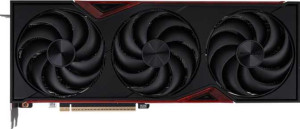
Colorful GeForce RTX 5060 Ti NB EX 16GB
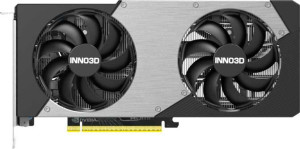
Inno3D GeForce RTX 5060 Ti Twin X2 16GB

Colorful GeForce RTX 5060 Ti NB EX 16GB Inno3D GeForce RTX 5060 Ti Twin X2 16GB

Overview

When choosing between the Colorful GeForce RTX 5060 Ti NB EX 16GB and the Inno3D GeForce RTX 5060 Ti Twin X2 16GB, you are looking at two cards that share the same Blackwell architecture and virtually identical performance specifications. This makes for a uniquely focused comparison, where the real deciding factors come down to physical dimensions and aesthetic design choices such as RGB lighting — details that can matter greatly depending on your case and build preferences.

Common Features

  • Both cards have a GPU clock speed of 2407 MHz.
  • Both cards have a GPU turbo speed of 2572 MHz.
  • Both cards deliver a pixel rate of 123.5 GPixel/s.
  • Both cards provide 23.7 TFLOPS of floating-point performance.
  • Both cards have a texture rate of 370.4 GTexels/s.
  • Both cards feature 4608 shading units.
  • Both cards include 144 texture mapping units (TMUs).
  • Both cards have a GPU memory speed of 1750 MHz.
  • Both cards come with 16GB of GDDR7 VRAM.
  • Both cards have an effective memory speed of 28000 MHz.
  • Both cards offer a maximum memory bandwidth of 448 GB/s.
  • Both cards use a 128-bit memory bus width.
  • ECC memory is supported on both cards.
  • Both cards support DirectX 12 Ultimate.
  • Both cards support OpenGL version 4.6.
  • Both cards support OpenCL version 3.
  • Multi-display technology is supported on both cards.
  • Ray tracing is supported on both cards.
  • DLSS is supported on both cards.
  • 3D support is available on both cards.
  • XeSS (XMX) support is not available on either card.
  • Both cards include one HDMI 2.1b output.
  • Both cards include three DisplayPort outputs.
  • Neither card has USB-C, DVI, or mini DisplayPort outputs.
  • Both cards are based on the Blackwell GPU architecture.
  • Both cards have a Thermal Design Power (TDP) of 180W.
  • Both cards use a PCIe version 5 interface.
  • Both cards are manufactured on a 5 nm semiconductor process.
  • Both cards contain 21900 million transistors.
  • Neither card features air-water cooling.

Main Differences

  • RGB lighting is present on the Colorful GeForce RTX 5060 Ti NB EX 16GB but not available on the Inno3D GeForce RTX 5060 Ti Twin X2 16GB.
  • Width is 301.4 mm on the Colorful GeForce RTX 5060 Ti NB EX 16GB and 250 mm on the Inno3D GeForce RTX 5060 Ti Twin X2 16GB.
  • Height is 120 mm on the Colorful GeForce RTX 5060 Ti NB EX 16GB and 116 mm on the Inno3D GeForce RTX 5060 Ti Twin X2 16GB.
Specs Comparison
Colorful GeForce RTX 5060 Ti NB EX 16GB

Colorful GeForce RTX 5060 Ti NB EX 16GB

Inno3D GeForce RTX 5060 Ti Twin X2 16GB

Inno3D GeForce RTX 5060 Ti Twin X2 16GB

Performance:
GPU clock speed 2407 MHz 2407 MHz
GPU turbo 2572 MHz 2572 MHz
pixel rate 123.5 GPixel/s 123.5 GPixel/s
floating-point performance 23.7 TFLOPS 23.7 TFLOPS
texture rate 370.4 GTexels/s 370.4 GTexels/s
GPU memory speed 1750 MHz 1750 MHz
shading units 4608 4608
texture mapping units (TMUs) 144 144
render output units (ROPs) 48 48
Has Double Precision Floating Point (DPFP)

In the Performance category, the Colorful RTX 5060 Ti NB EX 16GB and the Inno3D RTX 5060 Ti Twin X2 16GB are a perfect mirror of each other across every measurable metric. Both cards share the same base and boost clocks — 2407 MHz and 2572 MHz respectively — and both draw on an identical silicon configuration: 4608 shading units, 144 TMUs, and 48 ROPs. Memory is equally matched at 1750 MHz. This is expected behavior when two AIB partners build non-overclocked cards on the same GPU die without factory boost adjustments.

The practical consequence of this parity is straightforward: both cards will deliver the same 23.7 TFLOPS of floating-point throughput and identical pixel and texture fill rates (123.5 GPixel/s and 370.4 GTexels/s). In gaming workloads, rasterization throughput, shader throughput, and memory bandwidth will behave identically out of the box. Neither card holds a clock-speed or compute advantage that would translate into measurable frame rate differences under standard conditions.

This group is a dead heat. From a raw performance standpoint, neither the Colorful nor the Inno3D variant offers any advantage over the other — the decision between them should rest entirely on thermal design, acoustics, build quality, and pricing, none of which are captured in these specs.

Memory:
effective memory speed 28000 MHz 28000 MHz
maximum memory bandwidth 448 GB/s 448 GB/s
VRAM 16GB 16GB
GDDR version GDDR7 GDDR7
memory bus width 128-bit 128-bit
Supports ECC memory

The memory subsystem on both cards is built around GDDR7 running at an effective 28000 MHz across a 128-bit bus — a combination that delivers 448 GB/s of peak bandwidth. To put that in perspective, GDDR7 extracts significantly more throughput per pin than its GDDR6X predecessor, meaning this 128-bit interface punches well above its weight compared to wider GDDR6 implementations seen on prior-generation mid-range cards. For a GPU at this tier, 448 GB/s is a strong figure that keeps texture streaming and frame buffer reads from becoming a bottleneck in demanding 1080p and 1440p workloads.

The 16 GB of VRAM is equally notable. At this market segment, 16 GB provides a comfortable margin for high-resolution texture packs, content creation tasks, and the growing VRAM demands of modern titles — a meaningful step up from the 8 GB configurations that constrained many previous mid-range options. ECC memory support is a shared feature that adds reliability for compute-adjacent workloads, though it is less relevant for pure gaming use cases.

As with the performance group, this is a complete tie. Every memory specification — capacity, speed, bandwidth, bus width, and ECC support — is identical between the Colorful NB EX and the Inno3D Twin X2. Neither card holds any memory-related advantage, and real-world VRAM performance will be indistinguishable between the two.

Features:
DirectX version DirectX 12 Ultimate DirectX 12 Ultimate
OpenGL version 4.6 4.6
OpenCL version 3 3
Supports multi-display technology
supports ray tracing
Supports 3D
supports DLSS
has XeSS (XMX)
AMD SAM / Intel Resizable BAR Intel Resizable BAR Intel Resizable BAR
has LHR
has RGB lighting
supported displays 4 4

Across the software and API feature set, these two cards are functionally identical where it counts most. Both support DirectX 12 Ultimate and ray tracing, ensuring compatibility with the full suite of modern rendering techniques including hardware-accelerated reflections, shadows, and global illumination. DLSS support is present on both, giving users access to NVIDIA's AI-driven upscaling and frame generation technology — a meaningful real-world advantage for maintaining high frame rates in ray-traced workloads. Neither card supports XeSS, which is expected given that is Intel's proprietary upscaling solution.

Both cards also support up to 4 simultaneous displays and include Intel Resizable BAR, which allows the CPU to access the full GPU frame buffer at once rather than in smaller chunks — a feature that can yield modest but measurable performance gains in supported titles. The absence of LHR (Lite Hash Rate) on both is worth noting for buyers who care: these cards carry no mining-related throttling restrictions.

The sole differentiator in this group is RGB lighting: the Colorful NB EX includes it, while the Inno3D Twin X2 does not. This is purely an aesthetic consideration with no bearing on gaming or compute performance. For users building a lit system with RGB synchronization, the Colorful NB EX has a marginal edge here — but buyers who prefer a cleaner, no-frills look or simply do not care about aesthetics will find the Inno3D Twin X2 equally capable in every functional respect.

Ports:
has an HDMI output
HDMI ports 1 1
HDMI version HDMI 2.1b HDMI 2.1b
DisplayPort outputs 3 3
USB-C ports 0 0
DVI outputs 0 0
mini DisplayPort outputs 0 0

Both cards offer an identical port layout: 3 DisplayPort outputs and 1 HDMI 2.1b port, totaling four display connections — which aligns with the four-display maximum established in the Features group. The HDMI 2.1b standard is the key detail here, as it supports up to 4K at 144Hz or 10K at 120Hz with DSC, making it well-suited for high-refresh-rate gaming monitors and modern TVs alike without any adapters or bandwidth compromises.

The three DisplayPort outputs are the workhorse of the configuration for multi-monitor setups, offering high bandwidth for driving multiple high-resolution panels simultaneously. The absence of USB-C and legacy DVI outputs is entirely expected at this product tier — DVI has been effectively retired from discrete GPUs, and USB-C display output, while increasingly common on laptop GPUs, remains uncommon on mid-range desktop AIB cards.

This group is another complete tie. The port selection, count, and versions are byte-for-byte identical between the Colorful NB EX and the Inno3D Twin X2. Connectivity will not be a differentiating factor in any purchasing decision between these two cards.

General info:
GPU architecture Blackwell Blackwell
release date April 2025 April 2025
Thermal Design Power (TDP) 180W 180W
PCI Express (PCIe) version 5 5
semiconductor size 5 nm 5 nm
number of transistors 21900 million 21900 million
Has air-water cooling
width 301.4 mm 250 mm
height 120 mm 116 mm

Sharing the same Blackwell architecture, 5 nm process node, and 21.9 billion transistors, both cards are built from the same silicon foundation — so there is no generational or manufacturing advantage to speak of on either side. A 180W TDP and PCIe 5.0 interface are likewise identical, meaning power delivery requirements and motherboard compatibility are the same for both. PCIe 5.0 ensures these cards are future-proofed for bandwidth-hungry workloads, though at this GPU tier the practical difference over PCIe 4.0 is negligible for current gaming use cases.

Where this group finally separates the two is physical dimensions. The Colorful NB EX measures 301.4 mm in length, while the Inno3D Twin X2 comes in at a notably more compact 250 mm — a difference of over 50 mm. That gap is significant in practice: the Inno3D will fit comfortably in a wider range of mid-tower and compact ATX cases that impose GPU length restrictions, whereas the Colorful's larger footprint may require case compatibility checks before purchasing. The height difference of 120 mm vs 116 mm is marginal and unlikely to matter in most builds.

For this group, the Inno3D Twin X2 holds a meaningful edge for builders with space-constrained cases. Both cards draw the same power and are built on identical silicon, but the Inno3D's shorter length makes it the more flexible option from a physical compatibility standpoint. The Colorful's larger size may indicate a more expansive cooler, but cooling performance is not captured in these specs and cannot be inferred from dimensions alone.

Comparison Summary & Verdict

Having examined all available specifications, the Colorful GeForce RTX 5060 Ti NB EX 16GB and the Inno3D GeForce RTX 5060 Ti Twin X2 16GB are evenly matched in every meaningful performance category, including GPU clocks, 23.7 TFLOPS of compute performance, 16GB of GDDR7 memory, and a 180W TDP. The differences are purely physical and cosmetic: the Inno3D is the more compact option at 250 mm wide and 116 mm tall, giving it a clear advantage for smaller or tighter cases. The Colorful card, measuring 301.4 mm wide and 120 mm tall, differentiates itself with RGB lighting, making it the stronger choice for users who prioritize visual flair in an open or windowed build. If raw performance is your only concern, either card will serve you equally well.

Colorful GeForce RTX 5060 Ti NB EX 16GB
Buy Colorful GeForce RTX 5060 Ti NB EX 16GB if...

Buy the Colorful GeForce RTX 5060 Ti NB EX 16GB if RGB lighting is important to your build aesthetic and you have a case that comfortably accommodates a larger card.

Inno3D GeForce RTX 5060 Ti Twin X2 16GB
Buy Inno3D GeForce RTX 5060 Ti Twin X2 16GB if...

Buy the Inno3D GeForce RTX 5060 Ti Twin X2 16GB if you need a more compact GPU for a smaller case and RGB lighting is not a priority for you.