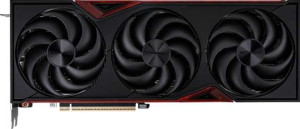
Colorful GeForce RTX 5070 Battle AX
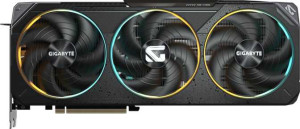
Gigabyte GeForce RTX 5070 Gaming OC

Colorful GeForce RTX 5070 Battle AX Gigabyte GeForce RTX 5070 Gaming OC

Overview

When choosing between the Colorful GeForce RTX 5070 Battle AX and the Gigabyte GeForce RTX 5070 Gaming OC, both cards are rooted in the same Blackwell architecture and share identical memory configurations, feature sets, and a 250W TDP. Yet they diverge in meaningful ways across boost clock speeds, computed throughput, and physical dimensions. This comparison digs into exactly where those gaps lie and what they mean for your next build.

Common Features

  • Both cards share a base GPU clock speed of 2325 MHz.
  • Both cards have a GPU memory speed of 1750 MHz.
  • Both cards feature 6144 shading units.
  • Both cards include 192 texture mapping units (TMUs).
  • Both cards have 80 render output units (ROPs).
  • Double Precision Floating Point (DPFP) is supported on both cards.
  • Both cards have an effective memory speed of 28000 MHz.
  • Both cards offer a maximum memory bandwidth of 672 GB/s.
  • Both cards come with 12GB of VRAM.
  • Both cards use GDDR7 memory.
  • Both cards have a 192-bit memory bus width.
  • ECC memory is supported on both cards.
  • Both cards support DirectX 12 Ultimate.
  • Both cards support OpenGL version 4.6.
  • Both cards support OpenCL version 3.
  • Multi-display technology is supported on both cards.
  • Ray tracing is supported on both cards.
  • 3D support is available on both cards.
  • DLSS is supported on both cards.
  • XeSS (XMX) support is not available on either card.
  • Both cards feature one HDMI 2.1b output.
  • Both cards have three DisplayPort outputs.
  • Neither card includes USB-C, DVI, or mini DisplayPort outputs.
  • Both cards are based on the Blackwell GPU architecture.
  • Both cards have a Thermal Design Power (TDP) of 250W.
  • Both cards use PCIe version 5.
  • Both cards are manufactured on a 5 nm process.
  • Both cards contain 31,100 million transistors.
  • Neither card features air-water cooling.

Main Differences

  • GPU turbo clock speed is 2512 MHz on the Colorful GeForce RTX 5070 Battle AX and 2625 MHz on the Gigabyte GeForce RTX 5070 Gaming OC.
  • Pixel rate is 201 GPixel/s on the Colorful GeForce RTX 5070 Battle AX and 210 GPixel/s on the Gigabyte GeForce RTX 5070 Gaming OC.
  • Floating-point performance is 30.87 TFLOPS on the Colorful GeForce RTX 5070 Battle AX and 32.26 TFLOPS on the Gigabyte GeForce RTX 5070 Gaming OC.
  • Texture rate is 482.3 GTexels/s on the Colorful GeForce RTX 5070 Battle AX and 504 GTexels/s on the Gigabyte GeForce RTX 5070 Gaming OC.
  • Card width is 301.4 mm on the Colorful GeForce RTX 5070 Battle AX and 327 mm on the Gigabyte GeForce RTX 5070 Gaming OC.
  • Card height is 120 mm on the Colorful GeForce RTX 5070 Battle AX and 132 mm on the Gigabyte GeForce RTX 5070 Gaming OC.
Specs Comparison
Colorful GeForce RTX 5070 Battle AX

Colorful GeForce RTX 5070 Battle AX

Gigabyte GeForce RTX 5070 Gaming OC

Gigabyte GeForce RTX 5070 Gaming OC

Performance:
GPU clock speed 2325 MHz 2325 MHz
GPU turbo 2512 MHz 2625 MHz
pixel rate 201 GPixel/s 210 GPixel/s
floating-point performance 30.87 TFLOPS 32.26 TFLOPS
texture rate 482.3 GTexels/s 504 GTexels/s
GPU memory speed 1750 MHz 1750 MHz
shading units 6144 6144
texture mapping units (TMUs) 192 192
render output units (ROPs) 80 80
Has Double Precision Floating Point (DPFP)

Both the Colorful Battle AX and the Gigabyte Gaming OC share identical foundations: the same 2325 MHz base clock, 6144 shading units, 192 TMUs, 80 ROPs, and 1750 MHz memory speed. This means the underlying GPU silicon and memory subsystem are equivalent, and any performance gap between them comes down entirely to how aggressively each card boosts under load.

That is where the Gigabyte Gaming OC pulls ahead. Its 2625 MHz boost clock outpaces the Colorful Battle AX's 2512 MHz — a difference of 113 MHz, or roughly 4.5%. Because pixel fill rate, texture throughput, and floating-point throughput all scale directly with clock speed, this single delta cascades into measurable gaps across every derived metric: the Gaming OC delivers 210 GPixel/s versus 201 GPixel/s, 504 GTexels/s versus 482.3 GTexels/s, and 32.26 TFLOPS versus 30.87 TFLOPS. In practice, a ~4–5% throughput advantage translates to marginally higher average frame rates and slightly more headroom in compute-heavy workloads such as ray tracing and AI-accelerated rendering.

The verdict for this group is clear: the Gigabyte Gaming OC holds a consistent, if modest, performance edge across every metric, driven purely by its higher factory boost clock. Both cards support Double Precision Floating Point, so neither has a qualitative advantage there. If raw out-of-the-box GPU throughput is the priority, the Gaming OC is the stronger choice; the Battle AX effectively trades that clock headroom for whatever other differentiators it may offer elsewhere.
Memory:
effective memory speed 28000 MHz 28000 MHz
maximum memory bandwidth 672 GB/s 672 GB/s
VRAM 12GB 12GB
GDDR version GDDR7 GDDR7
memory bus width 192-bit 192-bit
Supports ECC memory

The Colorful GeForce RTX 5070 Battle AX and Gigabyte GeForce RTX 5070 Gaming OC have identical memory specifications. Both feature an effective memory speed of 28000 MHz and a maximum memory bandwidth of 672 GB/s. Each card is equipped with 12GB of VRAM and uses GDDR7 memory, offering high performance for demanding tasks.

Additionally, both products have a memory bus width of 192-bit and support ECC (Error-Correcting Code) memory, ensuring reliable performance during intensive use. There are no differences in any of these memory-related specs between the two models.

Features:
DirectX version DirectX 12 Ultimate DirectX 12 Ultimate
OpenGL version 4.6 4.6
OpenCL version 3 3
Supports multi-display technology
supports ray tracing
Supports 3D
supports DLSS
has XeSS (XMX)
AMD SAM / Intel Resizable BAR Intel Resizable BAR Intel Resizable BAR
has LHR
has RGB lighting
supported displays 4 4

The Colorful GeForce RTX 5070 Battle AX and Gigabyte GeForce RTX 5070 Gaming OC are nearly identical in terms of features. Both support DirectX 12 Ultimate, OpenGL 4.6, and OpenCL 3, making them highly compatible with modern applications and games. Additionally, both cards support multi-display technology, ray tracing, 3D, and DLSS, enhancing their performance and visual capabilities in compatible software.

Both cards also lack support for XeSS (XMX) and feature Intel Resizable BAR, ensuring optimized performance with Intel processors. Neither product includes LHR (Lite Hash Rate) technology, so they are suitable for a variety of use cases, including gaming and other GPU-intensive tasks. Furthermore, both models are equipped with RGB lighting and support up to 4 displays, providing flexibility for multi-monitor setups.

Overall, there are no differences in the feature sets between the Colorful GeForce RTX 5070 Battle AX and the Gigabyte GeForce RTX 5070 Gaming OC, as all specifications match exactly.

Ports:
has an HDMI output
HDMI ports 1 1
HDMI version HDMI 2.1b HDMI 2.1b
DisplayPort outputs 3 3
USB-C ports 0 0
DVI outputs 0 0
mini DisplayPort outputs 0 0

The Colorful GeForce RTX 5070 Battle AX and Gigabyte GeForce RTX 5070 Gaming OC offer identical port configurations. Both models feature one HDMI output with HDMI 2.1b support, as well as three DisplayPort outputs. Neither card includes USB-C, DVI, or mini DisplayPort outputs.

Since the port setups match exactly, users can expect the same connectivity options for both cards, supporting HDMI 2.1b and DisplayPort connections for high-quality display setups.

General info:
GPU architecture Blackwell Blackwell
release date March 2025 January 2025
Thermal Design Power (TDP) 250W 250W
PCI Express (PCIe) version 5 5
semiconductor size 5 nm 5 nm
number of transistors 31100 million 31100 million
Has air-water cooling
width 301.4 mm 327 mm
height 120 mm 132 mm

Both the Colorful GeForce RTX 5070 Battle AX and the Gigabyte GeForce RTX 5070 Gaming OC share the same GPU architecture, Blackwell, and feature a thermal design power (TDP) of 250W. They both use the 5 nm semiconductor process and have the same number of transistors, 31,100 million. Additionally, both cards support PCI Express version 5 and lack air-water cooling systems.

The primary differences between the two cards are their physical dimensions. The Colorful card is 301.4 mm in width and 120 mm in height, while the Gigabyte model is slightly larger, measuring 327 mm in width and 132 mm in height. These size differences could impact compatibility with certain builds or enclosures.

Comparison Summary & Verdict

Both the Colorful GeForce RTX 5070 Battle AX and the Gigabyte GeForce RTX 5070 Gaming OC share the same Blackwell foundation, 12GB GDDR7 memory, and identical feature support, making the choice between them a focused one. The Gigabyte Gaming OC pulls ahead in raw output with a higher boost clock of 2625 MHz, a stronger floating-point performance of 32.26 TFLOPS, and a superior texture rate of 504 GTexels/s, making it the natural pick for users who demand every last frame. The Colorful Battle AX, while trailing in peak throughput, stands out with a noticeably more compact form factor at 301.4 x 120 mm compared to 327 x 132 mm, which can be a deciding factor in smaller or tighter chassis. If maximum performance is the goal, go Gigabyte; if a space-efficient build is the priority, the Colorful earns its place.

Colorful GeForce RTX 5070 Battle AX
Buy Colorful GeForce RTX 5070 Battle AX if...

Buy the Colorful GeForce RTX 5070 Battle AX if you are building in a compact case and need a smaller card, as its 301.4 x 120 mm dimensions make it significantly more space-efficient than its rival.

Gigabyte GeForce RTX 5070 Gaming OC
Buy Gigabyte GeForce RTX 5070 Gaming OC if...

Buy the Gigabyte GeForce RTX 5070 Gaming OC if raw performance is your top priority, as it delivers a faster boost clock of 2625 MHz, higher floating-point performance at 32.26 TFLOPS, and a better texture rate of 504 GTexels/s.