Colorful GeForce RTX 5070 Battle AX
Gigabyte GeForce RTX 5070 Ti WindForce OC SFF

Colorful GeForce RTX 5070 Battle AX Gigabyte GeForce RTX 5070 Ti WindForce OC SFF

Overview

Welcome to our in-depth specification comparison between the Colorful GeForce RTX 5070 Battle AX and the Gigabyte GeForce RTX 5070 Ti WindForce OC SFF. Both cards are built on the same Blackwell architecture and share a strong foundation of modern features, yet they diverge significantly when it comes to raw compute power, memory capacity, and power consumption. Read on to explore how these two GPUs stack up across performance, memory, and physical design.

Common Features

  • GPU memory speed is 1750 MHz on both products.
  • Both products support Double Precision Floating Point (DPFP).
  • Effective memory speed is 28000 MHz on both products.
  • Both products use GDDR7 memory.
  • Both products support ECC memory.
  • Both products support DirectX 12 Ultimate.
  • OpenGL version is 4.6 on both products.
  • OpenCL version is 3 on both products.
  • Both products support multi-display technology.
  • Both products support ray tracing.
  • Both products support 3D.
  • Both products support DLSS.
  • XeSS (XMX) support is not available on either product.
  • Both products have an HDMI output with 1 HDMI port at version HDMI 2.1b.
  • Both products have 3 DisplayPort outputs.
  • Neither product has USB-C ports, DVI outputs, or mini DisplayPort outputs.
  • Both products are based on the Blackwell GPU architecture.
  • Both products use PCIe version 5.
  • Both products are manufactured with a 5 nm semiconductor process.
  • Neither product features air-water cooling.

Main Differences

  • GPU clock speed is 2325 MHz on Colorful GeForce RTX 5070 Battle AX and 2295 MHz on Gigabyte GeForce RTX 5070 Ti WindForce OC SFF.
  • GPU turbo speed is 2512 MHz on Colorful GeForce RTX 5070 Battle AX and 2497 MHz on Gigabyte GeForce RTX 5070 Ti WindForce OC SFF.
  • Pixel rate is 201 GPixel/s on Colorful GeForce RTX 5070 Battle AX and 239.7 GPixel/s on Gigabyte GeForce RTX 5070 Ti WindForce OC SFF.
  • Floating-point performance is 30.87 TFLOPS on Colorful GeForce RTX 5070 Battle AX and 44.75 TFLOPS on Gigabyte GeForce RTX 5070 Ti WindForce OC SFF.
  • Texture rate is 482.3 GTexels/s on Colorful GeForce RTX 5070 Battle AX and 699.2 GTexels/s on Gigabyte GeForce RTX 5070 Ti WindForce OC SFF.
  • Shading units total 6144 on Colorful GeForce RTX 5070 Battle AX and 8960 on Gigabyte GeForce RTX 5070 Ti WindForce OC SFF.
  • Texture mapping units (TMUs) number 192 on Colorful GeForce RTX 5070 Battle AX and 280 on Gigabyte GeForce RTX 5070 Ti WindForce OC SFF.
  • Render output units (ROPs) number 80 on Colorful GeForce RTX 5070 Battle AX and 96 on Gigabyte GeForce RTX 5070 Ti WindForce OC SFF.
  • Maximum memory bandwidth is 672 GB/s on Colorful GeForce RTX 5070 Battle AX and 896 GB/s on Gigabyte GeForce RTX 5070 Ti WindForce OC SFF.
  • VRAM is 12 GB on Colorful GeForce RTX 5070 Battle AX and 16 GB on Gigabyte GeForce RTX 5070 Ti WindForce OC SFF.
  • Memory bus width is 192-bit on Colorful GeForce RTX 5070 Battle AX and 256-bit on Gigabyte GeForce RTX 5070 Ti WindForce OC SFF.
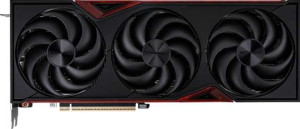
  • RGB lighting is present on Colorful GeForce RTX 5070 Battle AX but not available on Gigabyte GeForce RTX 5070 Ti WindForce OC SFF.
  • Thermal Design Power (TDP) is 250W on Colorful GeForce RTX 5070 Battle AX and 300W on Gigabyte GeForce RTX 5070 Ti WindForce OC SFF.
  • Number of transistors is 31100 million on Colorful GeForce RTX 5070 Battle AX and 45600 million on Gigabyte GeForce RTX 5070 Ti WindForce OC SFF.
  • Width is 301.4 mm on Colorful GeForce RTX 5070 Battle AX and 304 mm on Gigabyte GeForce RTX 5070 Ti WindForce OC SFF.
  • Height is 120 mm on Colorful GeForce RTX 5070 Battle AX and 126 mm on Gigabyte GeForce RTX 5070 Ti WindForce OC SFF.
Specs Comparison
Colorful GeForce RTX 5070 Battle AX

Colorful GeForce RTX 5070 Battle AX

Gigabyte GeForce RTX 5070 Ti WindForce OC SFF

Gigabyte GeForce RTX 5070 Ti WindForce OC SFF

Performance:
GPU clock speed 2325 MHz 2295 MHz
GPU turbo 2512 MHz 2497 MHz
pixel rate 201 GPixel/s 239.7 GPixel/s
floating-point performance 30.87 TFLOPS 44.75 TFLOPS
texture rate 482.3 GTexels/s 699.2 GTexels/s
GPU memory speed 1750 MHz 1750 MHz
shading units 6144 8960
texture mapping units (TMUs) 192 280
render output units (ROPs) 80 96
Has Double Precision Floating Point (DPFP)

The most telling difference in this group comes down to silicon: the Gigabyte WindForce OC SFF is built on the RTX 5070 Ti die, giving it 8,960 shading units, 280 TMUs, and 96 ROPs, compared to the Colorful Battle AX's 6,144 shaders, 192 TMUs, and 80 ROPs. More shaders and TMUs directly translate to higher throughput in both rasterized and shader-heavy workloads, while additional ROPs accelerate pixel fill rate — the rate at which the GPU can write finalized pixels to the framebuffer. In practice, this gap widens at higher resolutions like 4K, where fill-rate and raw compute become the primary bottlenecks.

The raw compute numbers reflect this divide clearly. The Gigabyte delivers 44.75 TFLOPS of floating-point performance versus 30.87 TFLOPS on the Colorful — roughly a 45% advantage. Similarly, texture throughput stands at 699.2 GTexels/s versus 482.3 GTexels/s, and pixel rate at 239.7 GPixel/s versus 201 GPixel/s. These gaps are not marginal; they represent a meaningful tier separation in GPU-limited scenarios, AI-accelerated features, and content creation tasks. Clock speeds, by contrast, are nearly identical — the Colorful edges ahead slightly at 2,512 MHz turbo versus 2,497 MHz — but this narrow lead has negligible impact when the unit count disparity is this large.

Both cards share the same 1,750 MHz memory speed and both support Double Precision Floating Point, so those specs offer no differentiation. The performance edge here belongs unambiguously to the Gigabyte GeForce RTX 5070 Ti WindForce OC SFF across every major compute metric. Users prioritizing raw GPU throughput — whether for gaming at high resolutions, AI inference, or creative workloads — will find a substantially more capable chip in the Gigabyte.
Memory:
effective memory speed 28000 MHz 28000 MHz
maximum memory bandwidth 672 GB/s 896 GB/s
VRAM 12GB 16GB
GDDR version GDDR7 GDDR7
memory bus width 192-bit 256-bit
Supports ECC memory

Both the Colorful GeForce RTX 5070 Battle AX and the Gigabyte GeForce RTX 5070 Ti WindForce OC SFF feature an effective memory speed of 28000 MHz and support GDDR7 memory, so their memory technology is identical. However, the Gigabyte card has a higher maximum memory bandwidth of 896 GB/s, compared to the Colorful card's 672 GB/s, providing better overall memory throughput.

In terms of VRAM, the Gigabyte model offers 16GB, while the Colorful model is equipped with 12GB. This gives the Gigabyte card a noticeable advantage for tasks that require more memory, such as higher resolution gaming or more demanding applications.

The memory bus width of the Gigabyte card is also wider, measuring 256-bit compared to the 192-bit bus on the Colorful card. This wider bus on the Gigabyte card allows for more data to be transferred simultaneously, contributing to its higher memory bandwidth. Both cards support ECC memory, ensuring error correction capabilities on both models.

Features:
DirectX version DirectX 12 Ultimate DirectX 12 Ultimate
OpenGL version 4.6 4.6
OpenCL version 3 3
Supports multi-display technology
supports ray tracing
Supports 3D
supports DLSS
has XeSS (XMX)
AMD SAM / Intel Resizable BAR Intel Resizable BAR Intel Resizable BAR
has LHR
has RGB lighting
supported displays 4 4

The Colorful GeForce RTX 5070 Battle AX and the Gigabyte GeForce RTX 5070 Ti WindForce OC SFF are very similar in terms of features, both supporting DirectX 12 Ultimate, OpenGL 4.6, and OpenCL 3. They also both support multi-display technology, ray tracing, 3D, DLSS, and Intel Resizable BAR. These common features ensure that both cards provide a modern and high-performance experience for gaming and other graphics-intensive tasks.

One notable difference is that the Colorful card features RGB lighting, while the Gigabyte card does not. For users who prefer a visually customizable setup, the Colorful model offers this additional aesthetic option. Other than this, both cards lack XeSS (XMX) support and do not have LHR, so they both offer a similar experience in terms of mining restrictions.

In terms of supported displays, both cards can drive up to 4 displays, ensuring ample connectivity options for multi-monitor setups.

Ports:
has an HDMI output
HDMI ports 1 1
HDMI version HDMI 2.1b HDMI 2.1b
DisplayPort outputs 3 3
USB-C ports 0 0
DVI outputs 0 0
mini DisplayPort outputs 0 0

Both the Colorful GeForce RTX 5070 Battle AX and the Gigabyte GeForce RTX 5070 Ti WindForce OC SFF are equipped with one HDMI output, which supports HDMI 2.1b. Both models also feature three DisplayPort outputs. Neither card includes USB-C ports, DVI outputs, or mini DisplayPort outputs, so the connectivity options for both cards are identical in this respect.

There are no differences between the two products when it comes to their port configurations, as both share the same HDMI and DisplayPort setup. Users can expect similar performance and connectivity capabilities from either card in this category.

General info:
GPU architecture Blackwell Blackwell
release date March 2025 January 2025
Thermal Design Power (TDP) 250W 300W
PCI Express (PCIe) version 5 5
semiconductor size 5 nm 5 nm
number of transistors 31100 million 45600 million
Has air-water cooling
width 301.4 mm 304 mm
height 120 mm 126 mm

Both the Colorful GeForce RTX 5070 Battle AX and the Gigabyte GeForce RTX 5070 Ti WindForce OC SFF feature the Blackwell GPU architecture and use a 5 nm semiconductor size, ensuring modern and efficient performance. The Colorful card has a Thermal Design Power (TDP) of 250W, while the Gigabyte card has a higher TDP of 300W, indicating a higher power requirement for the latter.

In terms of transistors, the Colorful model contains 31,100 million transistors, whereas the Gigabyte model has 45,600 million, providing a significant increase in transistor count. Both cards use PCI Express version 5 for fast data transfer between the GPU and the rest of the system.

The physical dimensions of the two cards are quite similar, with the Colorful card measuring 301.4 mm in width and 120 mm in height, while the Gigabyte card is slightly smaller at 304 mm in width and 126 mm in height. Neither card features air-water cooling, so they both rely on traditional cooling methods.

Comparison Summary & Verdict

After examining the full specification set, a clear picture emerges for each card. The Colorful GeForce RTX 5070 Battle AX offers a lower 250W TDP, a more compact 120 mm height, 12 GB of GDDR7 memory on a 192-bit bus, and the added flair of RGB lighting, making it an appealing choice for energy-conscious builds or smaller enclosures where visual customization matters. The Gigabyte GeForce RTX 5070 Ti WindForce OC SFF, on the other hand, delivers substantially higher muscle: 44.75 TFLOPS of floating-point performance, 16 GB of GDDR7 on a wider 256-bit bus, 896 GB/s of memory bandwidth, and 8960 shading units, at the cost of a 300W TDP. Ultimately, the right choice depends on your workload and system constraints.

Colorful GeForce RTX 5070 Battle AX
Buy Colorful GeForce RTX 5070 Battle AX if...

Buy the Colorful GeForce RTX 5070 Battle AX if you want a more power-efficient card with RGB lighting and a slightly more compact form factor, and your workloads fit comfortably within 12 GB of VRAM.

Gigabyte GeForce RTX 5070 Ti WindForce OC SFF
Buy Gigabyte GeForce RTX 5070 Ti WindForce OC SFF if...

Buy the Gigabyte GeForce RTX 5070 Ti WindForce OC SFF if you need maximum compute throughput, a larger 16 GB GDDR7 frame buffer, and higher memory bandwidth for demanding workloads or gaming at the highest settings.