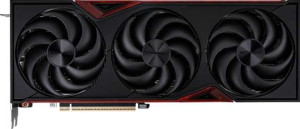
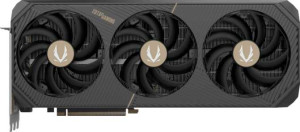
Both cards run GDDR7 memory at the same 28000 MHz effective speed, so the memory technology itself is evenly matched. The critical divergence lies in how much of that memory is available and how wide the pipeline feeding it is. The Zotac RTX 5070 Ti Solid OC ships with 16GB of VRAM across a 256-bit bus, while the Colorful RTX 5070 Battle AX offers 12GB over a 192-bit bus. Since bandwidth is a direct product of bus width and clock speed, the wider bus on the Zotac translates into a peak bandwidth of 896 GB/s versus 672 GB/s — a 33% advantage that cannot be closed by any driver or software optimization.
In practice, memory bandwidth is one of the most impactful specs for GPU-bound tasks. At 4K resolution, frame buffers, shadow maps, and texture atlases are far larger, and a GPU starved of bandwidth will throttle even if its compute units are idle. Similarly, in AI and content creation workloads, larger and faster memory directly determines what model sizes or scene complexities can be processed without spilling to slower system RAM. The 4GB VRAM delta also matters here: 16GB provides meaningful headroom for high-resolution texture packs and future titles that increasingly breach the 12GB threshold, whereas the Colorful's 12GB may become a bottleneck sooner in demanding scenarios.
Both cards support ECC memory, which is a shared strength relevant to professional and compute use cases requiring error correction. But on balance, the memory group is a clear win for the Zotac RTX 5070 Ti — it offers more capacity, a wider bus, and substantially higher bandwidth, all of which compound the compute advantages seen in raw performance metrics.