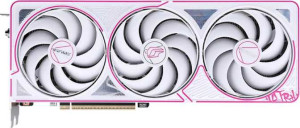
Colorful iGame GeForce RTX 5060 Ultra W OC
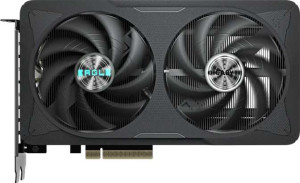
Gigabyte GeForce RTX 5060 Eagle OC

Colorful iGame GeForce RTX 5060 Ultra W OC Gigabyte GeForce RTX 5060 Eagle OC

Overview

Welcome to our detailed specification comparison between the Colorful iGame GeForce RTX 5060 Ultra W OC and the Gigabyte GeForce RTX 5060 Eagle OC, two Blackwell-architecture cards targeting the same performance tier. While they share a substantial common foundation, key battlegrounds emerge around GPU turbo clock speeds, raw compute throughput, physical card dimensions, and aesthetics. Read on to see how these two RTX 5060 contenders stack up across every measurable spec.

Common Features

  • Both cards share a base GPU clock speed of 2280 MHz.
  • Both cards have a GPU memory speed of 1750 MHz.
  • Both cards feature 3840 shading units.
  • Both cards have 120 texture mapping units (TMUs).
  • Both cards have 48 render output units (ROPs).
  • Double Precision Floating Point (DPFP) is supported on both cards.
  • Both cards have an effective memory speed of 28000 MHz.
  • Both cards offer a maximum memory bandwidth of 448 GB/s.
  • Both cards come with 8GB of VRAM.
  • Both cards use GDDR7 memory.
  • Both cards have a 128-bit memory bus width.
  • ECC memory is supported on both cards.
  • Both cards support DirectX 12 Ultimate.
  • Both cards support OpenGL version 4.6.
  • Both cards support OpenCL version 3.
  • Multi-display technology is supported on both cards.
  • Ray tracing is supported on both cards.
  • 3D support is available on both cards.
  • DLSS is supported on both cards.
  • XeSS (XMX) is not available on either card.
  • Both cards have one HDMI output running HDMI version 2.1b.
  • Both cards feature 3 DisplayPort outputs.
  • Neither card has USB-C ports, DVI outputs, or mini DisplayPort outputs.
  • Both cards are based on the Blackwell GPU architecture.
  • Both cards have a Thermal Design Power (TDP) of 145W.
  • Both cards use PCIe version 5.
  • Both cards are manufactured on a 5 nm semiconductor process.
  • Both cards have 21900 million transistors.
  • Air-water cooling is not available on either card.
  • Both cards have a height of 120 mm.

Main Differences

  • GPU turbo clock speed is 2580 MHz on Colorful iGame GeForce RTX 5060 Ultra W OC and 2550 MHz on Gigabyte GeForce RTX 5060 Eagle OC.
  • Pixel rate is 123.8 GPixel/s on Colorful iGame GeForce RTX 5060 Ultra W OC and 122.4 GPixel/s on Gigabyte GeForce RTX 5060 Eagle OC.
  • Floating-point performance is 19.81 TFLOPS on Colorful iGame GeForce RTX 5060 Ultra W OC and 19.58 TFLOPS on Gigabyte GeForce RTX 5060 Eagle OC.
  • Texture rate is 309.6 GTexels/s on Colorful iGame GeForce RTX 5060 Ultra W OC and 306 GTexels/s on Gigabyte GeForce RTX 5060 Eagle OC.
  • RGB lighting is present on Colorful iGame GeForce RTX 5060 Ultra W OC but not available on Gigabyte GeForce RTX 5060 Eagle OC.
  • Card width is 300.5 mm on Colorful iGame GeForce RTX 5060 Ultra W OC and 208 mm on Gigabyte GeForce RTX 5060 Eagle OC.
Specs Comparison
Colorful iGame GeForce RTX 5060 Ultra W OC

Colorful iGame GeForce RTX 5060 Ultra W OC

Gigabyte GeForce RTX 5060 Eagle OC

Gigabyte GeForce RTX 5060 Eagle OC

Performance:
GPU clock speed 2280 MHz 2280 MHz
GPU turbo 2580 MHz 2550 MHz
pixel rate 123.8 GPixel/s 122.4 GPixel/s
floating-point performance 19.81 TFLOPS 19.58 TFLOPS
texture rate 309.6 GTexels/s 306 GTexels/s
GPU memory speed 1750 MHz 1750 MHz
shading units 3840 3840
texture mapping units (TMUs) 120 120
render output units (ROPs) 48 48
Has Double Precision Floating Point (DPFP)

At the architectural level, both the iGame GeForce RTX 5060 Ultra W OC and the Gigabyte RTX 5060 Eagle OC are built on identical silicon: the same 3840 shading units, 120 TMUs, 48 ROPs, and 1750 MHz memory speed. This means any performance difference between them is not a matter of hardware configuration, but purely of factory clock tuning.

The sole — but meaningful — differentiator is the GPU boost clock: the iGame pushes to 2580 MHz versus the Eagle OC's 2550 MHz, a gap of 30 MHz (~1.2%). While modest in isolation, that delta flows directly into every derived performance metric. The iGame leads in floating-point throughput (19.81 TFLOPS vs 19.58 TFLOPS), texture fill rate (309.6 vs 306 GTexels/s), and pixel fill rate (123.8 vs 122.4 GPixel/s). In practice, a sub-1.5% clock advantage will not produce a perceptible framerate difference in real gaming workloads — the gap falls well within benchmark-to-benchmark variance.

Both cards support Double Precision Floating Point (DPFP), which is relevant for compute and simulation tasks rather than gaming. Overall, the iGame Ultra W OC holds a narrow technical edge in this group strictly due to its higher factory boost clock, but the Gigabyte Eagle OC is functionally equivalent for virtually all real-world use cases.

Memory:
effective memory speed 28000 MHz 28000 MHz
maximum memory bandwidth 448 GB/s 448 GB/s
VRAM 8GB 8GB
GDDR version GDDR7 GDDR7
memory bus width 128-bit 128-bit
Supports ECC memory

The memory subsystem is where these two cards are in complete lockstep. Both the iGame Ultra W OC and the Eagle OC carry 8GB of GDDR7 across a 128-bit bus, running at an effective 28000 MHz to deliver 448 GB/s of memory bandwidth. There is not a single figure here that separates them.

The generational context matters here: GDDR7 at 28 Gbps per pin allows a 128-bit bus to punch well above its width, largely closing the gap that once made 128-bit configurations feel constrained. That 448 GB/s of bandwidth is substantially higher than what GDDR6X delivered on the same bus width in the previous generation, which translates to less texture and framebuffer bottlenecking at 1080p and 1440p. The ECC memory support on both cards is a bonus for users running compute or professional workloads where data integrity matters, though it has no bearing on gaming performance.

This group is a straightforward tie. A buyer choosing between these two cards gains no memory advantage from either direction — the decision must rest entirely on other specification groups.

Features:
DirectX version DirectX 12 Ultimate DirectX 12 Ultimate
OpenGL version 4.6 4.6
OpenCL version 3 3
Supports multi-display technology
supports ray tracing
Supports 3D
supports DLSS
has XeSS (XMX)
AMD SAM / Intel Resizable BAR Intel Resizable BAR Intel Resizable BAR
has LHR
has RGB lighting
supported displays 4 4

On the software and API feature front, these two cards are functionally identical. Both support DirectX 12 Ultimate, ray tracing, and DLSS — the trio that defines a modern NVIDIA gaming card. DirectX 12 Ultimate ensures compatibility with the full range of current and near-future game rendering features, while DLSS provides AI-accelerated upscaling that can meaningfully boost framerates with minimal visual quality loss. Neither card supports XeSS, which is expected given that is Intel's competing upscaling technology.

The one practical differentiator in this group is RGB lighting: the iGame Ultra W OC has it, the Eagle OC does not. For buyers building an aesthetically themed system, this matters — RGB can be synchronized with other components for a cohesive look. For those indifferent to aesthetics, it is a non-factor for performance. Both cards support up to 4 simultaneous displays and Intel Resizable BAR, which allows the CPU to access the full GPU framebuffer at once and can provide small but real performance uplift in supported games.

The iGame Ultra W OC holds a narrow edge here solely due to its RGB lighting. Every other feature is shared equally, so this group will only sway buyers for whom case aesthetics are part of the purchasing decision.

Ports:
has an HDMI output
HDMI ports 1 1
HDMI version HDMI 2.1b HDMI 2.1b
DisplayPort outputs 3 3
USB-C ports 0 0
DVI outputs 0 0
mini DisplayPort outputs 0 0

Port selection is another area of complete parity. Both the iGame Ultra W OC and the Eagle OC offer the same output configuration: 1 HDMI 2.1b and 3 DisplayPort outputs, for a total of four connections — matching the four-display limit noted in the features group.

HDMI 2.1b is the most capable HDMI specification available, supporting up to 4K at high refresh rates and 8K output, making it future-proof for the vast majority of monitor and TV use cases. The three DisplayPort outputs give multi-monitor users flexibility without the need for adapters. The absence of USB-C is worth noting for users who own USB-C or Thunderbolt-based displays, as they would require an active adapter — but since neither card offers it, this is not a differentiator between them.

This group is a clean tie. Connectivity decisions will not factor into choosing between these two cards.

General info:
GPU architecture Blackwell Blackwell
release date May 2025 May 2025
Thermal Design Power (TDP) 145W 145W
PCI Express (PCIe) version 5 5
semiconductor size 5 nm 5 nm
number of transistors 21900 million 21900 million
Has air-water cooling
width 300.5 mm 208 mm
height 120 mm 120 mm

Beneath the cooler shroud, these two cards are architecturally inseparable. Both are built on NVIDIA's Blackwell architecture using a 5nm process with 21.9 billion transistors, share an identical 145W TDP, and use PCIe 5.0 — meaning system compatibility and power draw are exactly the same regardless of which card is chosen.

The one genuinely practical differentiator in this group is physical size. The iGame Ultra W OC stretches to 300.5mm in length, while the Eagle OC is a notably more compact 208mm — a difference of nearly 93mm. That is not a trivial gap. The Eagle OC will fit comfortably in a much wider range of cases, including smaller mid-towers and compact builds where clearance behind the motherboard tray or drive cages is limited. The iGame's length, by contrast, demands careful case compatibility checks before purchase.

For this group, the Eagle OC holds a clear physical advantage for anyone working with a space-constrained build. Users in full-tower cases where length is not a concern can treat this as a tie, but for the significant portion of buyers in compact or mid-size enclosures, the Eagle OC's 208mm footprint is a meaningful practical benefit.

Comparison Summary & Verdict

Both cards deliver the same core hardware package: identical base clocks, 8GB of GDDR7 memory at 448 GB/s bandwidth, a 145W TDP, and full support for ray tracing and DLSS on the Blackwell architecture. The deciding factors come down to subtler details. The Colorful iGame GeForce RTX 5060 Ultra W OC edges ahead with a higher 2580 MHz turbo clock, 19.81 TFLOPS of floating-point performance, and RGB lighting, making it the stronger pick for enthusiasts who want every last bit of performance and a visually striking build. The Gigabyte GeForce RTX 5060 Eagle OC, at just 208 mm wide versus 300.5 mm, is the clear choice for users working with compact or small-form-factor cases where physical space is a genuine constraint, and its slightly lower turbo clock is unlikely to be noticeable in real-world use.

Colorful iGame GeForce RTX 5060 Ultra W OC
Buy Colorful iGame GeForce RTX 5060 Ultra W OC if...

Buy the Colorful iGame GeForce RTX 5060 Ultra W OC if you want the highest turbo clock speed and floating-point performance between the two, and you appreciate RGB lighting in your build.

Gigabyte GeForce RTX 5060 Eagle OC
Buy Gigabyte GeForce RTX 5060 Eagle OC if...

Buy the Gigabyte GeForce RTX 5060 Eagle OC if you need a significantly more compact card at just 208 mm wide, making it ideal for small or space-constrained PC cases.