Colorful iGame GeForce RTX 5070 Ti Ultra W OC
Colorful iGame GeForce RTX 5080 Ultra W OC

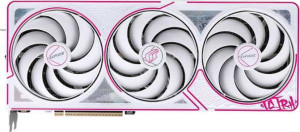
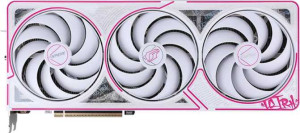
Colorful iGame GeForce RTX 5070 Ti Ultra W OC Colorful iGame GeForce RTX 5080 Ultra W OC

Overview

Welcome to our in-depth specification comparison between the Colorful iGame GeForce RTX 5070 Ti Ultra W OC and the Colorful iGame GeForce RTX 5080 Ultra W OC. Both cards share the same Blackwell architecture and a strong foundation of common features, yet they diverge meaningfully in areas like raw compute performance, shader counts, memory bandwidth, and power consumption. Read on to see exactly how these two GPUs stack up across every key metric.

Common Features

  • Both cards share a base GPU clock speed of 2295 MHz.
  • Double Precision Floating Point (DPFP) is supported on both cards.
  • Both cards come with 16GB of VRAM.
  • Both cards use GDDR7 memory.
  • Both cards feature a 256-bit memory bus width.
  • ECC memory is supported on both cards.
  • Both cards support DirectX 12 Ultimate.
  • Both cards support OpenGL version 4.6.
  • Both cards support OpenCL version 3.
  • Multi-display technology is supported on both cards.
  • Ray tracing is supported on both cards.
  • 3D support is available on both cards.
  • DLSS is supported on both cards.
  • XeSS (XMX) is not available on either card.
  • Both cards include one HDMI 2.1b output.
  • Both cards include 3 DisplayPort outputs.
  • Neither card has a USB-C port.
  • Neither card has a DVI output.
  • Both cards are built on the Blackwell GPU architecture.
  • Both cards use PCIe 5 and a 5 nm manufacturing process, with 45,600 million transistors, and share the same dimensions of 331 mm width and 139.3 mm height.

Main Differences

  • GPU turbo clock speed is 2497 MHz on Colorful iGame GeForce RTX 5070 Ti Ultra W OC and 2655 MHz on Colorful iGame GeForce RTX 5080 Ultra W OC.
  • Pixel rate is 239.7 GPixel/s on Colorful iGame GeForce RTX 5070 Ti Ultra W OC and 297.4 GPixel/s on Colorful iGame GeForce RTX 5080 Ultra W OC.
  • Floating-point performance is 44.75 TFLOPS on Colorful iGame GeForce RTX 5070 Ti Ultra W OC and 57.09 TFLOPS on Colorful iGame GeForce RTX 5080 Ultra W OC.
  • Texture rate is 699.2 GTexels/s on Colorful iGame GeForce RTX 5070 Ti Ultra W OC and 892.1 GTexels/s on Colorful iGame GeForce RTX 5080 Ultra W OC.
  • GPU memory speed is 1750 MHz on Colorful iGame GeForce RTX 5070 Ti Ultra W OC and 1875 MHz on Colorful iGame GeForce RTX 5080 Ultra W OC.
  • Shading units number 8960 on Colorful iGame GeForce RTX 5070 Ti Ultra W OC and 10752 on Colorful iGame GeForce RTX 5080 Ultra W OC.
  • Texture mapping units (TMUs) total 280 on Colorful iGame GeForce RTX 5070 Ti Ultra W OC and 336 on Colorful iGame GeForce RTX 5080 Ultra W OC.
  • Render output units (ROPs) number 96 on Colorful iGame GeForce RTX 5070 Ti Ultra W OC and 112 on Colorful iGame GeForce RTX 5080 Ultra W OC.
  • Effective memory speed is 28000 MHz on Colorful iGame GeForce RTX 5070 Ti Ultra W OC and 30000 MHz on Colorful iGame GeForce RTX 5080 Ultra W OC.
  • Maximum memory bandwidth is 896 GB/s on Colorful iGame GeForce RTX 5070 Ti Ultra W OC and 960 GB/s on Colorful iGame GeForce RTX 5080 Ultra W OC.
  • Thermal Design Power (TDP) is 300W on Colorful iGame GeForce RTX 5070 Ti Ultra W OC and 380W on Colorful iGame GeForce RTX 5080 Ultra W OC.
Specs Comparison
Colorful iGame GeForce RTX 5070 Ti Ultra W OC

Colorful iGame GeForce RTX 5070 Ti Ultra W OC

Colorful iGame GeForce RTX 5080 Ultra W OC

Colorful iGame GeForce RTX 5080 Ultra W OC

Performance:
GPU clock speed 2295 MHz 2295 MHz
GPU turbo 2497 MHz 2655 MHz
pixel rate 239.7 GPixel/s 297.4 GPixel/s
floating-point performance 44.75 TFLOPS 57.09 TFLOPS
texture rate 699.2 GTexels/s 892.1 GTexels/s
GPU memory speed 1750 MHz 1875 MHz
shading units 8960 10752
texture mapping units (TMUs) 280 336
render output units (ROPs) 96 112
Has Double Precision Floating Point (DPFP)

Both the iGame RTX 5070 Ti Ultra W OC and the iGame RTX 5080 Ultra W OC share an identical base clock of 2295 MHz, meaning neither card has a factory advantage at the starting line. The real divergence begins at boost: the RTX 5080 variant reaches 2655 MHz turbo versus 2497 MHz on the 5070 Ti — a 158 MHz gap that, while not dramatic in isolation, compounds meaningfully across a workload when sustained over time.

The more telling differentiators lie in the rendering pipeline. The RTX 5080 model fields 10,752 shading units, 336 TMUs, and 112 ROPs against the 5070 Ti's 8,960 / 280 / 96 respectively — roughly a 20% wider compute and rasterization front. This directly translates into the floating-point gap: 57.09 TFLOPS versus 44.75 TFLOPS, a ~27% throughput advantage for the RTX 5080. In practice, wider shader and texture capacity matters most in GPU-limited scenarios — dense geometry, high-resolution rendering, and compute-heavy workloads like ray tracing or AI inference will all scale with that headroom. The RTX 5080's pixel rate of 297.4 GPixel/s versus 239.7 GPixel/s also suggests a tangible edge in fill-rate-bound situations such as high-refresh or multi-display output.

Both cards support Double Precision Floating Point, which is relevant for professional compute tasks, and both offer a similar memory clock baseline, though the RTX 5080 edges ahead at 1875 MHz versus 1750 MHz on the 5070 Ti. Overall, the RTX 5080 Ultra W OC holds a clear and consistent performance advantage across every throughput metric in this group — it is the stronger card by a meaningful margin, not just marginally faster binning of the same silicon.
Memory:
effective memory speed 28000 MHz 30000 MHz
maximum memory bandwidth 896 GB/s 960 GB/s
VRAM 16GB 16GB
GDDR version GDDR7 GDDR7
memory bus width 256-bit 256-bit
Supports ECC memory

On the surface, the memory configurations of these two cards look nearly identical: both carry 16GB of GDDR7 across a 256-bit bus, and both support ECC memory — a feature relevant for professional and compute workloads where data integrity matters. The shared bus width means neither card has a structural bandwidth advantage from bus architecture alone; the difference instead comes down to memory clock speed.

That said, the RTX 5080 Ultra W OC runs its memory at an effective 30,000 MHz versus 28,000 MHz on the 5070 Ti — a roughly 7% frequency advantage that directly produces a higher peak bandwidth ceiling of 960 GB/s compared to 896 GB/s. In memory-bandwidth-sensitive scenarios — think 4K texture streaming, large frame buffers in ray-traced scenes, or high-throughput AI inference — that additional ~64 GB/s headroom can prevent the GPU from stalling while waiting on data, keeping its larger shader array fed.

However, it is worth contextualizing the gap: both cards occupy the same capacity tier, use the same memory generation and bus width, and the bandwidth difference is meaningful but not transformative. For the majority of gaming workloads, either card will rarely be purely memory-bandwidth-bound. The RTX 5080 holds a modest but real edge here, one that is more likely to surface in professional or bandwidth-intensive compute tasks than in typical consumer gaming.

Features:
DirectX version DirectX 12 Ultimate DirectX 12 Ultimate
OpenGL version 4.6 4.6
OpenCL version 3 3
Supports multi-display technology
supports ray tracing
Supports 3D
supports DLSS
has XeSS (XMX)
AMD SAM / Intel Resizable BAR Intel Resizable BAR Intel Resizable BAR
has LHR
has RGB lighting
supported displays 4 4

Across every feature listed in this group, the iGame RTX 5070 Ti Ultra W OC and the iGame RTX 5080 Ultra W OC are in complete lockstep. Both support DirectX 12 Ultimate, OpenGL 4.6, and OpenCL 3 — meaning the same API-level feature set is available to developers and users on either card, with no capability gaps in shader model support, hardware ray tracing, or compute workloads.

On the practical side, both cards support ray tracing and DLSS, which remain the two most impactful real-world feature checkboxes for modern PC gaming. DLSS in particular allows both cards to trade raw resolution for upscaled image quality and higher frame rates, making it highly relevant at 4K. Neither card supports XeSS, though that is an Intel-native upscaling technology and its absence is expected and inconsequential here. Both also support up to 4 simultaneous displays and Intel Resizable BAR, which can improve CPU-to-GPU data throughput in compatible systems.

This group is a straight tie — the feature parity between these two cards is total. A buyer choosing between them based solely on supported features has no differentiator to weigh; the decision will inevitably rest on the performance and memory specs covered elsewhere.

Ports:
has an HDMI output
HDMI ports 1 1
HDMI version HDMI 2.1b HDMI 2.1b
DisplayPort outputs 3 3
USB-C ports 0 0
DVI outputs 0 0
mini DisplayPort outputs 0 0

Port selection is another area where these two cards offer no basis for differentiation whatsoever. Both the iGame RTX 5070 Ti Ultra W OC and the iGame RTX 5080 Ultra W OC ship with an identical output configuration: 3 DisplayPort outputs and 1 HDMI 2.1b port, totaling four display connections — consistent with the four supported displays noted in their feature specs.

The inclusion of HDMI 2.1b is the headline here, as it enables 4K at up to 144Hz or 8K output over a single cable, making either card well-suited for high-refresh premium displays without requiring DisplayPort adapters. The three DisplayPort outputs give multi-monitor users plenty of flexibility for driving ultrawide or multi-screen setups simultaneously. Neither card offers USB-C, which rules out direct connection to USB-C or Thunderbolt monitors without an adapter — a minor but worth-noting omission for users in all-USB-C desk setups.

This group is a complete tie. The port layout is bit-for-bit identical, and neither card offers any connectivity advantage over the other. Buyers with specific display connection requirements will find both cards equally capable — or equally limited — depending on their setup.

General info:
GPU architecture Blackwell Blackwell
release date February 2025 February 2025
Thermal Design Power (TDP) 300W 380W
PCI Express (PCIe) version 5 5
semiconductor size 5 nm 5 nm
number of transistors 45600 million 45600 million
Has air-water cooling
width 331 mm 331 mm
height 139.3 mm 139.3 mm

Sharing the same Blackwell architecture, 5nm process node, and identical transistor count of 45,600 million, these two cards are built from the same generational foundation — which makes the differences that do exist here more illuminating. The fact that both cards pack the same number of transistors yet the RTX 5080 delivers significantly more compute throughput (as seen in the performance group) suggests that Colorful is enabling more of that silicon on the higher-tier card, rather than using a physically different die.

The most consequential divergence in this group is TDP: the iGame RTX 5080 Ultra W OC draws 380W versus 300W for the RTX 5070 Ti — an 80W gap representing a 27% higher power ceiling. In practical terms, this means the RTX 5080 will demand a more robust PSU, produce more heat under sustained load, and place greater strain on case airflow. Builders targeting the RTX 5080 should account for this when planning power supply headroom and cooling infrastructure. Neither card uses hybrid air-water cooling, so thermal management falls entirely on the air cooler design.

Physical dimensions are identical at 331 mm × 139.3 mm, and both use PCIe 5.0, so installation logistics are interchangeable between the two. On balance, this group hands a meaningful consideration to the RTX 5070 Ti for system builders prioritizing power efficiency or working within tighter PSU or thermal constraints — while the RTX 5080 accepts that higher power cost in exchange for the performance headroom documented elsewhere.

Comparison Summary & Verdict

After examining the full specification breakdown, both cards prove to be capable Blackwell-generation GPUs with identical feature sets, port configurations, and form factors. The Colorful iGame GeForce RTX 5070 Ti Ultra W OC delivers 44.75 TFLOPS of floating-point performance and a 300W TDP, making it the more power-efficient option for gamers who want strong performance without demanding as much from their system. The Colorful iGame GeForce RTX 5080 Ultra W OC pulls ahead with 57.09 TFLOPS, a higher texture rate of 892.1 GTexels/s, 10752 shading units, and 960 GB/s of memory bandwidth, positioning it as the superior choice for users who need maximum throughput. If budget and efficiency matter, the 5070 Ti is compelling; if outright top-tier GPU performance is the priority and a 380W power draw is acceptable, the 5080 is the clear step up.

Colorful iGame GeForce RTX 5070 Ti Ultra W OC
Buy Colorful iGame GeForce RTX 5070 Ti Ultra W OC if...

Buy the Colorful iGame GeForce RTX 5070 Ti Ultra W OC if you want a strong Blackwell-generation GPU with lower power consumption of 300W and solid 44.75 TFLOPS performance at a more energy-efficient operating point.

Colorful iGame GeForce RTX 5080 Ultra W OC
Buy Colorful iGame GeForce RTX 5080 Ultra W OC if...

Buy the Colorful iGame GeForce RTX 5080 Ultra W OC if you demand the highest available performance, with greater shading units, a faster GPU turbo clock of 2655 MHz, higher memory bandwidth of 960 GB/s, and 57.09 TFLOPS of floating-point throughput.