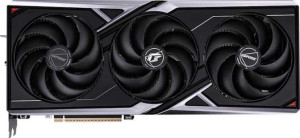
Colorful iGame GeForce RTX 5070 Vulcan OC
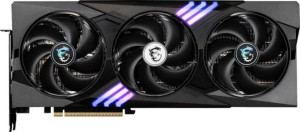
MSI GeForce RTX 5070 Gaming Trio OC

Colorful iGame GeForce RTX 5070 Vulcan OC MSI GeForce RTX 5070 Gaming Trio OC

Overview

Choosing between the Colorful iGame GeForce RTX 5070 Vulcan OC and the MSI GeForce RTX 5070 Gaming Trio OC is no simple task: both cards are built on the same Blackwell architecture, pack 12GB of GDDR7 memory, and share an identical feature set including ray tracing and DLSS support. Yet beneath that shared foundation, meaningful differences in boost clock speeds, raw computational throughput, power consumption, and physical dimensions emerge. This in-depth spec comparison will help you identify which card is the right fit for your rig and priorities.

Common Features

  • Both cards share a base GPU clock speed of 2325 MHz.
  • Both cards have a GPU memory speed of 1750 MHz.
  • Both cards feature 6144 shading units.
  • Both cards include 192 texture mapping units (TMUs).
  • Both cards have 80 render output units (ROPs).
  • Double Precision Floating Point (DPFP) is supported on both cards.
  • Both cards have an effective memory speed of 28000 MHz.
  • Both cards offer a maximum memory bandwidth of 672 GB/s.
  • Both cards are equipped with 12GB of VRAM.
  • Both cards use GDDR7 memory.
  • Both cards feature a 192-bit memory bus width.
  • ECC memory is supported on both cards.
  • Both cards support DirectX 12 Ultimate.
  • Both cards support OpenGL version 4.6.
  • Both cards support OpenCL version 3.
  • Multi-display technology is supported on both cards.
  • Ray tracing is supported on both cards.
  • 3D support is available on both cards.
  • DLSS is supported on both cards.
  • XeSS (XMX) support is not available on either card.
  • Both cards include one HDMI 2.1b output.
  • Both cards feature three DisplayPort outputs.
  • Neither card includes USB-C, DVI, or mini DisplayPort outputs.
  • Both cards are built on the Blackwell GPU architecture.
  • Both cards use PCIe version 5.
  • Both cards are manufactured on a 5 nm semiconductor process.
  • Both cards feature 31,100 million transistors.
  • Neither card includes air-water cooling.

Main Differences

  • GPU turbo clock speed is 2587 MHz on the Colorful iGame GeForce RTX 5070 Vulcan OC and 2610 MHz on the MSI GeForce RTX 5070 Gaming Trio OC.
  • Pixel rate is 207 GPixel/s on the Colorful iGame GeForce RTX 5070 Vulcan OC and 208.8 GPixel/s on the MSI GeForce RTX 5070 Gaming Trio OC.
  • Floating-point performance is 31.79 TFLOPS on the Colorful iGame GeForce RTX 5070 Vulcan OC and 32.07 TFLOPS on the MSI GeForce RTX 5070 Gaming Trio OC.
  • Texture rate is 496.7 GTexels/s on the Colorful iGame GeForce RTX 5070 Vulcan OC and 501.1 GTexels/s on the MSI GeForce RTX 5070 Gaming Trio OC.
  • Thermal Design Power (TDP) is 270W on the Colorful iGame GeForce RTX 5070 Vulcan OC and 250W on the MSI GeForce RTX 5070 Gaming Trio OC.
  • Width is 336 mm on the Colorful iGame GeForce RTX 5070 Vulcan OC and 338 mm on the MSI GeForce RTX 5070 Gaming Trio OC.
  • Height is 145 mm on the Colorful iGame GeForce RTX 5070 Vulcan OC and 140 mm on the MSI GeForce RTX 5070 Gaming Trio OC.
Specs Comparison
Colorful iGame GeForce RTX 5070 Vulcan OC

Colorful iGame GeForce RTX 5070 Vulcan OC

MSI GeForce RTX 5070 Gaming Trio OC

MSI GeForce RTX 5070 Gaming Trio OC

Performance:
GPU clock speed 2325 MHz 2325 MHz
GPU turbo 2587 MHz 2610 MHz
pixel rate 207 GPixel/s 208.8 GPixel/s
floating-point performance 31.79 TFLOPS 32.07 TFLOPS
texture rate 496.7 GTexels/s 501.1 GTexels/s
GPU memory speed 1750 MHz 1750 MHz
shading units 6144 6144
texture mapping units (TMUs) 192 192
render output units (ROPs) 80 80
Has Double Precision Floating Point (DPFP)

At their core, the Colorful iGame RTX 5070 Vulcan OC and the MSI RTX 5070 Gaming Trio OC share the same fundamental silicon architecture: identical base clocks of 2325 MHz, the same 6144 shading units, 192 TMUs, 80 ROPs, and matched memory speeds of 1750 MHz. This means both cards draw from the same underlying compute resources, and neither holds a structural advantage in raw shader count or memory throughput.

The only differentiator within this group comes down to the GPU boost clock. The MSI Gaming Trio OC reaches a turbo of 2610 MHz versus the Colorful Vulcan OC's 2587 MHz — a delta of just 23 MHz. This marginal frequency advantage flows directly into the derived metrics: the MSI edges ahead with 32.07 TFLOPS of floating-point performance versus 31.79 TFLOPS, a 501.1 GTexels/s texture rate versus 496.7 GTexels/s, and a pixel rate of 208.8 GPixel/s versus 207 GPixel/s. In real-world terms, these are sub-1% differences that will not be perceptible in gaming frame rates or rendering workloads.

On balance, the MSI Gaming Trio OC holds a technical edge in this performance group, but it is negligible in practice. Both cards support Double Precision Floating Point, making either a viable choice for compute tasks. A buyer prioritizing pure out-of-box clock speed will find the MSI marginally ahead, but the gap is too small to be a deciding factor on performance grounds alone.

Memory:
effective memory speed 28000 MHz 28000 MHz
maximum memory bandwidth 672 GB/s 672 GB/s
VRAM 12GB 12GB
GDDR version GDDR7 GDDR7
memory bus width 192-bit 192-bit
Supports ECC memory

Both the Colorful iGame GeForce RTX 5070 Vulcan OC and the MSI GeForce RTX 5070 Gaming Trio OC offer identical memory specifications. They both feature an effective memory speed of 28000 MHz and a maximum memory bandwidth of 672 GB/s.

In terms of VRAM, both models are equipped with 12GB of memory, ensuring ample capacity for high-end gaming and demanding tasks. Both also utilize GDDR7 memory, and the memory bus width is 192-bit for each card.

Furthermore, both graphics cards support ECC memory (Error-Correcting Code), offering additional reliability in data handling.

Features:
DirectX version DirectX 12 Ultimate DirectX 12 Ultimate
OpenGL version 4.6 4.6
OpenCL version 3 3
Supports multi-display technology
supports ray tracing
Supports 3D
supports DLSS
has XeSS (XMX)
AMD SAM / Intel Resizable BAR Intel Resizable BAR Intel Resizable BAR
has LHR
has RGB lighting
supported displays 4 4

The Colorful iGame GeForce RTX 5070 Vulcan OC and MSI GeForce RTX 5070 Gaming Trio OC both share the same key features. Both cards support DirectX 12 Ultimate, OpenGL 4.6, and OpenCL 3, ensuring compatibility with the latest graphics technologies. They also both support multi-display technology, ray tracing, 3D, and DLSS, enhancing visual quality and performance in supported applications and games.

Neither card includes XeSS (XMX) support, but both feature Intel Resizable BAR support, a technology aimed at improving GPU performance in compatible systems. Additionally, neither card has LHR (Lite Hash Rate) limitations, allowing full access to the card's mining potential if that is a consideration.

Both models also come equipped with RGB lighting and support up to four displays, offering similar aesthetic and multitasking capabilities.

Ports:
has an HDMI output
HDMI ports 1 1
HDMI version HDMI 2.1b HDMI 2.1b
DisplayPort outputs 3 3
USB-C ports 0 0
DVI outputs 0 0
mini DisplayPort outputs 0 0

The Colorful iGame GeForce RTX 5070 Vulcan OC and the MSI GeForce RTX 5070 Gaming Trio OC have identical port configurations. Both cards feature one HDMI output with HDMI 2.1b support, ensuring compatibility with the latest displays and high-bandwidth features. Each card also includes three DisplayPort outputs for additional display connections.

Neither of the cards includes USB-C ports, DVI outputs, or mini DisplayPort outputs, meaning both are limited to HDMI and DisplayPort connections for display output.

General info:
GPU architecture Blackwell Blackwell
release date March 2025 January 2025
Thermal Design Power (TDP) 270W 250W
PCI Express (PCIe) version 5 5
semiconductor size 5 nm 5 nm
number of transistors 31100 million 31100 million
Has air-water cooling
width 336 mm 338 mm
height 145 mm 140 mm

Both the Colorful iGame GeForce RTX 5070 Vulcan OC and MSI GeForce RTX 5070 Gaming Trio OC share the same GPU architecture, using Blackwell. They also have the same semiconductor size of 5 nm and the same number of transistors at 31,100 million.

However, the Thermal Design Power (TDP) differs slightly, with the Vulcan OC rated at 270W and the Gaming Trio OC at 250W. Both cards use PCI Express version 5, ensuring high-speed data transfer for modern systems.

In terms of size, the Vulcan OC is 336 mm wide and 145 mm tall, while the Gaming Trio OC is slightly wider at 338 mm but shorter in height at 140 mm. Neither card features air-water cooling.

Comparison Summary & Verdict

After examining every available data point, both cards prove to be extremely capable RTX 5070-class options built on the same Blackwell foundation with identical memory configurations. However, the MSI GeForce RTX 5070 Gaming Trio OC pulls ahead in pure performance, delivering a higher GPU turbo clock of 2610 MHz, a superior floating-point output of 32.07 TFLOPS, and a better texture rate of 501.1 GTexels/s, all while drawing a more frugal 250W TDP. The Colorful iGame GeForce RTX 5070 Vulcan OC, on the other hand, runs at a slightly lower boost clock of 2587 MHz and draws 270W, though it is marginally narrower at 336 mm. For most users, the MSI card offers a better balance of performance and power efficiency, while the Colorful card may appeal to those already committed to that brand ecosystem.

Colorful iGame GeForce RTX 5070 Vulcan OC
Buy Colorful iGame GeForce RTX 5070 Vulcan OC if...

Buy the Colorful iGame GeForce RTX 5070 Vulcan OC if you are loyal to the Colorful ecosystem and can accommodate its slightly higher 270W power draw in your build.

MSI GeForce RTX 5070 Gaming Trio OC
Buy MSI GeForce RTX 5070 Gaming Trio OC if...

Buy the MSI GeForce RTX 5070 Gaming Trio OC if you want the higher boost clock of 2610 MHz, better floating-point performance, and greater power efficiency at just 250W TDP.