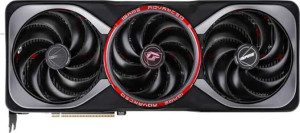
Colorful iGame GeForce RTX 5080 Advanced OC
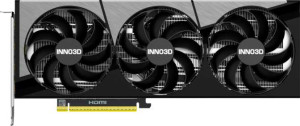
Inno3D GeForce RTX 5080 X3 Gaming OC

Colorful iGame GeForce RTX 5080 Advanced OC Inno3D GeForce RTX 5080 X3 Gaming OC

Overview

Welcome to our in-depth spec comparison between the Colorful iGame GeForce RTX 5080 Advanced OC and the Inno3D GeForce RTX 5080 X3 Gaming OC. Both cards are built on the same Blackwell architecture and share identical memory configurations, yet they diverge in areas like boost clock speeds, raw compute throughput, and physical footprint and power consumption. Read on to find out which RTX 5080 variant best suits your build and priorities.

Common Features

  • Both products share a base GPU clock speed of 2295 MHz.
  • Both products have a GPU memory speed of 1875 MHz.
  • Both products feature 10752 shading units.
  • Both products include 336 texture mapping units (TMUs).
  • Both products have 112 render output units (ROPs).
  • Double Precision Floating Point (DPFP) is supported on both products.
  • Both products have an effective memory speed of 30000 MHz.
  • Both products offer a maximum memory bandwidth of 960 GB/s.
  • Both products are equipped with 16GB of VRAM.
  • Both products use GDDR7 memory.
  • Both products feature a 256-bit memory bus width.
  • ECC memory is supported on both products.
  • Both products support DirectX 12 Ultimate.
  • Both products support OpenGL version 4.6.
  • Both products support OpenCL version 3.
  • Multi-display technology is supported on both products.
  • Ray tracing is supported on both products.
  • 3D support is available on both products.
  • DLSS is supported on both products.
  • XeSS (XMX) is not available on either product.
  • Both products include one HDMI 2.1b output.
  • Both products feature three DisplayPort outputs.
  • Neither product includes USB-C, DVI, or mini DisplayPort outputs.
  • Both products are built on the Blackwell GPU architecture.
  • Both products use PCIe version 5.
  • Both products are manufactured on a 5 nm process.
  • Both products contain 45600 million transistors.
  • Air-water cooling is not available on either product.

Main Differences

  • GPU turbo clock speed is 2670 MHz on Colorful iGame GeForce RTX 5080 Advanced OC and 2700 MHz on Inno3D GeForce RTX 5080 X3 Gaming OC.
  • Pixel rate is 299 GPixel/s on Colorful iGame GeForce RTX 5080 Advanced OC and 302.4 GPixel/s on Inno3D GeForce RTX 5080 X3 Gaming OC.
  • Floating-point performance is 57.42 TFLOPS on Colorful iGame GeForce RTX 5080 Advanced OC and 58.06 TFLOPS on Inno3D GeForce RTX 5080 X3 Gaming OC.
  • Texture rate is 897.1 GTexels/s on Colorful iGame GeForce RTX 5080 Advanced OC and 907.2 GTexels/s on Inno3D GeForce RTX 5080 X3 Gaming OC.
  • Thermal Design Power (TDP) is 390W on Colorful iGame GeForce RTX 5080 Advanced OC and 360W on Inno3D GeForce RTX 5080 X3 Gaming OC.
  • Card width is 355 mm on Colorful iGame GeForce RTX 5080 Advanced OC and 300 mm on Inno3D GeForce RTX 5080 X3 Gaming OC.
  • Card height is 144.7 mm on Colorful iGame GeForce RTX 5080 Advanced OC and 120 mm on Inno3D GeForce RTX 5080 X3 Gaming OC.
Specs Comparison
Colorful iGame GeForce RTX 5080 Advanced OC

Colorful iGame GeForce RTX 5080 Advanced OC

Inno3D GeForce RTX 5080 X3 Gaming OC

Inno3D GeForce RTX 5080 X3 Gaming OC

Performance:
GPU clock speed 2295 MHz 2295 MHz
GPU turbo 2670 MHz 2700 MHz
pixel rate 299 GPixel/s 302.4 GPixel/s
floating-point performance 57.42 TFLOPS 58.06 TFLOPS
texture rate 897.1 GTexels/s 907.2 GTexels/s
GPU memory speed 1875 MHz 1875 MHz
shading units 10752 10752
texture mapping units (TMUs) 336 336
render output units (ROPs) 112 112
Has Double Precision Floating Point (DPFP)

Both the Colorful iGame Advanced OC and the Inno3D X3 Gaming OC are built on the same GPU silicon, and it shows: they share an identical base clock of 2295 MHz, the same 10752 shading units, 336 TMUs, 112 ROPs, and a 1875 MHz memory speed. This means the vast majority of their compute architecture is functionally equivalent out of the box.

The only meaningful differentiator within this spec group is the GPU boost clock. The Inno3D X3 Gaming OC reaches 2700 MHz versus the iGame Advanced OC's 2670 MHz — a 30 MHz advantage that flows directly into every derived metric: the X3 Gaming OC edges ahead with 58.06 TFLOPS of floating-point throughput versus 57.42 TFLOPS, a texture rate of 907.2 GTexels/s versus 897.1, and a pixel rate of 302.4 GPixel/s versus 299. In practice, a ~1.1% boost clock difference is unlikely to produce a perceptible framerate gap in most workloads, but it does represent a real, consistent lead for the Inno3D card.

The edge in this group goes to the Inno3D GeForce RTX 5080 X3 Gaming OC. While the advantage is slim, it is uniform across all performance-derived specs, meaning the Inno3D card is the faster binned or tuned variant of the two. For users comparing these cards purely on GPU throughput, the X3 Gaming OC is the stronger choice — if only by a narrow margin.

Memory:
effective memory speed 30000 MHz 30000 MHz
maximum memory bandwidth 960 GB/s 960 GB/s
VRAM 16GB 16GB
GDDR version GDDR7 GDDR7
memory bus width 256-bit 256-bit
Supports ECC memory

On memory, these two cards are carbon copies of each other. Both feature 16GB of GDDR7 running across a 256-bit bus at an effective speed of 30000 MHz, delivering 960 GB/s of peak bandwidth. That bandwidth figure is particularly significant: it places both cards well above previous-generation flagships, and in bandwidth-hungry workloads — think high-resolution texturing, large asset streaming, or AI inference — this headroom translates directly into smoother, more sustained throughput.

The 256-bit bus width paired with GDDR7 is worth noting as an architectural choice. Rather than widening the bus further, GDDR7's higher per-pin efficiency achieves competitive bandwidth at a narrower width, which generally favors power efficiency and die area. Both cards benefit equally from this design. ECC memory support is also present on both, which is a useful reliability feature for users running compute or professional workloads alongside gaming.

This group is a complete tie. There is no differentiator anywhere in the memory spec set — every figure is identical. A buyer's decision between the iGame Advanced OC and the X3 Gaming OC cannot be informed by memory alone, and neither card holds any advantage here.

Features:
DirectX version DirectX 12 Ultimate DirectX 12 Ultimate
OpenGL version 4.6 4.6
OpenCL version 3 3
Supports multi-display technology
supports ray tracing
Supports 3D
supports DLSS
has XeSS (XMX)
AMD SAM / Intel Resizable BAR Intel Resizable BAR Intel Resizable BAR
has LHR
has RGB lighting
supported displays 4 4

Feature parity is total between these two cards. Both support DirectX 12 Ultimate — the current gold standard for gaming APIs, enabling hardware-accelerated ray tracing, mesh shaders, and variable rate shading across compatible titles. Alongside this, DLSS support is present on both, which is arguably the most practically impactful feature for end users: DLSS's AI-driven upscaling allows games to render at lower resolutions and reconstruct sharp, high-fidelity frames, significantly boosting performance at 4K and beyond with minimal visual compromise.

Ray tracing support and up to 4 simultaneous displays round out the shared feature set meaningfully. Multi-display capability at this level suits both enthusiast gaming setups and productivity-heavy workstations. The inclusion of Intel Resizable BAR on both cards also ensures the CPU can access the full GPU framebuffer at once, a low-level optimization that can yield measurable framerate improvements in supported games without any user configuration.

As with the memory group, this is an exact tie. Every feature flag — from RGB lighting to the absence of LHR — is identical across both cards. No advantage can be drawn here, and prospective buyers should look to other spec groups, such as performance or connectivity, to differentiate the two.

Ports:
has an HDMI output
HDMI ports 1 1
HDMI version HDMI 2.1b HDMI 2.1b
DisplayPort outputs 3 3
USB-C ports 0 0
DVI outputs 0 0
mini DisplayPort outputs 0 0

Connectivity is identical across both cards. Each offers the same layout: three DisplayPort outputs and one HDMI 2.1b port, totaling four display outputs — consistent with the four-display maximum noted in the features group. For most users, three DisplayPorts alone is sufficient to drive a triple-monitor gaming or productivity setup, while the HDMI port handles a TV, projector, or any display that lacks a DisplayPort input.

The HDMI 2.1b version is worth calling out. It supports bandwidth sufficient for 4K at very high refresh rates and 8K output, making both cards well-suited for next-generation display technology without requiring adapters or workarounds. The absence of USB-C on both cards is notable for users who prefer that connector for modern monitors, though this affects neither card disproportionately since both are in the same position.

This group is another complete tie. Port configuration is a pixel-perfect match between the iGame Advanced OC and the X3 Gaming OC, and no advantage exists for either card in terms of display connectivity.

General info:
GPU architecture Blackwell Blackwell
release date February 2025 April 2025
Thermal Design Power (TDP) 390W 360W
PCI Express (PCIe) version 5 5
semiconductor size 5 nm 5 nm
number of transistors 45600 million 45600 million
Has air-water cooling
width 355 mm 300 mm
height 144.7 mm 120 mm

Under the hood, both cards share the same Blackwell architecture built on a 5nm process with 45.6 billion transistors, confirming they are variants of the same silicon. PCIe 5 support on both ensures neither card is bottlenecked by the interface on any modern platform. Where things diverge, however, is in power draw and physical footprint — and the gaps are significant enough to influence a buying decision.

The Colorful iGame Advanced OC carries a TDP of 390W, versus 360W for the Inno3D X3 Gaming OC — a 30W difference. This matters in two practical ways: first, PSU headroom requirements are higher for the iGame, meaning users with tighter power budgets need to account for this; second, a higher TDP in a card with only marginally higher boost clocks (as seen in the performance group) suggests the iGame runs less efficiently per watt. The X3 Gaming OC actually achieves comparable or slightly higher peak clocks while drawing less power, which is a meaningful efficiency advantage. Physical size tells a similar story: the iGame measures 355 × 144.7 mm while the X3 Gaming OC is notably more compact at 300 × 120 mm. That 55mm length difference is substantial — smaller cases that cannot accommodate a 355mm card will be locked out of the iGame entirely.

The edge in this group goes clearly to the Inno3D X3 Gaming OC. It runs cooler on paper, draws less power, and fits into a wider range of chassis — all without sacrificing meaningful performance. For builders working with smaller cases or efficiency-conscious builds, the X3 Gaming OC is the more practical choice by a considerable margin.

Comparison Summary & Verdict

After examining all the specifications, both cards deliver the same foundation: identical 16GB GDDR7 memory, a 256-bit bus, 960 GB/s bandwidth, and full support for ray tracing and DLSS. The Inno3D GeForce RTX 5080 X3 Gaming OC edges ahead in pure performance metrics, offering a higher 2700 MHz boost clock, 58.06 TFLOPS of floating-point performance, and a more efficient 360W TDP, all in a notably more compact 300 x 120 mm form factor. The Colorful iGame GeForce RTX 5080 Advanced OC, by contrast, runs a 390W TDP and occupies a larger 355 x 144.7 mm footprint, which may suit spacious full-tower builds where size is not a constraint. Choose the Inno3D if efficiency and compactness matter; choose the Colorful if your chassis accommodates it and availability or pricing works in its favor.

Colorful iGame GeForce RTX 5080 Advanced OC
Buy Colorful iGame GeForce RTX 5080 Advanced OC if...

Buy the Colorful iGame GeForce RTX 5080 Advanced OC if you have a spacious full-tower case with ample power headroom and it offers a better price or availability than the competition.

Inno3D GeForce RTX 5080 X3 Gaming OC
Buy Inno3D GeForce RTX 5080 X3 Gaming OC if...

Buy the Inno3D GeForce RTX 5080 X3 Gaming OC if you want a higher boost clock, greater compute throughput, lower power draw at 360W, and a more compact card that fits tighter builds.