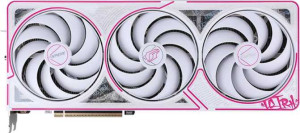
Colorful iGame GeForce RTX 5080 Ultra W OC
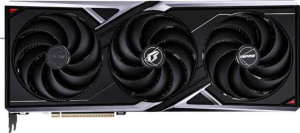
Colorful iGame GeForce RTX 5080 Vulcan OC

Colorful iGame GeForce RTX 5080 Ultra W OC Colorful iGame GeForce RTX 5080 Vulcan OC

Overview

Welcome to our in-depth spec comparison between the Colorful iGame GeForce RTX 5080 Ultra W OC and the Colorful iGame GeForce RTX 5080 Vulcan OC — two high-end graphics cards built on the same Blackwell architecture. While they share a strong foundation of identical memory specs and feature support, the key battlegrounds lie in GPU turbo clock speeds, raw compute performance, physical dimensions, and connectivity options. Read on to find out which card best suits your needs.

Common Features

  • Both products have a base GPU clock speed of 2295 MHz.
  • Both products have a GPU memory speed of 1875 MHz.
  • Both products feature 10752 shading units.
  • Both products have 336 texture mapping units (TMUs).
  • Both products have 112 render output units (ROPs).
  • Double Precision Floating Point (DPFP) is supported on both products.
  • Both products have an effective memory speed of 30000 MHz.
  • Both products offer a maximum memory bandwidth of 960 GB/s.
  • Both products come with 16GB of VRAM.
  • Both products use GDDR7 memory.
  • Both products have a 256-bit memory bus width.
  • ECC memory is supported on both products.
  • Both products support DirectX 12 Ultimate.
  • Both products support OpenGL version 4.6.
  • Both products support OpenCL version 3.
  • Multi-display technology is supported on both products.
  • Ray tracing is supported on both products.
  • 3D support is available on both products.
  • DLSS is supported on both products.
  • XeSS (XMX) is not available on either product.
  • Both products have an HDMI output using HDMI version 2.1b.
  • Both products have 3 DisplayPort outputs.
  • Neither product has USB-C ports, DVI outputs, or mini DisplayPort outputs.
  • Both products are built on the Blackwell GPU architecture.
  • Both products use PCIe version 5.
  • Both products are manufactured on a 5 nm semiconductor process.
  • Both products feature 45600 million transistors.
  • Air-water cooling is not available on either product.

Main Differences

  • GPU turbo clock speed is 2655 MHz on Colorful iGame GeForce RTX 5080 Ultra W OC and 2695 MHz on Colorful iGame GeForce RTX 5080 Vulcan OC.
  • Pixel rate is 297.4 GPixel/s on Colorful iGame GeForce RTX 5080 Ultra W OC and 301.8 GPixel/s on Colorful iGame GeForce RTX 5080 Vulcan OC.
  • Floating-point performance is 57.09 TFLOPS on Colorful iGame GeForce RTX 5080 Ultra W OC and 57.95 TFLOPS on Colorful iGame GeForce RTX 5080 Vulcan OC.
  • Texture rate is 892.1 GTexels/s on Colorful iGame GeForce RTX 5080 Ultra W OC and 905.5 GTexels/s on Colorful iGame GeForce RTX 5080 Vulcan OC.
  • HDMI port count is 1 on Colorful iGame GeForce RTX 5080 Ultra W OC and 2 on Colorful iGame GeForce RTX 5080 Vulcan OC.
  • Thermal Design Power (TDP) is 380W on Colorful iGame GeForce RTX 5080 Ultra W OC and 400W on Colorful iGame GeForce RTX 5080 Vulcan OC.
  • Width is 331 mm on Colorful iGame GeForce RTX 5080 Ultra W OC and 360 mm on Colorful iGame GeForce RTX 5080 Vulcan OC.
  • Height is 139.3 mm on Colorful iGame GeForce RTX 5080 Ultra W OC and 148.9 mm on Colorful iGame GeForce RTX 5080 Vulcan OC.
Specs Comparison
Colorful iGame GeForce RTX 5080 Ultra W OC

Colorful iGame GeForce RTX 5080 Ultra W OC

Colorful iGame GeForce RTX 5080 Vulcan OC

Colorful iGame GeForce RTX 5080 Vulcan OC

Performance:
GPU clock speed 2295 MHz 2295 MHz
GPU turbo 2655 MHz 2695 MHz
pixel rate 297.4 GPixel/s 301.8 GPixel/s
floating-point performance 57.09 TFLOPS 57.95 TFLOPS
texture rate 892.1 GTexels/s 905.5 GTexels/s
GPU memory speed 1875 MHz 1875 MHz
shading units 10752 10752
texture mapping units (TMUs) 336 336
render output units (ROPs) 112 112
Has Double Precision Floating Point (DPFP)

At their core, both the Ultra W OC and Vulcan OC share identical foundational hardware: the same 10,752 shading units, 336 TMUs, 112 ROPs, and a base clock of 2295 MHz — confirming they are built on the exact same GPU die with no architectural distinction between them. The real differentiator lives at the top end of the clock range.

The Vulcan OC reaches a boost clock of 2695 MHz versus the Ultra W OC's 2655 MHz — a 40 MHz advantage that cascades into every throughput metric. The Vulcan OC delivers 57.95 TFLOPS of floating-point performance against 57.09 TFLOPS, a texture rate of 905.5 GTexels/s versus 892.1 GTexels/s, and a pixel rate of 301.8 GPixel/s compared to 297.4 GPixel/s. In practice, these roughly 1.5% gaps are imperceptible in any real-world gaming or rendering workload — no benchmark would reliably separate them at the frame level.

The Vulcan OC holds a technical edge on paper in this group, purely by virtue of its higher factory boost clock. However, the margin is so slim that it carries no meaningful real-world consequence. Both cards are effectively performance-equivalent, and a user choosing between them should look to other spec groups — such as cooling, power, or connectivity — rather than raw compute numbers to make their decision.

Memory:
effective memory speed 30000 MHz 30000 MHz
maximum memory bandwidth 960 GB/s 960 GB/s
VRAM 16GB 16GB
GDDR version GDDR7 GDDR7
memory bus width 256-bit 256-bit
Supports ECC memory

Memory is one area where these two cards are in complete lockstep. Both the Ultra W OC and Vulcan OC carry 16GB of GDDR7 VRAM across a 256-bit bus, hitting an effective memory speed of 30,000 MHz and a peak bandwidth of 960 GB/s — there is not a single differentiating data point between them here.

The specs themselves are worth contextualizing. GDDR7 represents a generational leap in memory efficiency and throughput over GDDR6X, and 960 GB/s of bandwidth is substantial — enough to feed even the most texture- and geometry-heavy workloads at 4K without creating a memory bottleneck. The 16GB frame buffer is well-suited for high-resolution gaming and most professional creative tasks, though users working with extremely large AI models or multi-display 8K rendering may eventually feel its limits. ECC memory support is a practical bonus for workstation use cases, adding a layer of data integrity that matters in compute-heavy or mission-critical environments.

This group is an unambiguous tie. Memory configuration cannot be a deciding factor between these two cards — anyone weighing them against each other should look elsewhere in the spec sheet for differentiation.

Features:
DirectX version DirectX 12 Ultimate DirectX 12 Ultimate
OpenGL version 4.6 4.6
OpenCL version 3 3
Supports multi-display technology
supports ray tracing
Supports 3D
supports DLSS
has XeSS (XMX)
AMD SAM / Intel Resizable BAR Intel Resizable BAR Intel Resizable BAR
has LHR
has RGB lighting
supported displays 4 4

Feature parity is total between the Ultra W OC and Vulcan OC — every capability listed is shared identically across both cards. The headline additions worth understanding are ray tracing and DLSS support. Ray tracing enables physically accurate lighting, shadows, and reflections in supported titles, while DLSS uses AI-based upscaling to recover frame rates lost to ray tracing overhead — together, they form the core of NVIDIA's modern visual fidelity pipeline and are essential for anyone targeting the highest graphical presets in current-generation games.

DirectX 12 Ultimate is the other noteworthy flag here, as it is the prerequisite for hardware-accelerated ray tracing, mesh shaders, and variable-rate shading in games built on modern rendering engines. Support for up to 4 simultaneous displays and multi-display technology adds flexibility for productivity-focused users or sim enthusiasts running wide setups. Intel Resizable BAR is also present on both, allowing the CPU to access the full GPU frame buffer at once rather than in small chunks — a feature that yields modest but real performance gains in select titles without any user configuration.

With no feature exclusive to either card, this group is a straightforward tie. The software and API capabilities of both models are completely interchangeable, and feature set alone gives no grounds for preferring one over the other.

Ports:
has an HDMI output
HDMI ports 1 2
HDMI version HDMI 2.1b HDMI 2.1b
DisplayPort outputs 3 3
USB-C ports 0 0
DVI outputs 0 0
mini DisplayPort outputs 0 0

Port layout is where these two cards finally diverge in a tangible, practical way. Both share three DisplayPort outputs and a single HDMI 2.1b port — but the Vulcan OC adds a second HDMI port, bringing its total output count to five versus the Ultra W OC's four.

The real-world significance depends entirely on the user's display setup. For the vast majority of gamers running one or two monitors, this difference is invisible. However, for users who mix HDMI-native devices — such as a TV alongside a gaming monitor, or a capture card and a display simultaneously — having two HDMI ports eliminates the need for an adapter or a switcher, which is a genuine convenience advantage. It is also worth noting that HDMI 2.1b on both cards supports the bandwidth needed for 4K at high refresh rates and 8K output, so the quality of each HDMI connection is identical; only the quantity differs.

The Vulcan OC holds a clear edge in this group. The extra HDMI port is a niche but real advantage for multi-display users with HDMI-dependent hardware, and it costs the Vulcan OC nothing in DisplayPort flexibility since that count remains the same on both cards.

General info:
GPU architecture Blackwell Blackwell
release date February 2025 January 2025
Thermal Design Power (TDP) 380W 400W
PCI Express (PCIe) version 5 5
semiconductor size 5 nm 5 nm
number of transistors 45600 million 45600 million
Has air-water cooling
width 331 mm 360 mm
height 139.3 mm 148.9 mm

Underneath the branding, both cards are built on the same Blackwell architecture using a 5nm process with an identical 45.6 billion transistors — confirming they are the same silicon. The differences that emerge in this group are physical rather than architectural, and they carry genuine implications for system builders.

The most consequential gap is power draw. The Ultra W OC is rated at 380W TDP while the Vulcan OC steps up to 400W — a 20W difference that, in isolation, seems minor but is directly tied to the Vulcan OC's higher boost clock seen in the Performance group. That extra headroom enables the higher turbo frequency, but it also demands more from the power supply and generates marginally more heat under sustained load. Users running tight PSU configurations should factor this in. Physical size tells a similar story: the Vulcan OC measures 360 × 148.9 mm against the Ultra W OC's 331 × 139.3 mm, making it noticeably larger in both length and height. In compact or mid-tower cases, that 29mm length difference can be the deciding factor between a card that fits and one that doesn't.

Neither card uses air-water hybrid cooling, so thermal management falls entirely on the air cooler — and the Vulcan OC's larger footprint likely reflects a more substantial cooling solution to handle its higher TDP. For users with spacious full-tower cases and robust power supplies, this is a non-issue. For everyone else, the Ultra W OC holds a practical advantage in this group: lower power consumption and a smaller physical envelope make it the more system-friendly option, without sacrificing the same underlying silicon.

Comparison Summary & Verdict

Both cards deliver the same 16GB GDDR7 memory with 960 GB/s bandwidth, full DirectX 12 Ultimate support, and ray tracing capabilities, making either a formidable choice for demanding workloads. However, the distinctions are meaningful. The Colorful iGame GeForce RTX 5080 Vulcan OC edges ahead with a higher GPU turbo of 2695 MHz, 57.95 TFLOPS of floating-point performance, and a second HDMI port — advantages that matter for enthusiasts who want every last frame. In contrast, the Colorful iGame GeForce RTX 5080 Ultra W OC operates at a lower 380W TDP and occupies a more compact footprint at 331 x 139.3 mm, making it the smarter pick for smaller builds or power-conscious setups. Choose based on whether raw peak performance or efficiency and form factor is your priority.

Colorful iGame GeForce RTX 5080 Ultra W OC
Buy Colorful iGame GeForce RTX 5080 Ultra W OC if...

Buy the Colorful iGame GeForce RTX 5080 Ultra W OC if you have a compact build or want a more power-efficient card with a lower 380W TDP and smaller physical dimensions.

Colorful iGame GeForce RTX 5080 Vulcan OC
Buy Colorful iGame GeForce RTX 5080 Vulcan OC if...

Buy the Colorful iGame GeForce RTX 5080 Vulcan OC if you want the highest possible GPU turbo clock, better peak compute performance, and the added flexibility of two HDMI ports.