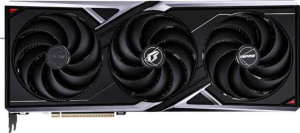
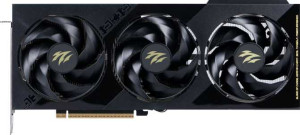
Both cards adopt GDDR7 memory, which is the common ground here — but the similarities fade quickly once you look at how each implementation is configured. The Vulcan OC pairs its memory with a 256-bit bus and achieves an effective speed of 30,000 MHz, yielding a maximum bandwidth of 960 GB/s. The Magic Blade steps down to a 192-bit bus at 28,000 MHz, delivering 672 GB/s. That 43% bandwidth gap is significant — memory bandwidth is the pipeline through which the GPU feeds its shaders, and starving a fast GPU of data is one of the quickest ways to leave performance on the table, particularly at 4K or with large texture assets.
The VRAM difference reinforces this divide. The Vulcan OC carries 16 GB of frame buffer versus the Magic Blade's 12 GB. In today's landscape, 12 GB remains workable for most gaming workloads, but it can become a bottleneck in VRAM-hungry scenarios such as high-resolution texture packs, AI workloads running large models locally, or multi-display setups. The extra 4 GB on the 5080 provides a more comfortable margin as content demands continue to grow.
Both cards support ECC memory, which is a shared capability relevant mainly to professional and compute users who need error-corrected memory for reliability-critical tasks — neither card holds an advantage there. Overall, the Vulcan OC has a clear memory advantage: wider bus, higher bandwidth, and more VRAM collectively make it the stronger choice for memory-intensive workloads, and they also explain a meaningful portion of its broader performance lead over the Magic Blade.