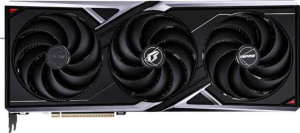
Colorful iGame GeForce RTX 5080 Vulcan OC
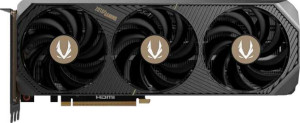
Zotac Gaming GeForce RTX 5080 Solid Core OC

Colorful iGame GeForce RTX 5080 Vulcan OC Zotac Gaming GeForce RTX 5080 Solid Core OC

Overview

When choosing between the Colorful iGame GeForce RTX 5080 Vulcan OC and the Zotac Gaming GeForce RTX 5080 Solid Core OC, buyers are looking at two distinct interpretations of the same powerful Blackwell architecture. While both cards share an identical memory configuration and full feature set, they differ in meaningful ways across boost clock speeds, thermal design power, physical size, and display connectivity. This head-to-head breakdown explores exactly where each card pulls ahead.

Common Features

  • Both cards have a base GPU clock speed of 2295 MHz.
  • Both cards have a GPU memory speed of 1875 MHz.
  • Both cards feature 10752 shading units.
  • Both cards have 336 texture mapping units (TMUs).
  • Both cards have 112 render output units (ROPs).
  • Double Precision Floating Point (DPFP) is supported on both cards.
  • Both cards have an effective memory speed of 30000 MHz.
  • Both cards offer a maximum memory bandwidth of 960 GB/s.
  • Both cards come with 16GB of VRAM.
  • Both cards use GDDR7 memory.
  • Both cards have a 256-bit memory bus width.
  • ECC memory is supported on both cards.
  • Both cards support DirectX 12 Ultimate.
  • Both cards support OpenGL version 4.6.
  • Both cards support OpenCL version 3.
  • Multi-display technology is supported on both cards.
  • Ray tracing is supported on both cards.
  • 3D support is available on both cards.
  • DLSS is supported on both cards.
  • XeSS (XMX) is not available on either card.
  • Both cards include an HDMI output with HDMI version 2.1b.
  • Both cards have 3 DisplayPort outputs.
  • Neither card has USB-C ports, DVI outputs, or mini DisplayPort outputs.
  • Both cards use the Blackwell GPU architecture.
  • Both cards use PCIe version 5.
  • Both cards are built on a 5 nm semiconductor process.
  • Both cards feature 45600 million transistors.
  • Air-water cooling is not available on either card.

Main Differences

  • GPU turbo clock speed is 2695 MHz on the Colorful iGame GeForce RTX 5080 Vulcan OC and 2640 MHz on the Zotac Gaming GeForce RTX 5080 Solid Core OC.
  • Pixel rate is 301.8 GPixel/s on the Colorful iGame GeForce RTX 5080 Vulcan OC and 295.7 GPixel/s on the Zotac Gaming GeForce RTX 5080 Solid Core OC.
  • Floating-point performance is 57.95 TFLOPS on the Colorful iGame GeForce RTX 5080 Vulcan OC and 56.77 TFLOPS on the Zotac Gaming GeForce RTX 5080 Solid Core OC.
  • Texture rate is 905.5 GTexels/s on the Colorful iGame GeForce RTX 5080 Vulcan OC and 887 GTexels/s on the Zotac Gaming GeForce RTX 5080 Solid Core OC.
  • The number of HDMI ports is 2 on the Colorful iGame GeForce RTX 5080 Vulcan OC and 1 on the Zotac Gaming GeForce RTX 5080 Solid Core OC.
  • Thermal Design Power (TDP) is 400W on the Colorful iGame GeForce RTX 5080 Vulcan OC and 360W on the Zotac Gaming GeForce RTX 5080 Solid Core OC.
  • Card width is 360 mm on the Colorful iGame GeForce RTX 5080 Vulcan OC and 303.5 mm on the Zotac Gaming GeForce RTX 5080 Solid Core OC.
  • Card height is 148.9 mm on the Colorful iGame GeForce RTX 5080 Vulcan OC and 115.8 mm on the Zotac Gaming GeForce RTX 5080 Solid Core OC.
Specs Comparison
Colorful iGame GeForce RTX 5080 Vulcan OC

Colorful iGame GeForce RTX 5080 Vulcan OC

Zotac Gaming GeForce RTX 5080 Solid Core OC

Zotac Gaming GeForce RTX 5080 Solid Core OC

Performance:
GPU clock speed 2295 MHz 2295 MHz
GPU turbo 2695 MHz 2640 MHz
pixel rate 301.8 GPixel/s 295.7 GPixel/s
floating-point performance 57.95 TFLOPS 56.77 TFLOPS
texture rate 905.5 GTexels/s 887 GTexels/s
GPU memory speed 1875 MHz 1875 MHz
shading units 10752 10752
texture mapping units (TMUs) 336 336
render output units (ROPs) 112 112
Has Double Precision Floating Point (DPFP)

At the foundation, both the Colorful iGame Vulcan OC and the Zotac Gaming Solid Core OC share identical silicon configurations: the same 10,752 shading units, 336 TMUs, 112 ROPs, and a base GPU clock of 2295 MHz. They also match on memory speed at 1875 MHz and both support Double Precision Floating Point — meaning on paper, they start from exactly the same place.

The only meaningful divergence emerges at boost clock. The Vulcan OC reaches a turbo of 2695 MHz versus the Solid Core OC's 2640 MHz — a 55 MHz advantage. While that gap sounds modest in isolation, it cascades directly into every derived performance metric: the Vulcan OC pulls ahead with 57.95 TFLOPS of floating-point throughput versus 56.77 TFLOPS, a 905.5 GTexels/s texture fill rate versus 887 GTexels/s, and a pixel rate of 301.8 GPixel/s against 295.7 GPixel/s. In practice, a higher sustained boost translates to marginally faster frame delivery in GPU-bound workloads and slightly more headroom in compute tasks.

The Colorful iGame Vulcan OC holds a clear, if incremental, performance edge in this group. The gains are roughly 2% across throughput metrics — noticeable in benchmarks and competitive scenarios where every frame counts, but unlikely to be felt dramatically in casual use. Buyers prioritizing peak clock headroom and sustained compute throughput should lean toward the Vulcan OC; those for whom the boost difference is less critical will find the Solid Core OC essentially on par in real-world gaming.
Memory:
effective memory speed 30000 MHz 30000 MHz
maximum memory bandwidth 960 GB/s 960 GB/s
VRAM 16GB 16GB
GDDR version GDDR7 GDDR7
memory bus width 256-bit 256-bit
Supports ECC memory

Memory is where any differentiation between the Vulcan OC and the Solid Core OC completely disappears. Both cards carry 16GB of GDDR7 across a 256-bit bus, running at an effective speed of 30,000 MHz and delivering a peak bandwidth of 960 GB/s. Every single memory specification is a perfect match.

That bandwidth figure deserves context: 960 GB/s is a substantial leap over previous-generation GDDR6X implementations, and GDDR7 as a standard brings improved power efficiency alongside the raw throughput gains. For users running 4K textures, large generative AI models, or memory-intensive compute workloads, this headroom matters — and both cards offer it equally. ECC memory support is also present on both, which is relevant for creators and professionals who need error-corrected computation, though it has no bearing on gaming performance.

This group is an unambiguous tie. There is no memory-based reason to choose one card over the other — the hardware underneath is identical in every measurable way. The decision between these two cards must rest entirely on other spec groups.

Features:
DirectX version DirectX 12 Ultimate DirectX 12 Ultimate
OpenGL version 4.6 4.6
OpenCL version 3 3
Supports multi-display technology
supports ray tracing
Supports 3D
supports DLSS
has XeSS (XMX)
AMD SAM / Intel Resizable BAR Intel Resizable BAR Intel Resizable BAR
has LHR
has RGB lighting
supported displays 4 4

Feature parity is total between the Vulcan OC and the Solid Core OC. Both run on DirectX 12 Ultimate — the current ceiling for modern gaming APIs — and support ray tracing and DLSS, which are the two most practically impactful technologies for real-time rendering quality and AI-assisted upscaling respectively. Neither card supports XeSS, which is expected given that is an Intel-native feature irrelevant to NVIDIA hardware.

Both cards also share Intel Resizable BAR support, which allows the CPU to access the full GPU framebuffer simultaneously rather than in smaller chunks — a feature that can yield tangible frame rate improvements in supported titles at no cost. Multi-display support up to 4 screens is identical across both, making either a capable choice for power users running complex desktop setups. RGB lighting is present on both as well, though aesthetic implementation differences would fall outside the scope of this data.

Much like the memory group, features deliver a complete tie. Every API, capability flag, and display output count is shared between these two cards. Prospective buyers gain nothing — and sacrifice nothing — on the features front regardless of which they choose.

Ports:
has an HDMI output
HDMI ports 2 1
HDMI version HDMI 2.1b HDMI 2.1b
DisplayPort outputs 3 3
USB-C ports 0 0
DVI outputs 0 0
mini DisplayPort outputs 0 0

After three groups of near-identical specs, the Ports category finally surfaces a tangible hardware difference. Both cards offer 3 DisplayPort outputs and use HDMI 2.1b — the latest HDMI standard, capable of driving 4K at high refresh rates or 8K output. Where they diverge is HDMI quantity: the Vulcan OC ships with 2 HDMI ports, while the Solid Core OC carries just 1.

For most single-monitor or even dual-monitor users, this distinction is academic — one HDMI port is all they will ever use. However, the extra HDMI port becomes genuinely useful in specific scenarios: connecting both a primary display and a TV or projector simultaneously without swapping cables, driving a mixed setup where two devices require HDMI rather than DisplayPort, or simplifying connections in living-room or home-theater PC configurations where HDMI is the dominant interface.

The Vulcan OC holds a clear edge here. The additional HDMI port adds real-world flexibility at no apparent cost elsewhere in the port layout, and for users whose display ecosystem leans on HDMI, it removes a potential inconvenience entirely.

General info:
GPU architecture Blackwell Blackwell
release date January 2025 January 2025
Thermal Design Power (TDP) 400W 360W
PCI Express (PCIe) version 5 5
semiconductor size 5 nm 5 nm
number of transistors 45600 million 45600 million
Has air-water cooling
width 360 mm 303.5 mm
height 148.9 mm 115.8 mm

Sharing the same Blackwell architecture, 5nm process node, and 45.6 billion transistors, both cards are built on identical silicon — but how each manufacturer has tuned and packaged that silicon tells two quite different stories. The most consequential divergence is TDP: the Vulcan OC draws 400W versus the Solid Core OC's 360W. That 40W gap is directly connected to the Vulcan OC's higher boost clocks seen in the Performance group — the extra headroom funds the additional frequency — but it also means stricter PSU requirements, more heat output, and higher sustained power draw under load.

Physical dimensions separate these cards just as meaningfully. The Vulcan OC measures 360 × 148.9 mm, while the Solid Core OC is notably more compact at 303.5 × 115.8 mm — a difference of nearly 57mm in length and 33mm in height. In practice, the Solid Core OC will fit comfortably in a wider range of mid-tower and smaller form-factor cases where the Vulcan OC may not clear the clearance limits. For builders working in constrained chassis, this is not a minor consideration.

This group has no single winner — it presents a genuine trade-off. The Vulcan OC suits builders with full-tower cases, high-wattage PSUs, and a priority on peak performance. The Solid Core OC is the more practical choice for tighter builds or those mindful of power consumption, accepting a small performance concession in exchange for significantly better physical and thermal manageability.

Comparison Summary & Verdict

Both cards deliver the same foundation: 16GB of GDDR7 memory, a 256-bit bus with 960 GB/s bandwidth, and full support for ray tracing and DLSS on the Blackwell architecture. However, the differences reveal two distinct profiles. The Colorful iGame GeForce RTX 5080 Vulcan OC edges ahead in raw performance with a higher boost clock of 2695 MHz, 57.95 TFLOPS of floating-point performance, and dual HDMI ports, making it the stronger pick for users who want every last frame and a richer multi-display setup. The Zotac Gaming GeForce RTX 5080 Solid Core OC, by contrast, draws only 360W TDP versus 400W and occupies a noticeably more compact footprint at 303.5 x 115.8 mm, making it better suited to smaller chassis builds or systems with tighter power budgets. Choose based on whether peak performance or build compatibility is your priority.

Colorful iGame GeForce RTX 5080 Vulcan OC
Buy Colorful iGame GeForce RTX 5080 Vulcan OC if...

Buy the Colorful iGame GeForce RTX 5080 Vulcan OC if you want the highest boost clock and floating-point performance, or if you need two HDMI outputs for a multi-display setup.

Zotac Gaming GeForce RTX 5080 Solid Core OC
Buy Zotac Gaming GeForce RTX 5080 Solid Core OC if...

Buy the Zotac Gaming GeForce RTX 5080 Solid Core OC if you have a compact or space-constrained case, or if your system has a tighter power budget given its lower 360W TDP.