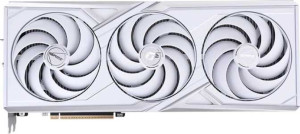
Colorful iGame GeForce RTX 5080 Vulcan W OC
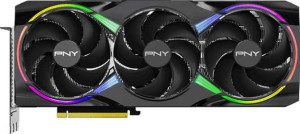
PNY GeForce RTX 5080 ARGB Epic-X OC Triple Fan

Colorful iGame GeForce RTX 5080 Vulcan W OC PNY GeForce RTX 5080 ARGB Epic-X OC Triple Fan

Overview

When two premium graphics cards share the same Blackwell architecture, 16GB of GDDR7 memory, and an identical feature set, the finer details become the deciding factor. This comparison between the Colorful iGame GeForce RTX 5080 Vulcan W OC and the PNY GeForce RTX 5080 ARGB Epic-X OC Triple Fan dives into where these two RTX 5080 cards diverge, from boost clock speeds and compute throughput to thermal envelopes, physical dimensions, and display output configurations.

Common Features

  • Both cards share a base GPU clock speed of 2295 MHz.
  • Both cards have a GPU memory speed of 1875 MHz.
  • Both cards feature 10752 shading units.
  • Both cards include 336 texture mapping units (TMUs).
  • Both cards have 112 render output units (ROPs).
  • Double Precision Floating Point (DPFP) is supported on both cards.
  • Both cards have an effective memory speed of 30000 MHz.
  • Both cards offer a maximum memory bandwidth of 960 GB/s.
  • Both cards come with 16GB of VRAM.
  • Both cards use GDDR7 memory.
  • Both cards have a 256-bit memory bus width.
  • ECC memory is supported on both cards.
  • Both cards support DirectX 12 Ultimate.
  • Both cards support OpenGL version 4.6.
  • Both cards support OpenCL version 3.
  • Multi-display technology is supported on both cards.
  • Ray tracing is supported on both cards.
  • 3D support is available on both cards.
  • DLSS is supported on both cards.
  • XeSS (XMX) is not available on either card.
  • Both cards include an HDMI output with HDMI version 2.1b.
  • Both cards feature 3 DisplayPort outputs.
  • Neither card has USB-C ports, DVI outputs, or mini DisplayPort outputs.
  • Both cards are built on the Blackwell GPU architecture.
  • Both cards use PCIe version 5.
  • Both cards are manufactured on a 5 nm semiconductor process.
  • Both cards feature 45600 million transistors.
  • Neither card has air-water cooling.

Main Differences

  • GPU turbo clock speed is 2685 MHz on Colorful iGame GeForce RTX 5080 Vulcan W OC and 2775 MHz on PNY GeForce RTX 5080 ARGB Epic-X OC Triple Fan.
  • Pixel rate is 300.7 GPixel/s on Colorful iGame GeForce RTX 5080 Vulcan W OC and 310.8 GPixel/s on PNY GeForce RTX 5080 ARGB Epic-X OC Triple Fan.
  • Floating-point performance is 57.74 TFLOPS on Colorful iGame GeForce RTX 5080 Vulcan W OC and 59.67 TFLOPS on PNY GeForce RTX 5080 ARGB Epic-X OC Triple Fan.
  • Texture rate is 902.2 GTexels/s on Colorful iGame GeForce RTX 5080 Vulcan W OC and 932.4 GTexels/s on PNY GeForce RTX 5080 ARGB Epic-X OC Triple Fan.
  • HDMI port count is 2 on Colorful iGame GeForce RTX 5080 Vulcan W OC and 1 on PNY GeForce RTX 5080 ARGB Epic-X OC Triple Fan.
  • Thermal Design Power (TDP) is 400W on Colorful iGame GeForce RTX 5080 Vulcan W OC and 360W on PNY GeForce RTX 5080 ARGB Epic-X OC Triple Fan.
  • Card width is 360 mm on Colorful iGame GeForce RTX 5080 Vulcan W OC and 328.7 mm on PNY GeForce RTX 5080 ARGB Epic-X OC Triple Fan.
  • Card height is 148.9 mm on Colorful iGame GeForce RTX 5080 Vulcan W OC and 137.7 mm on PNY GeForce RTX 5080 ARGB Epic-X OC Triple Fan.
Specs Comparison
Colorful iGame GeForce RTX 5080 Vulcan W OC

Colorful iGame GeForce RTX 5080 Vulcan W OC

PNY GeForce RTX 5080 ARGB Epic-X OC Triple Fan

PNY GeForce RTX 5080 ARGB Epic-X OC Triple Fan

Performance:
GPU clock speed 2295 MHz 2295 MHz
GPU turbo 2685 MHz 2775 MHz
pixel rate 300.7 GPixel/s 310.8 GPixel/s
floating-point performance 57.74 TFLOPS 59.67 TFLOPS
texture rate 902.2 GTexels/s 932.4 GTexels/s
GPU memory speed 1875 MHz 1875 MHz
shading units 10752 10752
texture mapping units (TMUs) 336 336
render output units (ROPs) 112 112
Has Double Precision Floating Point (DPFP)

Both cards share the same 2295 MHz base clock, identical shader counts (10,752 shading units), and matching memory speeds, which means their performance floors are effectively the same. Where they diverge is at the boost ceiling: the PNY RTX 5080 ARGB Epic-X OC reaches a 2775 MHz turbo clock, while the Colorful iGame Vulcan W OC peaks at 2685 MHz — a 90 MHz gap that flows directly into every derived throughput metric.

That boost clock difference translates into measurably higher output rates for the PNY: 59.67 TFLOPS of floating-point performance versus 57.74 TFLOPS, a 932.4 GTexels/s texture fill rate against 902.2 GTexels/s, and a 310.8 GPixel/s pixel rate compared to 300.7 GPixel/s. In practice, these differences — roughly 3–3.5% across the board — won't be perceptible in most gaming workloads, but they do matter in sustained compute-heavy scenarios like AI inference, 3D rendering, or heavily tessellated scenes where the GPU is pinned at its upper frequency limit for extended periods.

Both cards support double-precision floating-point (DPFP) and share the same ROPs and TMU configuration, so their architectural parity is real. The PNY nonetheless holds a clear, if modest, performance edge in this group purely by virtue of its higher factory boost clock — making it the better choice for users who prioritize peak throughput without manual overclocking.

Memory:
effective memory speed 30000 MHz 30000 MHz
maximum memory bandwidth 960 GB/s 960 GB/s
VRAM 16GB 16GB
GDDR version GDDR7 GDDR7
memory bus width 256-bit 256-bit
Supports ECC memory

The Colorful iGame GeForce RTX 5080 Vulcan W OC and PNY GeForce RTX 5080 ARGB Epic-X OC Triple Fan share identical specifications in the memory category. Both cards feature an effective memory speed of 30000 MHz and offer a maximum memory bandwidth of 960 GB/s. They are equipped with 16GB of VRAM, use GDDR7 memory, and have a 256-bit memory bus width.

Additionally, both products support Error-Correcting Code (ECC) memory, ensuring improved reliability and data integrity.

Since all the values are the same across both products, there is no difference in their memory performance or features.

Features:
DirectX version DirectX 12 Ultimate DirectX 12 Ultimate
OpenGL version 4.6 4.6
OpenCL version 3 3
Supports multi-display technology
supports ray tracing
Supports 3D
supports DLSS
has XeSS (XMX)
AMD SAM / Intel Resizable BAR Intel Resizable BAR Intel Resizable BAR
has LHR
has RGB lighting
supported displays 4 4

The Colorful iGame GeForce RTX 5080 Vulcan W OC and PNY GeForce RTX 5080 ARGB Epic-X OC Triple Fan are nearly identical in terms of features. Both support DirectX 12 Ultimate, OpenGL 4.6, and OpenCL 3, ensuring compatibility with the latest software standards. They also both support multi-display technology, ray tracing, 3D, and DLSS.

In terms of additional features, both cards do not support XeSS (XMX) and include Intel Resizable BAR for compatibility with newer Intel processors. Neither of the cards has LHR (Lite Hash Rate), and both come with RGB lighting for customization. Additionally, both support up to 4 displays.

Since all the listed features are the same across both products, there are no differences in terms of features between the Colorful and PNY cards.

Ports:
has an HDMI output
HDMI ports 2 1
HDMI version HDMI 2.1b HDMI 2.1b
DisplayPort outputs 3 3
USB-C ports 0 0
DVI outputs 0 0
mini DisplayPort outputs 0 0

The Colorful iGame GeForce RTX 5080 Vulcan W OC and PNY GeForce RTX 5080 ARGB Epic-X OC Triple Fan both feature HDMI 2.1b outputs. However, they differ in the number of HDMI ports: the Colorful card has 2 HDMI ports, while the PNY card has only 1 HDMI port.

Both cards are equipped with 3 DisplayPort outputs, and neither product includes USB-C ports, DVI outputs, or mini DisplayPort outputs.

Despite the difference in HDMI ports, the rest of the connectivity options are the same across both products.

General info:
GPU architecture Blackwell Blackwell
release date January 2025 January 2025
Thermal Design Power (TDP) 400W 360W
PCI Express (PCIe) version 5 5
semiconductor size 5 nm 5 nm
number of transistors 45600 million 45600 million
Has air-water cooling
width 360 mm 328.7 mm
height 148.9 mm 137.7 mm

Both the Colorful iGame GeForce RTX 5080 Vulcan W OC and the PNY GeForce RTX 5080 ARGB Epic-X OC Triple Fan are based on the Blackwell GPU architecture, with a semiconductor size of 5 nm and 45600 million transistors. They also both support PCI Express (PCIe) version 5, ensuring high-speed connectivity.

The Colorful card has a higher Thermal Design Power (TDP) of 400W compared to the PNY card’s 360W, indicating that the Colorful card may require more power for operation. In terms of physical size, the Colorful card is larger, with a width of 360 mm and a height of 148.9 mm, while the PNY card is more compact with a width of 328.7 mm and a height of 137.7 mm.

Both cards do not include air-water cooling solutions, focusing on traditional cooling methods instead.

Comparison Summary & Verdict

Both cards deliver the same core RTX 5080 experience, sharing identical memory, feature support, and architecture, so the right choice comes down to specific needs. The PNY GeForce RTX 5080 ARGB Epic-X OC Triple Fan holds a clear edge in raw performance, offering a higher boost clock of 2775 MHz, better pixel and texture rates, and stronger floating-point throughput, all while operating at a lower 360W TDP and occupying less space in your case. It suits builders who prioritize maximum compute efficiency and a more compact, power-conscious build. The Colorful iGame GeForce RTX 5080 Vulcan W OC, on the other hand, is the better fit for users who need dual HDMI outputs, giving it an advantage in setups that rely on multiple HDMI-connected displays simultaneously. If outright performance and a smaller footprint matter most, go with the PNY; if expanded HDMI connectivity is a priority, the Colorful is the stronger choice.

Colorful iGame GeForce RTX 5080 Vulcan W OC
Buy Colorful iGame GeForce RTX 5080 Vulcan W OC if...

Buy the Colorful iGame GeForce RTX 5080 Vulcan W OC if you need dual HDMI outputs to connect multiple HDMI displays at the same time.

PNY GeForce RTX 5080 ARGB Epic-X OC Triple Fan
Buy PNY GeForce RTX 5080 ARGB Epic-X OC Triple Fan if...

Buy the PNY GeForce RTX 5080 ARGB Epic-X OC Triple Fan if you want higher boost clocks and greater compute performance with a lower 360W TDP and a more compact form factor.