Coolpad X100
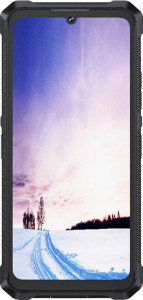
Cubot KingKong ES 3

Coolpad X100 Cubot KingKong ES 3

Overview

Welcome to our in-depth spec comparison between the Coolpad X100 and the Cubot KingKong ES 3. These two Android smartphones take notably different approaches to their target audience, with key battlegrounds spanning display quality and performance, battery capacity, build ruggedness, and camera capabilities. Whether you value a slim, powerful everyday device or a tough, long-lasting companion for demanding environments, this comparison will help you decide which phone truly fits your needs.

Common Features

  • Neither product can be folded.
  • Both products have an LCD IPS display type.
  • HDR10 support is not available on either product.
  • HDR10+ support is not available on either product.
  • Always-On Display is not available on either product.
  • Dolby Vision support is not available on either product.
  • Neither product has a secondary screen.
  • Both products have a touch screen.
  • Both products use a Mali G57 GPU.
  • Both products have integrated LTE.
  • Both products support 64-bit processing.
  • Both products have integrated graphics.
  • Both products support OpenGL ES version 3.2.
  • Both products use big.LITTLE technology.
  • Both products have 8 CPU threads.
  • Both products have TrustZone support.
  • Neither product has built-in optical image stabilization.
  • Neither product has a dual-tone LED flash.
  • Both products have one flash LED.
  • Both products support continuous autofocus when recording movies.
  • Both products have phase-detection autofocus for photos.
  • Both products have a built-in HDR mode.
  • Both products have a multi-lens main camera.
  • Neither product has a BSI sensor.
  • Both products include clipboard warnings.
  • Both products have location privacy options.
  • Both products have camera and microphone privacy options.
  • Mail Privacy Protection is not available on either product.
  • Both products support theme customization.
  • Both products can block app tracking.
  • Cross-site tracking blocking is not available on either product.
  • Both products have on-device machine learning.
  • Neither product supports wireless charging.
  • Both products support fast charging at 33W.
  • Neither product has a removable battery.
  • Both products have a battery level indicator.
  • Both products have a rechargeable battery.
  • Neither product has a 3.5 mm audio jack.
  • aptX support is not available on either product.
  • LDAC support is not available on either product.
  • aptX HD support is not available on either product.
  • aptX Adaptive support is not available on either product.
  • aptX Lossless support is not available on either product.
  • Neither product supports 5G.
  • Both products support Wi-Fi 4 (802.11n) and Wi-Fi 5 (802.11ac).
  • Both products support dual SIM cards.
  • Both products have an external memory slot.
  • Both products have a USB Type-C port.
  • Both products have NFC.
  • Both products have an upload speed of 150 MBits/s.
  • Both products have a fingerprint scanner.
  • Both products have a video light.
  • Neither product has a sapphire glass display.
  • Neither product has a curved display.
  • Neither product has an e-paper display.

Main Differences

  • Water resistance is absent on Coolpad X100 but Cubot KingKong ES 3 is waterproof.
  • Weight is 213 g on Coolpad X100 and 352 g on Cubot KingKong ES 3.
  • Thickness is 8.6 mm on Coolpad X100 and 15.3 mm on Cubot KingKong ES 3.
  • Width is 76.3 mm on Coolpad X100 and 83.7 mm on Cubot KingKong ES 3.
  • Height is 169 mm on Coolpad X100 and 177.4 mm on Cubot KingKong ES 3.
  • Volume is 110.89 cm³ on Coolpad X100 and 227.18 cm³ on Cubot KingKong ES 3.
  • A rugged build is present on Cubot KingKong ES 3 but not on Coolpad X100.
  • Screen size is 6.78″ on Coolpad X100 and 6.75″ on Cubot KingKong ES 3.
  • Pixel density is 396 ppi on Coolpad X100 and 260 ppi on Cubot KingKong ES 3.
  • Resolution is 1080 x 2460 px on Coolpad X100 and 720 x 1600 px on Cubot KingKong ES 3.
  • Refresh rate is 120Hz on Coolpad X100 and 90Hz on Cubot KingKong ES 3.
  • Branded damage-resistant glass is present on Cubot KingKong ES 3 but not on Coolpad X100.
  • Internal storage is 512GB on Coolpad X100 and 256GB on Cubot KingKong ES 3.
  • RAM is 12GB on Coolpad X100 and 6GB on Cubot KingKong ES 3.
  • The chipset is Mediatek Helio G99 on Coolpad X100 and Unisoc T615 on Cubot KingKong ES 3.
  • CPU speed is 2 x 2.2 & 6 x 2 GHz on Coolpad X100 and 2 x 1.8 & 6 x 1.6 GHz on Cubot KingKong ES 3.
  • Geekbench 6 multi-core score is 1979 on Coolpad X100 and 1461 on Cubot KingKong ES 3.
  • Geekbench 6 single-core score is 729 on Coolpad X100 and 437 on Cubot KingKong ES 3.
  • GPU clock speed is 950 MHz on Coolpad X100 and 850 MHz on Cubot KingKong ES 3.
  • RAM speed is 4266 MHz on Coolpad X100 and 1866 MHz on Cubot KingKong ES 3.
  • Semiconductor size is 6 nm on Coolpad X100 and 12 nm on Cubot KingKong ES 3.
  • eMMC version is 5.2 on Coolpad X100 and 5.1 on Cubot KingKong ES 3.
  • Thermal Design Power (TDP) is 5W on Coolpad X100 and 10W on Cubot KingKong ES 3.
  • Shading units number 32 on Coolpad X100 and 64 on Cubot KingKong ES 3.
  • Main camera resolution is 108 & 5 & 2 MP on Coolpad X100 and 48 & 2 MP on Cubot KingKong ES 3.
  • Front camera resolution is 32MP on Coolpad X100 and 16MP on Cubot KingKong ES 3.
  • A CMOS sensor is present on Cubot KingKong ES 3 but not on Coolpad X100.
  • Slow-motion video recording is supported on Coolpad X100 but not on Cubot KingKong ES 3.
  • A timelapse function is available on Coolpad X100 but not on Cubot KingKong ES 3.
  • Android version is Android 14 on Coolpad X100 and Android 15 on Cubot KingKong ES 3.
  • App offloading is supported on Cubot KingKong ES 3 but not on Coolpad X100.
  • Battery capacity is 5000 mAh on Coolpad X100 and 10200 mAh on Cubot KingKong ES 3.
  • Stereo speakers are present on Coolpad X100 but not on Cubot KingKong ES 3.
  • Bluetooth version is 5.2 on Coolpad X100 and 5.0 on Cubot KingKong ES 3.
  • Download speed is 650 MBits/s on Coolpad X100 and 300 MBits/s on Cubot KingKong ES 3.
  • A gyroscope is present on Coolpad X100 but not on Cubot KingKong ES 3.
Specs Comparison
Coolpad X100

Coolpad X100

Cubot KingKong ES 3

Cubot KingKong ES 3

Design:
water resistance None Waterproof
weight 213 g 352 g
thickness 8.6 mm 15.3 mm
width 76.3 mm 83.7 mm
height 169 mm 177.4 mm
volume 110.89442 cm³ 227.180214 cm³
has a rugged build
can be folded

These two phones represent fundamentally different design philosophies. The Coolpad X100 is built for everyday carry: at just 213 g and 8.6 mm thick, it sits comfortably in a pocket and won't fatigue the hand during long sessions. The Cubot KingKong ES 3, by contrast, is a rugged device in every sense — weighing a substantial 352 g and measuring 15.3 mm thick, it is nearly double the volume of the X100 (227 cm³ vs 111 cm³). That extra bulk is the direct cost of its reinforced, ruggedized chassis.

The most significant functional divide is durability. The KingKong ES 3 carries a waterproof rating and a confirmed rugged build, meaning it is engineered to survive drops, dust, and water exposure — making it a serious tool for outdoor workers, construction sites, or adventure use. The X100 offers no water resistance and no rugged construction whatsoever, leaving it vulnerable in harsh environments.

The edge here depends entirely on use case. For daily urban use where portability and comfort matter, the Coolpad X100 wins decisively — it is dramatically lighter and thinner. But for anyone who needs a phone that can take punishment or handle wet and dirty conditions, the Cubot KingKong ES 3 has a clear and unambiguous advantage, with the added weight and size being an accepted trade-off for that protection.

Display:
Display type LCD, IPS LCD, IPS
screen size 6.78" 6.75"
pixel density 396 ppi 260 ppi
resolution 1080 x 2460 px 720 x 1600 px
refresh rate 120Hz 90Hz
has branded damage-resistant glass
supports HDR10
supports HDR10+
Always-On Display
supports Dolby Vision
Has a secondary screen
has a touch screen

Both phones use an LCD IPS panel of nearly identical physical size, so the display type itself is a wash. Where they diverge sharply is in resolution and pixel density. The Coolpad X100 renders at 1080 x 2460 px — a full HD+ image at 396 ppi — while the KingKong ES 3 tops out at 720 x 1600 px and just 260 ppi. That 136 ppi gap is perceptible to the naked eye: text edges will look noticeably crisper and images more detailed on the X100, especially when reading small print or viewing photos up close.

Refresh rate tells a similar story. The X100's 120Hz panel delivers visibly smoother scrolling and animations compared to the KingKong ES 3's 90Hz screen — a meaningful difference for anyone who has used a high-refresh display and finds it hard to go back. On the durability side, the KingKong ES 3 counters with branded damage-resistant glass, which the X100 lacks entirely. For a rugged device that may be dropped or used outdoors, that protection for the screen surface is a practical asset.

Overall, the Coolpad X100 holds a clear advantage in pure display quality — sharper resolution and a faster refresh rate make for a noticeably better visual experience in everyday use. The KingKong ES 3's screen glass protection is a meaningful trade-off for its target audience, but it cannot compensate for the significant gap in image fidelity.

Performance:
internal storage 512GB 256GB
RAM 12GB 6GB
Chipset (SoC) name Mediatek Helio G99 Unisoc T615
GPU name Mali G57 Mali G57
CPU speed 2 x 2.2 & 6 x 2 GHz 2 x 1.8 & 6 x 1.6 GHz
Geekbench 6 result (multi) 1979 1461
Geekbench 6 result (single) 729 437
GPU clock speed 950 MHz 850 MHz
Has integrated LTE
RAM speed 4266 MHz 1866 MHz
semiconductor size 6 nm 12 nm
Supports 64-bit
Has integrated graphics
OpenGL ES version 3.2 3.2
Uses big.LITTLE technology
CPU threads 8 threads 8 threads
Has TrustZone
OpenCL version 2 2
eMMC version 5.2 5.1
maximum memory amount 12GB 12GB
Thermal Design Power (TDP) 5W 10W
DDR memory version 4 4
shading units 32 64

The Coolpad X100 holds a commanding performance lead, rooted in its Mediatek Helio G99 chip built on a 6 nm process versus the KingKong ES 3's Unisoc T615 on a comparatively aged 12 nm node. That process gap matters in two ways: the X100 runs faster CPU cores (peaking at 2.2 GHz vs 1.8 GHz) and does so more efficiently, reflected in its dramatically lower 5W TDP against the KingKong ES 3's 10W. In practice, this means the X100 should sustain performance under load without generating as much heat — a real advantage for gaming sessions or prolonged multitasking.

Benchmark scores confirm the gap is not marginal. The X100 scores 1979 in Geekbench 6 multi-core and 729 single-core, versus 1461 and 437 respectively for the KingKong ES 3 — roughly a 35–67% advantage depending on the workload. Backing that up, the X100 also ships with 12 GB of RAM running at a much faster 4266 MHz, compared to the KingKong ES 3's 6 GB at just 1866 MHz. More RAM at higher bandwidth means smoother app switching and less stuttering when juggling multiple applications simultaneously. Storage doubles as well, at 512 GB vs 256 GB.

The Coolpad X100 wins this category decisively across every meaningful performance dimension — raw CPU throughput, memory capacity and speed, storage, and power efficiency all favor it. The KingKong ES 3's performance tier is adequate for basic tasks, but users who care about responsive, sustained performance have a clear choice here.

Cameras:
megapixels (main camera) 108 & 5 & 2 MP 48 & 2 MP
Has a dual-lens (or multi-lens) main camera
megapixels (front camera) 32MP 16MP
has built-in optical image stabilization
Has a dual-tone LED flash
number of flash LEDs 1 1
has a BSI sensor
has a CMOS sensor
has continuous autofocus when recording movies
Has phase-detection autofocus for photos
supports slow-motion video recording
has a built-in HDR mode
has manual exposure
has a flash
optical zoom 0x 0x
has manual ISO
has a serial shot mode
has manual focus
has a front camera
Has laser autofocus
Shoots 360° panorama
has manual white balance
shoots raw
has touch autofocus
has manual shutter speed
can create panoramas in-camera
Has timelapse function
Has a front-facing LED flash
has a dual-lens (or multi-lens) front camera
supports HDR10 recording
supports Dolby Vision recording
has a front-facing camera under the display
Has a RGB LED flash
has 3D photo/video recording capabilities

On paper, the Coolpad X100 arrives with a significantly more ambitious rear camera setup: a 108 MP primary sensor joined by 5 MP and 2 MP lenses, versus the KingKong ES 3's 48 MP main camera paired with a single 2 MP auxiliary lens. That 108 MP sensor captures far more raw detail, which translates to sharper crops and more flexibility when framing shots after the fact. The X100 also pulls ahead on the front camera, offering 32 MP for selfies compared to 16 MP on the KingKong ES 3 — a meaningful gap for video calls or self-portraits where fine detail is appreciated.

Feature parity is high between the two: both support phase-detection autofocus, HDR mode, continuous autofocus during video, and a comparable suite of manual controls. However, two notable divergences tip the balance further. The X100 supports slow-motion video recording and has a timelapse function, neither of which the KingKong ES 3 offers — limiting the latter's creative video versatility. The KingKong ES 3 does confirm a CMOS sensor, which the X100's spec sheet leaves unspecified, though this alone is insufficient to offset the other deficits.

The Coolpad X100 takes a clear edge in this category. Its higher-resolution sensors on both front and rear, combined with the exclusive slow-motion and timelapse capabilities, give it a meaningfully broader camera toolkit. The KingKong ES 3 covers the basics competently, but for users who prioritize camera versatility and resolution, the X100 is the stronger choice based strictly on the available data.

Operating system:
Android version Android 14 Android 15
has clipboard warnings
has location privacy options
has camera/microphone privacy options
has Mail Privacy Protection
has theme customization
can block app tracking
blocks cross-site tracking
has on-device machine learning
has notification permissions
has media picker
Can play games while they download
has dark mode
has Wi-Fi password sharing
has battery health check
has an extra dim mode
has focus modes
has dynamic theming
can offload apps
Has customizable notifications
has Live Text
has full-page screenshots
supports split screen
gets direct OS updates
has PiP
Can be used as a PC
Has sharing intents
has a child lock
Supports widgets
Is free and open source
Has offline voice recognition
has voice commands
Tracks the current position of a mobile device
is a multi-user system
has Quick Start

Across the vast majority of software features, these two phones are functionally identical — both ship with the same privacy controls, productivity tools, and Android customization options. The practical differentiator comes down to two things: Android version and one feature flag. The KingKong ES 3 launches on Android 15 while the Coolpad X100 ships with Android 14, meaning the KingKong ES 3 starts its lifecycle one generation ahead in terms of OS-level security patches, system behaviors, and any platform improvements introduced in that release.

The only concrete feature difference in this dataset is that the KingKong ES 3 supports app offloading, which the X100 does not. This function allows the system to remove an app's installation files while preserving its data — freeing up storage without losing progress or settings. Given the KingKong ES 3's lower 256 GB base storage (compared to the X100's 512 GB), this capability carries real practical value, helping users manage space without committing to a full uninstall.

The Cubot KingKong ES 3 earns a narrow edge here. A newer Android version means a longer window before the OS feels dated, and app offloading is a genuinely useful storage management tool. The gap is not dramatic — the X100's software experience is substantively equivalent in almost every area — but on the data provided, the KingKong ES 3 holds the modest advantage in this category.

Battery:
battery power 5000 mAh 10200 mAh
has wireless charging
Supports fast charging
charging speed 33W 33W
has a removable battery
has a battery level indicator
has a rechargeable battery

Battery capacity is where the KingKong ES 3 makes its most emphatic statement. Its 10200 mAh cell is more than double the Coolpad X100's 5000 mAh — and that is not a marginal difference. A 5000 mAh battery is already considered generous by modern smartphone standards, capable of comfortably lasting a full day of mixed use. At 10200 mAh, the KingKong ES 3 is firmly in power-bank territory, realistically targeting two or more days between charges even under heavier loads. For field workers, outdoor enthusiasts, or anyone far from a power outlet, that reserve is a genuine lifeline.

Where the two phones converge entirely is on charging: both support 33W fast charging and neither offers wireless charging. Identical charging speeds mean that despite the KingKong ES 3's vastly larger battery, it will take proportionally longer to fill — a reasonable trade-off given the capacity on offer, but worth noting for users who rely on quick top-ups rather than sustained endurance.

The Cubot KingKong ES 3 wins this category decisively and without caveat. More than doubling the battery capacity of an already-adequate 5000 mAh phone is a defining advantage, and it aligns directly with the rugged, field-use positioning of the device. The Coolpad X100's battery is perfectly capable for typical daily use, but for anyone prioritizing maximum time away from a charger, the KingKong ES 3 is in a different league here.

Audio:
has a socket for a 3.5 mm audio jack
has stereo speakers
has aptX
has LDAC
has aptX HD
has aptX Adaptive
has aptX Lossless

Audio is a category where both phones share the same limitations but diverge on one meaningful point. Neither offers a 3.5 mm headphone jack, so wired audio is off the table without an adapter. Neither supports any high-fidelity Bluetooth codec — no aptX, LDAC, or any of their variants — meaning wireless audio quality is capped at standard Bluetooth performance regardless of which device you choose.

The single differentiator is speaker configuration. The Coolpad X100 features stereo speakers, while the KingKong ES 3 has only a mono setup. In practice, stereo speakers create a noticeably wider soundstage for media consumption — watching videos, playing games, or listening to music through the device's own speakers all benefit from the spatial separation that a dual-speaker arrangement provides. A mono speaker, by contrast, collapses everything to a single point of sound.

The Coolpad X100 takes the edge here on the strength of that one distinction. Stereo speakers are a tangible, everyday improvement for speaker-based listening, and it is the only audio advantage either phone holds over the other in the provided data. Neither device stands out for audiophiles, but for casual media use without headphones, the X100 delivers a more immersive experience.

Connectivity & Features:
release date February 2025 August 2025
has 5G support
Wi-Fi version Wi-Fi 4 (802.11n), Wi-Fi 5 (802.11ac) Wi-Fi 4 (802.11n), Wi-Fi 5 (802.11ac)
SIM cards 2 SIM 2 SIM
Bluetooth version 5.2 5
has an external memory slot
Has USB Type-C
has NFC
download speed 650 MBits/s 300 MBits/s
upload speed 150 MBits/s 150 MBits/s
Has a fingerprint scanner
has emergency SOS via satellite
has crash detection
is DLNA-certified
has a gyroscope
supports ANT+
Has a heart rate monitor
has GPS
has a compass
supports Wi-Fi
Has an infrared sensor
has an accelerometer
has a cellular module
Has a barometer
has an HDMI output
Uses 3D facial recognition
Has an iris scanner
Stylus included
supports Galileo
Has motion tracking
Has optical tracking
Has a built-in projector

Connectivity foundations are nearly identical: both phones run on the same Wi-Fi 4/5 dual-band support, share a dual-SIM configuration, include USB Type-C, NFC, and expandable storage. Neither supports 5G, so both are capped at LTE speeds — though even within that constraint, a gap emerges. The Coolpad X100 achieves a peak download speed of 650 Mbits/s versus 300 Mbits/s on the KingKong ES 3, meaning the X100 can pull data from a strong LTE network significantly faster, which matters for large file downloads, streaming, or cloud sync in the field.

Bluetooth tells a similar story. The X100 carries Bluetooth 5.2 against the KingKong ES 3's 5.0 — a generational step that brings incremental improvements in connection stability and efficiency. More notably, the X100 includes a gyroscope while the KingKong ES 3 does not. A gyroscope enables accurate screen rotation based on orientation, supports augmented reality applications, and improves motion-based gaming. Its absence on a rugged outdoor device is a minor but real omission, particularly for navigation apps that rely on sensor fusion.

The Coolpad X100 holds the edge in this category. Its faster LTE throughput, newer Bluetooth version, and gyroscope together represent a more complete connectivity and sensor package. The KingKong ES 3 matches it on the core essentials — NFC, GPS, dual-SIM — but falls short on the details that distinguish a well-rounded device from a functional one.

Miscellaneous:
has a video light
Has sapphire glass display
Has a curved display
Has an e-paper display

The miscellaneous specs for these two phones are a complete match across every data point provided. Both include a video light, and neither features sapphire glass, a curved display, or an e-paper screen. There is simply nothing in this dataset that separates them.

This category is a tie by the available data. Neither product holds any advantage here, and no further differentiation can be drawn without going beyond the provided specifications.

Comparison Summary & Verdict

After reviewing every specification, it is clear that each phone serves a distinct type of user. The Coolpad X100 stands out with its sharper 1080p 120Hz display, superior Mediatek Helio G99 chipset, higher RAM and storage, stereo speakers, and a significantly lighter and slimmer form factor — making it the better choice for everyday performance and media consumption. The Cubot KingKong ES 3, on the other hand, dominates with its 10200 mAh battery, waterproof rugged build, and damage-resistant glass, at the cost of a heavier body and lower display resolution. It also ships with Android 15 and supports app offloading. Ultimately, the Coolpad X100 suits mainstream users who want speed and display quality, while the Cubot KingKong ES 3 is purpose-built for users who need maximum battery endurance and durability in tough conditions.

Coolpad X100
Buy Coolpad X100 if...

Buy the Coolpad X100 if you want a slim, lightweight phone with a sharp 1080p 120Hz display, stronger performance, more RAM and storage, and stereo speakers for everyday use.

Cubot KingKong ES 3
Buy Cubot KingKong ES 3 if...

Buy the Cubot KingKong ES 3 if you need a rugged, waterproof device with a massive 10200 mAh battery that can handle tough environments and extended time away from a charger.