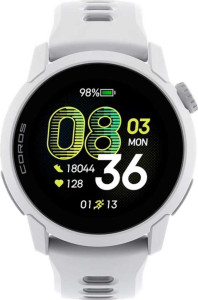
Coros Pace 4
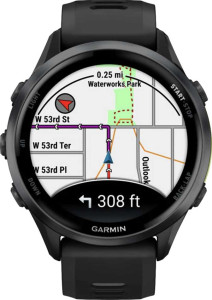
Garmin Forerunner 970

Coros Pace 4 Garmin Forerunner 970

Overview

When comparing the Coros Pace 4 and the Garmin Forerunner 970, two serious contenders in the premium GPS running watch segment emerge with notably different philosophies. Both share a strong sensor suite, OLED displays, and comprehensive activity tracking, yet they diverge sharply on areas like battery endurance, physical footprint, smart features, and onboard storage. Whether you value travelling light or packing in functionality, this comparison will help you decide which watch earns a place on your wrist.

Common Features

  • Both watches feature an OLED/AMOLED display type.
  • Both are waterproof with a 5 ATM rating.
  • Watch bands are replaceable on both products.
  • Both watches have a touchscreen.
  • Always-On Display is available on both products.
  • Both operate down to a lowest temperature of -20 °C.
  • Both watches include GPS.
  • Both have a heart rate monitor.
  • Blood oxygenation level monitoring is available on both products.
  • A barometer is present on both watches.
  • Both include an accelerometer and a compass.
  • A temperature sensor is built into both products.
  • Neither watch has a cadence sensor.
  • Both offer route tracking, distance tracking, pace measurement, and trackback mode.
  • Sleep tracking is available on both products.
  • Multi-sport mode and automatic activity detection are supported on both watches.
  • Elevation tracking is available on both products.
  • Both are compatible with iOS and Android.
  • Wi-Fi is supported on both watches, but neither has a cellular module.
  • Neither watch supports wireless charging, solar power battery, or has a removable battery, though both have a rechargeable battery.
  • HRV tracking, VO2 max measurement, resting heart rate measurement, and readiness level are available on both products.
  • Both watches feature vibrating alerts, a stopwatch, phone locating, and a silent alarm.
  • Activity reports, calorie tracking, goal setting, achievements, exercise diary, weight tracking, water intake tracking, and coaching are provided by both products.
  • A battery level indicator is present on both watches.
  • Neither watch has an external memory slot or a 3.5 mm audio jack socket.

Main Differences

  • Screen size is 1.2″ on Coros Pace 4 and 1.4″ on Garmin Forerunner 970.
  • Branded damage-resistant glass is present on Coros Pace 4 but not available on Garmin Forerunner 970.
  • Resolution is 390 x 390 px on Coros Pace 4 and 454 x 454 px on Garmin Forerunner 970.
  • Weight is 40 g on Coros Pace 4 and 56 g on Garmin Forerunner 970.
  • Thickness is 11.8 mm on Coros Pace 4 and 12.9 mm on Garmin Forerunner 970.
  • Height is 43.4 mm on Coros Pace 4 and 47 mm on Garmin Forerunner 970.
  • Width is 43.4 mm on Coros Pace 4 and 47 mm on Garmin Forerunner 970.
  • Volume is 22.226008 cm³ on Coros Pace 4 and 28.4961 cm³ on Garmin Forerunner 970.
  • Maximum operating temperature is 50 °C on Coros Pace 4 and 60 °C on Garmin Forerunner 970.
  • Golf mode is designed into Garmin Forerunner 970 but is not available on Coros Pace 4.
  • ANT+ support is present on Garmin Forerunner 970 but not available on Coros Pace 4.
  • NFC is present on Garmin Forerunner 970 but not available on Coros Pace 4.
  • Battery life is 19 days on Coros Pace 4 and 15 days on Garmin Forerunner 970.
  • Battery life with GPS on is 41 hours on Coros Pace 4 and 26 hours on Garmin Forerunner 970.
  • Fast/slow heart rate notifications are available on Garmin Forerunner 970 but not on Coros Pace 4.
  • Map uploading is supported on Garmin Forerunner 970 but not on Coros Pace 4.
  • Internal storage is 4 GB on Coros Pace 4 and 32 GB on Garmin Forerunner 970.
  • The ability to answer calls is available on Garmin Forerunner 970 but not on Coros Pace 4.
  • Voice commands are supported on Garmin Forerunner 970 but not on Coros Pace 4.
  • Inactivity alerts are available on Garmin Forerunner 970 but not on Coros Pace 4.
  • Windows compatibility is present on Garmin Forerunner 970 but not on Coros Pace 4.
  • Mac OS X compatibility is present on Garmin Forerunner 970 but not on Coros Pace 4.
Specs Comparison
Coros Pace 4

Coros Pace 4

Garmin Forerunner 970

Garmin Forerunner 970

Design:
screen size 1.2" 1.4"
Display type OLED/AMOLED OLED/AMOLED
water resistance Waterproof Waterproof
has branded damage-resistant glass
ATM rating 5 ATM 5 ATM
resolution 390 x 390 px 454 x 454 px
Watch band is replaceable
has a touch screen
weight 40 g 56 g
thickness 11.8 mm 12.9 mm
Always-On Display
height 43.4 mm 47 mm
pixel density 459 ppi 458.6 ppi
maximum operating temperature 50 °C 60 °C
lowest potential operating temperature -20 °C -20 °C
Has a display
width 43.4 mm 47 mm
width of band 22 mm 22 mm
volume 22.226008 cm³ 28.4961 cm³

The Coros Pace 4 and Garmin Forerunner 970 both feature an OLED/AMOLED display, but differ in screen size, resolution, and pixel density. The Pace 4 has a 1.2″ screen with a resolution of 390 x 390 px, offering a pixel density of 459 ppi. In contrast, the Forerunner 970 sports a larger 1.4″ screen with a higher resolution of 454 x 454 px, resulting in a slightly lower pixel density of 458.6 ppi. Despite these differences, both displays have an Always-On feature and are touch-sensitive.

Both watches are waterproof with a 5 ATM water resistance rating, ensuring they can withstand submersion. The Coros Pace 4 has branded damage-resistant glass, while the Garmin Forerunner 970 does not specify any branded protection for its glass.

In terms of physical design, the Coros Pace 4 is lighter and thinner, weighing just 40 g with a thickness of 11.8 mm, while the Garmin Forerunner 970 is heavier at 56 g and slightly thicker at 12.9 mm. The height and width of the two devices also vary: the Pace 4 has a height and width of 43.4 mm, while the Forerunner 970 is slightly larger at 47 mm in both dimensions. Despite these differences, both watches feature replaceable bands and are built to handle a maximum operating temperature of 50 °C (Pace 4) and 60 °C (Forerunner 970), with both capable of operating in temperatures as low as -20 °C.

Sensors:
has GPS
Has a heart rate monitor
Monitors blood oxygenation levels
Has a barometer
has an accelerometer
has a compass
Has a temperature sensor
Has a cadence sensor
has a gyroscope
Has a wind speed sensor
Monitors perspiration

The Coros Pace 4 and Garmin Forerunner 970 both come equipped with a comprehensive suite of sensors. Both devices feature GPS, heart rate monitors, blood oxygen level monitoring, barometers, accelerometers, compasses, and gyroscopes. Additionally, both watches have temperature sensors, though the Pace 4 and Forerunner 970 share this feature in common.

Neither the Pace 4 nor the Forerunner 970 includes a cadence sensor or a wind speed sensor, and both lack perspiration monitoring. The key difference is that the Forerunner 970 offers the temperature sensor, which the Pace 4 also includes, ensuring that both watches have similar sensor capabilities in this regard.

Overall, the sensors across both models are very similar, with the main difference being the identical set of sensors, all present in both watches. There are no unique sensors for either model in this category.

Activity tracking:
Has a route tracker
Tracks distance
Measures pace
Has trackback mode
Tracks your sleep
Has multi-sport mode
Detects activities automatically
Tracks elevation
Tracks steps taken
Provides sleep reports
Has exercise tagging
Has a stroke counter for swimming
Tracks calorie intake
Designed for diving
Designed for golf

For the vast majority of activity tracking capabilities, the Coros Pace 4 and Garmin Forerunner 970 are essentially identical. Both cover the full spectrum of everyday and athletic tracking — distance, pace, elevation, steps, sleep with dedicated reports, automatic activity detection, multi-sport mode, trackback navigation, calorie intake logging, and even a stroke counter for swimmers. In practice, this means neither watch leaves users wanting for core functionality, whether they are runners, triathletes, hikers, or general fitness enthusiasts.

The only differentiator in this group is that the Forerunner 970 is designed for golf, while the Pace 4 is not. This is not a minor footnote — golf mode typically brings dedicated features like course maps, shot tracking, green distance measurements, and scorecard logging. For a golfer, this transforms the watch from a fitness tracker into an on-course caddie. For non-golfers, it is completely irrelevant and adds no practical value.

The Garmin Forerunner 970 holds a narrow but clear edge in this category, strictly because of its golf support. If your activities ever include a round on the course, the Forerunner 970 is the only real choice here. For everyone else, the two watches are functionally tied across all tracked activity metrics, and the Pace 4 concedes nothing meaningful.

Connectivity:
Is compatible with iOS
Is compatible with Android
supports Wi-Fi
has a cellular module
supports ANT+
has NFC

Both watches share the same connectivity foundation — dual compatibility with iOS and Android, plus Wi-Fi support for syncing workouts and maps without needing to be tethered to a phone. Neither includes a cellular module, so real-time independent connectivity is off the table for both. That baseline is solid, but it's where the similarities end.

The Garmin Forerunner 970 adds two features the Pace 4 lacks entirely: ANT+ and NFC. ANT+ is a big deal for serious athletes — it enables wireless pairing with a wide ecosystem of third-party sensors like heart rate chest straps, power meters, cycling cadence sensors, and more, all with near-zero latency and proven reliability during workouts. NFC, meanwhile, enables contactless payments directly from the wrist, which is genuinely useful for runners who want to leave their wallet at home. Together, these two additions meaningfully expand the Forerunner 970's real-world utility both during and around exercise.

The Forerunner 970 wins this category without much contest. The Pace 4 covers the essentials, but the absence of ANT+ is a real limitation for anyone who relies on external sensors, and skipping NFC removes a convenience that competing watches at this price tier typically include. Users who are deeply embedded in a sensor-based training setup will feel the gap most acutely.

Battery:
battery life 19 days 15 days
battery life with GPS on 41 hours 26 hours
has wireless charging
Has a solar power battery
has a rechargeable battery
has a removable battery

Battery life is where the Coros Pace 4 pulls ahead decisively. In everyday use, it lasts 19 days versus the Forerunner 970's 15 days — a meaningful gap that translates to roughly one fewer charge per month. More striking is the GPS endurance difference: the Pace 4 delivers 41 hours of continuous GPS tracking compared to 26 hours on the Forerunner 970. That 15-hour advantage is not trivial — it's the difference between comfortably covering an ultramarathon or a multi-day expedition on a single charge versus needing to plan around a mid-event top-up.

On charging method, both watches are on equal footing — rechargeable, non-removable batteries with no wireless charging and no solar assistance. Neither offers the convenience of Qi charging or the endurance boost that solar panels provide on higher-end models, so users on both sides are working with the same cable-dependent routine.

The Coros Pace 4 has a clear and significant edge in this category. For endurance athletes, adventurers, or anyone who dislikes frequent charging, the Pace 4's superior GPS stamina in particular makes it the stronger choice here. The Forerunner 970's 26-hour GPS life is still respectable for most race formats, but against the Pace 4's numbers, it simply doesn't compete.

Features:
release date November 2025 June 2025
has HRV tracking
measures VO2 max
measures resting heart rate
has fast/slow heart rate notifications
shows readiness level
Can upload maps
Has vibrating alerts
Has a stopwatch
Locates your phone
Has silent alarm
has irregular heart rate warnings
Has notifications
Acquires GPS faster
Has call control
Provides the sunrise/sunset time
internal storage 4GB 32GB
Can be used to answer calls
supports Galileo
Has smart alarm
Informs about the risk of thunderstorms
number of microphones 1 1
has voice commands
Has a built-in camera remote control function

Across the core feature set, these two watches are closely matched — both offer HRV tracking, VO2 max measurement, readiness scores, vibrating alerts, silent alarms, phone locating, Galileo support, and thunderstorm risk notifications. That shared foundation is strong. The divergence, however, shows up in several areas that collectively paint a clear picture of which watch is more fully equipped.

Storage is the starkest gap: the Forerunner 970 packs 32GB of internal storage against the Pace 4's 4GB. Eight times the space means the Forerunner 970 can hold vastly more maps, music, and workout data — a tangible advantage for anyone who loads detailed topographic maps or offline audio for long efforts. Alongside that, only the Forerunner 970 supports map uploads, answering calls directly from the wrist, and voice commands — three features that push it meaningfully into smartwatch territory. The Pace 4 can control calls but cannot answer them, and its 4GB cap limits how much map or media content it can realistically store.

The Garmin Forerunner 970 holds a clear advantage in this category. The combination of dramatically more storage, map upload capability, call answering, and voice commands represents a meaningful step up in versatility. The Pace 4 handles the athletic essentials well, but for users who want their watch to double as a capable smart device beyond the workout, the Forerunner 970 is the substantially more capable option here.

App & Software:
Provides activity reports
Has inactivity alerts
Counts how many calories you've burned
Has goal setting
Has achievements
Has exercise diary
Has weight tracking
Tracks water intake
Has coaching
Has temperature tracking
Supports routes
Predicts start date
Has barcode scanner on app

From a software and app perspective, the Coros Pace 4 and Garmin Forerunner 970 are remarkably well-matched. Both deliver a comprehensive wellness and training ecosystem — activity reports, calorie tracking, goal setting, achievements, an exercise diary, weight and water intake logging, coaching, temperature tracking, route support, and menstrual cycle start date prediction. For the overwhelming majority of users, neither platform leaves a meaningful gap in day-to-day health and training management.

The sole differentiator in this group is inactivity alerts, which the Forerunner 970 supports and the Pace 4 does not. In practice, this feature prompts users to move after extended periods of stillness — a small but genuinely useful nudge for desk-bound athletes who otherwise lose track of how long they've been sedentary. It's not a flagship feature, but for users who value holistic wellness reminders beyond structured workouts, its absence on the Pace 4 is a minor shortcoming.

This category is essentially a tie, with the Forerunner 970 holding only a marginal edge due to inactivity alerts. The shared feature depth is extensive enough that most users will feel no meaningful difference between the two platforms in real-world use. Neither watch has a software advantage worth making a purchasing decision on alone.

Miscellaneous:
has a battery level indicator
Is compatible with Windows
Is compatible with Mac OS X
has an external memory slot
has a socket for a 3.5 mm audio jack

This category is lean on specs, and most of what's here is shared — both watches have a battery level indicator, neither offers an external memory slot, and neither includes a 3.5mm audio jack. The one distinction worth noting is desktop compatibility: the Garmin Forerunner 970 supports both Windows and Mac OS X, while the Coros Pace 4 is compatible with neither.

In practice, desktop OS compatibility matters most for users who prefer to manage their device, sync data, or configure settings through a computer rather than exclusively through a smartphone app. Athletes who want to review detailed training logs on a larger screen or work within a desktop-based platform will find the Forerunner 970's broader compatibility more accommodating. The Pace 4, by contrast, appears to be fully app-dependent for device interaction.

The Forerunner 970 takes a modest edge here solely on the strength of its Windows and Mac support. It's not a category that will drive most purchasing decisions, but for users who prefer or require a desktop workflow, the Pace 4's absence of computer compatibility is a genuine limitation that the Forerunner 970 avoids.

Comparison Summary & Verdict

After examining every specification, the Coros Pace 4 and Garmin Forerunner 970 each make a compelling case for a different type of athlete. The Coros Pace 4 stands out with its remarkably lightweight 40 g build, slimmer profile, branded damage-resistant glass, and superior battery life of 19 days and 41 hours with GPS active, making it the ideal companion for ultramarathon runners and those who need to go the distance between charges. The Garmin Forerunner 970, on the other hand, counters with a richer smart feature set, including NFC payments, ANT+ connectivity, voice commands, call answering, map uploading, and a significantly larger 32 GB internal storage, alongside golf mode and inactivity alerts. If portability and battery efficiency are your top priorities, the Coros Pace 4 is the clear pick. If you want a feature-complete training partner with deeper connectivity and smarter daily-use capabilities, the Garmin Forerunner 970 is worth every extra gram.

Coros Pace 4
Buy Coros Pace 4 if...

Buy the Coros Pace 4 if you prioritize a lightweight, compact design and exceptional battery life, with up to 19 days of use and 41 hours of GPS tracking on a single charge.

Garmin Forerunner 970
Buy Garmin Forerunner 970 if...

Buy the Garmin Forerunner 970 if you want a feature-rich smartwatch experience with NFC, ANT+, voice commands, map uploading, call support, and 32 GB of onboard storage.