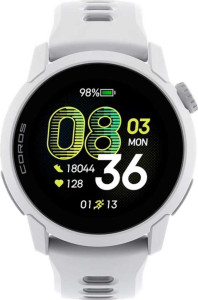
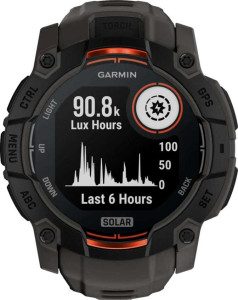
Across the shared feature set, these two watches are well-matched: both offer HRV tracking, VO2 max, readiness scores, fast GPS acquisition, Galileo support, thunderstorm alerts, and sunrise/sunset times. Where they diverge, however, the gaps are pointed. The most practically significant difference is internal storage — the Coros Pace 4 provides 4 GB versus the Garmin Instinct 3 Solar's 0.128 GB. That is a 30x difference, and it matters: 4 GB can comfortably store music, detailed map data, or large activity logs, while 0.128 GB is essentially limited to firmware and basic workout records.
The health monitoring trade-off is also worth noting. The Garmin includes fast/slow heart rate notifications, which passively alert the user to anomalies during the day — a useful passive safety net. The Coros counters with vibrating alerts, which the Garmin lacks entirely; without haptic feedback, the Instinct 3 relies solely on audible or visual cues, a real limitation in noisy environments or situations where discretion matters. The Coros also adds call control, allowing users to manage incoming calls from the wrist — a convenience the Garmin does not offer.
Neither watch supports answering calls directly, voice commands, or a camera remote, so those are shared limitations. On balance, the Coros Pace 4 holds the broader feature advantage here, driven primarily by its vastly superior storage capacity, haptic feedback, and call control. The Garmin's heart rate notifications are a useful addition, but they do not offset the Coros's wider practical toolkit.