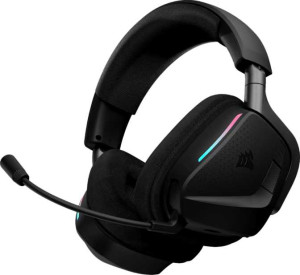
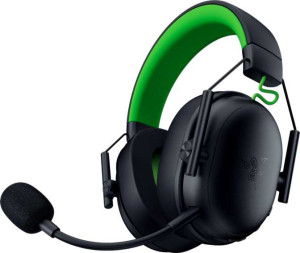
On paper, the shared specs between these two headsets are substantial: identical 50 mm drivers, the same 32 Ohm impedance, neodymium magnets, passive noise reduction, virtual surround sound, and spatial audio support. Neither offers ANC, so passive isolation is your only shield from ambient noise on both.
Where they diverge is in frequency range and sensitivity. The Razer BlackShark V3 X HyperSpeed extends considerably further — 12 Hz to 28,000 Hz — compared to the Void v2 MAX's standard 20 Hz to 20,000 Hz range. The lower floor of 12 Hz means the BlackShark can reproduce deeper sub-bass rumble, which translates to more visceral impact in explosions and low-frequency game effects. The upper ceiling of 28,000 Hz exceeds the threshold of human hearing but can influence perceived audio ″air″ and instrument separation through harmonic content. In contrast, the Corsair Void v2 MAX counters with a significantly higher sensitivity rating of 116 dB/mW versus the BlackShark's 106 dB/mW — a 10 dB gap that means the Void gets meaningfully louder from the same source signal, which matters for users who prefer high volume headroom or use underpowered audio sources.
The edge here depends on what you prioritize. For tonal range and low-end depth, the BlackShark V3 X HyperSpeed holds the advantage. For raw loudness and volume headroom, the Void v2 MAX pulls ahead. Neither is a clear-cut overall winner in sound quality from specs alone, but the BlackShark's wider frequency response gives it a slight technical lead for immersive gaming audio.