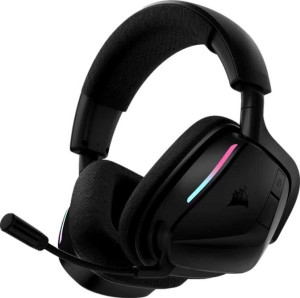
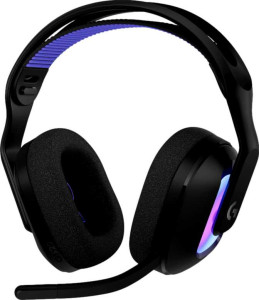
At a glance, the two headsets share a lot of common ground: identical 20 Hz–20,000 Hz frequency ranges, virtual surround sound, spatial audio support, passive noise reduction, and a dual-driver configuration. For gaming headsets at this tier, those are standard expectations rather than differentiators. The meaningful gaps emerge once you look at driver size, sensitivity, and magnet technology.
The Corsair Void V2 uses larger 50 mm drivers paired with neodymium magnets, compared to the G522's 40 mm drivers and no specified magnet type. Larger drivers generally move more air, which tends to translate into fuller low-end presence and more impactful audio at high volumes. Neodymium magnets reinforce this advantage — they produce a stronger magnetic field in a compact form, which typically improves driver efficiency and transient response. The sensitivity gap is also hard to ignore: the Void V2's 116 dB/mW versus the G522's 97 dB/mW is a substantial 19 dB difference, meaning the Void V2 will produce significantly louder output from the same power input — an asset for users who want strong volume headroom without an amplifier.
The Corsair Void V2 holds a clear edge in sound quality specs. Its combination of larger drivers, neodymium magnets, and considerably higher sensitivity paints a picture of a headset engineered for more powerful, dynamic audio output. The G522's slightly higher impedance of 39 Ohms versus 32 Ohms also means it demands marginally more power to drive — a minor but real consideration when paired with onboard audio. For users who prioritize raw acoustic performance, the Void V2's hardware profile is the stronger package based on these specs.