Creative Aurvana Ace 3
Creative Aurvana Ace Mimi

Creative Aurvana Ace 3 Creative Aurvana Ace Mimi

Overview

Welcome to our in-depth spec comparison between the Creative Aurvana Ace 3 and the Creative Aurvana Ace Mimi. Both earbuds share a strong foundation — identical IP ratings, wireless freedom, and a six-microphone setup — yet they diverge in meaningful ways across audio range, codec support, and key comfort features. Read on to discover which of these two earbuds best matches your listening priorities.

Common Features

  • Both products use an in-ear fit.
  • Both products have an IPX5 ingress protection rating.
  • Both products are water resistant.
  • Both products are fully wireless with no wires or cables.
  • Neither product is a neckband earbud design.
  • Neither product includes wingtips.
  • Neither product has RGB lighting.
  • Both products have stereo speakers.
  • Both products offer passive noise reduction.
  • Neither product supports spatial audio.
  • Neither product has Dolby Atmos.
  • Neither product has Dirac Virtuo.
  • Neither product uses a neodymium magnet.
  • Both products take 1.5 hours to fully charge.
  • Neither product has a solar power battery.
  • Both products have a battery level indicator.
  • Both products have a rechargeable battery.
  • Neither product supports fast pairing.
  • Both products have a USB Type-C port.
  • Both products support LDAC.
  • Neither product supports LDHC.
  • Both products support Bluetooth LE Audio.
  • Neither product supports aptX Low Latency.
  • Neither product supports aptX HD.
  • Neither product supports aptX.
  • Neither product has a find device feature.
  • Both products support fast charging.
  • Neither product can read notifications.
  • Both products have a mute function.
  • Both products can be used as a headset.
  • Both products have a control panel placed on the device.
  • Both products have voice prompts.
  • Both products include a travel bag.
  • Both products have 6 microphones.
  • Both products have a noise-canceling microphone.

Main Differences

  • Weight is 9.5 g on Creative Aurvana Ace 3 and 9.4 g on Creative Aurvana Ace Mimi.
  • Active noise cancellation (ANC) is present on Creative Aurvana Ace Mimi but not available on Creative Aurvana Ace 3.
  • The lowest frequency is 20 Hz on Creative Aurvana Ace 3 and 5 Hz on Creative Aurvana Ace Mimi.
  • The highest frequency is 20000 Hz on Creative Aurvana Ace 3 and 40000 Hz on Creative Aurvana Ace Mimi.
  • Battery life is 8 hours on Creative Aurvana Ace 3 and 7 hours on Creative Aurvana Ace Mimi.
  • Battery life of the charging case is 18 hours on Creative Aurvana Ace 3 and 21 hours on Creative Aurvana Ace Mimi.
  • Wireless charging is available on Creative Aurvana Ace Mimi but not on Creative Aurvana Ace 3.
  • Bluetooth version is 5.4 on Creative Aurvana Ace 3 and 5.3 on Creative Aurvana Ace Mimi.
  • aptX Adaptive support is present on Creative Aurvana Ace 3 but not available on Creative Aurvana Ace Mimi.
  • aptX Lossless support is present on Creative Aurvana Ace 3 but not available on Creative Aurvana Ace Mimi.
  • Auracast support is present on Creative Aurvana Ace 3 but not available on Creative Aurvana Ace Mimi.
  • Ambient sound mode is available on Creative Aurvana Ace Mimi but not on Creative Aurvana Ace 3.
  • In/on-ear detection is present on Creative Aurvana Ace 3 but not available on Creative Aurvana Ace Mimi.
Specs Comparison
Creative Aurvana Ace 3

Creative Aurvana Ace 3

Creative Aurvana Ace Mimi

Creative Aurvana Ace Mimi

Design:
Fit In-ear In-ear
Ingress Protection (IP) rating IPX5 IPX5
water resistance Water resistant Water resistant
weight 9.5 g 9.4 g
has no wires or cables
are neckband earbuds
wingtips included
has RGB lighting
has stereo speakers
has UV light
Has a display

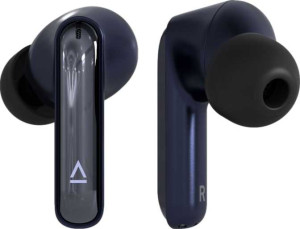
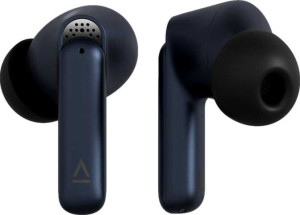
From a design standpoint, the Creative Aurvana Ace 3 and the Creative Aurvana Ace Mimi are remarkably similar. Both adopt an in-ear, truly wireless form factor with no neckband, no wingtips, and no wires of any kind, making them equally suited for active, cable-free use. They also share an IPX5 water-resistance rating, meaning both can handle sweat and light rain without issue — a practical assurance for gym sessions or commutes in unpredictable weather.

The only measurable difference in this category is weight: the Ace 3 comes in at 9.5 g per earbud versus the Ace Mimi's 9.4 g. In practice, a 0.1 g gap is imperceptible during wear and has no meaningful real-world impact on comfort or fatigue over extended listening sessions.

Based strictly on the provided design specs, these two earbuds are effectively tied. There is no meaningful differentiator here — neither product holds a design advantage over the other. Buyers choosing between them should look to other spec groups, such as audio performance or battery life, to find a deciding factor.

Sound quality:
has active noise cancellation (ANC)
has passive noise reduction
lowest frequency 20 Hz 5 Hz
highest frequency 20000 Hz 40000 Hz
supports spatial audio
has Dolby Atmos
has Dirac Virtuo
has a neodymium magnet

The most consequential difference in this group is the presence of Active Noise Cancellation (ANC) on the Ace Mimi, a feature entirely absent from the Ace 3. Both earbuds offer passive noise reduction through their physical in-ear seal, but ANC adds an active layer that uses microphones to electronically cancel ambient sound — a meaningful advantage in noisy environments like open offices, public transit, or busy streets. For users prioritizing focus or immersion in loud settings, this gap is significant.

The frequency response specs compound the Ace Mimi's lead further. Its range stretches from 5 Hz to 40,000 Hz, compared to the Ace 3's more conventional 20 Hz–20,000 Hz. The extended low-end reaches into sub-bass territory that adds depth and physicality to bass-heavy music, while the upper ceiling of 40 kHz enables compatibility with high-resolution audio formats. In practice, most listeners won't consciously perceive frequencies at the extreme edges, but the wider range suggests a driver tuned for greater headroom and fidelity across the audible spectrum.

This group has a clear winner: the Ace Mimi holds a substantial advantage, combining active noise cancellation with a significantly broader frequency response. The Ace 3 covers the basics competently, but for users who care about isolation and audio fidelity headroom, the Ace Mimi is the stronger choice based on these specs alone.

Power:
Battery life 8 hours 7 hours
Battery life of charging case 18 hours 21 hours
charge time 1.5 hours 1.5 hours
has wireless charging
Has a solar power battery
has a battery level indicator
has a rechargeable battery

Battery life splits interestingly between these two earbuds. The Ace 3 delivers a longer single-session playback time at 8 hours versus the Ace Mimi's 7 hours — a one-hour gap that matters if you frequently go long stretches without accessing your case. However, the Ace Mimi compensates with a more capable charging case rated at 21 hours, compared to the Ace 3's 18 hours. When you add everything up, the Ace Mimi actually edges ahead in total combined battery life: 28 hours versus 26 hours.

Where the Ace Mimi pulls ahead more decisively is with wireless charging support, a feature the Ace 3 lacks entirely. The practical benefit here is convenience — being able to drop the case on a Qi pad without hunting for a cable is a meaningful quality-of-life upgrade, especially for users who already have wireless chargers on their desk or nightstand. Both earbuds share an identical 1.5-hour charge time, so neither has a speed advantage when plugged in.

Overall, the Ace Mimi takes the edge in this group. While the Ace 3 wins on per-session earbud stamina, the Ace Mimi's larger case reserve and wireless charging support give it a more well-rounded and convenient power package — particularly for travelers or users who prefer cable-free charging habits.

Connectivity:
has fast pairing
Has USB Type-C
Bluetooth version 5.4 5.3
has LDAC
has LDHC
has Bluetooth LE Audio
has aptX Adaptive
has aptX Low Latency
has aptX HD
has aptX
has aptX Lossless
has aptX Voice
has Auracast
maximum Bluetooth range 10 m 10 m
supports Bluetooth pairing using NFC
Can be used wirelessly
has AAC

Connectivity is where the Ace 3 pulls ahead meaningfully. Both earbuds share a solid common foundation — LDAC, Bluetooth LE Audio, AAC, USB-C, and an identical 10 m wireless range — but the Ace 3 layers on several additional capabilities that the Ace Mimi simply does not offer. Chief among them is aptX Adaptive, a codec that dynamically adjusts bitrate to balance audio quality and latency in real time, and aptX Lossless, which enables bit-perfect CD-quality transmission over Bluetooth on compatible devices. For audiophiles or users with high-resolution audio libraries and supporting hardware, these codecs represent a tangible fidelity advantage.

The Ace 3 also supports Auracast, a Bluetooth broadcast feature built on the LE Audio standard that allows audio to be shared across multiple listeners or received from public broadcast points — a forward-looking capability with growing adoption in public venues, hearing accessibility, and multi-device audio sharing. The Ace Mimi, despite supporting LE Audio, does not include Auracast. Additionally, the Ace 3 runs on the slightly newer Bluetooth 5.4 versus the Ace Mimi's 5.3, though in everyday use this version difference is unlikely to produce a perceptible change in range or stability.

The verdict here is clear: the Ace 3 holds a strong advantage in connectivity. Its broader codec support and Auracast capability make it the more future-proof and audio-quality-focused option, particularly for users invested in high-resolution wireless audio or emerging Bluetooth broadcast features.

Features:
release date November 2025 January 2025
has ambient sound mode
has in/on-ear detection
has find device feature
Supports fast charging
can read notifications
has a mute function
can be used as a headset
control panel placed on a device
Has voice prompts
travel bag is included
Has an in-line control panel
Has a temperature sensor
Has a built-in camera remote control function

Across the features category, these two earbuds share a nearly identical set of capabilities — fast charging, on-device controls, voice prompts, mute function, headset use, and an included travel bag all appear on both. The real story comes down to a single trade-off: the Ace 3 includes in/on-ear detection, while the Ace Mimi includes ambient sound mode, and neither product has both.

In practical terms, in-ear detection automatically pauses playback when an earbud is removed — a convenience feature that prevents missed audio and reduces unnecessary battery drain during brief interactions. Ambient sound mode, by contrast, uses microphones to pipe in environmental sounds, letting the user stay aware of their surroundings without removing the earbuds entirely. This is particularly useful during commutes, workouts near traffic, or any situation where situational awareness matters. Given that the Ace Mimi already carries ANC (as noted in the sound quality group), the addition of ambient mode gives it a complete transparency-and-isolation toolkit — ANC to block the world out, ambient mode to let it back in on demand.

This group edges toward the Ace Mimi as the more practical winner for most users. Ambient sound mode addresses a broader, more frequent real-world need than in-ear detection, and its pairing with ANC makes it the more versatile choice for listeners who move between different environments throughout the day. The Ace 3's ear detection is a welcome convenience, but it is a narrower benefit by comparison.
Microphone:
number of microphones 6 6
has a noise-canceling microphone

On the microphone front, there is nothing to separate these two earbuds. Both the Ace 3 and the Ace Mimi feature 6 microphones and noise-canceling microphone technology — a configuration that typically supports both call clarity and the beamforming or multi-mic processing used for ANC and voice pickup. Six mics is a generously equipped array for true wireless earbuds, suggesting both products are engineered to perform well on calls and voice input in noisy environments.

This group is a clear tie. With identical microphone counts and the same noise-canceling mic capability, neither product holds any advantage here. Users prioritizing call quality or voice assistant performance can expect an equivalent experience from both.

Comparison Summary & Verdict

After reviewing all the specs, both earbuds prove to be capable companions, but they cater to different needs. The Creative Aurvana Ace 3 stands out for its broader codec support, offering aptX Adaptive, aptX Lossless, and Auracast, and it edges ahead with a slightly longer per-charge battery life and in/on-ear detection. The Creative Aurvana Ace Mimi, on the other hand, delivers a significantly wider frequency range (5 Hz to 40,000 Hz), adds active noise cancellation and an ambient sound mode, supports wireless charging, and provides more total battery life through its larger charging case. If you value cutting-edge codec flexibility, the Ace 3 is the stronger pick; if immersive sound reproduction, noise control, and wireless convenience matter most to you, the Ace Mimi is the clear choice.

Creative Aurvana Ace 3
Buy Creative Aurvana Ace 3 if...

Buy the Creative Aurvana Ace 3 if you want cutting-edge codec support with aptX Adaptive, aptX Lossless, and Auracast, and prefer in/on-ear detection for a smarter playback experience.

Creative Aurvana Ace Mimi
Buy Creative Aurvana Ace Mimi if...

Buy the Creative Aurvana Ace Mimi if you prioritize active noise cancellation, a wider frequency range, wireless charging, and a higher-capacity charging case for extended use on the go.